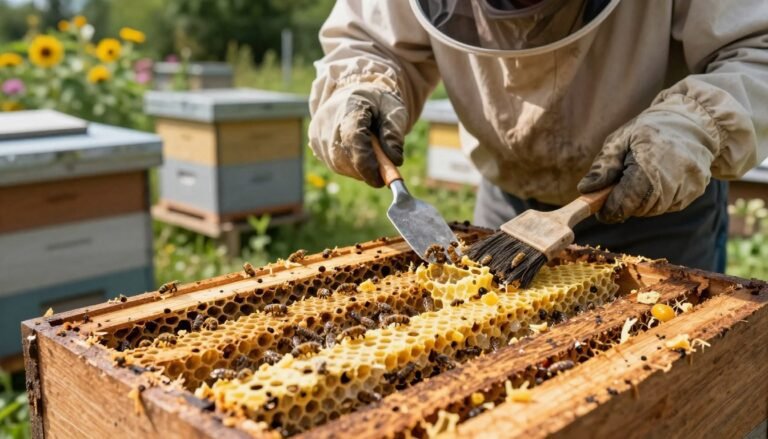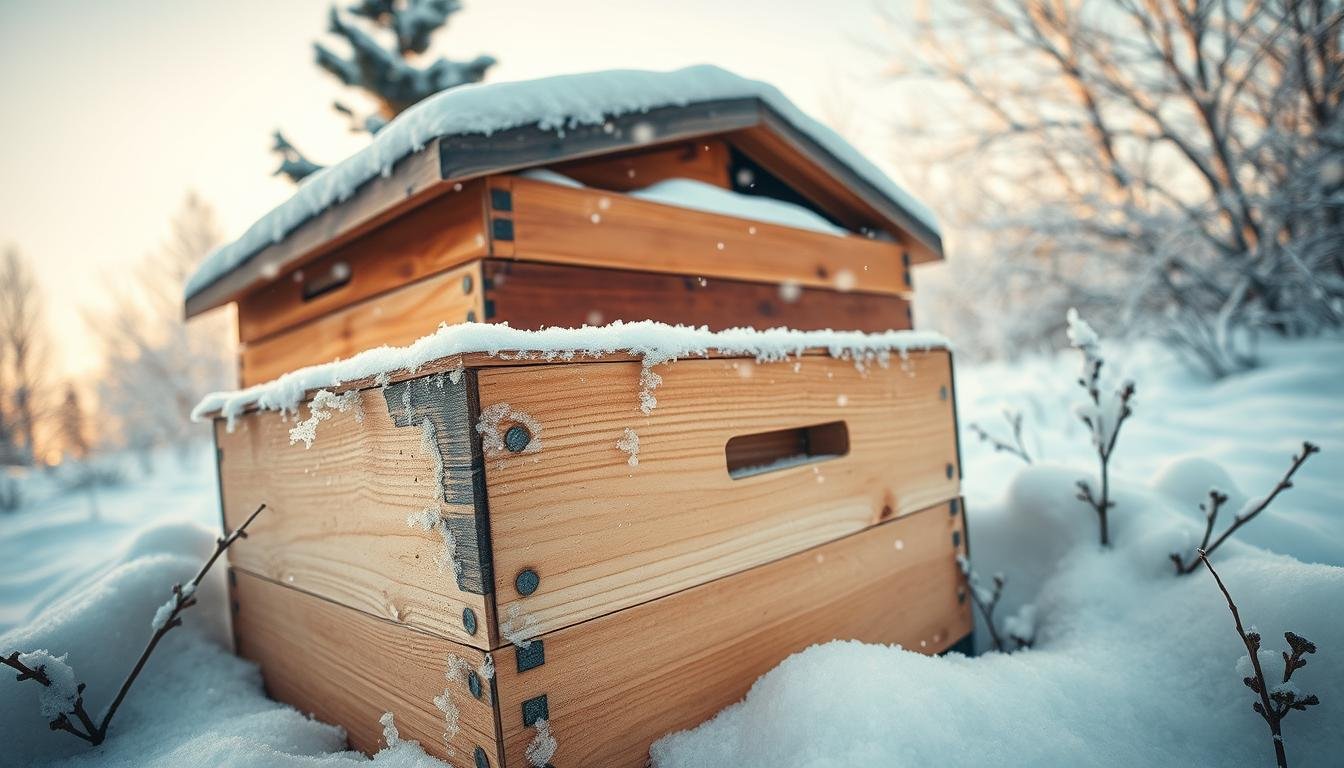
HillCo, LLC offers a 1/2″ fiber panel that soaks up excess dampness before it can drip back onto the cluster. This simple layer helps manage winter humidity and keeps cold-season stress from turning into colony loss.
When bees cluster, trapped air warms and forms condensation under the lid. A proper winter moisture board captures that vapor and improves internal airflow. Many customer reviews praise how this product reduces damp spots and preserves brood health.
We process shipping orders daily and monitor shipping so equipment reaches your yard ahead of freezing weather. Learn more about moisture-control methods and installation details at moisture boards for beehives, or read practical tips on managing colonies in wet climates at managing hives in wet climates.
Key Takeaways
- 1/2″ fiber panel absorbs condensation to protect the cluster.
- Proper placement reduces damp spots that stress bees.
- Daily order processing helps ensure timely shipping to your apiary.
- Customer reviews report fewer losses when using this top layer.
- Combine the panel with good ventilation for best results.
Why Moisture Control is Vital for Hive Health
Trapped vapor inside a hive can condense on cold surfaces and threaten the cluster. That condensate may drip down and chill the bees. Cold, wet conditions raise stress and increase the risk of colony loss during the cold season.
The Dangers of Condensation
Excess condensation can fall onto the bee cluster and cause fatalities when temperatures plunge. A quality moisture board soaks up this vapor before it returns to the frames.
Regulating Hive Temperature
By wicking water away, the board helps keep the cluster dry and conserves the colony’s heat. This preserves the small, warm microclimate bees need during the winter months.
- Absorbs rising humidity that forms when internal heat meets a cold lid.
- Prevents water from raining back onto bees and brood.
- Helps maintain steady internal heat so bees use less energy.
| Issue | Effect on Colony | How a Moisture Board Helps | Action |
|---|---|---|---|
| Condensation build-up | Chilled cluster, brood risk | Absorbs and holds vapor | Install under inner cover |
| Heat loss | Increased energy use | Keeps heat near bees | Use high-quality panel |
| Recurring dampness | Mold, disease | Wicks moisture away | Monitor and replace as needed |
Learn detailed installation tips and ventilation strategies at beehive ventilation and practical winterizing steps at winterizing beehives. For product specifics, see our guide to moisture boards for beehives.
Choosing the Best Moisture Board for Winter Hives
A correctly sized panel stops condensate from pooling and helps maintain steady hive warmth.
Mann Lake supplies a winter moisture board tailored to 10-frame equipment. That fit removes guesswork and reduces gaps under the cover.
If you run 8-frame setups, the panel trims easily with a utility knife to suit your frame hives. This lets beekeepers adapt one product across different equipment sizes.
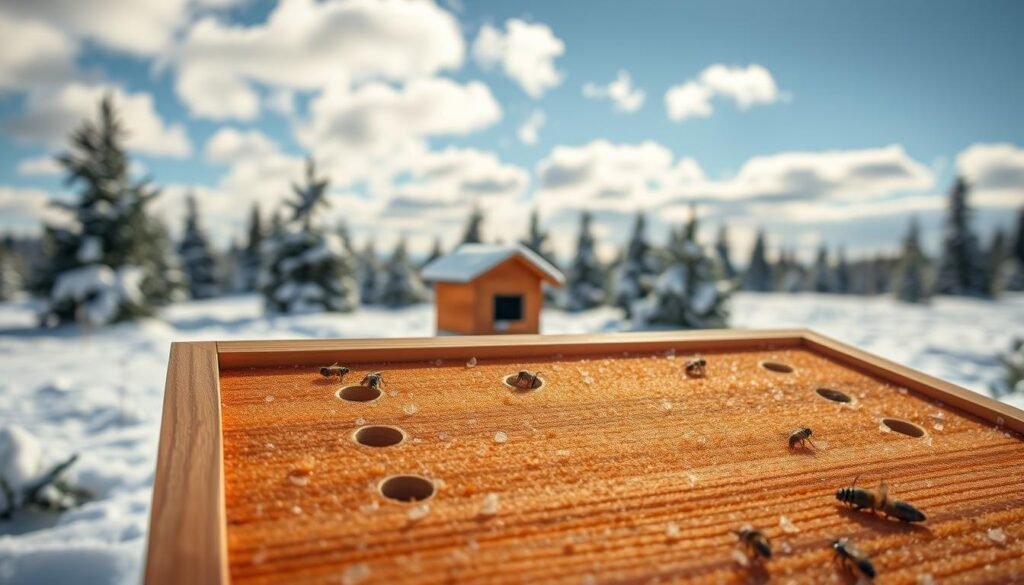
Proper use absorbs condensation and keeps the interior dry, which conserves the colony’s heat during cold months. Customer reviews often praise the product for stable internal conditions.
| Compatibility | Action | Benefit | Shipping |
|---|---|---|---|
| 10-frame equipment | Use as sold | Simple fit, full coverage | Fast processing of orders |
| 8-frame equipment | Trim with utility knife | Custom fit, protects frames | Packed securely for delivery |
| All setups | Place under inner cover | Reduces condensation and saves heat | Priority shipping available |
Plan early and place orders so panels arrive before the coldest months. Learn installation tips and product details at moisture boards for beehives or read how to manage hive moisture over the winter.
Proper Installation and Maintenance Techniques
A secure top layer and correct placement make a big difference in how a hive handles rising vapor. Follow simple steps to place the panel correctly, then protect the exterior against cold and wind.
Step by Step Placement Guide
1. Place the moisture board on top of the inner cover before adding your telescoping cover.
2. Wrap the hive with a winter wrap to add insulation through the cold months. Use a rock on the telescoping cover to hold flaps tight and reduce heat loss.
3. Trim the board top to fit either 8-frame or 10-frame equipment; the product adapts to most frame hives with a clean cut.
- Proper placement helps wick moisture away from the inner cover so condensate does not drip on the cluster.
- Check the board top periodically and replace when saturated to keep performance high.
- We process shipping orders year-round so you can get this product before the first frost.
For detailed installation tips and ventilation ideas, see our guide to beehive ventilation hacks and the product page on moisture boards for beehives.
Conclusion
A well-placed absorbent layer reduces the risk of chilled brood and colony stress. Installing a quality moisture board helps keep the cluster dry and conserves heat so your bee colony has a better chance at spring buildup.
We stand behind our products and value the positive reviews that confirm improved hive conditions. Place your orders early; timely shipping ensures panels arrive before cold sets in.
To learn installation tips and performance notes, see our guide to moisture boards for beehives or practical steps to reduce moisture inside winter hives. Thank you for choosing us to help protect hives and support your beekeeping goals.
FAQ
What is a moisture control panel and how does it protect a hive during cold months?
A moisture control panel sits under the hive cover to absorb or redirect condensation away from the cluster. It reduces dripping and damp insulation, helping bees maintain dry frames and a stable microclimate. Drying the air above the cluster lowers disease risk and conserves colony heat.
Which materials work well for winter hive moisture control?
Common options include cedar, pine, corrugated cardboard with absorbent pads, and commercial wool or fleece liners. Each material balances breathability and absorption differently. Wood offers durability and passive venting, while absorbent pads trap water that you can replace in spring.
Where should the panel be placed within the hive stack?
Install the panel directly beneath the outer cover or under a telescoping roof, above the inner cover if one exists. Position it so warm, moist air rises and contacts the panel first, preventing condensation from dripping onto frames or bees.
Can I use an inner cover and a moisture panel together?
Yes. Combining an inner cover with an absorbent panel creates a controlled venting path. The inner cover blocks drafts while the panel captures moisture at the top. Ensure there’s still adequate ventilation near the top entrance or an upper notch to allow airflow.
How often should absorbent pads or liners be checked or changed?
Inspect pads at the start and end of the cold season and after prolonged thaw cycles. Replace saturated materials in early spring to avoid mold and pests. Durable wood or fleece liners may need less frequent replacement but still deserve a seasonal check.
Will adding a panel affect hive temperature or cause heat loss?
A properly designed panel reduces heat loss by preventing bees from clustering under drips and by minimizing the need for excessive fanning. Avoid over-ventilating; panels should manage humidity while preserving the bees’ ability to retain warmth.
Are there commercial products or brands recommended by beekeepers?
Many beekeepers use products from Mann Lake, Betterbee, and Brushy Mountain, which offer hardwood and absorbent liners. Local suppliers and beekeeping clubs often stock proven options. Choose based on durability, fit to your hive type, and ease of replacement.
Can improvised liners like cardboard or old towels work?
Temporary solutions can work in a pinch but carry risks. Cardboard absorbs moisture well but can collapse or invite pests. Towels may retain water too long and foster mold. If you use improvised materials, check them frequently and replace with proper panels when possible.
How do ventilation modifications interact with moisture control?
Proper ventilation complements a panel by allowing moist air to escape without creating cold drafts across the cluster. Use small upper entrances, screened bottom boards, or an angled escape to balance airflow and humidity control without exposing bees to wind.
Do moisture panels help reduce winter hive diseases?
Yes. By keeping frames and bees drier, panels lower the risk of fungal growth and brood diseases that thrive in damp conditions. They also reduce stress on the colony, which improves overall winter survival and spring buildup.