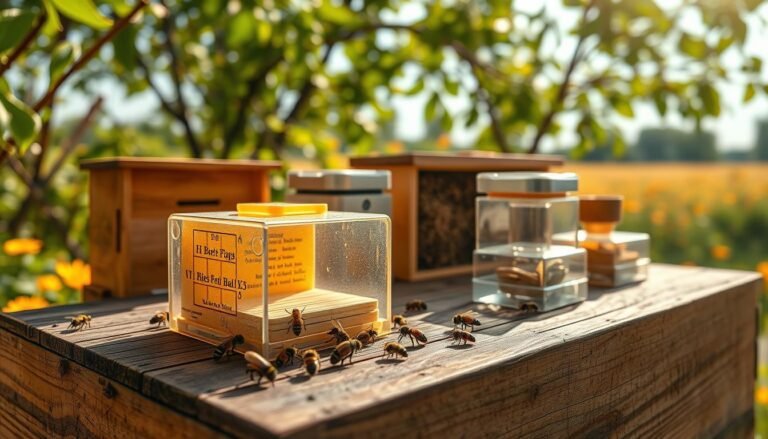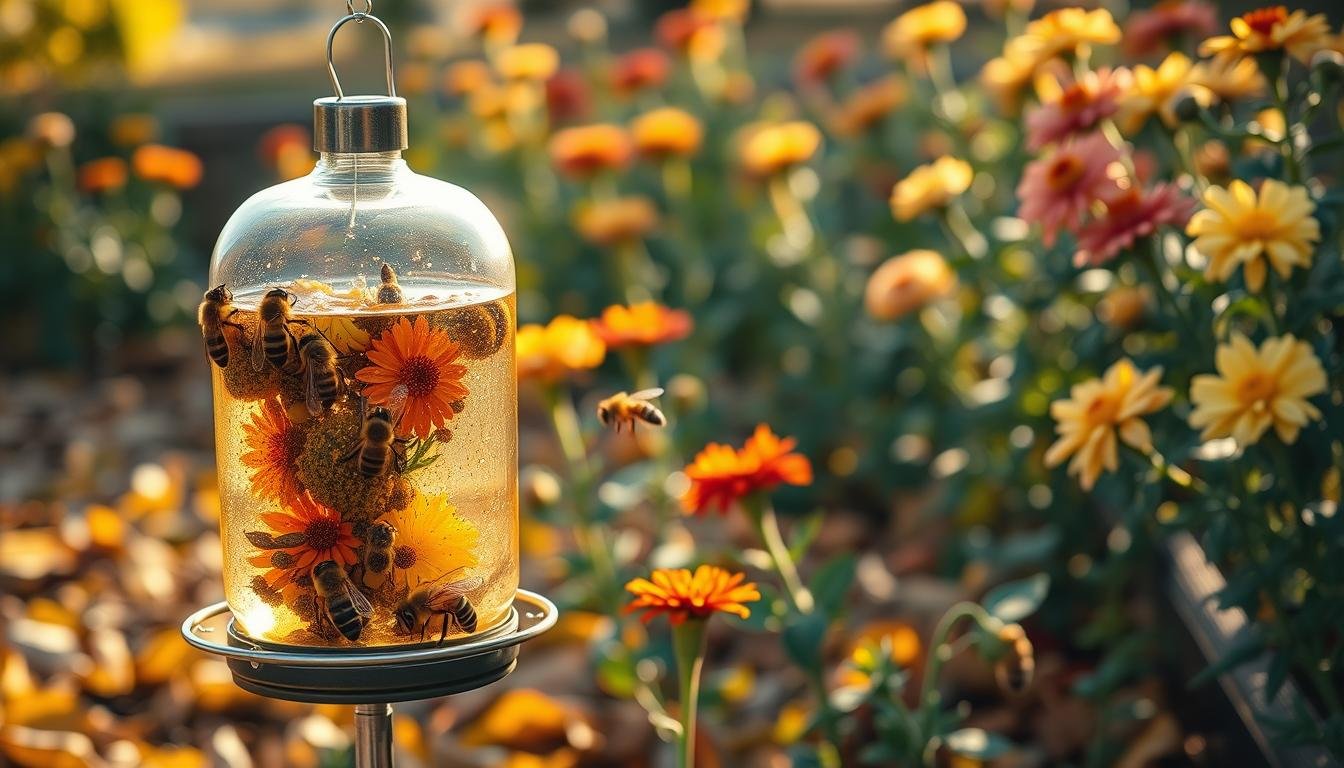
Selecting the right equipment matters. As temperatures drop, beekeepers must decide which feeder type will help a colony store enough food to reach winter. Dadant and Sons offer designs many apiarists trust to prepare a hive for cold months.
Timing is key. Assess your hive stores and bee health early. Supplemental syrup and pollen patties can shore up reserves when nectar sources vanish.
Choose between an entrance feeder, a division board, or top-frame feeding depending on your setup. Each method has trade-offs: entrance feeders are easy to check, while top frames with syrup reduce disturbance.
Plan and monitor. Make sure robbing risks are managed and that your colony can access food without stress. With the right gear, beekeeping during the transition to winter becomes a clearer, safer task.
Key Takeaways
- Select a type feeder that matches your hive layout and climate.
- Use syrup and pollen patties to supplement dwindling natural food.
- Consider entrance feeders for easy checks or top-frame syrup for less hive disruption.
- Assess stores early and act to protect colonies through cold months.
- Trusted brands like Dadant and Sons supply reliable options for beekeepers.
Why Fall Feeding is Critical for Colony Survival
As nectar dwindles, timely supplemental feeding becomes a lifeline for colonies heading into cold months.
The risk of starvation is real. Starvation is one of the leading causes of colony death during winter, with an average hive needing about 60–80 lbs of honey to overwinter in many climates.
The Risk of Starvation
During cold months, bees rely entirely on stored food. If a colony lacks 60–80 lbs, it faces a high chance of dying from lack of resources.
Preparing for Winter Bees
Beekeepers should provide sugar syrup and monitor stores. This is a great way to give bees the energy to maintain hive temperature and raise winter bees.
- Maintain a regular feeding schedule so colonies build needed stores.
- Use appropriate types of feeders and check that bees consume the feed.
- Act early—time matters when natural nectar wanes.
| Risk | Sign | Action |
|---|---|---|
| Low stores | Light hive weight | Add syrup using an entrance or top feeder |
| Failed brood rearing | Few young bees | Provide pollen substitute and monitor |
| Robbing | Agitated foragers | Limit exposed feed and reduce entrance size |
Assessing Your Hive for Food Shortages
A quick hive check—weight, frames, and entrance activity—reveals food shortages early. A healthy hive should weigh about 130–150 lbs to have the stores needed to reach winter. Weighing now saves time and stress later.
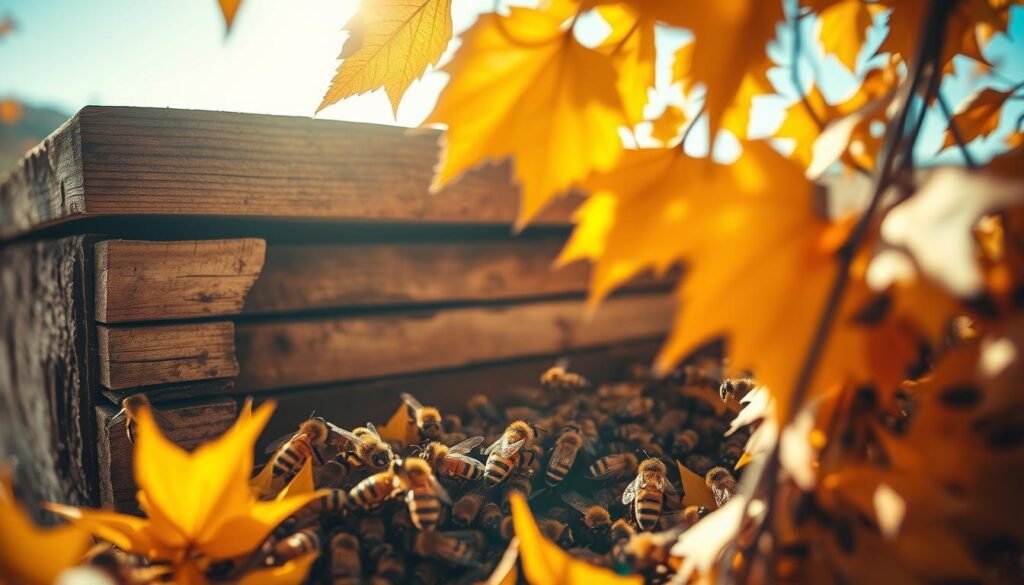
Observe the hive entrance during warm midday hours. Active traffic usually means the colony has forage. Low activity or clustered bees at the entrance can signal low food or a weak population.
Open the hive and inspect frames. You should see at least two full frames of pollen in the brood nest. If frames show sparse honey or pollen, provide sugar syrup and targeted feed without overexposing stores.
Document every finding. Note weight, frame counts, and any questions that arise. Good records help beekeepers decide which types of feeders suit each hive and when to intervene.
- Weigh hive: 130–150 lbs target.
- Check two full pollen frames in brood nest.
- Use syrup and feeders if the colony lacks stores for cold months.
Understanding the Best Bee Feeder for Fall
Selecting the right in-hive option makes feeding safer and reduces robbing risk.
In-hive units are built to replace a single frame and sit inside the brood chamber. They protect syrup and feed from pests while giving the colony easy access without leaving the hive.
A well-sized feeder can hold up to one gallon of syrup. Capacity matters; larger reservoirs mean fewer interruptions and less time handling frames.
When choosing a type feeder, check how it fits among frames and whether it blocks entrance traffic. Easy refill designs save time and reduce disturbance during fall feeding.
- Safety: Inside placement limits robbing and pest exposure.
- Capacity: One-gallon options cut refill frequency.
- Access: Bees can reach syrup without leaving the brood area.
If you want step-by-step winter prep, read this guide to inside hive winter care to match feeders to your operation.
Benefits of Using Hive Top Feeders
Placing a reservoir on top of the hive lets you add syrup without opening the brood box.
Top hive feeders excel at supplying large volumes of feed with minimal disturbance. A 10-frame hive top feeder from Dadant and Sons holds up to three gallons of syrup. That capacity reduces visits and saves time during busy feeding periods.
These units sit above the top frames so bees can reach the syrup without moving through the brood area. The design usually includes a steel safety screen to keep bees from drowning while they feed.
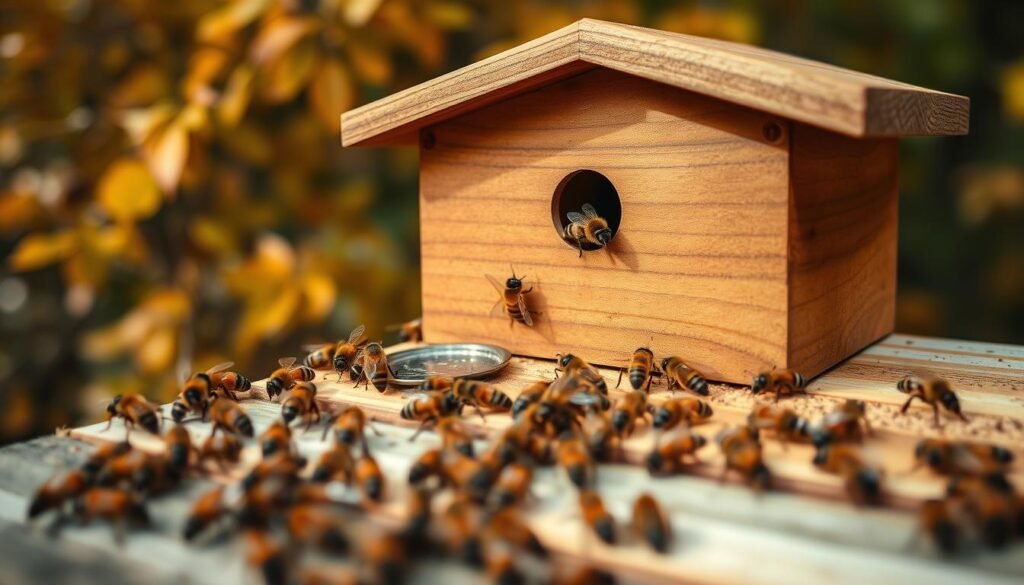
“A top-mounted feeder lets beekeepers refill without removing the inner cover, which lowers stress on the colony.”
- Less hive disturbance: refill without opening the brood box.
- High capacity: up to three gallons suits large colonies preparing for winter.
- Safety: steel screens reduce drownings and mess.
| Feature | Benefit | When to Use |
|---|---|---|
| Three-gallon capacity | Fewer refills; long-term supply | Large colony or extended feeding |
| Steel safety screen | Protects bees from drowning | Any syrup feeding period |
| Top placement | Refill without removing inner cover | When minimal disturbance is a priority |
Evaluating Entrance Feeders for Your Apiary
Entrance-style units let you top up syrup while leaving the brood box closed and calm. An entrance feeder is a jar that rests outside the hive with a sliding tray that fits into the hive entrance.
This design makes monitoring simple. Because the jar sits outside, beekeepers can see syrup levels without opening the colony. That saves time and reduces disturbance during routine checks.
There are trade-offs to consider. The external jar is prone to freezing in very cold winter weather. It can also attract pests or trigger robbing if left exposed.
- Easy checks: view syrup at a glance without lifting covers.
- Quick setup: this type feeder is a practical way to boost energy when nectar wanes.
- Limitations: vulnerable to freezing and pests; monitor the hive entrance for problems.
Entrance feeders are most useful while weather is mild and when you need a fast feed option. If you want a deeper look at different options, review this guide to different types of honey bee feeders.
Tip: keep the jar full and watch for robbing activity. If bees stop taking syrup, check causes with resources like why bees won’t take sugar syrup before changing your feeding way.
Using In-Hive Feeders to Prevent Robbing
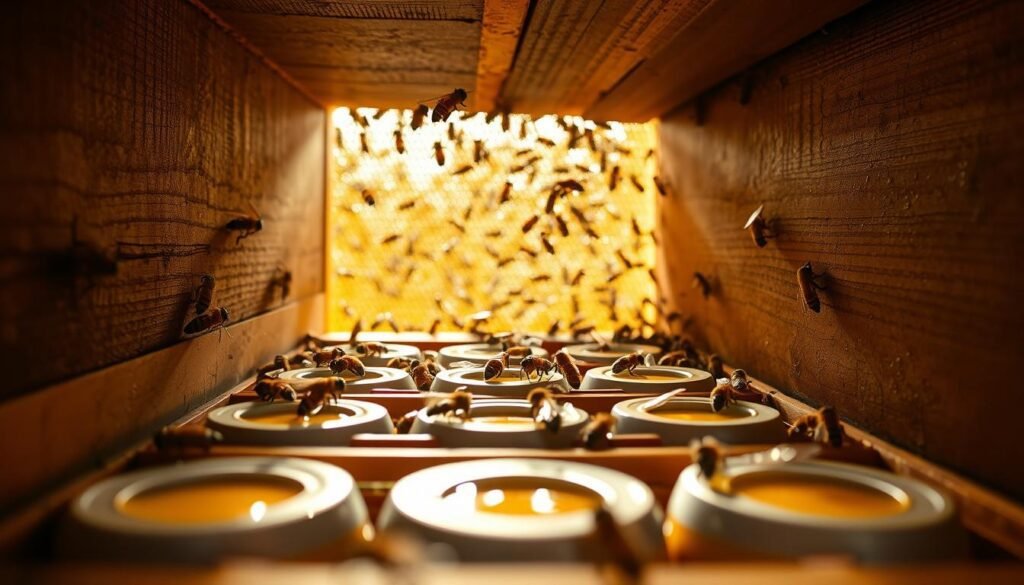
An internal reservoir helps maintain syrup warmth and keeps robbers from finding easy access. In-hive units, like a division board, sit among frames and replace a standard frame to give bees protected access to sugar syrup.
Protecting Against Pests
Keeping feed inside the hive reduces attraction to wasps and nearby colonies. A division board feeder holds about one gallon of syrup and stays warm in the brood nest.
Beekeepers should make sure to fit a robber screen at the entrance to block marauding insects and other hives. This small step cuts robbing events and keeps the colony calm.
Maintaining Temperature
Warm syrup matters. Inside placement helps maintain a stable temperature around the feed, which increases uptake during cooler weather.
Unlike an entrance feeder that sits outside hive, an in-hive option stays enclosed. That reduces freeze risk and lowers the chance of contamination.
“Keep the feed inside and check it often; regular inspection prevents surprises and keeps stores available through winter.”
- Division board feeder replaces a frame and holds up to one gallon of sugar syrup.
- Enclosed feeders reduce robbers inside hive and outside interference.
- Always check that bees access the syrup and that the unit is clean.
For additional tactics on preventing theft and robbing behavior, review this practical guide on feeding without causing robbing and steps to protect hives from robbers in this help article: how to protect hives.
Pros and Cons of Baggie Feeders
Placing a syrup bag on a frame beneath the inner cover keeps feed inside the hive and protected from weather.
Advantages:
- Low-cost and simple to set up; a practical option when budgets are tight.
- Keeps syrup inside the colony, which reduces attraction to nearby hives compared with an entrance feeder.
- Located under the inner cover, the bag stays warmer in winter and is less likely to freeze.
- Plastic bags can get messy and need frequent replacement to keep frames clean.
- Poor placement risks drowning or blocked access; bags must be slit correctly so bees can feed safely.
- Capacity is limited compared to large top reservoirs, so check supplies often.
“A baggie solution gives rapid access to syrup but demands close attention to placement and hygiene.”
If you want a deeper review, read this guide to the pros and cons of a baggie to decide whether this method suits your colony.
Essential Supplements for Winter Health
Winter supplements bridge the gap between dwindling forage and bee needs.
Pollen substitutes and winter patties act as emergency protein when natural sources are gone. Place patties on the top frames where the cluster can reach them without moving far from the brood nest.
Use a trivet under patties to reduce small hive beetle access and keep the patty from smearing on comb. A hive top feeder can hold syrup while also providing space on the hive top for patties.
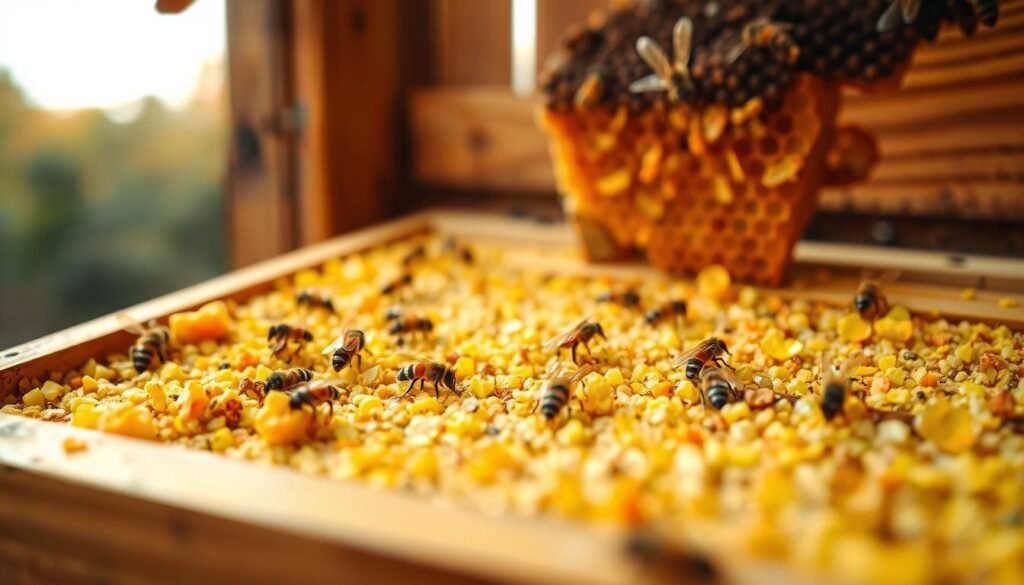
Monitor the colony and add supplements before weather prevents safe inspections. Follow manufacturer instructions on patties and syrup mixes to avoid overfeeding or contamination.
PRACTICAL POINTS
- Nutrition: winter patties give needed protein when stores run low.
- Placement: put patties on top frames so the cluster can access them.
- Protection: use a trivet to deter small hive beetles and keep frames clean.
- Dual supply: a hive top feeder lets you supply syrup and patties with minimal disturbance.
- Timing: add supplements early, before cold prevents safe opening of the hive.
“A balanced mix of syrup and pollen substitute helps a colony maintain brood rearing and winter strength.”
For practical guidance on scheduling supplements, consult this seasonal feeding guide at fall beekeeping feeding bees in winter and tips on preparing colonies for changing conditions at preparing bees for unpredictable seasons.
Managing Hive Weight and Honey Stores
Regularly tracking hive weight gives a clear signal about food reserves and colony readiness for winter.
Weigh often and act early. A light hive usually means low honey stores and a need for supplemental syrup or pollen patties. Keep a routine scale check to spot trouble before temperatures drop.
Move a full super to the bottom to help the cluster stay centered and discourage the queen from laying in an empty super come spring. This simple rearrangement improves winter cluster position and eases spring management.
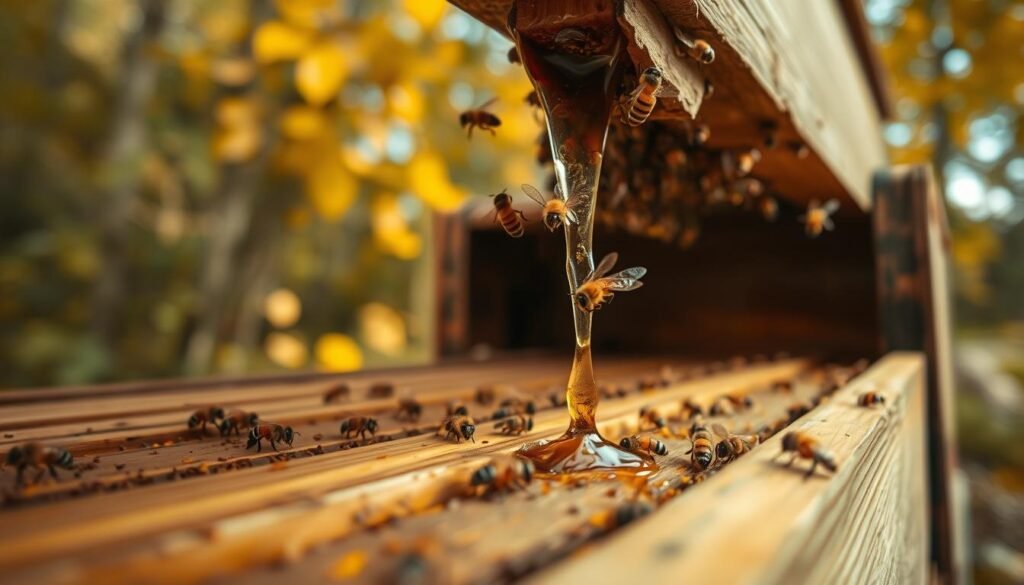
Use an inside hive option like a division board feeder to add syrup without overloading the top or inviting robbers inside hive. Division board units supply extra calories while keeping disturbance low.
Inspect frames regularly. Check that frames show adequate honey and that pollen patties remain accessible. If the colony is light, add targeted feed promptly to reduce starvation risk.
“Keep track of hive weight; it is the best indicator of whether your colony has enough food.”
- Manage an empty super carefully; avoid leaving it where the queen will occupy it.
- Act quickly if you suspect robbers inside hive to protect stored honey.
- Use feeders and supplemental syrup early when weight trends downward.
For a practical checklist on timing and methods, see this guide to feeding honeybees in the fall.
Conclusion
Properly timed supplements and the right equipment set the stage for hive survival.
Start with a clear plan: monitor weight, add syrup as needed, and place a top feeder or a hive top reservoir to reduce disturbance. Use pollen patties when protein is low to support brood and winter strength.
Choose feeders that match hive layout and climate, refill regularly, and watch bee activity to ensure uptake. Track stores so the colony enters winter with steady reserves.
Takeaway: proactive care, the right hive gear, and steady monitoring make the difference between loss and a strong spring buildup. For timing and practical steps to start fall syrup feeding, review this guide: start fall syrup feeding.
FAQ
Why is feeding colonies in autumn important?
Fall feeding helps colonies build and store enough food to survive winter. As nectar sources decline, supplemental sugar syrup and winter patties support the development of long-lived winter workers and reduce the risk of starvation during cold months.
How do I know if my hive needs extra food before winter?
Inspect frames for capped honey and weigh the hive. A strong colony typically needs about 60–90 pounds of stores in northern climates; less than this suggests supplemental feeding. Look for light supers, reduced brood, or frequent foraging on warm days as signs of low stores.
What type of top hive setup minimizes disturbance when adding syrup?
A hive-top feeder used under the inner cover lets you refill without removing frames. Models such as frame-style or gravity top feeders distribute syrup through a feeder in the top box, keeping bees calmer and preserving cluster warmth during cool weather.
Are entrance feeding systems safe to use in autumn?
Entrance feeders are easy to access but carry higher risk of robbing and attracting pests. Use them only for short-term, low-viscosity syrup and monitor closely. In cooler conditions, entrance feeding can reduce temperature control inside the hive, so exercise caution.
How do in-hive feeders help prevent robbing?
In-hive feeders, like division board feeders or internal frame feeders, place syrup inside the brood box or above frames. This hides the food source from other colonies and reduces scent trails that trigger robbing behavior, making them a safer option late in the season.
What are the advantages of using a division board feeder?
Division board feeders sit between frames and offer an internal refill point without exposing stores. They protect syrup from robbers, maintain hive temperature, and allow bees to access syrup near the cluster—useful when outside temperatures drop.
When should I stop feeding sugar syrup in the fall?
Transition away from liquid syrup as temperatures consistently fall below 50°F. By then, bees reduce intake and liquid can cool the cluster. Finish syrup feeding several weeks before deep cold sets in, and switch to solid supplements like pollen patties if needed.
Are baggie feeders a good option for late-season feeding?
Baggie feeders can be simple and inexpensive but have drawbacks: they can tear, leak, or freeze and may encourage robbing. Use them only as a temporary solution in mild conditions and ensure they are secured inside the hive to protect them from damage.
How do I protect my hive from pests when feeding in-hive?
Seal gaps, use entrance reducers, and monitor for small hive beetles and wax moths. In-hive feeders reduce external scent trails, but maintaining clean frames and removing spoiled syrup quickly helps prevent pest buildup during the cooler months.
What supplements should I consider to support winter health?
Pollen substitutes and winter patties provide essential protein and vitamins when natural pollen is scarce. Products from companies like Mann Lake and BetterBee are common choices; place patties near the brood area so nurse bees can access nutrients readily.
How can I manage hive weight and assess honey stores without heavy lifting?
Lift one side of the hive to get a feel for overall weight—compare to a known full hive. Use an empty super or a known-weight box as a reference. Digital hive scales offer continuous monitoring and help plan feeding before stores run out.
Will feeding in autumn affect queen laying and brood development?
Proper late-season feeding supports the production of winter bees by ensuring nurse bees have enough food to rear brood. Overfeeding or feeding at the wrong time can disrupt normal seasonal behavior, so match feeding to colony needs and local climate patterns.
How do I prevent robbers when using a hive-top or entrance setup?
Limit syrup exposure time, use entrance reducers, and choose internal or screened feeders when possible. Feeding during calm weather and placing feeders under an inner cover reduces scent spread and visibility to nearby colonies and wasps.