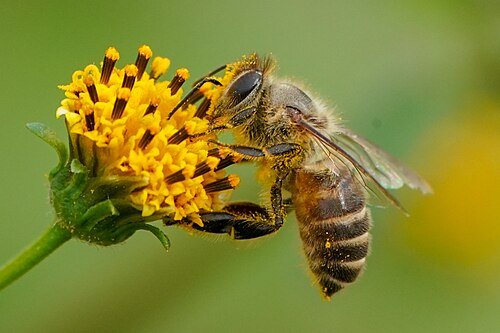
Long before a single Western honeybee ever crossed an ocean, Chinese beekeepers were already managing colonies of a completely different species — Apis cerana, the Asian honeybee — in log sections and wall cavities, and the character for “bee” had already been carved into oracle bones for roughly three thousand years. The domestication timeline that follows isn’t a footnote to European beekeeping history; it’s a separate, parallel tradition that ran for centuries on its own terms, with its own native bee, before the two traditions ever had reason to meet.
Key Takeaways
- The Chinese character for “bee” (蜂, feng) appears in oracle-bone inscriptions dated to roughly 3,000 years ago, among the earliest written references to bees anywhere in the world.
- China’s native honeybee, Apis cerana, is a genuinely different species from the Western honeybee (Apis mellifera) that dominates American and European beekeeping — not a regional variant of the same bee.
- Organized breeding and management of Apis cerana in China is generally dated to around 200 CE, following a long earlier period of honey-hunting from wild colonies.
- By the Zhou Dynasty (roughly 300 BCE), honey already appears as a recorded dietary item in the classical text the Li Ji (Book of Rites) — evidence honey had moved from a foraged treat to an established part of the diet worth writing down.
- Honey harvesting had become significant enough by the Ming Dynasty (1368–1644 CE) to be recorded as a notable annual event, traditionally taking place in the sixth month of the Chinese calendar, roughly July.
Table of Contents
- A Different Bee, Not a Regional Variant
- The Oracle-Bone Character for “Bee”
- From Honey-Hunting to Organized Domestication
- The Zhou Dynasty and Honey as a Recorded Food
- The Ming Dynasty Honey Harvest
- Why This Isn’t the Same Story as Western Beekeeping
- The Legacy: Where Apis Cerana Stands Today
- Frequently Asked Questions
A Different Bee, Not a Regional Variant
It’s worth being precise about what actually got domesticated here, because it’s easy to assume “beekeeping is beekeeping” regardless of species. It isn’t. Apis cerana, the Asian honeybee, is a distinct species from Apis mellifera, the Western honeybee that underpins nearly all commercial and hobbyist beekeeping in the Americas and Europe. The two diverged long before either was managed by humans, and they differ in colony size, temperament, comb-building habits, and — significant to the species’ modern fortunes — natural resistance to the Varroa mite that devastates unmanaged Apis mellifera colonies. This site covers those practical differences in detail in its Apis cerana vs. Apis mellifera comparison guide; this piece is about something that guide doesn’t cover — how China’s relationship with its native bee actually developed, centuries before Apis mellifera entered the picture at all.
The Oracle-Bone Character for “Bee”
The earliest plausible written trace of bees in Chinese history isn’t a beekeeping manual — it’s a single character. The pictographic form of 蜂 (feng, meaning bee or bees) appears among oracle-bone inscriptions, the divinatory texts carved into ox scapulae and turtle shells that represent some of the oldest surviving Chinese writing, dated to roughly 3,000 years ago. That places a recognizable reference to bees in the Chinese written record at a depth of time that predates most beekeeping literature from anywhere else in the world, though a character alone can’t tell us whether the bees referenced were wild, hunted, or already loosely managed.
From Honey-Hunting to Organized Domestication
Writing about bees is one thing; managing them for production is another, and the gap between the two in China’s case appears to be substantial. Historical and entomological research on early Chinese apiculture places organized breeding and hive management of Apis cerana at around 200 CE — a period that, by most reconstructions, followed a much longer stretch during which honey was gathered opportunistically from wild colonies nesting in tree hollows and rock crevices rather than kept deliberately close to human settlements. That earlier honey-hunting phase would have taught foragers a great deal about where and when colonies could reliably be found, which is typically how domestication of any wild species begins — familiarity and predictable access, long before anyone builds a purpose-made container for it.
Once colonies were being intentionally housed rather than simply raided, China’s traditional approach favored hollowed log sections and cavities built into walls — practical, low-cost hive designs suited to Apis cerana’s smaller, more cavity-oriented nesting habits, and a world away from the movable-frame hive designs that would later define Western beekeeping.
The Zhou Dynasty and Honey as a Recorded Food
By the Zhou Dynasty, roughly 300 BCE, honey had clearly moved beyond a rare foraged luxury. The character 蜜 (mi, meaning honey) is recorded in the Li Ji (Book of Rites), a classical text codifying social and ceremonial norms, where it appears in the context of dietary recommendations. Getting written into a text concerned with proper conduct and diet is a meaningful marker: it suggests honey had a defined, understood place in food culture significant enough to be worth codifying, not just an occasional treat mentioned in passing.
The Ming Dynasty Honey Harvest
The clearest evidence that beekeeping had become an organized, scaled activity — rather than scattered small-scale management — comes much later, in the Ming Dynasty (1368–1644 CE). By this period, the honey harvest had become significant enough to be recorded as a notable annual event, traditionally understood to fall in the sixth month of the Chinese lunar calendar, roughly corresponding to July. An activity worth noting on a calendar, year after year, across a dynasty that lasted nearly three centuries, points to honey production that had settled into a recognized seasonal rhythm rather than remaining an unpredictable side activity.
Why This Isn’t the Same Story as Western Beekeeping
It’s tempting to read ancient Chinese apiculture as simply an earlier chapter of the same global beekeeping story told elsewhere on this site — Egyptian hive transport along the Nile, Roman apiaries described in Virgil’s Georgics, the medieval skep tradition across Europe. It isn’t, and treating it that way flattens what actually makes it interesting. Every one of those other traditions was built around Apis mellifera. China’s was built around a different bee entirely, developed independently, with its own hive technology suited to that bee’s biology, on a timeline that doesn’t intersect with the Western tradition until the modern era, when Apis mellifera was introduced into China and the two species began to be kept — and studied — side by side.
Entomological surveys of Chinese apiculture note that prior to the introduction of the Western honeybee, Apis cerana was the only bee species kept in the country — a domestication tradition that developed in complete isolation from the Langstroth-hive lineage that shapes most modern beekeeping literature.
The Legacy: Where Apis Cerana Stands Today
That isolation has an unexpected modern payoff. Because Apis cerana evolved and was domesticated alongside the parasites and pathogens native to Asia — including the Varroa mite, long before Varroa ever reached Western honeybee populations — it developed genuine natural defenses that Apis mellifera never had reason to evolve. That resistance is now a serious subject of study for researchers looking to breed hardier Western honeybee lines, a modern research thread this site traces in its coverage of South Korea’s sacbrood virus crisis, which shows what happens when an Apis cerana population’s own long-evolved defenses are overwhelmed by a virus specific enough to exploit them. Three thousand years after that first oracle-bone character was carved, the species it may have named is still actively shaping how the rest of the world’s beekeepers think about disease resistance.
Frequently Asked Questions
Is Apis cerana the same bee kept by most American and European beekeepers?
No. Most Western beekeeping uses Apis mellifera, a distinct species. Apis cerana is China’s native honeybee and was the only species kept there before Apis mellifera was later introduced.
How old is the earliest Chinese written reference to bees?
The character for “bee” appears in oracle-bone inscriptions dated to roughly 3,000 years ago, among the oldest surviving Chinese writing.
When did organized beekeeping — not just honey-hunting — begin in China?
Historical and entomological research generally places organized breeding and management of Apis cerana at around 200 CE, following an earlier, longer period of gathering honey from wild colonies.
What kind of hives did ancient Chinese beekeepers use?
Traditional designs centered on hollowed log sections and cavities built into walls, suited to Apis cerana’s nesting habits — quite different from the movable-frame hives that later defined Western beekeeping.
Why does Apis cerana’s history matter to beekeepers today?
Because it evolved separately from Apis mellifera, Apis cerana developed natural resistance to pests like Varroa mites that Western honeybees never evolved, making it an active subject of disease-resistance research today.