Vanilla is the only major spice crop that honeybees essentially never pollinate, because the vanilla orchid evolved alongside a specific group of stingless Melipona bees native to Mexico, and outside that narrow native range the flower has no reliable natural pollinator at all — which is why almost every vanilla pod grown anywhere in the world today, including in Madagascar, the source of most of the global supply, is pollinated entirely by hand. The story of how growers solved that problem, without ever solving it the way nature originally did, says as much about the limits of pollinator specialization as it does about the spice itself.
Key Takeaways
- Vanilla orchids are native to Mexico, where they co-evolved with local Melipona stingless bees — a genus in the same tribe (Meliponini) as the bees kept in traditional Maya meliponiculture — as their effective natural pollinator.
- When vanilla was exported to other tropical regions in the late 1700s and 1800s, including Réunion, Madagascar, and beyond, the plants grew but almost never produced pods, because the Melipona bees they depended on for pollination weren’t present outside Mexico.
- In 1841, a 12-year-old enslaved boy named Edmond Albius, working on a plantation on the French island of Réunion, worked out a fast, repeatable hand-pollination technique that solved the problem completely and is still the method used commercially today.
- Modern research on Melipona and orchid bee visitation to vanilla flowers in the Yucatán confirms native bee pollination does still occur there, but the flower’s very short single-day receptive window makes even native pollination inefficient compared to a trained human hand.
- Because of hand pollination’s labor intensity, vanilla remains one of the most labor-expensive spices in the world to produce, a direct economic legacy of the plant’s unusually narrow pollinator relationship.
Table of Contents
- A Flower That Evolved for One Specific Bee
- What Happened When Vanilla Left Mexico
- Edmond Albius and the Hand-Pollination Breakthrough
- Does Any Bee Pollinate Vanilla Today?
- Frequently Asked Questions
A Flower That Evolved for One Specific Bee
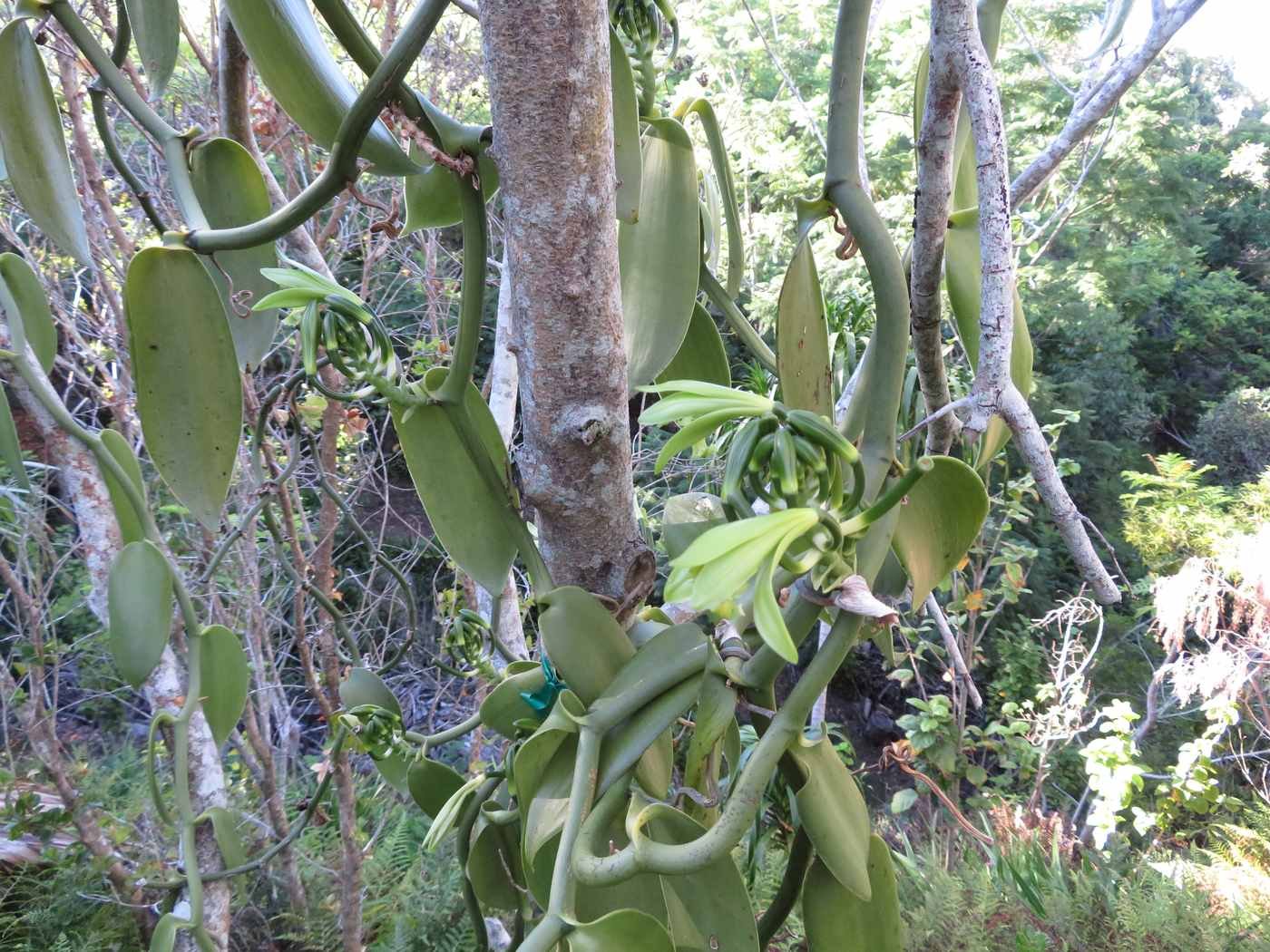
Vanilla planifolia, the source of the vast majority of the world’s vanilla, is a climbing orchid native to Mexico and parts of Central America, and like a striking number of orchid species worldwide, it evolved a pollination relationship narrow enough to depend on essentially one group of pollinators rather than bees generally. In vanilla’s case, that pollinator is a Melipona stingless bee — a genus in the same broad tribe, Meliponini, that includes the bees kept for centuries in the Maya tradition of meliponiculture in the Yucatán. The orchid’s flower structure, timing, and scent are all tuned to that specific relationship, which works well within vanilla’s native range but becomes a serious liability the moment the plant is grown anywhere the right bee doesn’t exist.
What Happened When Vanilla Left Mexico
For centuries after vanilla was first documented by Spanish conquistadors following Hernán Cortés’s arrival in Mexico in the early 1500s, cultivation outside Mexico simply didn’t work as a commercial crop. Vanilla vines were successfully transplanted to tropical greenhouses and plantations across the world by the late 1700s, flowering readily in climates that suited the plant physiologically — but the flowers almost never set pods. Growers had unknowingly exported a plant without its evolutionary partner: no Melipona bees existed outside Mexico and parts of Central America, so the orchid’s flowers opened, stayed receptive for roughly a single day as they do everywhere, and then withered unpollinated. For decades, this made non-Mexican vanilla cultivation an expensive, frustrating failure, despite genuine agricultural effort to make it work.
Edmond Albius and the Hand-Pollination Breakthrough
The solution came not from botanists but from a 12-year-old enslaved boy named Edmond Albius, working on the plantation of Ferréol Bellier-Beaumont on the French colonial island of Réunion in the Indian Ocean. In 1841, drawing on a technique he had already learned for hand-pollinating watermelon plants on the same plantation, Albius worked out how to use a simple sliver of bamboo or a similar thin tool to lift the flower’s rostellum — the structural barrier that normally keeps the flower’s male and female parts from self-pollinating — and press the two together by hand. The technique was fast enough that a trained worker could pollinate large numbers of flowers each morning during the brief window they stayed open, and it worked reliably regardless of whether any pollinating bee was present at all. Albius’s method spread rapidly across Réunion and then to Madagascar, the Comoros, and other vanilla-growing regions, and it remains, with only minor refinements, the method used to pollinate the overwhelming majority of the world’s commercial vanilla crop today.
Does Any Bee Pollinate Vanilla Today?
Within vanilla’s native Mexican range, yes — research documenting Melipona stingless bee and orchid bee visitation to vanilla flowers in the Yucatán confirms native pollinators are still active there and do still visit and pollinate vanilla flowers under natural conditions. But even in that native setting, researchers note the flower’s extremely short single-day receptive window makes pollination success inherently inefficient compared to a trained human working through a field systematically, which is part of why even some Mexican vanilla production today supplements natural pollination with hand pollination rather than relying on Melipona bees alone. Outside Mexico and parts of Central America — meaning essentially everywhere else vanilla is commercially grown, including Madagascar, which produces the majority of the world’s supply — hand pollination isn’t a supplement at all; it’s the entire pollination mechanism, performed flower by flower, one narrow morning window at a time, which is a major reason vanilla remains one of the most labor-intensive and expensive spices in the world relative to the volume produced.
Frequently Asked Questions
Why can’t honeybees pollinate vanilla?
Vanilla’s flower structure evolved specifically around a Melipona stingless bee relationship in its native Mexico, and honeybees don’t reliably trigger the flower’s pollination mechanism the way that co-evolved bee does.
Who invented hand pollination for vanilla?
Edmond Albius, a 12-year-old enslaved boy on the French island of Réunion, developed the technique in 1841, and it remains the method used for the vast majority of commercial vanilla production today.
Do any bees still pollinate vanilla naturally?
Yes, within vanilla’s native range in Mexico, Melipona stingless bees and orchid bees still visit and pollinate vanilla flowers, though even there pollination is inefficient enough that many growers supplement with hand pollination.
Why is vanilla so expensive compared to other spices?
A large part of the cost comes directly from labor: because most vanilla-growing regions have no natural pollinator for the plant, every flower must be hand-pollinated individually during its brief single-day receptive window.
Is vanilla related to the Maya stingless-bee tradition covered elsewhere on this site?
The Melipona genus that naturally pollinates vanilla is the same broad group of stingless bees kept in the traditional Maya meliponiculture practice, though the specific species and their roles are different.