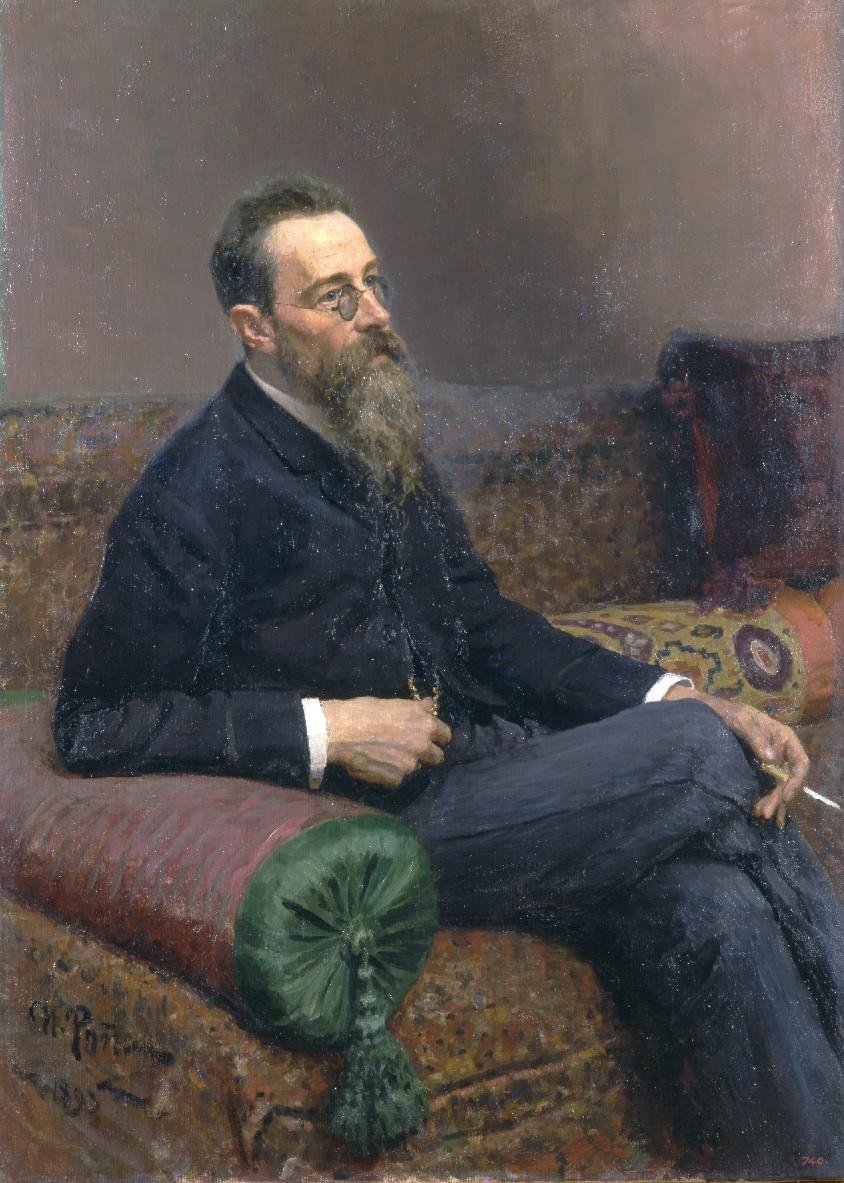
“Flight of the Bumblebee” wasn’t written as a standalone showpiece — it’s a roughly minute-long orchestral interlude from Nikolai Rimsky-Korsakov’s 1900 opera The Tale of Tsar Saltan, composed to underscore the moment a prince is magically transformed into an insect so he can secretly fly home to see his father. More than a century later, it’s become the default cultural shorthand for “a bee flying erratically” in everything from cartoons to virtuoso showcase performances — almost entirely disconnected from the opera it came from, which most people who can hum the piece have never seen.
Key Takeaways
- The piece was composed by Nikolai Rimsky-Korsakov for his opera The Tale of Tsar Saltan (1899–1900), based on Alexander Pushkin’s poem of the same name, with a libretto by Vladimir Belsky.
- In the opera, it accompanies the moment Prince Gvidon is transformed into a bumblebee by a magical swan-princess so he can fly, unrecognized, to visit his estranged father Tsar Saltan.
- The opera premiered in Moscow in 1900, timed to mark the 100th anniversary of Pushkin’s birth.
- Written originally for orchestral strings, the piece’s rapid chromatic runs were designed to mimic the seemingly chaotic, constantly changing flight pattern of a bumblebee — and its difficulty has made it a standard virtuoso showpiece transcribed for nearly every instrument since.
- It’s become far more famous divorced from its source opera than attached to it — most listeners today know the piece from film, television, and video games rather than from The Tale of Tsar Saltan itself.
Table of Contents
- The Opera Most People Have Never Seen
- What’s Actually Happening On Stage
- Why It’s So Hard to Play
- How It Escaped Its Own Opera
- Frequently Asked Questions
The Opera Most People Have Never Seen
Nikolai Rimsky-Korsakov composed The Tale of Tsar Saltan between 1899 and 1900, adapting Alexander Pushkin’s narrative poem of the same name with librettist Vladimir Belsky. The opera premiered in Moscow in 1900, deliberately timed to coincide with the centenary of Pushkin’s birth — a tribute from one of Russia’s most celebrated composers to one of its most celebrated poets. The story follows Tsar Saltan, who is tricked by jealous relatives into believing his newborn son and wife are monstrous, and has them sealed in a barrel and thrown into the sea. They survive, washing ashore on a magical island where the son, Prince Gvidon, grows to adulthood and rescues an enchanted swan-princess who repays him with a series of magical favors.
What’s Actually Happening On Stage
The interlude now known worldwide as “Flight of the Bumblebee” occurs in Act III, at the close of its first tableau. Prince Gvidon, longing to see his father but unable to leave his island kingdom, asks the swan-princess for help. She transforms him into a bumblebee, and the orchestral interlude depicts his frantic, buzzing flight across the sea to Tsar Saltan’s court — where, still in bee form, he eavesdrops on his father’s court and (in the opera’s broader plot) stings a few of the relatives responsible for his family’s exile before flying home again. The music itself is a “perpetuum mobile” — a continuous, breathless run of notes with no rest — built specifically to musically imitate that same erratic, constantly-redirecting flight pattern real bumblebees display when foraging, rather than the smoother, more direct flight lines of many other flying insects.
Why It’s So Hard to Play
Rimsky-Korsakov originally scored the interlude for strings, built around rapid chromatic scale runs played at high speed with almost no natural pause for breath or bow change. That combination — speed, chromatic movement, and sustained length without rest — is exactly what makes it a favorite showpiece for demonstrating technical virtuosity, and exactly why it has been arranged for essentially every instrument capable of fast passagework since: piano, violin, trumpet, clarinet, guitar, and novelty arrangements for instruments as unlikely as tuba or theremin. Full sheet music and historical editions of the original opera and its concert arrangements are preserved and freely viewable through the International Music Score Library Project (IMSLP), which hosts the public-domain score alongside Rimsky-Korsakov’s other works.
How It Escaped Its Own Opera
Almost none of the piece’s modern fame comes from productions of The Tale of Tsar Saltan itself, which is performed far less often outside Russia than most of Rimsky-Korsakov’s other orchestral work. Instead, the interlude took on a life of its own as a standalone concert and showcase piece almost immediately, and from there spread into film scores, cartoons (most famously as chase or panic music), video games, and figure-skating and gymnastics routines, where its relentless tempo works as a stand-in for frantic motion generally — not specifically a bee. It’s a similar trajectory to how this site’s own coverage of bee idioms found that phrases like “the bee’s knees” long ago detached from any literal connection to bees; “Flight of the Bumblebee” detached from its literal bee-transformation scene just as thoroughly, surviving in popular culture almost entirely as a piece of “fast, frantic music” rather than as a piece of storytelling about an insect.
Frequently Asked Questions
What opera is “Flight of the Bumblebee” from?
It’s an orchestral interlude from Nikolai Rimsky-Korsakov’s opera The Tale of Tsar Saltan, composed in 1899–1900 and based on Alexander Pushkin’s poem of the same name.
What is happening in the opera when this music plays?
A swan-princess transforms Prince Gvidon into a bumblebee so he can secretly fly across the sea to visit his father, Tsar Saltan, without being recognized.
Why does the music sound so erratic?
Rimsky-Korsakov built the piece around continuous, rapid chromatic runs with almost no rest, deliberately imitating the seemingly chaotic, constantly-changing flight pattern of a real bumblebee.
What instrument was “Flight of the Bumblebee” written for originally?
Orchestral strings. It has since been arranged for nearly every instrument capable of fast passagework, including piano, violin, trumpet, and clarinet, largely because of its value as a technical showpiece.
Is the opera it comes from still performed today?
The Tale of Tsar Saltan is performed far less often than the interlude’s fame would suggest, particularly outside Russia — most audiences today encounter the music completely separated from its original operatic scene.