A “bee bole” is a recess built directly into a garden or farmyard wall, sized to shelter a single straw skep, and Britain and Ireland hold the overwhelming majority of the roughly 1,600 documented examples worldwide — some dating back to the 1100s — making them an architectural feature that is, practically speaking, unique to these islands. Most people who own or pass a wall containing one have no idea what it originally housed, because the skep hives they were built for went out of everyday use well over a century ago.
Key Takeaways
- A bee bole is a niche or alcove, typically in a south-facing stone or brick wall, sized to hold one straw skep hive and shield it from wind, rain, and direct exposure while keeping it accessible to the beekeeper.
- Surviving bee boles in Britain and Ireland date from every century between the 1100s and the 1800s, though most documented examples come from the 1600s–1800s, the height of skep beekeeping’s popularity.
- Dr. Eva Crane started the Bee Boles Register in 1952 to systematically record and preserve knowledge of these structures before they were lost to demolition, weathering, or simple neglect; the register passed from the International Bee Research Association to the Eva Crane Trust in 2022 and now documents over 1,600 sites.
- Bee boles stopped being built once the moveable-frame wooden hive replaced the skep as the standard hive design in the second half of the 19th century, since frame hives didn’t need the same fixed, wall-mounted shelter.
- Most surviving bee boles today are empty and unused, preserved purely as historic garden features — some walls contain a single bole, others a full row of six or more built to house an entire apiary of skeps in one structure.
Table of Contents
- What a Bee Bole Actually Is
- A Feature Almost Unique to Britain and Ireland
- Eva Crane and the Bee Boles Register
- Why They Stopped Being Built
- Finding and Recognizing One Today
- Frequently Asked Questions
What a Bee Bole Actually Is
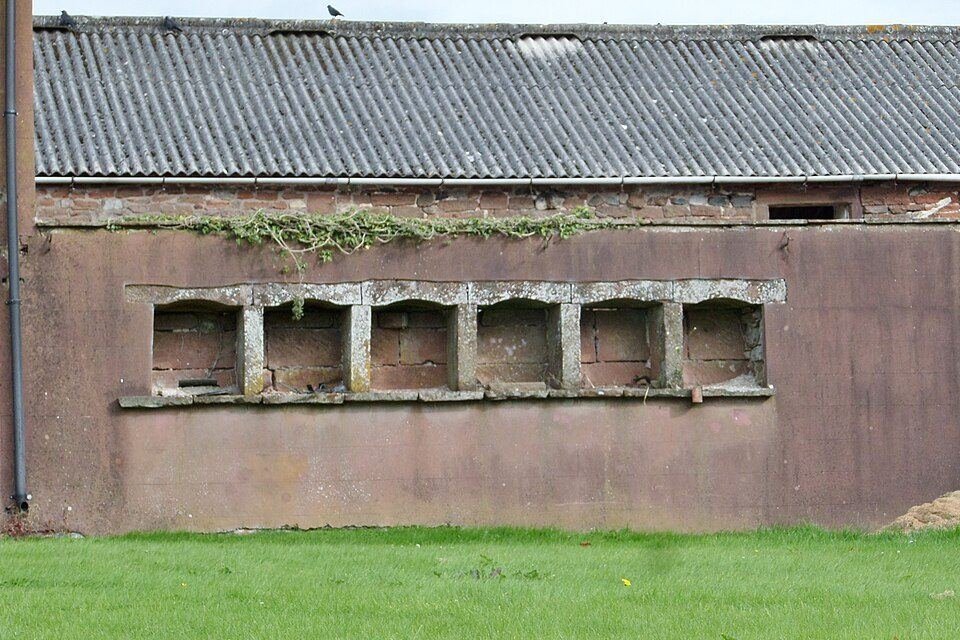
A bee bole is a purpose-built recess set into a solid wall — most often stone, sometimes brick — designed to hold one straw skep hive off the ground and out of direct weather. The recess typically has a solid back and sides with an arched or flat-topped opening facing outward, giving the skep genuine physical shelter from wind and rain while leaving its entrance accessible for the bees and its top reachable for the beekeeper. Walls were usually oriented to face south or southeast specifically to give the sheltered skeps maximum sun exposure and protection from prevailing cold winds, the same basic siting logic modern beekeepers still apply when choosing where to place a hive. Some walls hold a single bole; others were built with a long row of six, eight, or more recesses side by side, effectively functioning as a fixed, weatherproofed apiary built directly into a garden or farmyard boundary wall.
A Feature Almost Unique to Britain and Ireland
Bee boles survive in walls dated to every century from the 1100s through the 1800s, though the majority of documented examples date from the 1600s to the 1800s, spanning the height of skep beekeeping’s popularity in Britain and Ireland. What makes them genuinely distinctive as a historical feature — rather than simply “an old hive shelter” — is their geographic concentration: they are almost unique to Britain and Ireland, with only scattered comparable examples recorded elsewhere in Europe. Most surviving examples appear on the walls of old kitchen gardens, manor house grounds, farmhouses, and monastery or church precincts, reflecting how central skep beekeeping was to ordinary household food production — honey as a sweetener and beeswax for candles and other uses — across exactly the kind of self-sufficient rural properties that also tended to have the substantial stone walling needed to build a bole into in the first place.
Eva Crane and the Bee Boles Register
The systematic documentation of bee boles as a distinct historical category owes almost entirely to one person: Dr. Eva Crane, the physicist-turned-beekeeping-historian this site has profiled separately in its look at Eva Crane’s life and work. Crane started the Bee Boles Register in 1952, recognizing that these structures were disappearing through demolition, weathering, and simple neglect faster than anyone was recording them, and that once a wall was pulled down or rebuilt, any knowledge of the bole it once contained was gone for good. The register grew over subsequent decades into a genuinely comprehensive national record, eventually digitized and made available online in 2005 under the stewardship of the International Bee Research Association (IBRA), the organization Crane helped build. In 2022, care and maintenance of the register passed from IBRA to the Eva Crane Trust, which continues to maintain records for more than 1,600 documented sites across the UK and Ireland, most with accompanying photographs.
Why They Stopped Being Built
Bee boles were built specifically around the size and shape of a straw skep — a fixed, immovable hive design that couldn’t be opened for inspection without destroying the comb inside. Once the moveable-frame wooden hive became the standard design across Britain in the second half of the 19th century, following the same broad shift toward inspectable, manageable hive designs this site covers in its history of the skep hive, there was no longer a practical reason to build a fixed wall recess for a hive. Frame hives needed to sit on open stands where a beekeeper could access every side, remove the lid, and lift out individual frames — precisely the opposite of a hive tucked into a snug wall niche. New bee boles essentially stopped being built once frame hives took over, which is why the surviving examples cluster almost entirely in the pre-Victorian and early Victorian period.
Finding and Recognizing One Today
Most bee boles that survive today sit empty, preserved as historic garden or farmyard features rather than active hive shelters — a handful of heritage properties and gardens display a skep inside one for demonstration purposes, but functional use is essentially nonexistent now that skep beekeeping itself is a niche historical-reenactment practice rather than a live production method. Spotting one is straightforward once you know what to look for: a shallow, arched or flat-topped recess in an old stone or brick wall, roughly skep-sized, often in a row of several identical recesses, and almost always on a wall with clear south or southeast orientation. Old kitchen garden walls, historic estate boundary walls, and the grounds of properties with genuine 17th-, 18th-, or early-19th-century origins are the most likely places to spot a surviving example, particularly across England, Wales, Scotland, and Ireland.
Frequently Asked Questions
What is a bee bole used for?
A bee bole is a recess built into a wall to shelter a single straw skep hive from wind and rain while keeping it accessible to a beekeeper — essentially a fixed, weatherproof housing for a traditional immovable hive.
Are bee boles found outside Britain and Ireland?
They’re almost unique to these islands. Only scattered comparable examples are documented elsewhere, making the concentration in Britain and Ireland a genuinely distinctive historical and architectural pattern.
Who started recording bee boles systematically?
Dr. Eva Crane started the Bee Boles Register in 1952. It was digitized in 2005 and is now maintained by the Eva Crane Trust, documenting more than 1,600 sites.
Why did people stop building bee boles?
They were designed specifically around the fixed, immovable straw skep. Once the moveable-frame wooden hive became standard in the second half of the 19th century, there was no practical need for a wall-mounted skep shelter.
How old are the oldest surviving bee boles?
Documented examples survive in walls dating from as early as the 1100s, though most recorded bee boles date from the 1600s through the 1800s.
For more background on this, see the Eva Crane Trust’s Bee Boles Register.