Colorado is one of the few states with no active state-level beekeeping registration at all — not because lawmakers deliberately repealed the requirement like Arizona did, but because the state’s bee-inspection program was quietly defunded out of existence between 1987 and 1990. The Colorado Bee and Bee Products Act is still on the books, still requires movable-frame hives, and the Colorado Department of Agriculture will still inspect an apiary — but only if a beekeeper specifically requests it to meet another state’s export-certification requirements, and only at that beekeeper’s own expense. With no state registration to worry about, the rules that actually govern most Colorado beekeepers come from their own city: Denver, Colorado Springs, and Boulder each take a noticeably different approach to hive limits, setbacks, and flyaway barriers. That patchwork means a beekeeper who moves from one Front Range city to another, or even keeps a second hive location across town, can genuinely be subject to a different rulebook at each address.
This guide covers the Colorado Bee and Bee Products Act’s unusual defunding history, the one state-level requirement that survived it, how Denver, Colorado Springs, and Boulder each regulate backyard hives differently, and what to check before assuming your HOA allows what your city does.
Key Takeaways
- Colorado has no active state beekeeping registration; the state’s inspection program was defunded between 1987 and 1990, not deliberately repealed.
- State law still requires all hives to use movable frames, even though routine inspections no longer happen.
- Denver allows 2 hives per zone lot, placed in the rear third of the property with a 5-foot setback and a 6-foot flyaway barrier.
- Colorado Springs replaced a vague “nuisance” standard with specific, enforceable rules: a 2-hive standard for most residential lots, flyaway barriers, and a mandatory water source.
- City zoning code allowing beekeeping doesn’t override an HOA covenant that prohibits it — the two are enforced separately.
Table of Contents
- Colorado’s Defunded State Beekeeping Program
- The One State Requirement That Survived
- Denver Beekeeping Rules
- Colorado Springs Beekeeping Rules
- Boulder Beekeeping Rules
- City Code vs. HOA Covenants
- Selling Honey Legally in Colorado
- What Happens If You Violate a Local Ordinance
- Frequently Asked Questions
Colorado’s Defunded State Beekeeping Program
This history matters practically, not just historically: a beekeeper relocating to Colorado from a state with active registration, like California or Florida, often spends real time searching for a filing process or portal that simply doesn’t exist here anymore, before realizing the state genuinely has nothing to register with.
Colorado’s beekeeping history plays out differently than almost any other state covered in this series. The Colorado Bee and Bee Products Act was adopted in 1963 specifically to fund statewide disease inspections, but in the mid-1980s the legislature shifted the program to self-funding through registration and licensing fees rather than general tax revenue. That change collapsed the program almost immediately: the number of licensed beekeepers fell from 380 in 1987 to just 12 in 1988, since most beekeepers simply stopped registering once real fees were attached. Routine inspections were discontinued in 1987, and by 1990 the state eliminated the registration fees entirely, leaving the program unfunded ever since. The Act itself was never repealed, unlike Arizona’s deliberate 1994 deregulation — it just has no active funding mechanism behind it, which leaves Colorado in an unusual middle ground: a state law that technically still exists on paper but that no state employee is currently funded to enforce day to day.
The One State Requirement That Survived
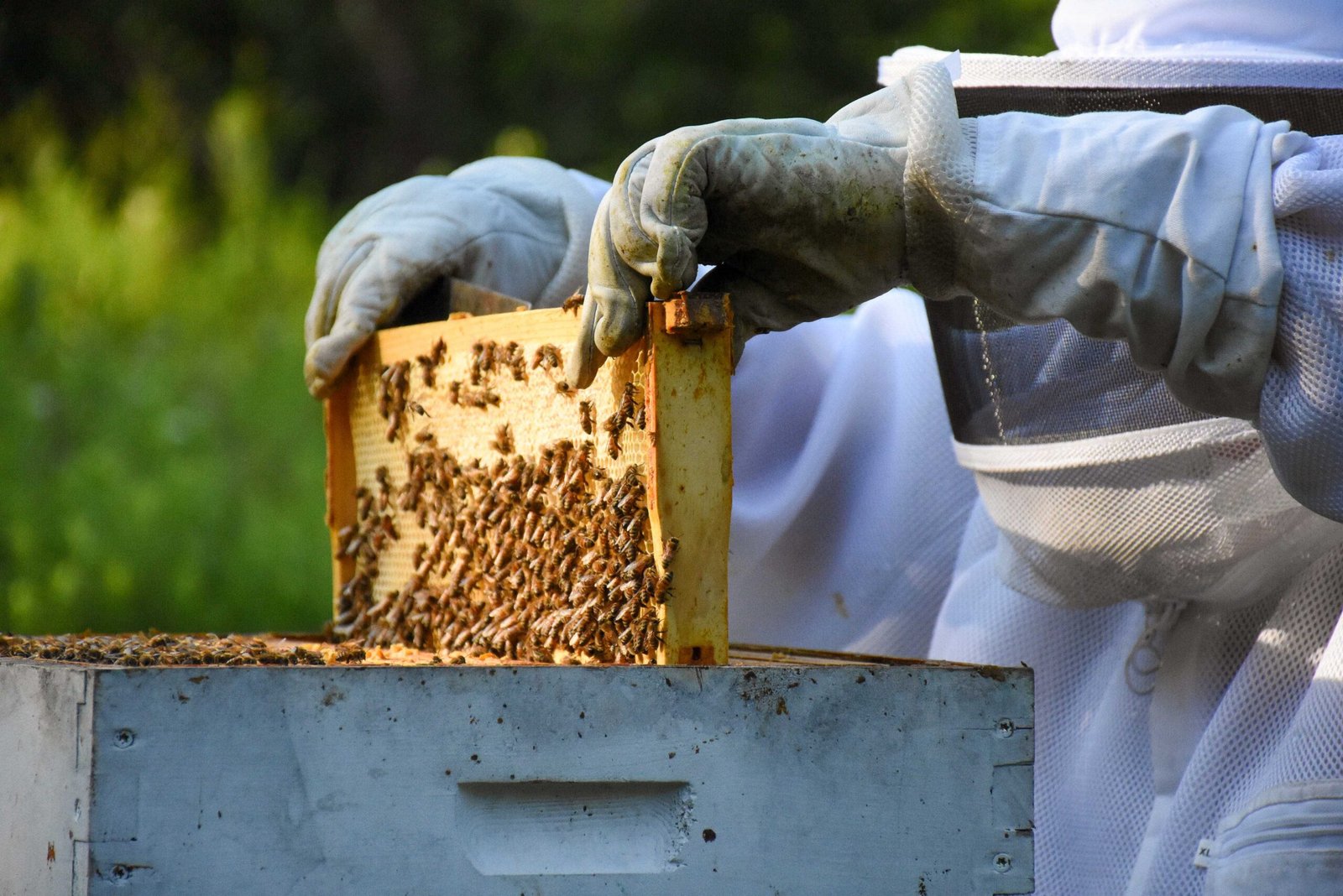
Despite the defunded inspection program, Colorado law still requires that every hive use movable frames, arranged so combs can be removed individually for inspection without damaging the rest of the hive. This is the same foundational disease-management standard nearly every state in the country maintains, and it applies in Colorado whether or not the state ever actually inspects a given hive. In practice, this means a standard Langstroth or top-bar hive already satisfies Colorado’s only surviving state-level requirement, and a fixed-comb or non-inspectable hive design would technically violate it even though no state inspector is likely to ever check. New beekeepers researching hive types for Colorado’s climate rarely need to think about this rule directly, since virtually every commercially available modern hive design already meets it by default.
Denver Beekeeping Rules
Denver’s zoning code treats domestic bees as a household animal permitted without a separate zoning permit, subject to specific placement limits. Residential zone lots may keep up to 2 hives, and those hives must sit in the rear third of the lot — not the front or side yard — with at least a 5-foot setback from the side and rear property lines. Denver also requires a 6-foot flyaway barrier, either a solid fence or dense vegetation, positioned so bees must fly up and over it immediately upon leaving the hive rather than exiting at head height toward a neighboring yard. Outdoor storage of unused hive equipment isn’t permitted either, which trips up some new beekeepers who assume an empty box left in the yard is harmless. Denver beekeepers who keep spare supers or extracting equipment on hand for the honey season should plan to store that gear inside a garage or shed rather than staging it near the hive itself.
Colorado Springs Beekeeping Rules
Colorado Springs took a notably deliberate approach to writing its beekeeping ordinance. According to the official Planning Commission record, the city had previously relied on a vague nuisance standard with no specific rules at all — which made enforcement almost impossible, since staff couldn’t define what actually made a hive “injurious” to a neighboring property. The ordinance that replaced it raised the standard hive limit to 2 for most residential lots and, instead of nuisance language, established concrete, enforceable standards: a mandatory flyaway barrier, a reliable water source so bees aren’t drawn to a neighbor’s pool or pet’s water bowl, and hive-size limitations. City planning staff specifically noted they found no comparable jurisdiction that used effective nuisance-based enforcement language, which is part of why Colorado Springs moved to specific numeric standards instead. Local beekeeping advocates, including officers of the Pikes Peak Beekeepers Association, testified in support of the change and pointed out that the vast majority of reported stings in the area actually come from wasps and yellow jackets rather than honey bees, a distinction that matters when neighbors report a “bee” problem.
Boulder Beekeeping Rules
Boulder takes a more practice-based approach than either Denver or Colorado Springs. Rather than leading with hive counts and setbacks, Boulder expects beekeepers to follow recognized best practices, including maintaining an Integrated Pest Management plan, being able to identify common honey bee diseases, and using hives with removable combs consistent with the state’s movable-frame standard. This management-focused framework means a Boulder beekeeper who can’t demonstrate basic disease-management competence is arguably further out of compliance than one who simply has an extra hive. For a new beekeeper moving to Boulder from a city with a straightforward hive-count cap, this practice-first approach can initially feel less clear-cut, since there’s no simple number to check against — the expectation is closer to demonstrating genuine competence than to satisfying a permit line item.
City Code vs. HOA Covenants
This distinction catches out more Colorado beekeepers than almost any other rule covered in this guide, precisely because it runs against intuition: most people assume that once a city has explicitly written beekeeping into its zoning code as a permitted use, that permission settles the matter.
One point Colorado Springs planning staff raised directly during the ordinance process is worth flagging for every city in this state: a municipal zoning code permitting beekeeping does not override a homeowners association covenant that prohibits it. If an HOA’s governing documents ban beekeeping, that restriction still applies even in a neighborhood where city code would otherwise allow 2 hives outright. Our guide to getting HOA approval for beekeeping walks through how to request an exception or amendment before assuming city-level permission is the only approval you need. Given how much of the Front Range has developed under HOA-governed subdivisions in the past two decades, this is genuinely one of the first things a prospective Colorado beekeeper should check, often before ordering any equipment at all.
Selling Honey Legally in Colorado
Beyond placement and hive counts, anyone planning to sell honey rather than just keep it for personal use faces a separate layer of rules entirely. Selling honey commercially in Colorado is governed separately from the beekeeping rules covered above. Colorado’s cottage food laws generally allow direct-to-consumer honey sales under specific labeling and disclosure requirements without a full commercial food license, though scaling beyond casual local sales brings in additional requirements. Our guide to starting a honey business in the United States covers the labeling and permitting basics that apply on top of whatever Colorado-specific cottage food thresholds are currently in effect.
What Happens If You Violate a Local Ordinance
This city-by-city enforcement pattern is worth internalizing early, since it means the practical consequences of a violation can look completely different depending on which municipality a beekeeper happens to live in, even for what looks like the same underlying issue.
Because Colorado has no active state registration to violate, enforcement in this state happens entirely at the municipal level. Exceeding Denver’s 2-hive limit, skipping Colorado Springs’ flyaway barrier requirement, or ignoring Boulder’s disease-management expectations are typically handled as zoning or code-enforcement matters, usually triggered by a neighbor complaint rather than routine inspection. Colorado Springs’ own planning staff noted they had received effectively no beekeeping complaints prior to writing their current ordinance, suggesting enforcement in most Colorado cities tends to be reactive rather than proactive — but a documented violation can still result in a formal notice, a compliance order, or in persistent cases, fines.
Frequently Asked Questions
The following questions cover the specific points that come up most often once a Colorado beekeeper has read through the state’s history and their own city’s ordinance in detail.
Do I need to register my hives with the state of Colorado?
No. Colorado’s state beekeeping registration program was defunded between 1987 and 1990 and has no active funding mechanism today, though the underlying law was never formally repealed.
Does Colorado still require any specific hive type?
Yes. State law requires movable-frame hives that allow individual combs to be removed for inspection, even though the state rarely if ever conducts routine inspections.
How many hives can I keep in Denver?
Denver allows up to 2 hives per zone lot, placed in the rear third of the property with a 5-foot setback and a 6-foot flyaway barrier.
Can my HOA prohibit beekeeping even if my city allows it?
Yes. City zoning permission does not override an HOA covenant that separately prohibits beekeeping; the two are enforced independently.
Does Boulder have hive-count limits like Denver and Colorado Springs?
Boulder’s approach focuses more on beekeeping practices — an Integrated Pest Management plan, disease identification, and removable-comb hives — rather than leading with a specific hive-count cap.
FAQ
Do I need to register my hives with the state of Colorado?
No. Colorado’s state beekeeping registration program was defunded between 1987 and 1990 and has no active funding mechanism today.
Does Colorado still require any specific hive type?
Yes. State law requires movable-frame hives that allow individual combs to be removed for inspection.
How many hives can I keep in Denver?
Denver allows up to 2 hives per zone lot, placed in the rear third of the property with a 5-foot setback and a 6-foot flyaway barrier.
Can my HOA prohibit beekeeping even if my city allows it?
Yes. City zoning permission does not override an HOA covenant that separately prohibits beekeeping.
Does Boulder have hive-count limits like Denver and Colorado Springs?
Boulder focuses more on beekeeping practices, including an Integrated Pest Management plan and disease identification, rather than a specific hive-count cap.