Published September 2, 2026
Clover honey is, by a wide margin, the honey most Americans have actually tasted, whether they know it by that name or not, since it’s the default variety behind most plain “honey” sold in grocery stores across the US and Canada. That sheer ubiquity makes it easy to overlook as a genuine single-source variety worth understanding on its own terms, distinct from the generic “wildflower” or blended honey it’s frequently confused with or bottled alongside. This guide covers what clover honey actually is, why it became North America’s baseline commercial honey, its mild flavor and notably fast crystallization, and how it compares to the rarer single-source varieties covered elsewhere on this site.
Table of Contents
- What Clover Honey Actually Is
- The Flavor: Mild, Sweet, and Pale Gold
- Where Clover Honey Comes From
- Why It Became America’s Default Honey
- Why Clover Honey Crystallizes Fast
- Price and Value
- Culinary Uses
- How It Compares to Rarer Single-Source Honeys
- What Clover Bloom Means for Colony Health
- Common Mistakes
- Verifying Authenticity
- Frequently Asked Questions
What Clover Honey Actually Is
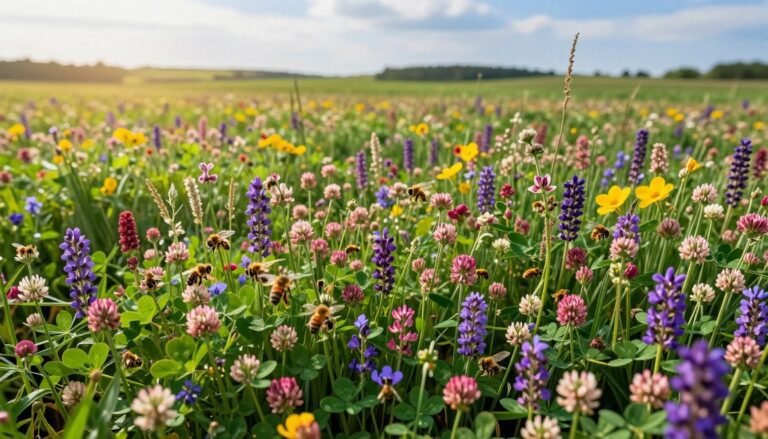
Clover honey is a monofloral or near-monofloral honey produced when honeybees forage predominantly on clover blossoms, most commonly white clover (Trifolium repens), also called Dutch clover, along with red clover (Trifolium pratense) and occasionally sweet clover (Melilotus species) in some regions. Clover isn’t a wildflower in the way many buyers assume; it’s typically a deliberately planted forage and cover crop, used widely across pastures, hayfields, and soil-improvement rotations throughout the American Midwest and Canadian prairies, which is part of why clover honey production tracks closely with the country’s broader agricultural land use rather than with wild meadow ecosystems specifically.
The Flavor: Mild, Sweet, and Pale Gold
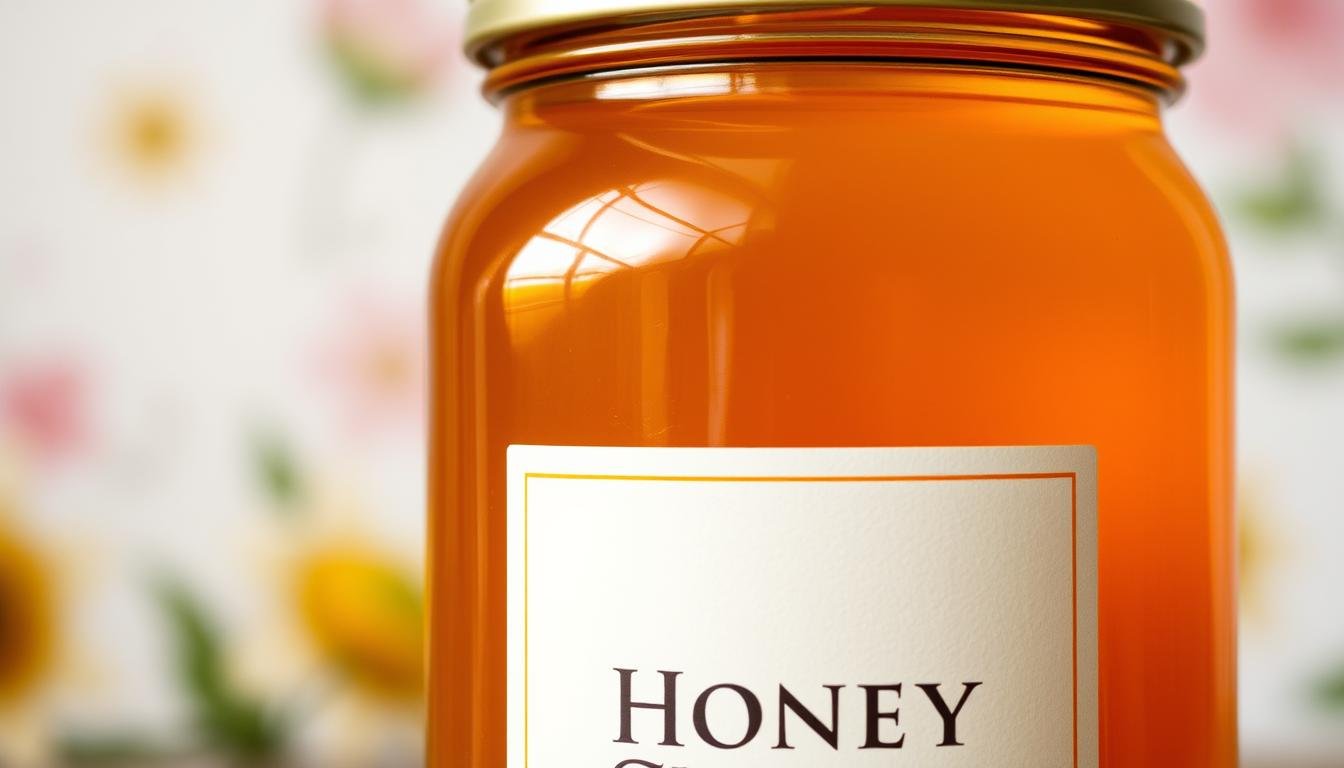
Clover honey’s flavor is genuinely mild and approachable by design: light floral sweetness with a clean, slightly grassy or hay-like undertone, no strong aftertaste, and a pale gold to light amber color that sits at the lighter end of the honey color spectrum. This is precisely the flavor profile most people picture when they imagine “honey” in the abstract, since it’s been the default commercial standard for so long across North America. That mildness is also exactly why it works so well as an everyday table honey and baking ingredient, in contrast to the far bolder, more assertive flavors of darker single-source honeys like buckwheat or avocado honey, both covered elsewhere on this site.
Where Clover Honey Comes From
The Upper Midwest, particularly North Dakota, South Dakota, and Minnesota, along with the Canadian prairie provinces, produces the bulk of North America’s clover honey, thanks to the region’s extensive clover and alfalfa forage acreage planted primarily for livestock grazing and hay rather than honey production itself. Beekeepers, including many operating migratory commercial operations, position hives near these clover fields specifically to capture the bloom, which generally runs from late spring through mid-summer depending on latitude and that year’s weather. Because clover is grown as a working agricultural forage crop rather than a decorative planting, its acreage, and by extension clover honey supply, fluctuates with broader farming trends and commodity decisions made by growers who aren’t primarily thinking about honey at all.
Why It Became America’s Default Honey
Clover honey’s dominance as the standard commercial honey in North America comes down to a fairly simple combination of factors: clover is grown at enormous scale as agricultural forage regardless of beekeeping demand, it produces a reliable, heavy nectar flow that colonies convert efficiently into honey, and its mild, inoffensive flavor has broad, near-universal consumer appeal compared to more polarizing regional varieties. Large commercial beekeeping operations, including many that also provide pollination services for other crops, have historically found clover-region honey production to be a dependable, high-volume complement to their pollination income, reinforcing clover honey’s position as the default baseline product against which more specialized single-source honeys are often compared.
Is clover honey the same thing as “wildflower honey” sold in stores?
Not necessarily; true wildflower honey comes from a genuinely mixed, uncontrolled array of blooming plants in a given area, while clover honey is drawn predominantly from a single deliberately cultivated crop, though in practice some commercial “wildflower” blends do contain a significant proportion of clover nectar given how widespread clover forage is across the honey-producing regions of North America.
Why Clover Honey Crystallizes Fast
Clover honey has a notably high glucose-to-fructose ratio compared to many other honey varieties, and since glucose is the sugar responsible for driving crystallization, clover honey tends to crystallize, or turn solid and grainy, considerably faster than lower-glucose varieties like tupelo or acacia honey. This is a completely normal, harmless natural process rather than any sign of spoilage, and it’s covered in more general depth in this site’s guide to why some honeys crystallize faster than others. Many buyers actually prefer crystallized clover honey specifically for its smoother, spreadable texture, and it’s a commonly chosen base for producers making creamed honey precisely because of this fast, reliable crystallization behavior.
Should I refrigerate clover honey to slow down crystallization?
No, refrigeration actually speeds up crystallization rather than preventing it; clover honey, like any honey, keeps best at stable room temperature away from direct light, and crystallization can always be reversed later with gentle warming if a liquid texture is preferred.
Price and Value
Clover honey is generally the least expensive widely available honey variety in North America, commonly found in the $5 to $10 per pound range at grocery stores and farmers markets, a direct reflection of its high production volume and broad regional availability compared to genuinely rare single-source honeys. That affordability is a real strength rather than a mark against its quality; a well-sourced, minimally processed clover honey from a local or regional producer offers a genuinely good, mild everyday honey at a fraction of the price commanded by limited-production varieties like tupelo or sourwood, both covered elsewhere on this site.
Culinary Uses
Clover honey’s mild, well-balanced sweetness makes it genuinely the most versatile honey for everyday cooking and baking, since its flavor doesn’t compete with or overpower other ingredients the way a bolder single-source honey sometimes can. It works well stirred into tea or coffee, drizzled over yogurt or oatmeal, used as a general one-to-one style sweetener substitute in most baking recipes, and blended into salad dressings or marinades where a subtler sweetness is preferred over a more assertive floral or earthy honey note. Its readily available, consistent supply also makes it the practical default choice for home bakers and small food producers who need a dependable honey source without the price premium or limited seasonal availability of a rarer regional variety.
Does clover honey have the same antioxidant or health properties as darker honey varieties?
Generally no, lighter honeys like clover test lower in antioxidant compounds than darker varieties such as buckwheat, a well-documented pattern in the honey research literature, though clover honey still carries the general nutritional profile common to honey overall and remains a genuinely reasonable everyday choice rather than a lesser one for most purposes.
How It Compares to Rarer Single-Source Honeys
Clover honey sits at the opposite end of the honey market from the rare, geographically limited single-source varieties covered elsewhere on this site, and understanding that contrast helps explain the honey market’s overall structure. Where tupelo honey is confined to a narrow window in a small Florida-Georgia swamp region and orange blossom honey depends on citrus grove bloom in specific growing regions, clover forage is planted at massive scale across an enormous geographic footprint purely for agricultural, non-honey reasons, making genuine clover honey abundant rather than scarce. Neither category is inherently “better” quality; they simply serve different roles, one as a reliable, affordable everyday honey and the other as a limited, sought-after specialty product.
What Clover Bloom Means for Colony Health
Beyond honey production itself, a strong clover bloom is generally a good sign for colony health more broadly, since clover provides both a reliable nectar flow and a genuinely valuable pollen source that supports healthy brood rearing during the peak of the growing season. Commercial beekeepers operating in clover-heavy regions often time other seasonal management tasks, including mite treatments and swarm prevention checks, around the clover flow specifically, since a colony drawing heavily on a strong, dependable nectar source is generally easier to manage and assess than one struggling through a weak or unpredictable bloom. This dependability is part of why clover country has long been considered valuable apiary territory independent of the honey market’s pricing for the finished product itself.
Do clover fields require any special pesticide considerations for beekeepers relying on them for honey production?
Yes, since clover is grown as an agricultural forage and cover crop rather than left entirely wild, beekeepers working clover country generally need to stay aware of regional spraying schedules and communicate with growers the same way they would for any other agricultural forage source, a standard practice for commercial operations positioning hives near working farmland.
Common Mistakes
The most common mistake is assuming any generic-looking, pale grocery-store honey is automatically genuine single-source clover honey, when much of what’s labeled that way is actually a blend of clover with other light nectar sources, or in some cases, honey that’s been ultra-filtered and blended from multiple countries of origin with only a loose relationship to actual clover foraging. Another mistake is treating rapid crystallization as a sign of a lower-quality or adulterated product, when it’s actually one of clover honey’s most normal, expected natural characteristics given its glucose content. People also sometimes assume “clover honey” and “wildflower honey” are interchangeable marketing terms for the same product, when they technically describe different floral sourcing even though the two can overlap significantly in regions where clover is a dominant local bloom.
Verifying Authenticity
Because clover honey is produced at such high volume and commands a comparatively low price, it’s also one of the honey varieties most commonly affected by the broader adulteration and mislabeling problems that affect the global honey supply chain. Readers wanting a full breakdown of how to spot adulterated or fraudulently labeled honey can consult this site’s complete guide to detecting fake honey, and those specifically weighing domestically produced clover honey against imported alternatives may find this site’s local honey vs. imported honey guide useful for making that comparison directly. Buying from a known regional producer, ideally one transparent about hive location and harvest timing, remains the most reliable way to get genuine, minimally processed clover honey rather than a blended or heavily filtered substitute.
Does clover honey ever get sold under a regional or state-branded name instead of “clover honey”?
Sometimes; producers in heavy clover-growing states occasionally market it under a state or regional identity, such as “North Dakota honey” or “prairie honey,” even when the underlying floral source is predominantly clover, which is worth keeping in mind for buyers specifically seeking out labeled single-source clover honey rather than a regionally branded equivalent.
Frequently Asked Questions
Is clover honey good for people managing diabetes?
Clover honey carries the same general glycemic considerations as honey overall; readers managing diabetes and weighing how any honey variety fits into their diet can find detailed, evidence-based context in this site’s guide to honey and diabetes.
Is clover honey vegan-friendly?
No; like all true honey, clover honey is an animal product made by honeybees, so it doesn’t meet a strict vegan diet’s criteria regardless of how mild or plant-derived its flavor profile might seem.
Can clover honey trigger allergies the way raw local honey sometimes is claimed to?
Claims that consuming local honey, including clover honey, helps build tolerance to regional pollen allergies remain scientifically unproven and not something this site treats as an established medical benefit, though genuine honey allergies themselves are rare and typically related to specific pollen or bee-product sensitivities rather than the clover source itself.
How can I tell if clover honey is raw or has been heavily processed?
Raw clover honey typically shows some natural cloudiness, occasional pollen or wax particles, and a tendency to crystallize relatively quickly, while heavily processed and ultra-filtered versions are usually perfectly clear, slower to crystallize, and often blended from multiple sources, so checking the label for terms like “raw” or “unfiltered” alongside a known producer name is a reasonable starting point for buyers who want the less processed version specifically.