Table of Contents
- What Duragilt Foundation Is
- Construction: Wax-Coated Metal Core
- Duragilt vs. Standard Plastic Foundation
- Duragilt vs. Pure Beeswax Foundation
- Installing Duragilt in a Frame
- Bee Acceptance and Comb Drawing
- Durability Through Extraction Cycles
- Cost Considerations
- Who Should Use Duragilt
- Warping Resistance in Hot Climates
- Brood Chamber vs. Honey Super Application
- Compatibility With Wired vs. Wedge-Top Frames
- Storing Unused Sheets Before Installation
- Cell Size and Foundation Imprint
- End-of-Life Disposal and Recycling
- Considerations for Larger Operations
- Using Duragilt With New Packages or Nucs
- Checking Real Beekeeper Experience Before Buying
- Visual Inspection Through the Frame
- Where to Source It
- Mixing Foundation Types Within One Hive
- Common Mistakes
What Duragilt Foundation Is
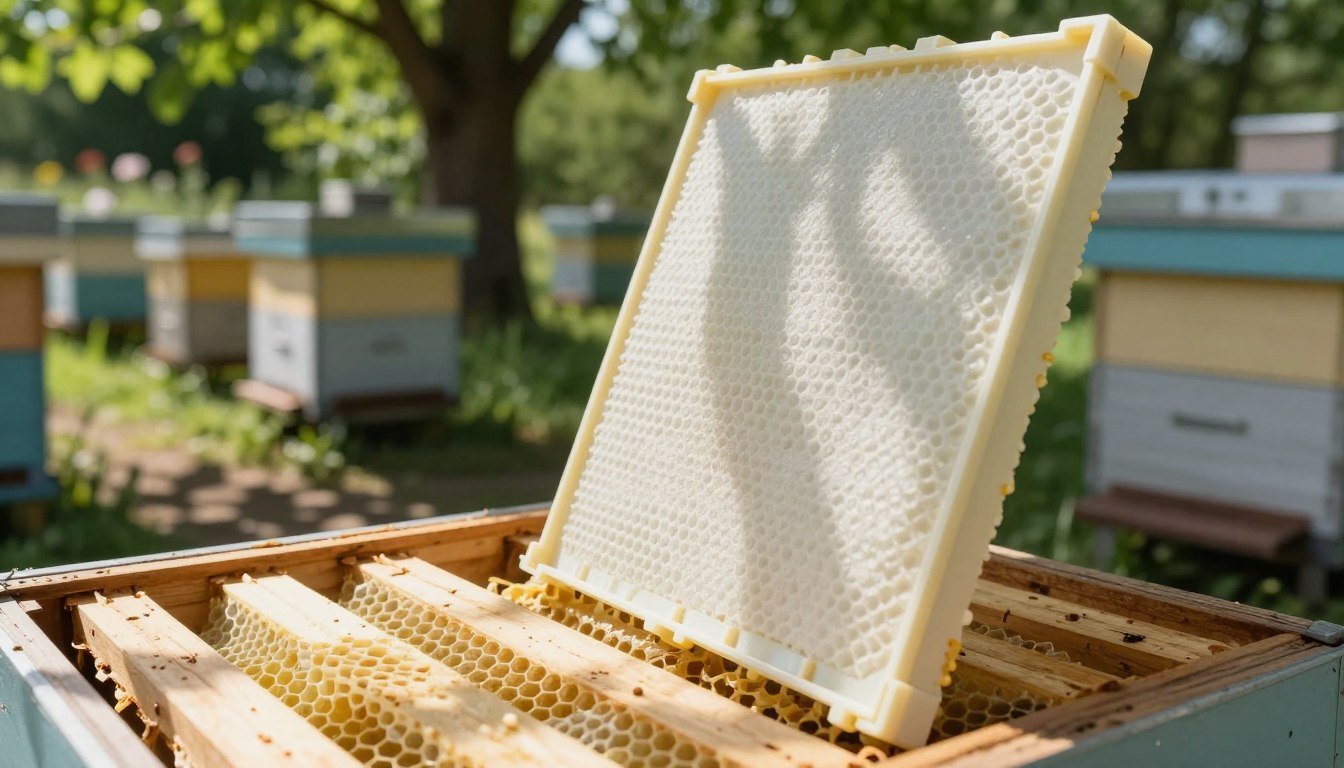
Duragilt is a named foundation product built around a thin metal core sandwiched between two layers of beeswax, combining the structural rigidity of a metal support with the natural wax surface bees typically accept more readily than bare plastic. Our broader guides comparing plastic vs. wax foundation and reviewing the best foundation for honey production cover foundation types generally; this guide covers Duragilt’s specific hybrid construction.
Construction: Wax-Coated Metal Core
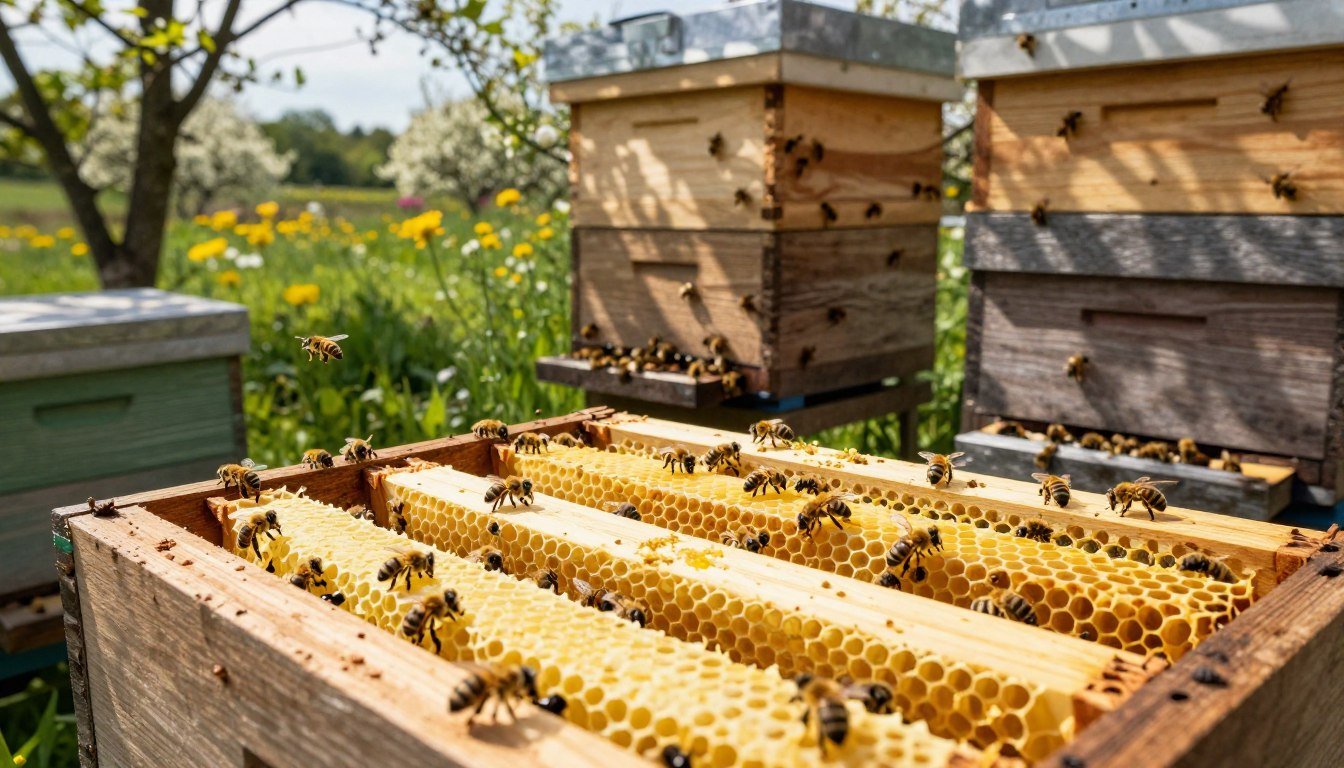
The metal core gives Duragilt genuine structural rigidity that pure wax foundation lacks on its own, resisting sagging or bulging during comb drawing and extraction in a way unsupported wax sheets are prone to, particularly in warmer conditions where wax alone can soften and deform. The wax coating on both sides, meanwhile, provides the natural scent and texture cue that generally improves bee acceptance compared to foundation with no wax coating at all.
Duragilt vs. Standard Plastic Foundation
| Factor | Duragilt | Standard Plastic Foundation |
|---|---|---|
| Core material | Thin metal | Plastic |
| Surface | Genuine beeswax coating both sides | Wax-coated or bare plastic surface |
| Rigidity | High, from metal core | High, from plastic structure |
| Recyclability/reuse after damage | Limited — metal core complicates rework | Often reusable/re-waxable |
Both designs solve the sagging problem pure wax foundation faces, but through different core materials with different long-term handling implications — plastic foundation is generally easier to clean and re-wax if bees under-draw or damage a section, while Duragilt’s metal core makes significant rework or repair less practical once the sheet is damaged.
Duragilt vs. Pure Beeswax Foundation
Pure beeswax foundation offers the most natural surface and is generally the most readily accepted by bees, but lacks any structural reinforcement, making it more prone to sagging, bulging, or breaking during handling, transport, and extraction — particularly in warm weather or with a heavier-bodied frame under load. Duragilt’s metal core directly addresses this durability gap while retaining a genuine wax surface, positioning it as a middle-ground option between pure wax’s acceptance advantage and plastic’s structural durability advantage.
Installing Duragilt in a Frame
Install Duragilt sheets into standard wired or wedge-top frames following the same general foundation installation process as any sheet foundation — securing the sheet properly within the frame to prevent shifting or buckling once bees begin drawing comb on it. Handle sheets carefully during installation, since the wax coating, while providing acceptance benefits, is still somewhat delicate and can crack or flake if handled roughly before it’s secured in the frame.
Bee Acceptance and Comb Drawing
Because Duragilt presents a genuine wax surface to bees rather than bare plastic, acceptance and comb-drawing speed are generally comparable to pure wax foundation and typically better than unwaxed plastic, addressing one of the more commonly reported hesitations some beekeepers have about plastic foundation’s sometimes slower initial acceptance. This is Duragilt’s central practical selling point — genuine wax acceptance without wax’s structural fragility.
Durability Through Extraction Cycles
The metal core’s rigidity helps drawn comb on Duragilt foundation better withstand the centrifugal force of extraction without the sagging or blowout risk that can affect less-supported comb, particularly on frames used repeatedly across many extraction cycles. This durability advantage compounds over a comb’s working life, making Duragilt a reasonable choice for frames intended for long-term reuse in honey supers specifically, where extraction stress is a recurring, repeated factor.
Cost Considerations
Duragilt generally costs more than either pure wax foundation or basic plastic foundation, reflecting its more complex hybrid manufacturing process — weigh this premium against the specific combination of acceptance and durability benefits it offers, since for many beekeepers, either wax alone or plastic alone adequately serves their actual needs without the added cost of a hybrid design addressing both concerns simultaneously.
Who Should Use Duragilt
Beekeepers specifically wanting genuine wax-surface acceptance combined with structural durability for frames used repeatedly through extraction cycles, particularly for honey supers rather than brood frames, are the clearest fit for Duragilt’s specific tradeoffs. A beekeeper satisfied with either standard plastic foundation’s durability or pure wax foundation’s acceptance and lower cost may not find the premium for this hybrid design worthwhile for their specific situation.
Warping Resistance in Hot Climates
Pure wax foundation is particularly prone to softening and sagging in genuinely hot climates or during summer storage, since wax has a relatively low softening point compared to the temperatures a stored super or a hive in direct sun can reach — Duragilt’s metal core specifically addresses this vulnerability, holding its shape under heat conditions that would cause unsupported wax foundation to bulge or sag even before bees have drawn comb on it. This is a genuine, climate-specific advantage worth weighing more heavily if you keep bees somewhere with consistently hot summers.
Brood Chamber vs. Honey Super Application
While Duragilt works in either brood chambers or honey supers, its specific durability advantage matters most in honey supers, where frames experience repeated extraction stress across a season and multiple seasons of reuse — brood frames experience different stresses (repeated inspection handling, but not centrifugal extraction force) where standard plastic or wax foundation’s tradeoffs may matter less than in a heavily reused super frame.
Compatibility With Wired vs. Wedge-Top Frames
Confirm your Duragilt sheets are sized and slotted correctly for whichever frame style you’re using, since foundation designed for a wired frame setup may not install cleanly into a wedge-top frame without adjustment, and vice versa — this compatibility check applies to any foundation type, but is worth confirming specifically before ordering a batch of Duragilt sheets to match your existing frame inventory.
Storing Unused Sheets Before Installation
Store unused Duragilt sheets flat, in a cool location away from direct heat, and protected from pests, since the wax coating remains vulnerable to the same wax-moth attraction any beeswax product faces even before it’s installed in a frame — a box of stored sheets left in a warm shed over a full season without protection can develop pest damage that ruins otherwise usable foundation before it’s ever put to use.
Cell Size and Foundation Imprint
Like other foundation types, Duragilt sheets are manufactured with a pre-embossed cell pattern that guides where bees begin drawing comb, and most standard sheets use conventional worker-cell sizing suited to typical brood and honey production — if you’re specifically working with small-cell or other non-standard cell-size approaches for particular management goals, confirm your chosen Duragilt product’s specific cell imprint matches what you’re trying to achieve rather than assuming all foundation products offer identical cell sizing options.
End-of-Life Disposal and Recycling
Once a Duragilt sheet reaches the end of its useful life — heavily damaged, overly dark from repeated brood cycles, or otherwise due for replacement — its embedded metal core means it can’t simply be melted down and reprocessed the way pure wax foundation scraps can be rendered into new wax product. Check whether your specific metal core type has any dedicated recycling pathway, and factor this end-of-life consideration into your overall foundation choice if minimizing waste and maximizing material reuse matters to your operation’s broader practices.
Considerations for Larger Operations
A commercial operation weighing Duragilt across many frames should factor the per-sheet cost premium into total supply budgeting realistically, and consider trialing it on a subset of honey-super frames specifically (where its durability advantage matters most) rather than converting an entire operation’s foundation supply at once, letting you evaluate real-world performance and cost-benefit under your own conditions before a larger commitment.
Using Duragilt With New Packages or Nucs
A newly installed package or nuc drawing comb for the first time benefits from any foundation type that supports quick, reliable acceptance, and Duragilt’s genuine wax surface is a reasonable choice here, similar to pure wax foundation in this specific application — though the durability advantage that most distinguishes Duragilt from simpler options matters less for a colony’s first season than it does for frames that will see many years of repeated extraction cycles later in a super’s working life.
Checking Real Beekeeper Experience Before Buying
Beyond manufacturer product descriptions, real feedback from other beekeepers who’ve used Duragilt across multiple seasons — through local beekeeping association members or online beekeeping forums — often surfaces practical details about long-term acceptance rates and durability that go beyond initial product specifications, worth the modest research time before committing to a larger order for your operation.
Visual Inspection Through the Frame
Some beekeepers note that a foundation sheet with an embedded metal core can make backlit visual inspection (holding a frame up to light to check for eggs or young larvae) slightly less effective than pure wax foundation, since the core material isn’t translucent the way wax alone is — this is a minor practical tradeoff worth being aware of if you rely heavily on this specific inspection technique, though it doesn’t meaningfully affect standard direct-view inspection of drawn comb.
Where to Source It
Purchase from established beekeeping supply retailers rather than an unverified third-party listing, and confirm current product specifications directly with the retailer before ordering in bulk, since foundation products and exact manufacturing details can be updated over time — a quick confirmation before a larger order avoids receiving product that doesn’t match what you expected based on older reference material.
Mixing Foundation Types Within One Hive
There’s no functional problem running a mix of Duragilt and other foundation types within the same hive or even the same super, letting you trial the product on a portion of your frames while continuing to use familiar foundation elsewhere — this is a genuinely low-risk way to evaluate real-world performance under your own conditions before committing more broadly to a foundation type switch.
Common Mistakes
Handling sheets roughly during installation, cracking or flaking the wax coating before frames are even in use, undermines the acceptance advantage that’s the product’s main selling point. Assuming Duragilt is easily reworked or re-waxed like plastic foundation if damaged overlooks the metal core’s limitation in this regard. Choosing Duragilt by default without considering whether standard plastic or pure wax foundation would actually serve your specific frame’s purpose (brood vs. honey super) just as well at lower cost misses the actual decision this guide is meant to inform.
Sources
Product construction and comparative details reflect publicly available manufacturer information for Duragilt foundation, alongside general beekeeping equipment guidance on foundation types and comb durability. See the USDA Agricultural Research Service’s Honey Bee Breeding, Genetics and Physiology Research Unit for additional authoritative detail.
FAQ
Is Duragilt better than plastic foundation?
Not universally better — it offers genuine wax-surface acceptance that some plastic foundation lacks, but plastic is generally easier to rework or re-wax if damaged, so the right choice depends on your specific priorities.
Can Duragilt be repaired if damaged?
Rework options are more limited than with plastic foundation, since the embedded metal core complicates significant repair or re-waxing once a sheet is damaged.
Is Duragilt worth the extra cost?
It depends on whether you specifically need both wax-surface acceptance and structural durability together — many beekeepers find either standard plastic or pure wax foundation adequate without the added hybrid-design premium.
Should I use Duragilt for brood frames or honey supers?
It’s often best suited to honey supers specifically, where repeated extraction stress benefits most from the metal core’s added rigidity across many reuse cycles.
Do I need to check frame compatibility before ordering Duragilt?
Yes — confirm sheets are sized and slotted correctly for your specific frame style (wired vs. wedge-top), since foundation designed for one style may not install cleanly into the other without adjustment.
Does the metal core affect backlit frame inspection?
Slightly — the core isn’t translucent the way wax alone is, which can make backlit egg/larva checks marginally less effective, though it doesn’t meaningfully affect standard direct-view inspection of drawn comb.