Published September 1, 2026
Table of Contents
- The Short Answer
- Honey’s Glycemic Index vs. Table Sugar
- Why the Numbers Vary So Much by Honey Type
- What the Comparative Studies Actually Show
- The Part That Doesn’t Change: It’s Still Sugar
- A Specific Caution for Type 1 Diabetes
- Practical Guidance If You Have Diabetes
- Common Mistakes
- Fitting Honey Into Carb Counting
- Does Raw vs. Processed Honey Matter Here?
- How Honey Compares to Other Sweetener Alternatives
- Why Individual Monitoring Matters More Than General Rules
- What About Prediabetes?
- A Beekeeper’s Honest Perspective on This Claim
- Reading Honey Labels With Diabetes in Mind
- Does Timing Around Exercise or Meals Matter?
- A Note on Children With Diabetes
- Where the Research Still Falls Short
The Short Answer
Honey generally has a lower glycemic index than table sugar and produces a somewhat more gradual blood sugar response in some comparative studies, but it is still a concentrated sugar source that raises blood glucose and requires the same portion control and monitoring as any other sweetener for someone managing diabetes. It is not a diabetes-friendly free food, and this article isn’t a substitute for guidance from your own doctor or dietitian.
Honey’s Glycemic Index vs. Table Sugar
Table sugar (sucrose) has a glycemic index around 65, while most honey varieties fall somewhat lower, typically in the medium range between roughly 45 and 64 depending on the specific variety and its fructose-to-glucose ratio. This means honey generally produces a less dramatic blood sugar spike than an equivalent amount of table sugar, though “less dramatic” is a meaningfully different claim than “safe to eat freely.”
Why the Numbers Vary So Much by Honey Type
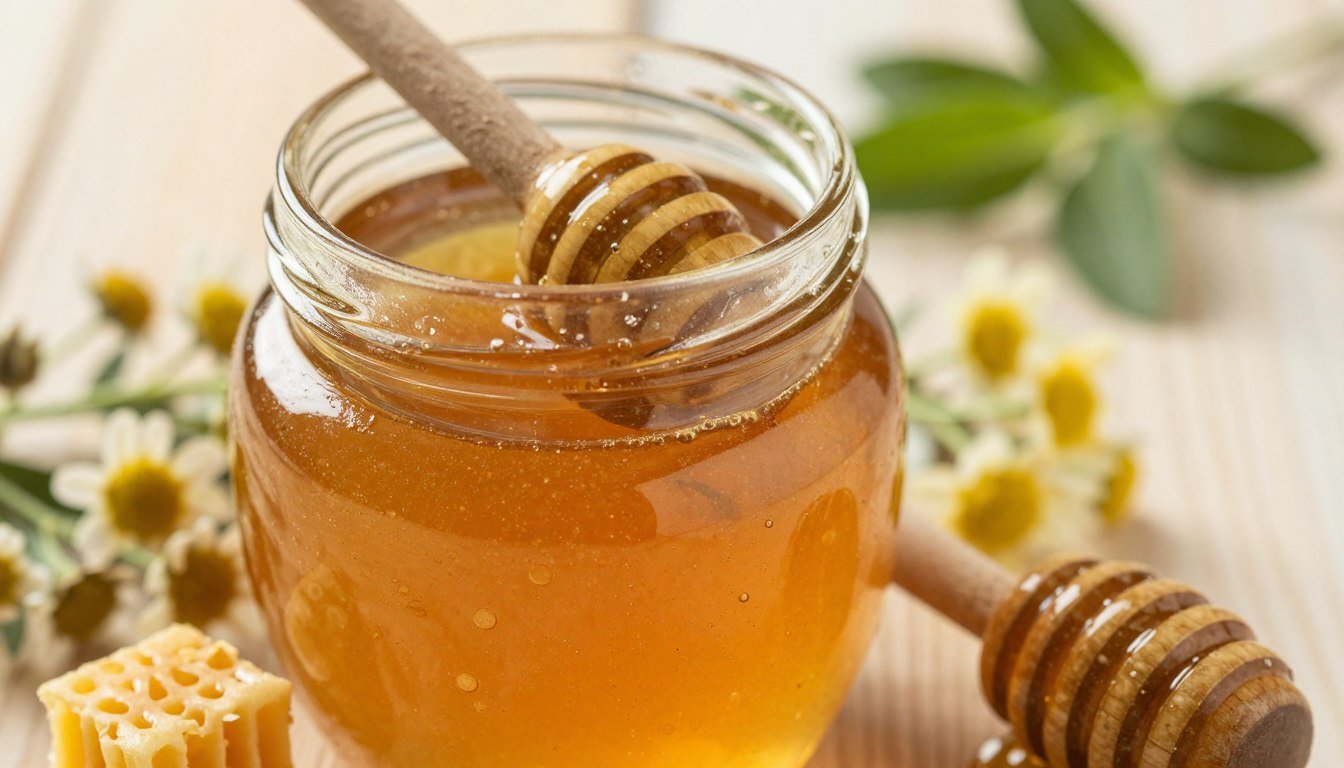
Glycemic index varies considerably across honey varieties: acacia honey tends to sit on the lower end around 32-35, orange blossom honey falls in a similar low-to-medium range around 35-40, while many wildflower honey blends run higher, around 40-50. This variation means a blanket statement like “honey has a low glycemic index” oversimplifies a genuinely more nuanced picture that depends heavily on which specific honey variety is being discussed.
What the Comparative Studies Actually Show
Research directly comparing honey, sucrose, and glucose in diabetic patients has found that honey tends to produce a lower glycemic and peak insulin response than equivalent amounts of table sugar or pure glucose, suggesting a genuinely real, measurable physiological difference rather than just a marketing claim. That said, researchers studying this question have also been clear that further research is needed before honey could be confidently recommended as a preferred sugar substitute, particularly for long-term use, and there is no research supporting the separate, broader claim that honey helps prevent diabetes from developing in the first place.
The Part That Doesn’t Change: It’s Still Sugar
Regardless of its comparatively favorable glycemic index numbers, honey remains a concentrated source of natural sugars and calories, and eating it in unlimited quantities on the theory that it’s “healthier than sugar” would still meaningfully raise blood glucose and calorie intake for someone managing diabetes. The honest framing here is that honey is a somewhat gentler sugar option in some head-to-head comparisons, not a loophole around standard sugar-management guidance.
A Specific Caution for Type 1 Diabetes
The research suggesting a comparatively favorable glycemic response to honey comes with an important caveat specifically for type 1 diabetes: researchers have explicitly cautioned that more study is needed before recommending honey as a preferred sugar substitute for this population, given the tighter insulin-dosing precision type 1 management typically requires. Anyone managing type 1 diabetes should treat honey with particular caution and involve their care team directly in any decision to include it regularly in their diet.
Practical Guidance If You Have Diabetes
Some sources suggest that small amounts of high-quality honey, with careful portion control and blood glucose monitoring, can reasonably fit into a diabetes management plan for some people, but this general guidance is not personalized medical advice and shouldn’t replace an actual conversation with your doctor or a registered dietitian familiar with your specific situation, medication regimen, and blood sugar patterns. If you do choose to include honey, treating it the same way you’d treat any other sugar source in your meal planning, rather than as a special exception, reflects what the actual evidence supports.
Fitting Honey Into Carb Counting
For people managing diabetes through carbohydrate counting, honey needs to be measured and logged the same way any other carbohydrate source would be, using its actual carbohydrate content per serving rather than its glycemic index alone, since glycemic index describes response speed and shape rather than total carbohydrate load. A tablespoon of honey contains meaningfully more carbohydrates than an equivalent volume of granulated sugar due to its water content and concentration, a detail worth factoring into any carb-counting approach rather than assuming volume-for-volume substitution is carbohydrate-neutral.
Does Raw vs. Processed Honey Matter Here?
Raw and processed honey are essentially identical in their core sugar content and glycemic impact, since standard commercial filtration and light heat processing don’t meaningfully alter honey’s fructose-to-glucose ratio or overall carbohydrate content. Any blood-sugar-related difference between raw and processed honey specifically is not well supported by current evidence, making this distinction more relevant to flavor, pollen content, and other properties covered in our raw honey benefits guide than to diabetes management specifically.
How Honey Compares to Other Sweetener Alternatives
Compared to other common sugar alternatives, honey generally sits in a middle position: it has a somewhat lower glycemic index than table sugar but still contains meaningfully more carbohydrates and calories than zero-calorie sweeteners, and unlike sugar alcohols or artificial sweeteners, it still directly raises blood glucose in a dose-dependent way. Choosing between honey and other sweetener options ultimately depends on individual priorities around taste, calorie goals, and how tightly blood sugar needs to be controlled, a decision best made in consultation with a healthcare provider rather than based on a single glycemic index comparison.
Why Individual Monitoring Matters More Than General Rules
Blood sugar response to the same food can vary meaningfully between individuals based on factors like insulin sensitivity, medication timing, other foods eaten alongside it, and overall metabolic health, meaning published average glycemic index figures are a useful starting point rather than a guarantee of how any specific person will respond to a specific honey variety. Personal blood glucose monitoring after trying a modest honey serving gives far more actionable, individualized information than any general published figure ever could.
What About Prediabetes?
For people with prediabetes, the same core guidance applies as for diagnosed diabetes: honey’s somewhat gentler glycemic profile compared to table sugar doesn’t mean it can be treated as a special exception to broader efforts around limiting added sugar intake and managing insulin sensitivity. If anything, prediabetes is a period where establishing sustainable, moderate sugar habits, including around honey, may carry particular long-term value, though this is again a conversation worth having with a healthcare provider rather than a decision to make from general information alone.
A Beekeeper’s Honest Perspective on This Claim
As with the local honey and seasonal allergies claim covered in a companion article on this site, it’s worth being direct here too: honey’s comparatively favorable glycemic index is a real, evidence-backed finding, not a myth, but it gets oversold online into something closer to “honey doesn’t count as sugar,” which isn’t an accurate representation of what the actual research supports. A credible beekeeping and honey resource should present the real, more nuanced finding rather than the more shareable but less accurate simplified version.
Reading Honey Labels With Diabetes in Mind
When choosing a specific honey product, checking the nutrition label for carbohydrate content per serving is more directly useful for diabetes management than relying on marketing language about a product being “raw” or “natural,” since neither of those terms reliably indicates anything about glycemic impact. Pure, unblended single-varietal honeys, where the specific floral source and its associated glycemic index are more likely to be accurately known, can also make it easier to have a reasonably informed sense of what to expect compared to an unlabeled generic blend.
Does Timing Around Exercise or Meals Matter?
Some people managing diabetes use small amounts of fast-acting carbohydrates like honey specifically around exercise or to treat a low blood sugar episode, situations where honey’s quick glucose delivery can actually be useful rather than a concern, distinct from its role as a general everyday sweetener. This context-specific use case, guided by a healthcare provider’s specific recommendations for an individual’s treatment plan, is a genuinely different question from whether honey is broadly “good” for diabetes as a routine dietary choice.
A Note on Children With Diabetes
For children managing type 1 or type 2 diabetes, honey guidance should come directly from the child’s pediatric endocrinology team rather than general adult-oriented information, since dosing precision, growth-related nutritional needs, and individual treatment plans in pediatric diabetes management differ meaningfully from adult management. General information like this article can help a parent understand the broader context, but shouldn’t substitute for that direct medical guidance in a child’s specific care plan.
Where the Research Still Falls Short
Much of the existing research on honey and blood sugar involves relatively small study groups and short observation periods, meaning solid evidence on long-term outcomes from regularly including honey in a diabetes management plan, over months or years rather than a single test meal, remains genuinely limited. This gap is exactly why researchers who found favorable short-term glycemic responses have still stopped short of a confident, unqualified recommendation, and it’s a meaningful part of the full picture that gets lost when the finding is simplified into a blanket “honey is good for diabetics” headline. Larger, longer-duration trials specifically designed to track real-world outcomes rather than single-meal glucose response curves would go a long way toward settling exactly how much practical difference honey’s glycemic profile actually makes over time for someone managing diabetes day to day. Until that more definitive research exists, the most defensible position remains the more modest one this article has taken throughout: honey compares somewhat favorably to table sugar on specific measures, but that is a narrower and less exciting claim than the version that tends to circulate online, but it happens to be the one the actual evidence currently and most honestly supports, and it is the standard this article has tried to hold itself to throughout.
Common Mistakes
Assuming honey’s lower glycemic index compared to table sugar means it can be eaten freely without affecting blood glucose misreads the actual comparative research, which shows a gentler response, not a negligible one. Applying general honey-and-diabetes guidance uniformly to type 1 diabetes without factoring in the specific caution researchers have raised for that population risks a mismatch between generic advice and individual medical needs. Treating any single honey variety’s glycemic index number as representative of all honey overlooks just how much this figure varies between acacia, orange blossom, wildflower, and other common varieties.
Sources
Glycemic index figures and comparative glucose/insulin response findings reflect published research in peer-reviewed nutrition and diabetes journals, including comparative studies of honey, sucrose, and glucose responses in diabetic patients.
FAQ
Can people with diabetes eat honey?
Some sources suggest small amounts with careful portion control and monitoring can fit into a diabetes management plan for some people, but this isn’t personalized medical advice – consult your doctor or dietitian about your specific situation.
Is honey’s glycemic index really lower than sugar’s?
Generally yes – table sugar sits around 65 while most honey varieties fall in the 45-64 range, though this varies significantly by specific honey type, with some varieties like acacia honey scoring notably lower.
Does honey help prevent diabetes?
No – there is no research supporting the claim that honey helps prevent diabetes from developing, despite its somewhat more favorable glycemic profile compared to table sugar in blood-sugar-response studies.
Is honey safer than sugar for type 1 diabetes specifically?
Researchers have specifically cautioned that more study is needed before recommending honey as a preferred sugar substitute for type 1 diabetes, given the precise insulin-dosing this population typically requires – this is a conversation to have directly with your care team.