Published August 31, 2026
Table of Contents
- The Four Main Uncapping Tool Types
- Cold Knife: How It Works
- Electric Heated Knife: How It Works
- Steam-Heated Knife: How It Works
- Uncapping Plane: How It Works
- Side-by-Side Comparison
- Comb Quality and Reusability Differences
- Matching Tool Choice to Your Scale
- The Uncapping Fork as a Companion Tool
- Which Tool Fits Which Beekeeper
- Why Cold Knives Have Two Different Edges
- Maintenance and Blade Care Across Tool Types
- Pairing Any Tool With an Uncapping Tank
- Safety Considerations Across Tool Types
- Realistic Cost Ranges
- Trying Before Committing to a Specific Tool
- Using More Than One Tool Together
- Tracking Which Tool Actually Works Best for You
- Where Uncapping Fits in the Full Extraction Workflow
- Common Mistakes
The Four Main Uncapping Tool Types
Beekeepers uncapping honey frames by hand choose between four main tool types — cold knives, electric heated knives, steam-heated knives, and uncapping planes — each with genuinely different mechanics, learning curves, and practical trade-offs. None of these is universally “best”; the right choice depends specifically on your scale, budget, and physical preferences, which this comparison covers honestly rather than pushing toward any single default recommendation.
Cold Knife: How It Works
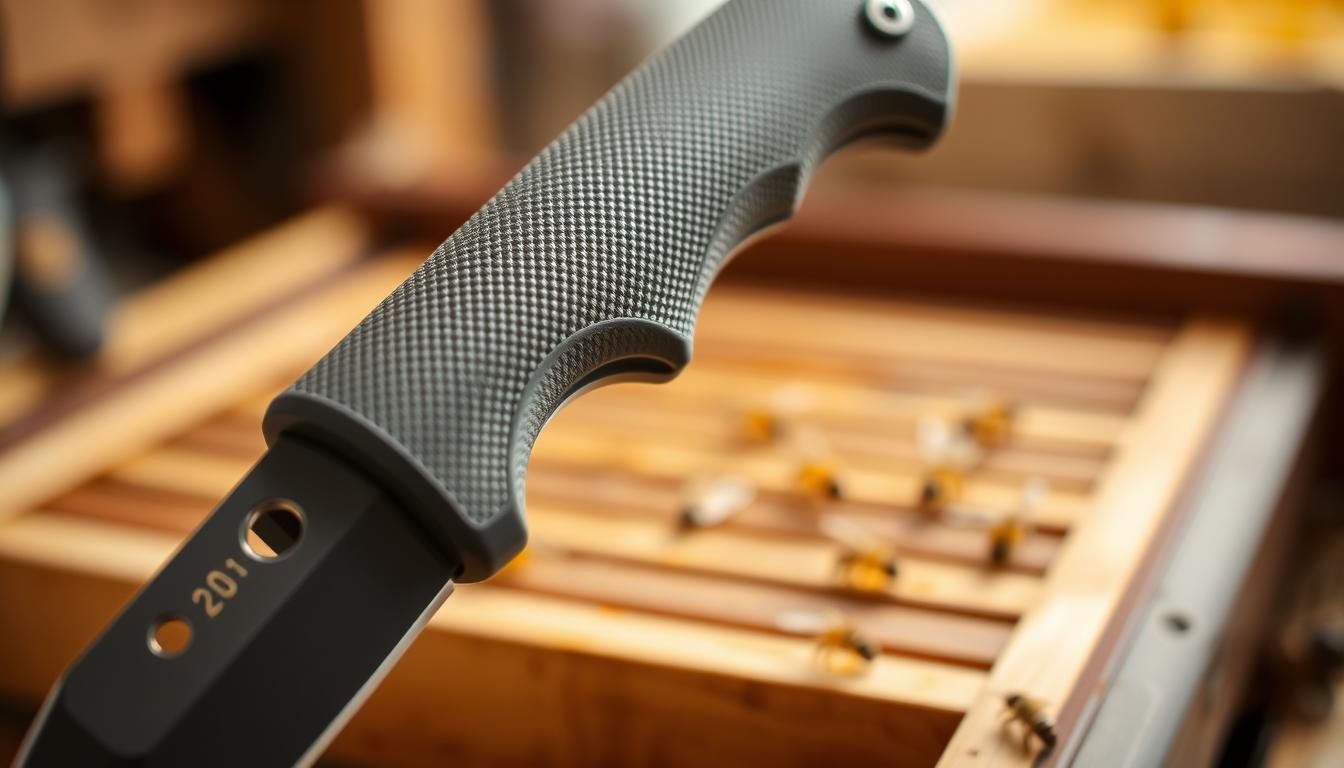
A cold knife, often an offset design with one serrated edge and one flat edge, requires no electricity or heat source — the beekeeper simply dips the blade into a pan of hot water between cuts to keep it warm enough to slide cleanly through wax cappings. This is the simplest, cheapest option, but genuinely more tedious for processing large frame volumes, since the blade cools quickly and needs frequent re-dipping to maintain clean cutting performance.
Electric Heated Knife: How It Works
An electric knife uses an internal heating element to keep the blade consistently warm throughout use, eliminating the repeated dipping cycle a cold knife requires and delivering a notably faster, smoother, more consistent cut across many frames in sequence. This consistency and speed advantage is the main reason electric knives are widely preferred for any operation processing meaningful frame volume, at the cost of needing a power source and the higher upfront equipment cost.
Steam-Heated Knife: How It Works
A steam-heated knife achieves the same consistent-heat benefit as an electric knife, but through a small steam boiler unit connected via a hose rather than electrical heating, a design favored by some professional and serious hobbyist beekeepers specifically for its more even heat distribution along the blade and independence from needing an electrical outlet at the exact uncapping station. This makes steam knives a genuine alternative for honey houses without convenient electrical access at the specific uncapping location, though they require managing the separate steam-generating unit as an added piece of equipment.
Uncapping Plane: How It Works
An uncapping plane works more like a woodworking hand plane than a knife, shaving cappings off in a controlled, shallow pass rather than slicing — beekeepers who’ve used both consistently report the plane is genuinely easier on the wrist over long uncapping sessions, producing less repetitive strain than the slicing motion a knife requires. The trade-off is that planes can be trickier to use effectively on medium-depth supers specifically, where getting consistent depth without cutting too deep into the comb takes more practiced technique than on standard shallow supers.
Side-by-Side Comparison
| Factor | Cold Knife | Electric Knife | Steam Knife | Uncapping Plane |
|---|---|---|---|---|
| Power needed | None | Electricity | Steam unit | None |
| Speed at volume | Slow | Fast | Fast | Moderate |
| Wrist fatigue | Moderate-high | Moderate | Moderate | Low |
| Upfront cost | Lowest | Moderate | Highest | Low-moderate |
This comparison makes clear why electric knives dominate mid-to-large operations, while cold knives and planes each retain genuine, specific appeal for smaller-scale or budget-conscious beekeepers depending on which trade-off (cost vs. wrist comfort vs. speed) matters most to them.
Comb Quality and Reusability Differences
Heated knives (electric or steam) tend to produce a cleaner, more evenly cut comb surface, which some beekeepers report translates into less “extractor dance” — imbalanced spinning during extraction caused by uneven comb surfaces — compared to a cold knife’s typically rougher cut. An uncapping plane, done well, can also produce a very clean surface, though achieving that consistency specifically takes more practiced technique than a heated knife’s more forgiving, consistently hot blade.
Matching Tool Choice to Your Scale
A hobbyist processing a handful of frames per season can reasonably manage with a cold knife’s lower cost and simplicity, while operations processing dozens or more frames per session benefit meaningfully from an electric or steam knife’s speed and consistency — and any beekeeper prioritizing wrist comfort over pure processing speed, regardless of scale, may prefer an uncapping plane specifically for that ergonomic reason.
Which Tool Fits Which Beekeeper
New beekeepers processing modest honey volumes are well served starting with a basic cold knife or an entry-level electric knife before investing in more specialized equipment. Beekeepers with existing wrist or repetitive-strain concerns should specifically consider an uncapping plane regardless of their production scale. Sideline and commercial operations processing significant frame volume each season should prioritize an electric or steam knife, with the choice between them coming down to available power infrastructure and personal preference on heat-distribution feel.
Why Cold Knives Have Two Different Edges
The classic offset cold knife’s dual-edge design — one serrated, one flat — isn’t accidental: the serrated edge helps grip and initiate the cut through wax capping while the flat edge follows through with a cleaner slice, together giving a hand-powered blade genuinely more cutting effectiveness than a single-edge design would provide without heat assistance. Understanding this design purpose helps explain why cold knives retain a real following even among beekeepers who could afford heated alternatives — the tool itself is thoughtfully engineered for its specific no-power use case.
Maintenance and Blade Care Across Tool Types
All four tool types benefit from prompt cleaning after each use, since dried wax and honey residue left on a blade or plane surface hardens and becomes considerably harder to remove later, and electric or steam knives specifically require checking heating elements and connections periodically to catch any developing issues before they cause an inconvenient failure mid-harvest. A quick end-of-session cleaning habit, rather than letting equipment sit dirty between uses, meaningfully extends the working life of any of these tools regardless of type.
Pairing Any Tool With an Uncapping Tank
Regardless of which uncapping tool you choose, working over a dedicated uncapping tank — a simple container designed to catch removed cappings and drips while supporting the frame during the process — keeps the workspace considerably cleaner and makes cappings collection for later spinning or rendering far more efficient than uncapping over an improvised surface. This pairing is worth planning as a complete workspace setup rather than treating the knife or plane choice in isolation from the surface you’re actually working over.
Safety Considerations Across Tool Types
Heated knives carry genuine burn risk if handled carelessly, requiring the same basic respect any heated tool deserves, while cold knives and planes carry more of a cut-risk profile given their reliance on sharp blade edges without heat to assist the cutting action — proper technique, adequate lighting, and simply staying focused during the repetitive uncapping task matter across every tool type to avoid an entirely preventable injury during what’s otherwise a routine part of the harvest process.
Realistic Cost Ranges
Cold knives are the least expensive option by a meaningful margin, typically costing a fraction of an electric knife’s price, while steam-heated systems generally represent the highest total investment given the separate boiler unit involved on top of the knife itself; uncapping planes fall somewhere in the low-to-moderate range depending on specific build quality and material. Weighing this cost spread against your actual frame volume and how many seasons you’ll use the equipment gives a more useful buying framework than simply defaulting to whichever option seems most popular online.
Trying Before Committing to a Specific Tool
Because personal preference plays a genuinely large role in which tool feels most comfortable and effective, borrowing a fellow club member’s equipment for a session, or attending a club extraction demonstration where multiple tool types are in use, gives you real hands-on comparison experience before spending money on your own equipment — a more reliable way to find your personal preference than relying purely on other beekeepers’ written opinions or product descriptions alone.
Using More Than One Tool Together
Many experienced beekeepers actually use a combination of tools rather than relying on just one — an uncapping plane or fork for the flatter comb areas, followed by a knife to clean up any missed spots or awkward corners the plane didn’t fully reach — treating tool selection as a practical toolkit decision rather than a single either/or choice. This combined approach is worth considering once you’ve developed enough hands-on experience to recognize where each tool genuinely performs best on real, imperfect comb rather than the idealized flat surface product demonstrations often show.
Tracking Which Tool Actually Works Best for You
Keeping simple notes on time-per-frame, comb quality, and physical comfort across a season using a particular tool gives you genuinely useful personal data for deciding whether to stick with your current choice or try something different next season, rather than relying purely on how a tool felt during a single memorable session, good or bad, to guide your longer-term equipment decisions.
Where Uncapping Fits in the Full Extraction Workflow
Regardless of which tool you choose, uncapping sits as the step immediately before frames go into an extractor, with removed cappings then processed separately through a cappings spinner and eventual wax rendering — planning your specific tool choice as part of this complete workflow, rather than in isolation, helps ensure your uncapping station’s physical layout and pace actually matches the rest of your extraction setup rather than becoming an unexpected bottleneck.
Common Mistakes
Using a cold knife without adequately reheating it between cuts (letting the blade cool too much before re-dipping) produces ragged, inconsistent cuts and unnecessary extra effort compared to properly maintained temperature. Attempting an uncapping plane on medium supers without first practicing depth control on a less valuable frame risks over-cutting into good comb before developing the necessary technique. Buying commercial-scale heated equipment before your actual frame volume justifies the investment wastes money better spent on other priorities at a smaller operation’s actual scale.
The Uncapping Fork as a Companion Tool
Many beekeepers keep a simple uncapping fork (or “cappings scratcher”) on hand alongside whichever primary tool they use, specifically for cleaning up low spots and irregular cells a knife or plane’s flat cutting motion misses — a small, inexpensive companion tool that genuinely improves overall uncapping thoroughness regardless of which primary method you’ve chosen.
Sources
Tool mechanism and comparative performance details reflect published beekeeping equipment guides and established beekeeper community consensus on uncapping tool trade-offs.
FAQ
Which uncapping tool is best for a beginner?
A basic cold knife or entry-level electric knife is a reasonable starting point for modest honey volumes; the choice mainly comes down to budget, since electric knives cost more but offer easier, more consistent results.
Is an uncapping plane really easier on the wrists?
Beekeepers who’ve used both consistently report the plane’s shaving motion causes less repetitive strain than a knife’s slicing motion over long uncapping sessions, making it a genuine consideration for anyone with wrist comfort concerns.
Do I need electricity to uncap frames effectively?
No — cold knives and uncapping planes both work without any power source, though electric or steam-heated knives offer genuinely faster, more consistent results for larger frame volumes.
Does an uncapping plane work well on medium supers?
It can, but achieving consistent depth without cutting too deep takes more practiced technique on medium-depth supers specifically compared to standard shallow supers.
Can I use a regular kitchen knife to uncap frames?
Some beekeepers do use a large serrated kitchen knife in a pinch, but purpose-built uncapping knives are specifically designed for this task’s blade length, edge geometry, and (for heated versions) consistent temperature, generally giving noticeably better results than a generic kitchen knife substitute.
Is a steam knife worth it over a standard electric knife?
For most beekeepers, an electric knife delivers comparable consistent-heat benefits at lower cost and complexity; a steam knife is generally worth the extra investment specifically when more even heat distribution or independence from a nearby electrical outlet matters for your particular setup.