Published August 28, 2026
Table of Contents
- What a Cowen Uncapper Is
- Automated Uncapping vs. Knife and Fork
- How the Machine Works
- Throughput: The Real Reason to Automate
- Integrating an Uncapper Into Your Extraction Line
- Handling the Wax Cappings Output
- Maintenance and Cleaning
- Cost and Break-Even Point
- Who Actually Needs This Equipment
- Comb Damage and Longevity Considerations
- Frame Feed Rate and Operator Coordination
- Power and Space Requirements
- Operator Safety and Training
- Buying Used Commercial Uncapping Equipment
- Leasing or Cooperative Access Options
- Effect on Honey Quality
- Staffing Around an Automated Uncapping Line
- Seasonal Use and Off-Season Storage
- Researching Real User Experience Before Buying
- A Framework for Deciding When to Automate
- Common Mistakes
What a Cowen Uncapper Is
A Cowen uncapper is an automated, motorized uncapping machine that removes wax cappings from frames of capped honey mechanically, using rotating chains or blades that shave cappings off as frames pass through, replacing the manual work covered in our guides to the best uncapping knife and cappings scratcher. It’s built specifically for commercial-scale operations processing far more frames than manual uncapping can reasonably handle.
Automated Uncapping vs. Knife and Fork
Manual uncapping with a heated knife or cappings scratcher works well and remains the standard approach for hobbyist and small-scale operations, since the equipment cost is minimal and the labor is manageable at low frame volumes. The tradeoff shifts dramatically at commercial scale: manually uncapping hundreds or thousands of frames during a harvest season becomes a genuine labor bottleneck, and this is precisely the problem an automated uncapper is built to solve — trading a significant equipment investment for a dramatic reduction in per-frame labor time.
How the Machine Works
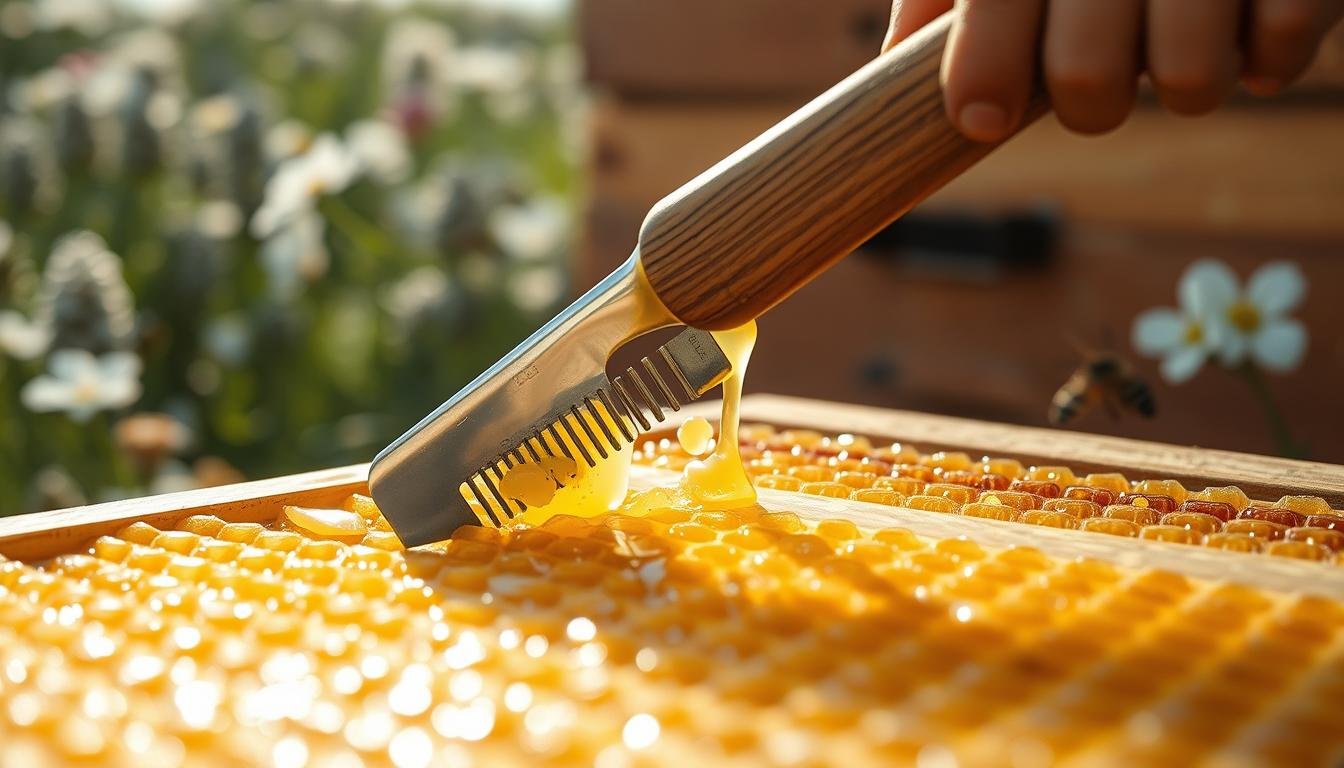
Frames are fed through the machine, typically via a conveyor or manual feed mechanism, where rotating chain flails or blade assemblies shave the wax cappings off both sides of the frame in a single pass, dropping the removed wax into a collection area below while the now-uncapped frame continues to the extraction line. The exact mechanism (chain-style versus blade-style) varies by specific model, with different tradeoffs in cappings quality, wax yield, and how gently the machine handles comb versus a manual knife’s more controlled, precise cut.
Throughput: The Real Reason to Automate
The core value proposition is throughput — an automated uncapper can process frames dramatically faster than even a skilled operator working manually, which becomes the deciding factor once your operation’s frame volume reaches a point where uncapping labor genuinely constrains how quickly you can move honey from hive to jar during a limited harvest window. For an operation still processing frames in the dozens or low hundreds per season, this throughput advantage doesn’t yet outweigh the equipment’s real cost; for an operation processing thousands, it often becomes essential.
Integrating an Uncapper Into Your Extraction Line
An uncapper is typically positioned as the first station in an extraction line, feeding directly into your extractor setup, and integrating it well means planning your honey house layout around a continuous frame flow — uncapping, extracting, and returning frames — rather than treating the uncapper as an isolated station requiring frames to be manually carried between steps. A well-designed line minimizes handling and walking time between stations, compounding the labor savings the uncapper itself provides.
Handling the Wax Cappings Output
Cappings wax removed by the machine falls into a collection area or spinner/strainer setup designed to separate residual honey from the wax before further processing — this cappings wax is valuable material worth rendering and using separately (candles, cosmetics, foundation) rather than treating as waste, and a well-integrated uncapper setup typically includes some form of honey-wax separation built into or immediately after the machine itself.
Maintenance and Cleaning
Thorough cleaning after each use, and periodic inspection of chains, blades, or other cutting components for wear or damage, keeps an uncapper functioning correctly and maintains food-safety standards for equipment in direct contact with honey and comb. Follow the manufacturer’s specific maintenance schedule and replacement-part guidance, since a poorly maintained uncapper can produce inconsistent uncapping results or, in worse cases, mechanical failure during a critical harvest window.
Cost and Break-Even Point
An automated uncapper represents a genuinely significant capital investment, meaningfully higher than any manual uncapping tool, which is why the break-even calculation matters — weigh the equipment cost against your actual labor cost savings across a realistic multi-season timeframe, factoring in your specific frame volume, rather than treating it as a purchase justified by convenience alone. For most beekeepers, this calculation only favors automation once frame volume reaches a genuinely commercial scale.
Who Actually Needs This Equipment
Commercial and larger semi-commercial operations processing enough frames that manual uncapping has become a genuine seasonal labor bottleneck are the clear fit for equipment like a Cowen uncapper. A hobbyist or small-scale sideline beekeeper processing frames in the dozens to low hundreds per season is very unlikely to see a return on this investment relative to a manual knife or scratcher, and should stick with the simpler, far less expensive manual tools our other uncapping guides cover.
Comb Damage and Longevity Considerations
An automated uncapper’s mechanical action, while fast, is generally less gentle and precise than a skilled operator using a manual knife, which can mean somewhat more wear on drawn comb over repeated seasons of machine uncapping compared to careful manual technique. This is a genuine tradeoff worth understanding: the throughput gain comes with a modest increase in comb wear rate, meaning you may need to replace or repair drawn comb somewhat more frequently in a fully automated operation than in one relying on gentler manual uncapping.
Frame Feed Rate and Operator Coordination
Whether frames are fed manually or via a conveyor system, coordinating a steady, appropriate feed rate matters for both uncapping quality and machine safety — feeding too quickly can produce inconsistent uncapping or jam the mechanism, while feeding too slowly wastes the throughput advantage that justified the investment in the first place. An operator experienced with the specific machine develops a feel for the right pace fairly quickly, but expect a real learning curve during initial setup and the first several uses.
Power and Space Requirements
Confirm the specific model’s electrical requirements against your honey house’s actual electrical setup before purchasing, since commercial uncapping equipment often draws more power than a standard household circuit provides and may require dedicated wiring. Physical footprint is also substantial compared to a manual knife’s negligible space needs, so plan your honey house layout with the uncapper’s actual dimensions, plus adequate clearance for safe operation and frame flow to and from adjacent extraction equipment, in mind before committing to a purchase.
Operator Safety and Training
Automated uncapping equipment involves genuine mechanical hazards — moving chains, blades, or flails — that a manual knife simply doesn’t present, so proper operator training and adherence to the manufacturer’s safety guidelines matter significantly more than with hand tools. Never bypass safety guards or interlocks for convenience, and ensure anyone operating the machine, including seasonal help during peak harvest, receives proper training before running it unsupervised.
Buying Used Commercial Uncapping Equipment
Given the significant new-equipment cost, a used market exists for commercial uncappers, and buying used can meaningfully reduce the investment for an operation scaling into automated uncapping for the first time — inspect chains, blades, motor condition, and overall mechanical wear carefully before buying, and if possible, see the specific unit run before purchase, since a machine’s actual operating condition matters far more than its age alone.
Leasing or Cooperative Access Options
Some regions have cooperative equipment-sharing arrangements or rental options for expensive, seasonally-used commercial equipment like uncappers, letting a growing operation access automation benefits during peak harvest without the full capital cost of ownership — worth investigating with your regional beekeeping association before committing to an outright purchase, particularly if your frame volume is right at the threshold where automation starts to make financial sense but you’re not yet certain it justifies full ownership.
Effect on Honey Quality
Automated uncapping doesn’t meaningfully affect final honey quality compared to manual uncapping when the machine is well-maintained and correctly calibrated — the mechanical action removes cappings similarly to a knife, and the resulting honey is processed through the same extraction and filtering steps regardless of uncapping method. Any quality concerns typically trace back to poor machine maintenance or incorrect feed rate rather than anything inherent to automated uncapping as a category.
Staffing Around an Automated Uncapping Line
Even with automation, an uncapping line typically still needs staff for frame loading, monitoring machine operation, and managing the extraction steps downstream — automation reduces labor needed per frame but doesn’t eliminate the need for people entirely, so factor realistic staffing requirements into your overall harvest-season labor planning rather than assuming the equipment runs itself unattended.
Seasonal Use and Off-Season Storage
Because uncapping equipment sees intense use during a limited harvest window and sits idle the rest of the year, proper off-season storage and pre-season inspection matter for keeping the machine reliable when you actually need it — clean thoroughly, lubricate moving parts per manufacturer guidance, and cover to protect from dust before storage, then run a test cycle before your next season’s first real use to catch any issues while there’s still time to address them before harvest pressure builds.
Researching Real User Experience Before Buying
Beyond manufacturer specifications, seek out real feedback from commercial beekeepers who’ve actually operated the specific model you’re considering — regional beekeeping associations and commercial beekeeping conferences are good sources for this kind of practical, hands-on experience, since real-world reliability, actual maintenance burden, and honest throughput figures under real operating conditions go beyond what any spec sheet communicates. A significant capital purchase like this deserves this level of research before committing.
A Framework for Deciding When to Automate
Rather than a single frame-count threshold, weigh your total seasonal uncapping labor hours against the equipment’s real cost across a realistic multi-season timeframe, factoring in your specific hourly labor cost and how tightly your harvest window constrains available uncapping time. An operation with a narrow harvest window and limited available labor may justify automation at a lower frame count than one with flexible timing and abundant seasonal help, since the constraint isn’t just total frames but how much time you actually have to process them.
Common Mistakes
Investing in commercial-scale uncapping automation before your actual frame volume justifies it is the most common financial misstep, driven by convenience appeal rather than a genuine cost-benefit analysis. Neglecting regular cleaning and maintenance, treating the machine as a set-and-forget tool rather than equipment requiring ongoing care, risks both food-safety issues and mechanical problems. Failing to plan honey house layout around the uncapper’s position in a continuous extraction line wastes much of the labor-saving benefit the automation was meant to provide.
Sources
Equipment mechanism and operational guidance reflect publicly available manufacturer information for Cowen and similar commercial uncapping equipment, alongside general commercial beekeeping extraction-line planning guidance.
FAQ
At what scale does an automated uncapper make financial sense?
For most beekeepers, the break-even calculation only favors automation once frame volume reaches a genuinely commercial scale — a hobbyist or small sideline operation is very unlikely to see a return relative to a manual knife or scratcher.
What happens to the wax cappings removed by the machine?
Cappings fall into a collection area, typically with a honey-wax separation setup, and this wax is valuable material worth rendering and using separately rather than discarding.
How much faster is an automated uncapper than manual uncapping?
Dramatically faster per frame, which is the entire value proposition — the exact throughput varies by specific model and mechanism, but it’s the reason commercial operations invest in this equipment despite the significant cost.
Does an uncapper need regular maintenance?
Yes — thorough cleaning after each use and periodic inspection of chains, blades, and other cutting components for wear keeps it functioning correctly and maintains food-safety standards.
Does automation reduce comb longevity?
Somewhat — the mechanical action is generally less gentle than careful manual uncapping, meaning drawn comb may need replacement or repair somewhat more frequently in a fully automated operation, a real tradeoff against the throughput gain.
Should I lease equipment instead of buying?
Some regions have cooperative equipment-sharing or rental arrangements worth investigating with your regional beekeeping association, particularly if your frame volume is right at the threshold where automation starts to make sense but you’re not yet certain it justifies full ownership.