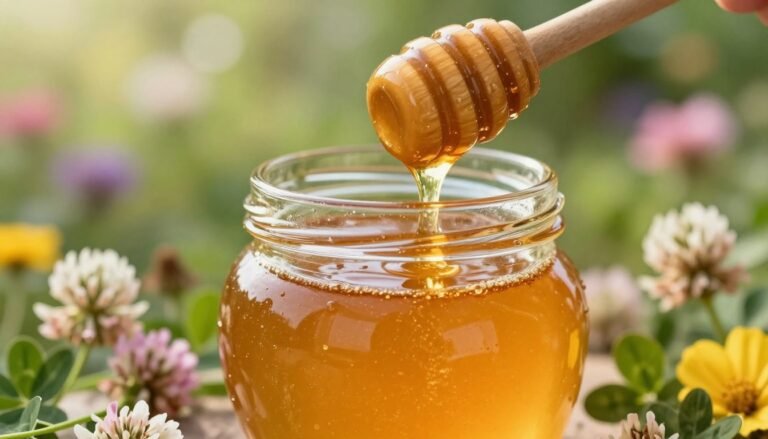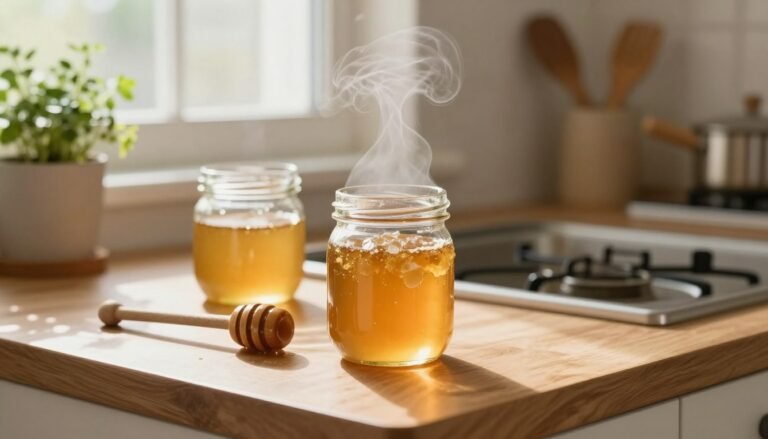
Honey can last for years. A striking fact is that archaeologists found an edible jar of honey in King Tut’s tomb in 1922. This shows how stable the sweet syrup can be when stored well.
Every jar honey product is a concentrated sugar solution. That mix stays liquid until conditions or chemistry prompt a change. Keep your honey in an airtight container to preserve texture and flavor.
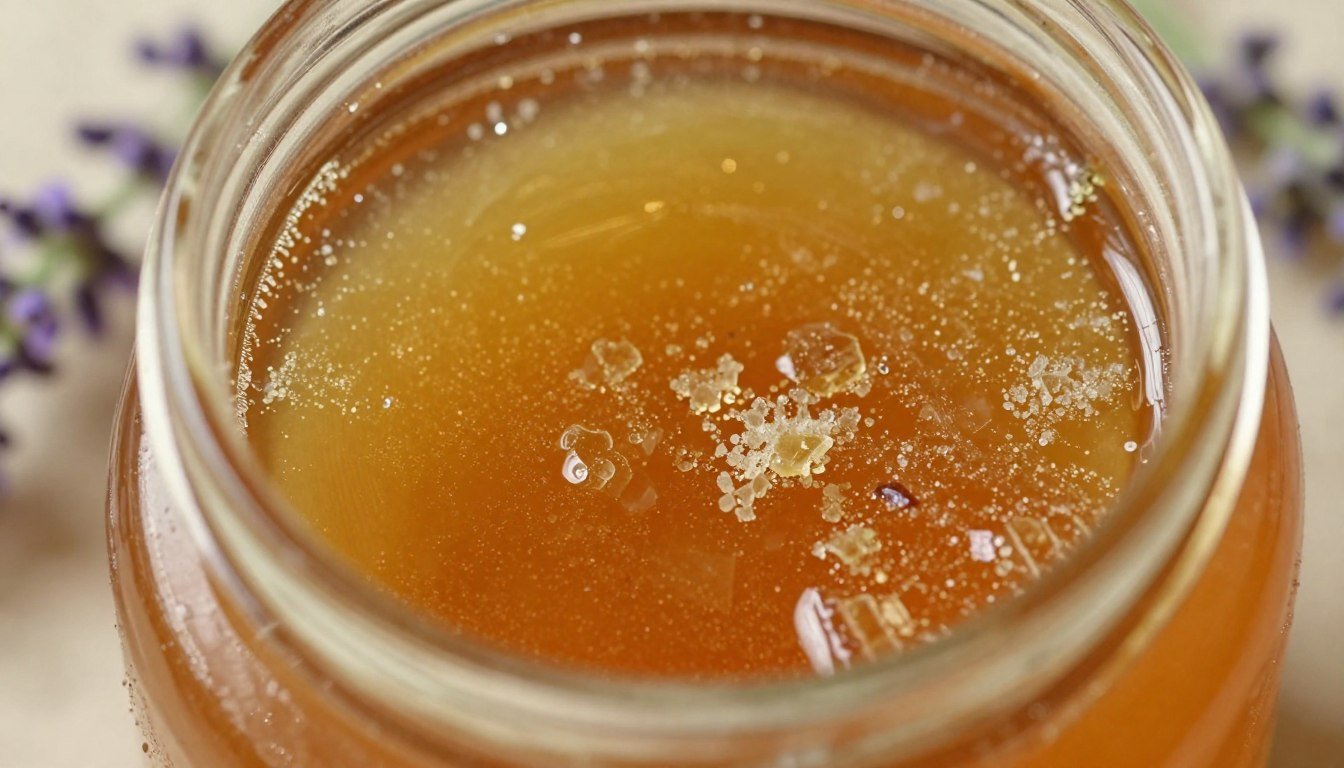
Crystallization is a natural shift in texture. It often begins when glucose separates from the solution and forms tiny crystals. Floral source, pollen, and filtering level all affect how quickly this process begins.
Understanding these factors helps you pick the right jar for cooking or spread. For deeper details on rapid crystal formation check a community discussion on fast crystallising honey. To compare raw and processed options see this guide on raw vs processed honey.
Key Takeaways
- Honey’s longevity is proven by historic finds like King Tut’s jar.
- Crystallization is a natural chemical change, not spoilage.
- Glucose level and floral source drive crystallization rate.
- Airtight containers slow texture changes and preserve quality.
- Raw, less-filtered honey often crystallizes sooner due to particles.
Understanding the Natural Process of Honey Crystallization
Honey is a natural, supersaturated solution that slowly seeks equilibrium as its sugars settle. This happens because honey contains far more sugar than water, with an average water content near 18%.
The science of supersaturated solutions
Pure honey is mainly glucose and fructose dissolved in very little water. When there is not enough water to hold the sugars, glucose can separate and begin to form tiny crystals. That shift is a normal physical process and does not mean the product is unsafe.
Distinguishing granulation from spoilage
Bees make honey by concentrating nectar, producing an acidic jarred food with a pH between 3.4 and 6.1. This acidity and low water content make fermentation unlikely.
Simple granulation is the formation of a semi-solid consistency as natural sugars stabilize. True fermentation involves bubbles, off-odors, or foaming — signs that a jar has been compromised.
For a deeper technical look, read this deep dive on raw honey crystallization or the practical honey crystallization guide.
Why Some Honeys Crystallize Faster Than Others
Different floral sources and processing steps shape how quickly a jar of honey firms up. Amy Newsome explains that each flower yields a unique glucose-to-fructose ratio. That ratio controls how easily sugar leaves solution and forms crystals.
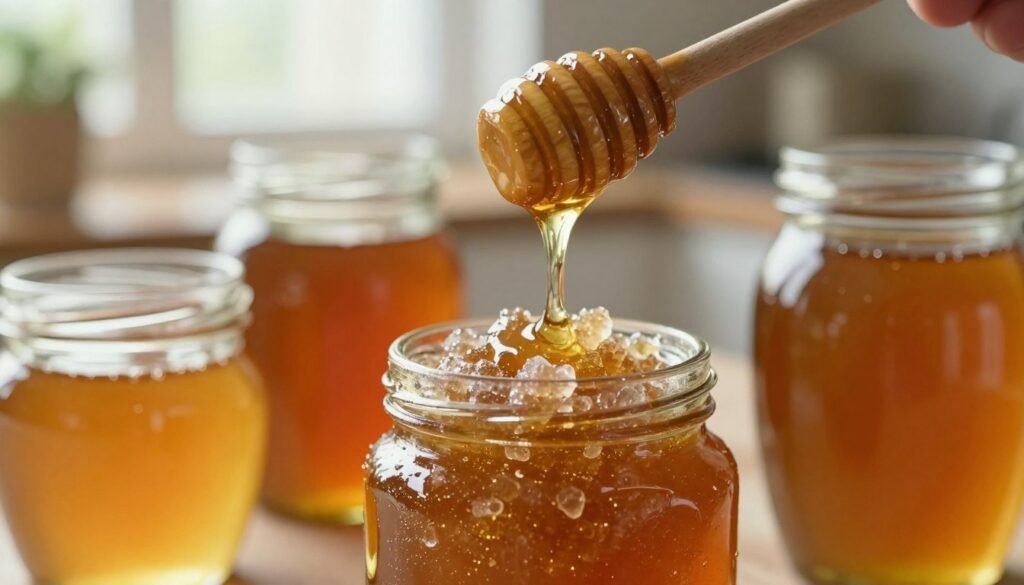
Bruce Shriver at Gowanus Apiary points out that filtration and heat treatment slow crystal formation. Commercially processed jars heat and filter out particles that act as crystal seeds. Raw varieties keep pollen and fine particles, so crystallized honey appears more often.
“Filtration and mild heating change the timeline for grain formation in a jar,” said Bruce Shriver.
- Botanical origin sets the sugar profile.
- Processing level affects seed particles that trigger crystals.
- Cool storage temperatures encourage crystal growth; fluctuating temperatures worsen it.
For a list of floral types prone to quick crystal formation, see a helpful guide on kinds that crystallize fast. If you plan to sell or label jars, follow best practices for packaging and labeling honey.
The Role of Chemical Composition and Pollen
The chemical mix inside a jar drives how its texture changes over time. Small shifts in sugar balance and moisture guide the pace of change in a product.
The Impact of Glucose and Fructose Ratios
Glucose and fructose sit at the heart of this process. When glucose is higher, the sugar can leave solution more readily if there is not enough water to hold it.
That means jars with a high glucose share will often firm up sooner. The ratio controls how fast a jar moves from liquid to a spreadable consistency.
How Pollen Particles Influence Texture
Pollen and other microscopic particles act as seeds for crystal growth. When bees make honey they add pollen that gives crystals a base to form over time.
Commercial facilities use heat and filtration to remove those particles. Processed honey stays liquid longer, but high heat can reduce natural sugars and enzymes that give raw honey its health benefits.
| Factor | Effect on Texture | Typical Outcome |
|---|---|---|
| Higher glucose | Leaves solution more easily | Firmer consistency sooner |
| Low water content | Less solvent to dissolve sugar | Faster crystallization |
| Pollen and particles | Provide nucleation sites | Speeds crystal formation |
| Heat & filtration | Remove seeds and enzymes | Longer liquid shelf life, lower enzymes |
“Pollen acts as the initial scaffold for crystals to form,”
- The chemical composition, including water content, sets the baseline.
- Particles determine how quickly crystals begin to grow.
- Processed honey may resist change but can lose some natural qualities.
Does Crystallized Honey Mean the Product Has Gone Bad
A jar that firms up does not mean the product has spoiled; it reflects a physical change in the sugars. The USDA confirms that crystallized honey is safe to eat. Low water content and acidic pH stop harmful microbes from growing.
Crystallization is a natural process. Granulation often signals a high-quality, pure honey product rather than decay. Pollen and tiny particles act as seeds that help crystals form, which is common in raw, less processed honey.
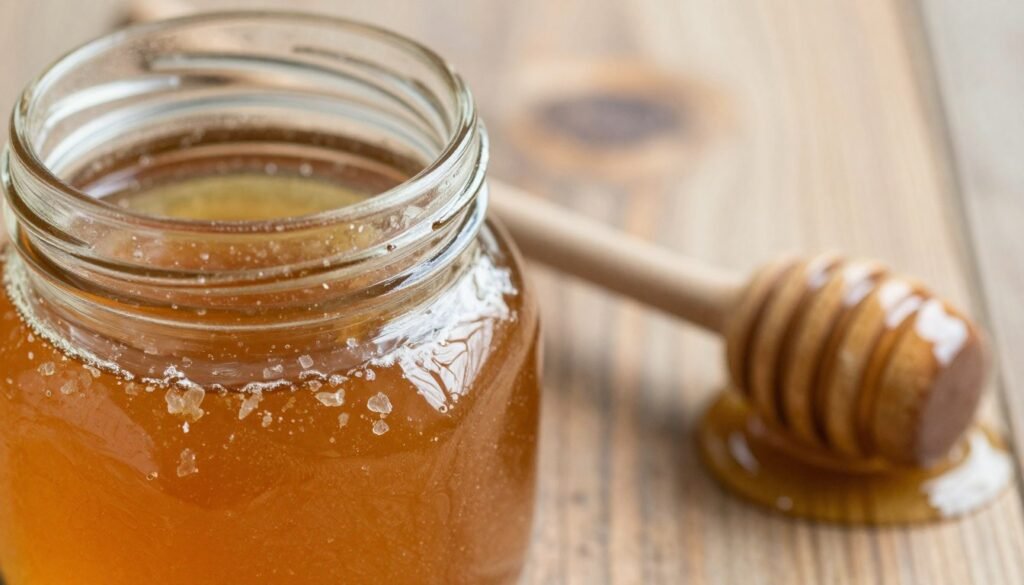
Fermentation only happens if moisture rises and the jar loses its airtight seal. Keep the product sealed to preserve the solution and prevent added water from changing the balance. The sugars are just changing form; that does not reduce the food’s health value.
- It is a scientific fact that crystallized honey has not gone bad.
- Granulation can indicate pure honey with pollen and particles.
- Store jars sealed to avoid fermentation caused by excess water.
Many discard crystallized jars unnecessarily. Understanding this natural change helps buyers value raw versus processed honey. For practical tips on handling a firm jar, see this crystallized honey guide and a quick how-to at how to fix crystallized honey.
Best Practices for Proper Honey Storage
Proper storage greatly slows changes in honey texture and keeps jars easy to pour. A stable environment reduces the chance of unwanted crystallization and preserves flavor.
Ideal Temperature Ranges for Long Term Storage
Temperature control matters. Mike’s Hot Honey recommends keeping honey between 70° and 80°F to delay crystal formation. Storing a jar below 50°F will speed solidification.
- Keep honey in a sealed jar at a consistent room temperature — this is the best way to keep honey liquid.
- Maintain 70°–80°F when possible; this range slows crystallization and preserves texture.
- Avoid rooms that drop below 50°F or refrigeration; cold temperatures make crystals form quickly.
- Stable conditions and airtight storage are the most effective methods to manage crystallization for long-term storage.
- For full guidance on preserving quality, see best practices for maintaining quality and a practical guide on how to store honey long term.
Bottom line: maintain steady temperatures and airtight storage to keep your honey usable and delay crystallization. Proper care preserves both flavor and texture for kitchen use.
How to Safely Decrystallize Your Honey
A gentle warm water bath is the best way to restore a firm jar to a smooth consistency. Place the sealed jar in a bowl of warm water and monitor the temperature so it stays below 95°F. This protects flavonoids and enzymes while the glucose crystals dissolve.
Never use boiling water or direct heat. High temperatures will degrade flavor and reduce natural benefits. Gently stirring after warming helps dissolved sugars reincorporate evenly.
If crystallization has advanced and fermentation begins, the flavor can shift and the product may not suit delicate recipes. So act early when you spot grainy texture.
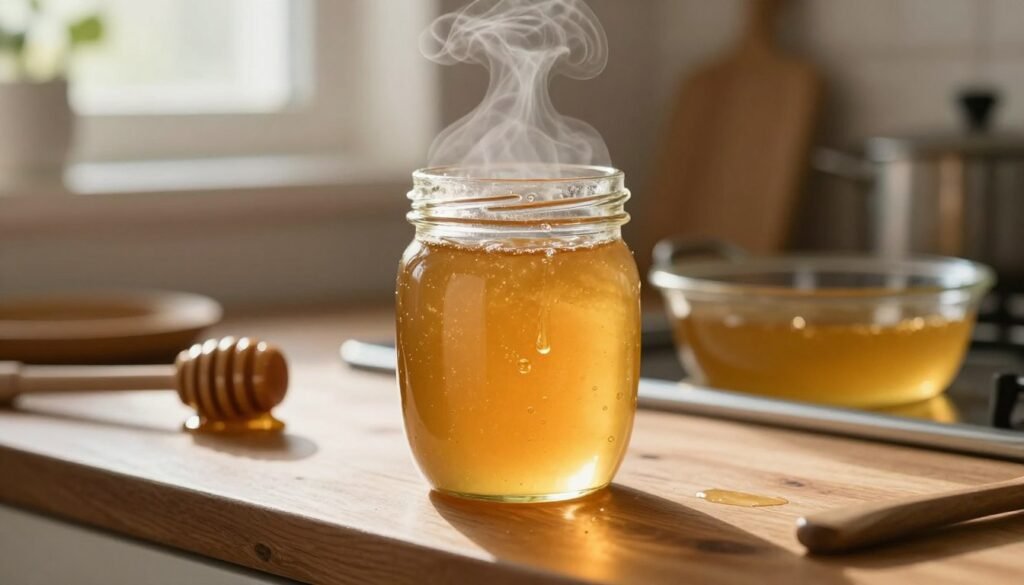
Repeat the warm water process as needed, but avoid overheating each time. Keep honey at stable room temperature during storage to minimize reheating. This simple, low-heat process is the safest way to keep honey usable while preserving taste and quality.
For a technical perspective on crystal formation and care, see this short guide from Epicurious.
Embracing the Texture of Raw Honey
Many fans of raw honey welcome its thick, grainy feel as a mark of authenticity. That texture is a natural process that develops over time and tells you the jar holds minimal processing.
Spread crystallized honey on warm toast to let the heat soften the crystals. The result is a rich, spreadable topping that melts into bread or biscuits.
A firm jar honey product can be easier to measure and spread than a runny jar. Its consistency makes spooning precise amounts simpler for baking or adding to tea.
Different temperatures change how honey feels. Cooler temperatures make it thicker, while gentle warmth loosens the texture. This versatility makes honey a useful food across recipes and drinks.
“A little grain can enhance mouthfeel and highlight floral notes.”
- Accepting texture lets you use each jar in a new way.
- Firm consistency often suits baking and spreading best.
- When needed, you can gently warm a jar to restore liquid form — see a simple guide to decrystallize honey.
| Use | Temperature Tip | Outcome |
|---|---|---|
| Spread on toast | Warm briefly | Melts slightly and spreads smoothly |
| Baking | Room temperature | Easy to measure; adds texture to dough |
| Stir into tea | Hot liquid | Dissolves and sweetens evenly |
Conclusion
Crystallization marks a natural shift in honey’s texture that many beekeepers and chefs value.
This process shows a pure honey product moving to a stable form. It does not mean the jar is spoiled. Low water content and cool storage guide this change in a predictable way.
You can enjoy crystallized honey as a spread, or restore liquid texture with a gentle warm water bath. The health benefits, flavor, and overall quality remain intact when handled properly.
For labelling and grading context on quality and storage, read this concise guide to honey grading standards. Proper care is the best way to preserve flavor and use this treasured food product for years.