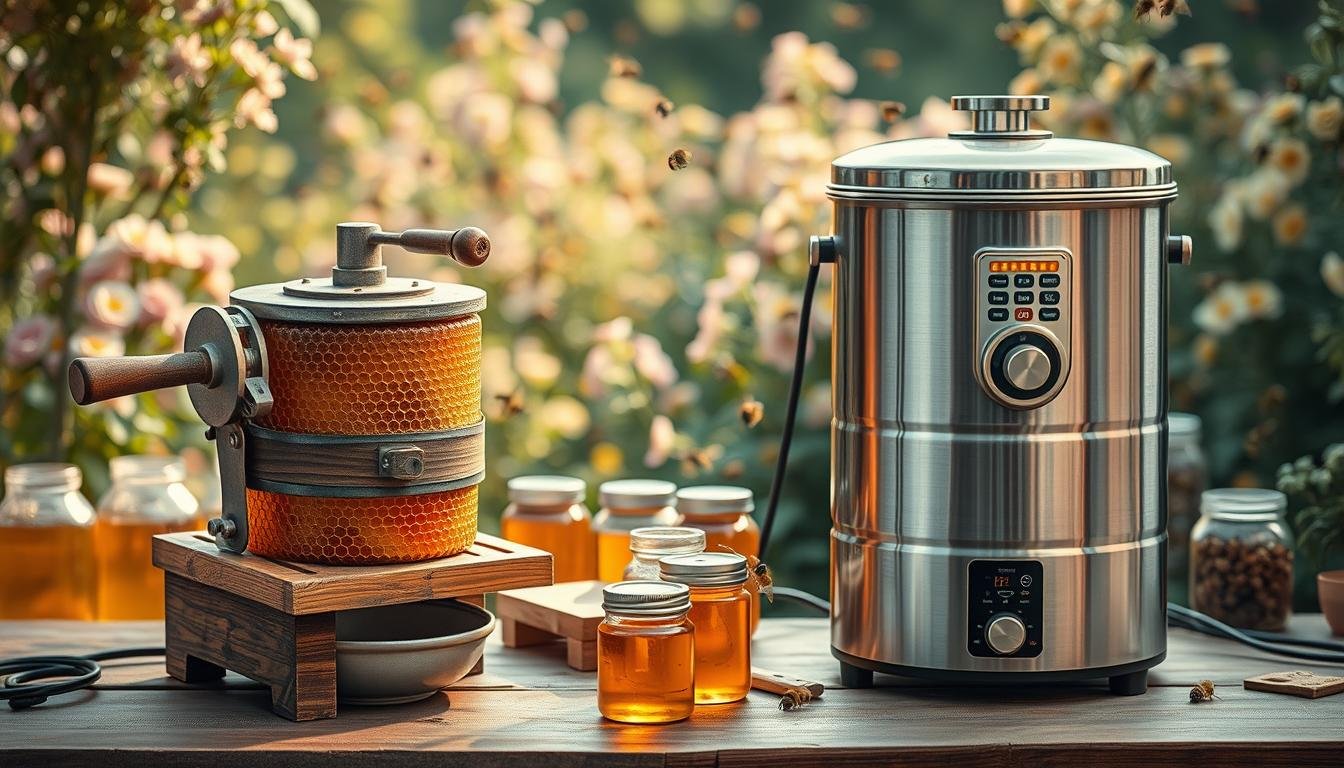
Choosing the right tool shapes your beekeeping workflow. For small apiaries, a hand-crank unit that handles 2 to 4 frames can keep costs low and work manageable. For larger operations, a powered machine can save significant time and labor.
Durability matters: many beekeepers prefer stainless steel equipment because it cleans easily and lasts season after season. Radial extractors are common in commercial setups because they spin both sides of a frame and speed up honey extraction.
Budget and scale guide the decision. A modest hand-crank model fits hobbyists, while high-capacity units can exceed $1,500 for commercial-grade builds. Learn more about key characteristics and capacity differences on this helpful comparison page at how manual and electric extractors compare, and explore automated options at automated extraction technologies.
Key Takeaways
- Select based on hive count and available time; small yards suit hand-cranked units.
- Stainless steel models offer hygiene and long-term value.
- Radial extractors reduce labor by extracting both sides at once.
- Electric, high-capacity machines can cost over $1,500 but cut processing time.
- Consider frame compatibility, material, and expected growth before buying.
Understanding the Role of Honey Extractors in Beekeeping
A proper extractor preserves the comb while freeing honey quickly and efficiently.
Extractors let a beekeeper remove honey from comb without damaging the wax. This protects frames so they can be reused. Using sturdy frames from suppliers like Dadant & Sons improves yield and keeps operations steady.
There are several types of extractors, from simple hand-cranked units to larger electric systems made of stainless steel. Match capacity to the number of frames you process each season to avoid bottlenecks.
“All extractors work best when paired with quality frames that hold comb securely.”
Proper maintenance of stainless steel equipment prevents wax buildup and preserves purity. Clean gear after each run and inspect seals and bearings to keep extraction smooth.
- Protect comb to reduce frame replacement costs.
- Choose the right capacity for your apiary size.
- Keep stainless steel clean to avoid debris in final jars.
| Feature | Benefit | Typical Choice |
|---|---|---|
| Capacity (frames) | Matches workload, saves time | 2–4 for small yards, 8+ for larger |
| Material | Durability, easy cleaning | Stainless steel |
| Design type | Extraction speed and wax care | Radial or tangential options |
Explore recommended equipment choices on this capacity and selection guide and learn about wax handling at bee wax extraction equipment.
Comparing Manual vs Electric Honey Extractor Performance
Performance differences show quickly once you start turning frames on a workday.
Manual Extraction Mechanics
A hand-crank unit relies on you to spin frames and create centrifugal force. You turn the crank to fling honey from the comb. That makes reusing frames easy, but you must flip each frame to clear both sides.
This process suits small yards and hobby beekeepers who process a few frames at a time. Stainless steel models are common in these units for durability and easy cleaning.
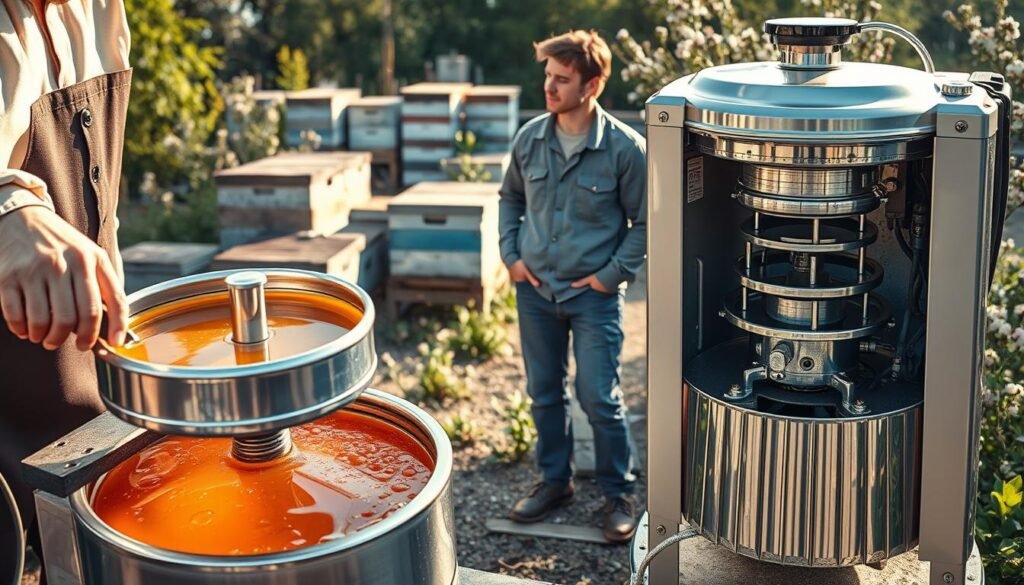
Electric Motor Advantages
An electric motor delivers steady speed control and reduces physical labor. For commercial beekeepers with many hives, consistent rpm saves time and keeps extraction efficient.
Electric machines cut repeated flipping and fatigue. For more on picking the right type for scale, see our guide to manual vs motorized extractors. Also learn care tips at cleaning and maintaining.
“Choose equipment that matches your number hives and the time you can commit.”
Key Differences in Extraction Styles
Extraction design dictates how fast you can process frames and how much labor you save.
Radial and tangential layouts change the work flow inside the drum. Radial extractors sit frames like spokes on a wheel so centrifugal force clears both sides at once. That makes these units highly efficient for commercial beekeepers handling large batches.
Tangential designs load frames facing one direction. You must flip each frame halfway through to clear the other side. That extra step increases time and physical effort but keeps equipment simpler and affordable for small yards.
Practical points to consider
- Efficiency: radial models speed up extraction because they act on both honey sides simultaneously.
- Labor: tangential units demand more handling and more time per frame.
- Preparation: remove wax cappings and inspect the comb before you load any frames.
- Material: stainless steel drums remain the preferred choice for easy cleaning and long service life.
“Choose the design that matches your frame count and schedule.”
For a practical comparison and buying considerations, see this FAQ on design differences and our harvesting guide at honey harvesting resources.
Operational Efficiency and Physical Demands
When spring yields peak, the real cost is often sweat and lost time. Choosing the right drive and drum affects who does the work and how fast it gets done.
Managing Physical Labor
Hand cranks place more demand on the beekeeper. Turning for hours tires wrists and shoulders. That is especially true when you have many frames to clear.
Keeping frames balanced inside the drum reduces vibration. Unbalanced loads can harm comb and slow the process.
Time Savings for Large Operations
An electric motor frees you to uncapping and sorting frames while the machine runs. Centrifugal force does the heavy lifting, so you can process more in less time.
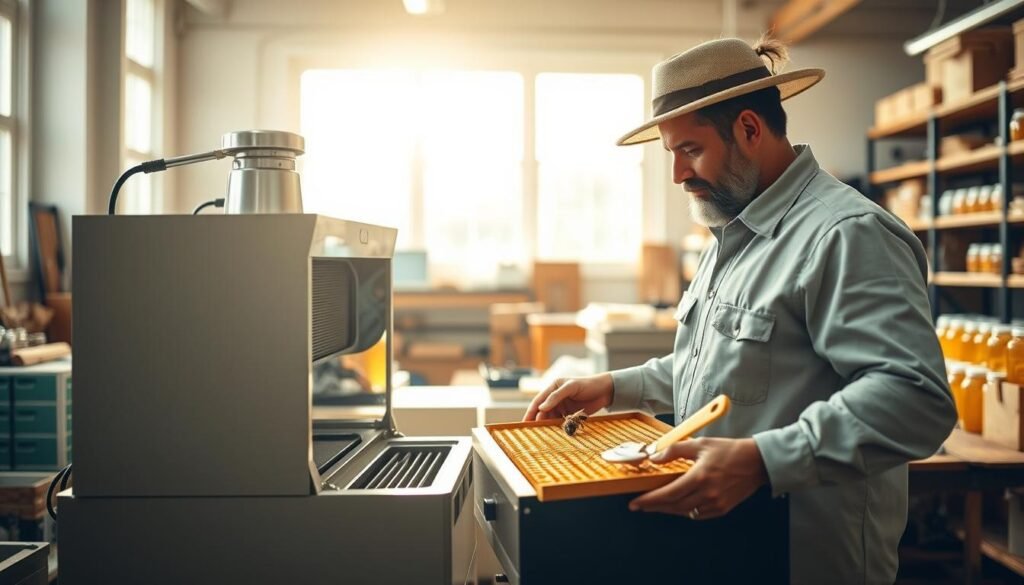
Maintenance Requirements
Regular care keeps stainless steel drums reliable. Scrape wax and propolis from the interior after each run.
Wash with warm water and a mild detergent, then dry to prevent corrosion. Inspect seals and bearings before peaks.
“Balanced loads and routine cleaning extend service life and preserve comb quality.”
| Task | Why it matters | Recommended action |
|---|---|---|
| Load balance | Prevents vibration and comb damage | Pair frames of similar weight |
| Cleaning | Removes wax and propolis build-up | Scrape then wash with warm, mild detergent |
| Motor use | Saves physical effort and time | Free up staff to uncapping and sorting |
| Inspection | Detects wear early | Check seals, bearings, and drum surface |
For broader beekeeping benefits and workflow tips, see our beekeeping benefits guide.
Factors Influencing Your Equipment Investment
Deciding what gear to buy starts with how many hives you plan to service each season. The number hives you manage will determine whether a compact hand crank unit or a larger motorized machine fits your workflow.
Brands matter: makers like Maxant and VIVO offer a range of models, with different frame capacities and motor options to match small to mid-size operations.
- Match capacity to your annual load so you avoid bottlenecks and wasted time.
- Weigh price against long-term goals; higher upfront cost for a machine often pays back in labor saved.
- Choose stainless steel drums for durability and easier cleaning after extraction.
- Decide between radial extractors and tangential types based on throughput and handling preferences.
“Buy to fit your harvest cycle and planned growth.”
For detailed comparisons and market options, review electric and hand choices at machine comparison and explore broader beekeeping topics at Beekeepers Realm.
Conclusion
Select tools that turn long days into efficient processing while protecting comb. Choose based on your hive count, budget, and available time so the workflow fits your goals.
Affordable hand units suit low-volume yards, while motor-driven models save labor for larger runs. Both radial and tangential designs have a place; pick the style that matches your frame flow and throughput needs.
Keep stainless steel gear clean and inspected to extend service life and preserve honey quality. For buying and maintenance guidance, see this differences between manual and automatic extractors and our honey production equipment overview.