Protecting your apiary starts with simple, reliable measures at the base of each box. Argentine ants have created vast super-colonies across parts of the United States, posing a real threat to backyard beekeeping.
Early action reduces stress on colonies and lowers the chance that bees will abscond. Focusing on the support system beneath boxes gives you a first line of defense against crawling pests.
Not every method works for every species, so most professionals now recommend layered solutions. Practical tactics include targeted barriers, repellents, and habitat tweaks that keep bees productive without harming them.
For practical guidance on dealing with invasions inside the box, see this detailed resource on ants in the hive. Use careful observation and tailored deterrents to keep colonies healthy today and into the future.
Key Takeaways
- Place barriers at the base to stop most crawling pests before they reach the entrance.
- Observe species-specific behavior to choose the right deterrents for your area.
- Combine repellents, physical barriers, and habitat changes for lasting results.
- Prioritize measures that protect bees while targeting the pests.
- Monitor regularly and adapt tactics to keep colonies strong over time.
Understanding the Ant Threat in Your Apiary
Argentine ants are a non-native menace across much of California and the southern United States. These invaders form vast super-colonies that move fast and act aggressively. Beekeepers should treat the risk as urgent.
The Impact of Argentine Ants
When these ants enter a hive they focus on honey stores and frames. Large groups can overwhelm a colony and force bees to abscond. Losses often include missing frames and a sharp drop in honey yield.
Why Ants Target Beehives
Scott Derrick noted on June 19, 2024, that ants are naturally drawn to sweet resources inside boxes.
“Ants are relentless in seeking food, making the sweet contents of the hive an irresistible target.”
Once an ant colony establishes itself nearby, it returns repeatedly, creating ongoing problems for the apiary. Protecting bees from these pests is key to preserving the season’s honey harvest.
- Aggressive invasion: super-colonies can force an entire bee colony to leave.
- Direct damage: ants may lay eggs in stores and ruin frames.
- Persistent pressure: repeated attacks reduce production and stress bees.
Selecting the Right Hive Stand for Maximum Protection
Start protection at the bottom: a good base reduces risk and makes management easier. Choosing the proper hive stand is the first step to protect hives, since beginners often lose new nucs when using simple cinder blocks.
Keep legs short and slim. A Langstroth becomes unstable if the support is too tall. Aim for legs between 6 and 8 inches to balance stability while adding heavy supers.
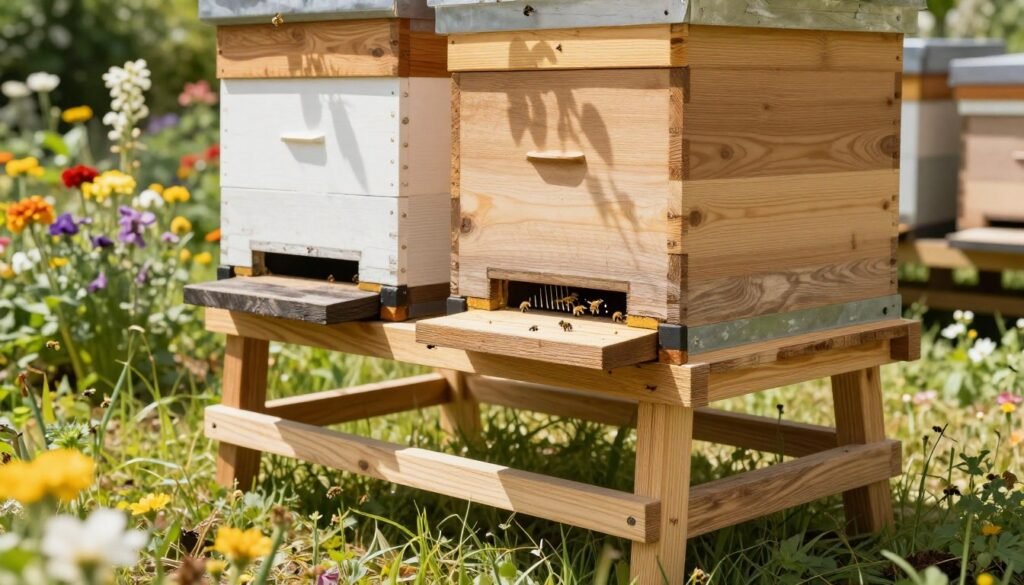
Slim legs make it easier to add barriers around a narrow surface. Elevating the colony limits the number of paths insects can use to reach the entrance of the beehive.
- Choose designs that safely carry seasonal loads without wobble.
- Select durable materials that resist rot and shifting.
- Invest in quality stands to protect colonies and long-term yield.
“A modest, sturdy base prevents many common losses and makes future maintenance safer.”
| Feature | Recommended | Why it matters |
|---|---|---|
| Leg height | 6–8 inches | Stability while adding supers; easier barrier setup |
| Leg profile | Slim | Narrow surface simplifies effective barriers |
| Material | Pressure-treated wood or metal | Durable under load and weather-resistant |
For detailed designs and noise-reducing options, review this guide on noise-reducing hive supports. Proper selection protects bees and preserves your investment.
Implementing Effective Hive Stand Sanitation and Ant Control
A tidy perimeter around each colony removes the simplest route pests use to find honey.
Keep vegetation low so grass or bushes cannot touch the base or reach the entrance. Any contact creates a direct highway for pests to reach frames and raid stores.
Use weed cloth and a gravel layer around the base to block growth. This approach works well, though it typically lasts about one year before renewal is needed.
The Importance of Weed Prevention
Inspect the legs of your hive stand often. Debris can collect at the leg sockets and create unnoticed bridges for insects.
If a concrete pad is not available, be diligent with weeding. One blade of grass touching the beehive entrance can compromise protection for the whole colony.
- Trim the area around the base at least every two weeks during peak growth.
- Refresh gravel and cloth annually for reliable protection.
- Check for debris under each leg during routine inspections.
| Issue | Recommended action | Frequency |
|---|---|---|
| Vegetation contact | Remove plants within 3 feet; install weed cloth | Biweekly trim / annual cloth refresh |
| Debris on legs | Brush and clear leg sockets; inspect for bridges | Every inspection (monthly) |
| No concrete pad | Use gravel perimeter and active weeding | Seasonal maintenance / as needed |
For detailed steps on keeping pests out of the beehive entry zones, consult this guide on keeping Argentine pests out of your. For broader apiary layout and pad options see a practical apiary setup guide.
Utilizing Physical Barriers and Moats
A focused barrier strategy turns each leg of your support into a fortified point of entry. Physical measures reduce routes pests use to reach the colony and protect frames without chemicals.
Setting Up Oil Moats
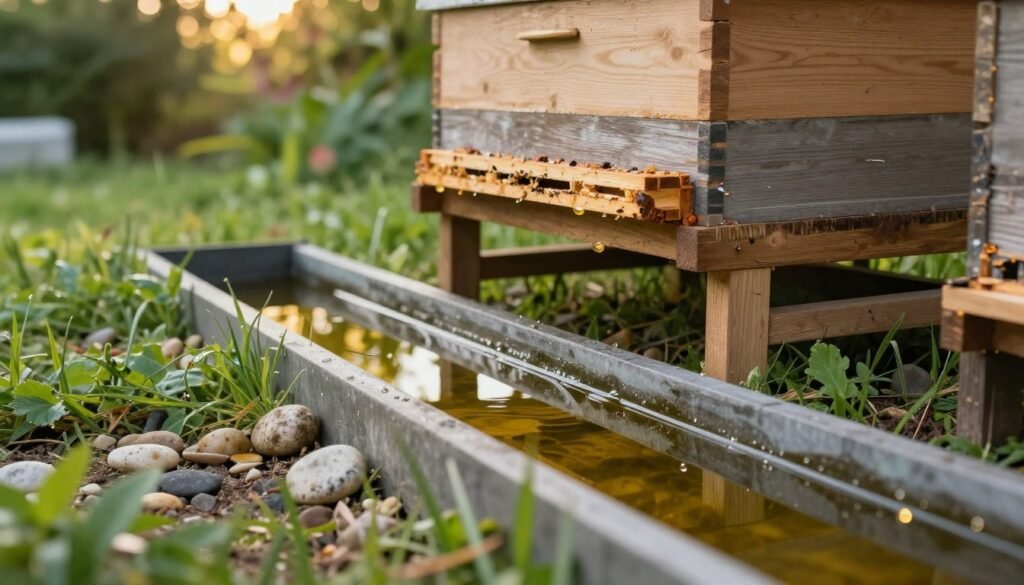
Oil moats are simple and effective when checked regularly. Place a wide, shielded container around each leg so the leg fits inside but bees cannot fall in.
Use vegetable oil or light motor oil and refill water or oil as needed. Wide containers reduce splashing and limit bee risk.
- Tip: Inspect reservoirs weekly during hot months to keep ants away.
- Pro option: DefyAnt Stands feature built-in moats and an adjustable shield for easy cleaning.
Using Sticky and Slick Barriers
Sticky roping like Tanglefoot works for short periods but gathers dust and dead insects. Replace it often to remain effective.
Newer products such as AntCant spray a dry, non-toxic coating on smooth legs. It creates a slick surface that prevents climbing for months.
Dedicate a little time to maintain these methods. Proper upkeep makes a hostile environment for insects and helps keep ants away.
Remove ants naturally for step-by-step practices that complement physical barriers.
Evaluating Natural and Chemical Deterrents
Before applying treatments, assess the area around your apiary to avoid harming bees or local wildlife.
Diatomaceous earth works by puncturing insect exoskeletons, causing dehydration. It is useful when dry, but loses effect after exposure to water and must be reapplied often.
Sprinkle a thin ring on the ground around the hive entrance, taking care to avoid deep piles where a bee might fall into the powder. Use sparingly and check frequently.
Cinnamon smells strong and can deter some pests, yet it is largely ineffective against Argentine ants. Do not rely on cinnamon as a primary solution for serious infestations.
Grease or oil on legs can block climbing, but dirt and debris reduce effectiveness over time. Chemical sprays can work faster, but evaluate soil impact and risks to foragers before use.
- Natural methods are safer for bees but require more time and upkeep.
- Reapply powders after rain and replace greasy barriers when soiled.
| Method | Pros | Cons |
|---|---|---|
| Diatomaceous earth | Non-toxic when dry; effective on many insects | Neutralized by water; can trap bees if overapplied |
| Cinnamon | Easy to apply; pleasant scent | Limited effect on Argentine ants; short-lived |
| Grease/oil moats | Simple barrier; immediate effect | Attracts debris; needs frequent cleaning |
| Targeted chemical | Fast reduction of pests | Soil contamination risk; may harm bees if misused |
When in doubt, pair careful physical measures with natural products. For removal options that require extra care, see this guide on safe bee removal from a building.
Maintaining a Clean Beekeeping Environment
A tidy apiary cuts pest pressure quickly. Spilled honey or wax near the entrance acts like a magnet for unwanted insects. Remove drips and crumbs after inspections to keep visits low.
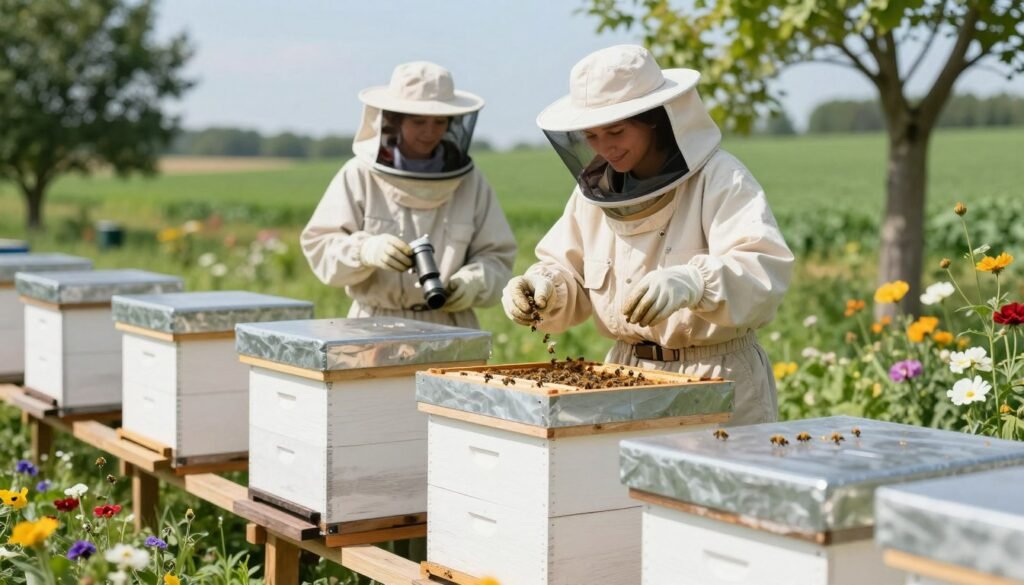
Inspect legs and the ground beneath each stand regularly. Debris can create new bridges to the colony. Clear leaf litter, grass, and soil that touches the base.
Use a small amount of cinnamon on the inner cover for a mild deterrent, but do not rely on it alone. Apply diatomaceous earth sparingly around hive perimeters; keep it away from frames where bees work.
Light oil in moat reservoirs works well to stop climbers when topped weekly. Check reservoirs after rain. Replace soiled barriers to avoid losing effectiveness over time.
- Clean spills right away after inspections.
- Brush legs and clear sockets monthly.
- Reapply diatomaceous earth after wet weather.
By dedicating a little time each visit, beekeepers reduce pressure on colonies. Regular upkeep preserves honey stores, supports bee health, and keeps the area productive.
Conclusion
strong, practical steps help keep colonies robust. Good beekeeping relies on simple habits: check supports, remove debris, and use layered barriers.
Keep the ground clear around each base to cut pest pathways. Implement proven solutions today to reduce stress on colonies and protect honey stores.
Limit pest visits with regular upkeep, targeted barriers, and timely adjustments. Consistent control preserves yield and supports long-term survival of hives.
Stay informed on new methods and adapt as threats change. Take these measures now to protect hives and secure healthy honey harvests in the seasons ahead.
FAQ
What are the most common ant species that attack beehives?
Argentine ants and pavement ants are frequent troublemakers. Argentine ants form large, persistent trails and can invade boxes to steal honey or disturb brood. Pavement ants forage in soil and debris near colony entrances. Identifying the species helps choose the right tactic, such as baiting for Argentine ants or using physical barriers for ground-nesters.
How do ants harm a honey-producing colony?
Ants compete for stored food, contaminate frames, and stress worker bees. Heavy infestations force bees to spend time defending the nest rather than foraging. That stress lowers honey production and can reduce colony strength, especially during spring buildup or hot, dry periods when resources are scarce.
What stand features reduce the risk of ant incursions?
Choose stands with smooth, elevated legs and a solid, stable base. Metal legs or treated lumber reduce tunneling and chewing. Elevation keeps entrances above ground moisture and minimizes access for crawling insects. A removable tray or drip pan makes cleaning easier and discourages debris that attracts pests.
What sanitation steps should I take around beehives to deter ants?
Keep the immediate area clear of plant debris, spilled sugar, and fallen frames. Mow vegetation and remove piles of wood or stones where ants nest. Clean up honey spills promptly and store supers and equipment off the ground in sealed containers to reduce attractants.
Are oil moats an effective physical barrier?
Yes. An oil moat around a leg or a rod coated with a thin film of vegetable oil prevents many species from crossing. The moat must be maintained and refilled after rain. Use non-toxic oils and secure containers so they won’t tilt; combine this with regular cleaning for best results.
How do sticky barriers compare to oil moats?
Sticky tapes or commercial adhesive collars block ants effectively for a time. They’re easy to apply but need frequent replacement as dirt and debris accumulate. Adhesives may gum up with wax or propolis, so check legs regularly and avoid products that could trap beneficial insects.
Can natural deterrents like cinnamon or diatomaceous earth protect colonies?
Cinnamon offers limited deterrence and works best as a short-term repellent near entrances. Diatomaceous earth can deter some ground-traveling species if kept dry, but it loses effectiveness when wet. Both are safer than many chemicals but require frequent reapplication and should be used as part of an integrated approach.
When should I use chemical baits or pesticides?
Use baits when infestation is severe and nonchemical methods fail. Choose ant-specific baits, place them away from hive entrances, and follow label directions. Avoid broad-spectrum sprays near colonies; they can harm worker bees. Consult local extension services for approved products and safe placement.
How often should I inspect stands and colony entrances for ants?
Inspect weekly during warm months and after storms. Look under boxes, around legs, and at entrance activity. Early detection allows quick action—clean, reapply barriers, or set baits—before ants establish large trails into equipment or honey stores.
What maintenance helps keep equipment ant-free over time?
Store supers and frames dry and off the ground, clean honey residues from tools, and rotate or replace worn leg barriers. Seal cracks and gaps in stands and regularly remove weeds and debris that offer cover. Good storage and routine cleaning significantly reduce long-term pest pressure.
Are there design changes that make existing stands more ant-resistant?
Yes. Adding smooth metal leg sleeves, raising stands onto concrete pavers, or fitting removable drip pans makes crossing harder for ants. Installing a shallow water moat around each leg or mounting equipment on a single central post with an oil moat also increases protection without replacing the whole structure.
How do colony location and landscaping affect ant problems?
Placing colonies away from dense ground cover, fruit trees, or compost piles reduces attractants. Gravel or hard-packed surfaces under hives limit nesting sites. Maintain a clear radius of several feet around each unit so ants must cross exposed ground, making barriers and inspections more effective.
Is it safe to use diatomaceous earth near bees?
Food-grade diatomaceous earth is low risk to adult bees if applied sparingly and kept dry. Avoid dusting frames or active brood areas. Apply it to pathways or around legs rather than on colony surfaces to minimize inhalation risk and preserve its desiccant effect.