Managing a productive apiary means choosing the right beekeeping equipment to keep honey harvesting safe and efficient. A full honey super can weigh up to 45 pounds, so good tools matter during inspection and lifting.
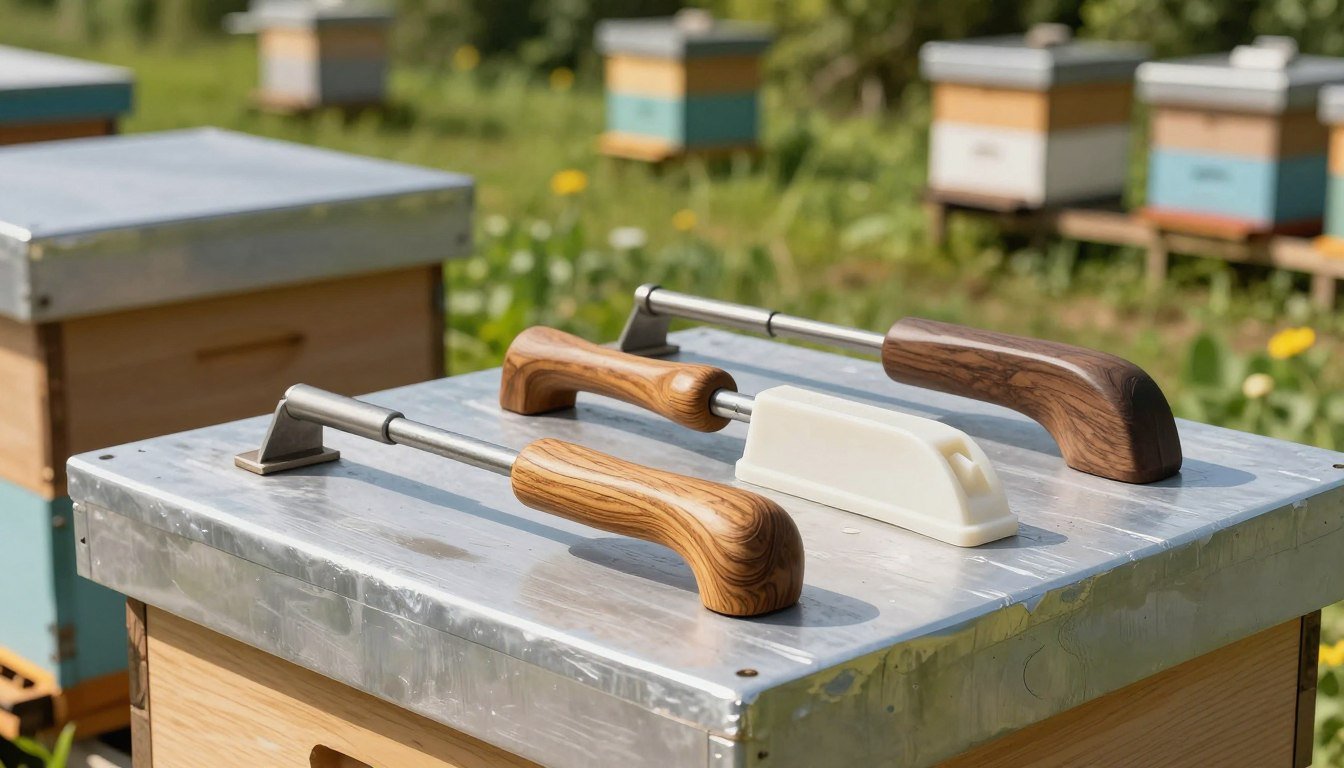
The Bee Smart Super Grip Beehive Handle, introduced March 19, 2024 by Scott Derrick, shows how design changes help reduce strain. Its stainless steel screws and secure grip protect hands and speed up work around bee boxes.
Proper management also means picking the right size and wooden materials to extend the life of your box and save time during honey harvesting. This guide explains how specific tools and accessories can transform daily work with bees and improve overall hive care.
Key Takeaways
- Invest in quality equipment to make honey harvesting safer and faster.
- A full honey super can reach 45 pounds; use tools that ease lifting.
- The Bee Smart Super Grip uses stainless steel screws for a secure grip.
- Choosing correct sizes and materials protects wooden boxes and hands.
- Learn more about beehive options at beehive types and accessories.
The Physical Challenge of Lifting Honey Supers
Lifting full honey boxes can strain even seasoned beekeepers if tools and technique fall short. Traditional Langstroth beehives use cut-out grips that offer little purchase. That forces the hand into awkward positions and causes sore hands after long inspections.
A loaded box—packed with bees honey and capped comb—demands notable strength. Repeated lifts across many hives increase the risk of joint pain and long-term wear for a dedicated beekeeper.
Modern designs aim to spread weight through better grip geometry. The Bee Smart Super Grip uses a helix concept to transfer load and reduce stress on stainless steel screws, lowering the chance of frame or box failure.
Prioritize tools that protect your body and your equipment. Learn practical recommendations in this general beekeeping guide and see evaluations of frame grips at best frame grip reviews.
Evaluating Commercial Hive Handle Types for Heavy Supers
A good commercial grip blends user comfort with reinforced structure to protect hive bodies. This short guide helps beekeepers weigh ergonomic features and material choices when selecting equipment that moves honey boxes safely.
Ergonomic Grip Designs
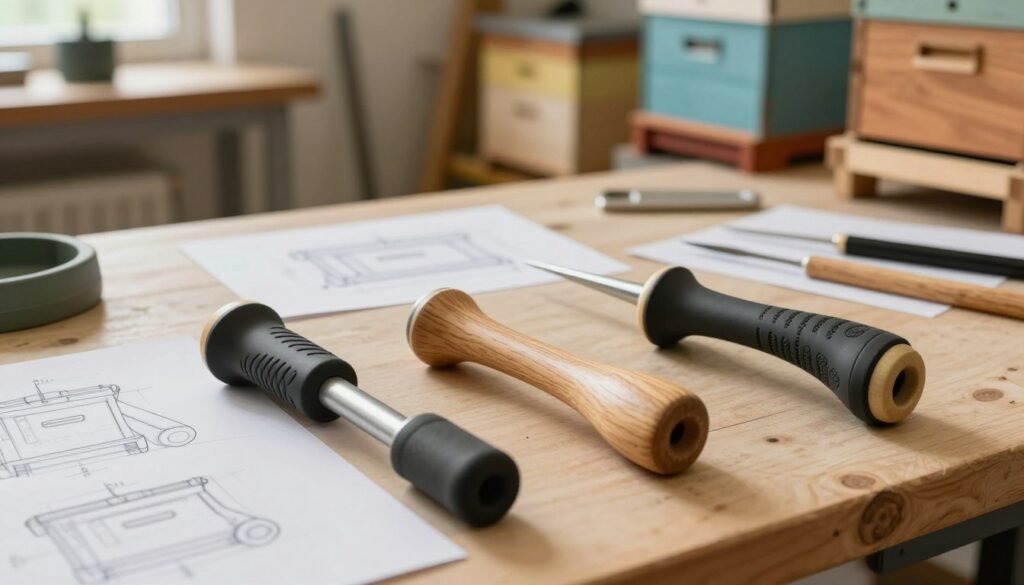
Comfort matters. Look for a grip that enlarges the hand surface and avoids sharp edges. A wider surface spreads load and lowers wrist torque during lifts.
Quick attachment and easy removal speed inspections and reduce time at the top of the hive. Select a size that fits the box and your hand to keep control every lift.
Durability and Material Considerations
Reinforcing ribs add rigidity and protect the frame under strain. The Bee Smart Super Grip uses this concept to reinforce box strength.
- Stainless steel screws prevent rust and extend service life.
- Choose corrosion-resistant materials to keep accessories reliable in wet seasons.
Compare designs and learn how super size affects management in this honey super size guide, and check tool picks at best hive tool reviews.
Crafting Custom Wooden Cleats for Your Apiary
Make simple wooden cleats to improve grip and reduce wrist strain when moving full boxes. A DIY cleat fits common wooden boxes and adapts to each beekeeper’s reach and strength.
Selecting Materials and Dimensions
Cut cleats from a 1 x 8 pine board to 7 1/4 inches long and 1 1/4 inches wide. Sand the edges smooth so the hand rests comfortably on the surface.
Cutting a 15° angle on the top and bottom gives a natural grip and helps shed water during wet seasons. Always pre-drill holes, and attach cleats with stainless steel screws to prevent splitting and corrosion.
| Material | Dimension | Top/Bottom Angle | Fastener |
|---|---|---|---|
| 1 x 8 pine | 7 1/4″ x 1 1/4″ | 15° | Stainless steel screws, pre-drilled |
| Wood finish (optional) | Trim to fit box edge | Helps water runoff | Check tightness annually |
Custom cleats improve ergonomics without buying costly gear. Keep an eye on storage so added pieces do not block stacking. Learn more about ergonomic safety and lifting cleats at lifting cleats ergonomic safety.
Essential Tools for Managing Heavy Hive Boxes
A compact kit of quality tools makes routine work in the apiary quicker and safer. Choose items that offer leverage, protect wood parts, and limit strain on the hand.
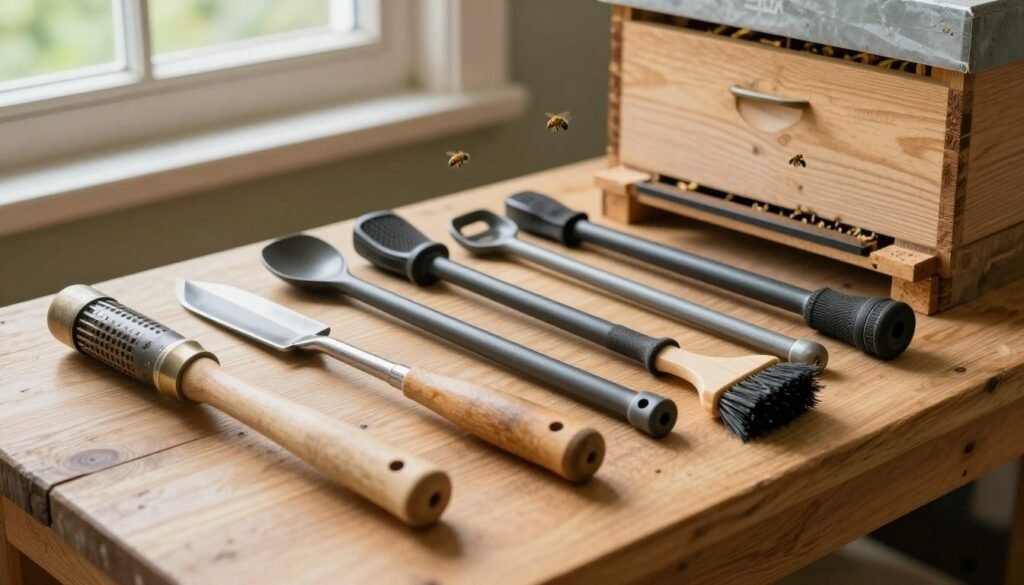
Standard Hive Tools
Standard tools run about 9 to 10 inches long and give needed leverage to pry apart propolized boxes. The flat blade is perfect to scrape propolis from the top and to lever apart joined surfaces.
J-Hook Lever Designs
The J-hook acts as a fulcrum to lift frames gently from tight spaces. This design helps beekeepers inspect frames without damaging wood or upsetting the colony.
Hybrid Multi-functional Tools
Hybrid tools blend the flat blade and J-hook features. They speed honey harvesting and general maintenance. Pick professional-grade stainless steel gear to last and to resist corrosion.
- Carry a quality stainless steel tool when doing box lifts and inspections.
- Match size and leverage to your strength to reduce fatigue during harvesting.
- See more on choosing the right option at which hive tool to use and brush choices at bee brush alternatives.
Best Practices for Installing and Maintaining Handles
A firm, rust-resistant screw pattern is the single best upgrade you can make to improve safety when lifting full boxes.
Use stainless steel screws and pre-drill holes to avoid splitting the wood. That prevents corrosion and keeps attachments secure through wet seasons.
Always confirm each grip is tight before any lift. A quick check saves time and prevents a dropped frame during an inspection.
Inspect wood annually. Look for rot, cracks, or loose fasteners and replace damaged parts right away.
Apply a protective coat of paint or finish to wooden surfaces to help shed water and extend life. Use the right tools — a drill and correct bit — to seat screws without stripping.
- Keep accessories simple: choose designs that spread load across the box edge.
- Routine checks: tighten screws and check fit after every few inspections.
| Task | Recommended Action | Frequency |
|---|---|---|
| Fasteners | Use stainless steel screws, pre-drill holes | At installation; check quarterly |
| Wood condition | Repair or replace cracked or rotted sections | Annual inspection; as needed |
| Protective finish | Apply paint or outdoor sealant | Every 2-3 years or after major wear |
| Tools | Drill with correct bit; torque control if possible | During installation and replacements |
Tip: If you build custom cleats, review mounting guidance at beehive cleats. For stand stability that reduces stress on fasteners, see noise-reducing options at noise-reducing hive stands.
Conclusion
Smart, low-cost changes to equipment transform routine harvesting into a simpler task. Good choices reduce strain and improve your overall hive management.
Selecting the right option helps beekeepers protect hands and backs. Use durable stainless steel fasteners and ergonomic design to make honey harvesting safer and quicker.
Whether you build wooden cleats or buy commercial solutions, prioritize quality tools and reliable equipment. Check each frame and box before lifts to avoid accidents.
We hope this guide helps you choose the best approach and to choose a beehive with confidence. Small upgrades pay off by making time with your bee colony more productive and enjoyable.