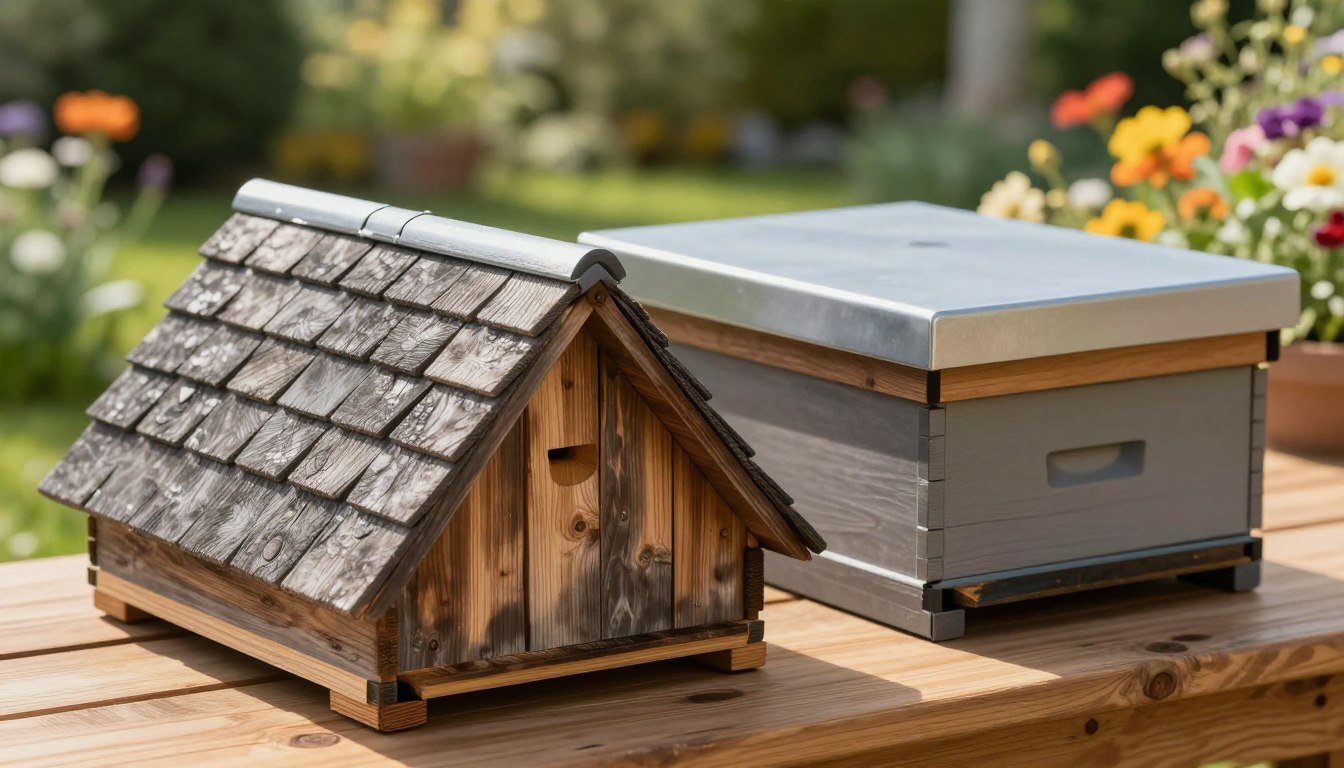
Picking the right top for your beehive affects protection, longevity, and maintenance. This short guide compares traditional gable options to simpler flat designs to help you choose a durable solution for your structure.
Historic designs such as the gable style have been a common feature on American homes since the 1600s and still deliver proven durability and weather shedding.
When weighing material cost and ongoing maintenance, consider how each design manages wind, rain, and ventilation. Good detailing keeps the interior dry and reduces repairs over time.
We include practical notes, build tips, and a link to a detailed ventilated design so you can see how ventilation and assembly work in practice: ventilated gabled bee hive roof.
Key Takeaways
- Durability matters: classic gable designs often last longer with proper care.
- Ventilation: proper airflow reduces moisture and colony stress.
- Cost vs maintenance: cheaper tops may cost more over time in repairs.
- Design choice: match the style to local weather and your skill level.
- Long-term protection: good construction keeps your investment safe.
Understanding Gabled Roof vs Flat Roof Hive Covers
A practical first step is comparing how each style manages moisture, airflow, and long-term wear.
Understanding the different roof types helps protect your house from damage. A professional 51-point inspection can reveal weak spots and hail susceptibility in many residential structures.
Many homes in the United States favor the gable design for its simple triangular profile and effective water shedding. When you compare gable designs to other styles, pay attention to how the structure ties into walls and flashing details.
Design choices shape curb appeal and the long-term functionality of your property. Balancing aesthetics with practical needs ensures the selected type meets local weather and maintenance capacity.
For a deeper look at ventilated approaches that improve airflow and reduce moisture, see this ventilated gabled roof design.
| Feature | Gable-style Top | Low-profile Top | Inspection Focus |
|---|---|---|---|
| Water shedding | Excellent—steep slope | Moderate—depends on flashing | Ridge and eave condition |
| Wind resistance | Good if braced | Better in high wind if sealed | Fasteners and edges |
| Ventilation | Easy to ventilate | Requires designed vents | Airflow paths and vents |
Defining the Gable Roof Design
A classic triangular top forms when two sloping sides join at a central ridge, defining this enduring design.
Open and Boxed Gable Styles
The open gable exposes the end framing under the peak, creating airflow and easy access for attic work.
The boxed gable encloses that end, which improves finish and weather resistance while keeping the same basic profile.
Structural Stability
Trusses and aligned framing follow the slope to transfer loads down to the walls. That approach keeps the structure stable under normal loads.
Because gable roofs shed water and rain quickly, they reduce long-term moisture on the walls and foundation.
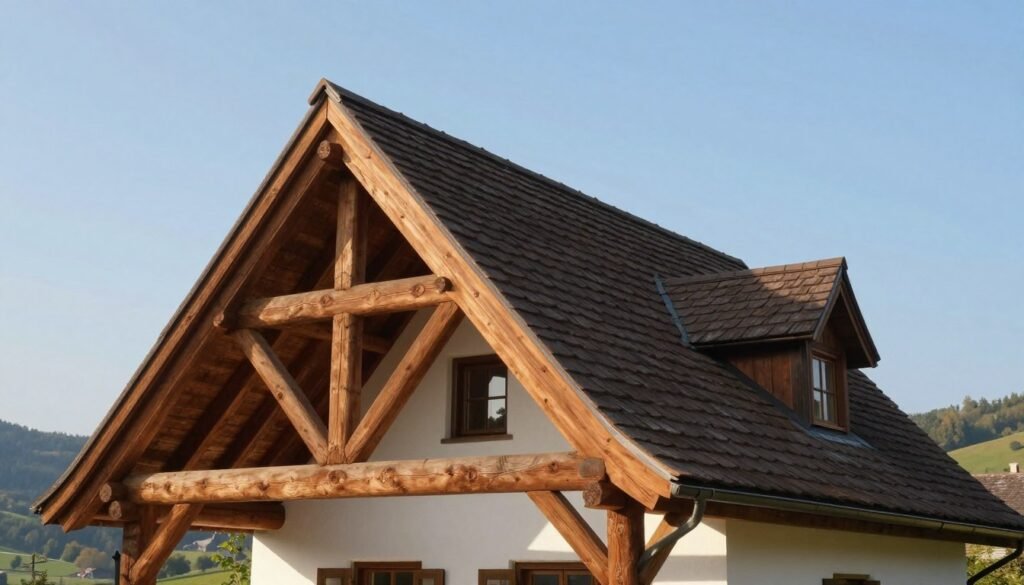
“Proper ventilation and correct pitch extend the life of the roof and lower maintenance.”
- The triangular gable is a centuries-old hallmark.
- Two sloping sides provide simple drainage and attic space for ventilation.
- In high-wind areas, Texas Direct adds end bracing to guard the structure.
| Feature | Open Gable | Boxed Gable |
|---|---|---|
| Ventilation | High — exposed soffits | Moderate — vented soffits needed |
| Weather resistance | Good with flashing | Better — enclosed ends |
| Maintenance | Easy attic access | Lower exterior upkeep |
Exploring Flat and Hip Roof Alternatives
Hip-style constructions channel water from every side, making them a solid option for heavy-rain regions.
A hip design has four sloping sides that meet the walls. That shape eliminates vertical ends and improves drainage and wind performance in exposed areas.
Construction is more complex than a gable option. Carpenters use more materials and refined framing to form the ridge intersections and hips. This raises initial costs but can lower repair needs over time.
Variations of Hip Roofs
- Pavilion—simple, nearly symmetrical slopes for small structures.
- Mansard—adds a steep lower slope to create extra attic space and architectural interest.
- Combination—blends hips with other styles to fit complex plans and curb appeal goals.
Adjusting pitch changes usable attic space and the overall look. For technical guidance on durable assembly and drainage details, consult this durability guidance.
“Slopes on all sides help channel rain and protect foundations when properly detailed.”
Performance Under Weather Conditions
How a roof handles wind, rain, and snow defines its real-world performance during storms.
Wind: A hip design resists gusts better because its multi-sided geometry reduces uplift and braces the structure naturally. Gable types can shed wind load well if the framing is reinforced, but they need proper bracing to avoid damage.
Water and drainage: The slope and number of sides determine how quickly water and rain move off the surface. Steeper slopes shed water faster and lower the chance of pooling at seams or eaves.
Snow load: Gable roofs often clear snow more easily due to pitch, but heavy accumulations still require strong rafters and secure fastening to protect the structure.
Durability ties directly to how runoff is managed and how the design copes with repeated storms. For practical tips on protecting woodwork and colonies during wet winters, see this wet winters guide.
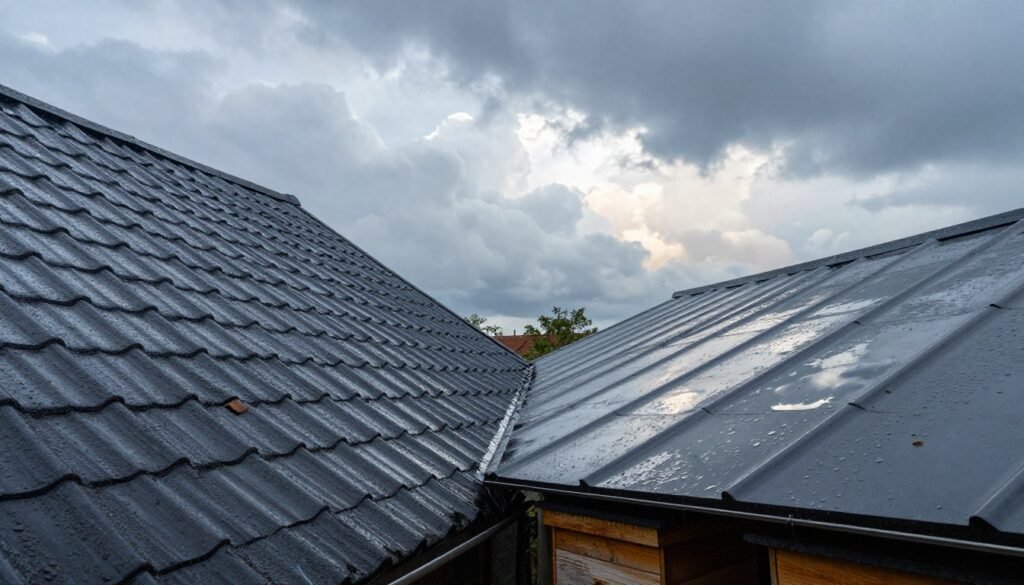
“A thoughtful design that matches local weather reduces repair costs and extends service life.”
Comparing Construction and Material Costs
Material choices and crew time drive most of the cost differences between styles.
Material and Labor Expenses
Gable installations tend to be faster and use less framing labor, keeping installation bills lower.
Typical ranges show gable projects between $13,000 and $48,000, while hip-style projects commonly fall from $20,000 to $60,000.
More complex framing and extra materials raise the price of multi-sided structures by roughly 35–40 percent.
| Feature | Gable | Hip |
|---|---|---|
| Installation range | $13,000–$48,000 | $20,000–$60,000 |
| Relative material use | Lower | Higher |
| Labor intensity | Standard | Specialized |
Long Term Value
Investing in quality materials reduces repairs and improves energy performance over time.
Pitch and slope affect material quantities and snow shedding, which influences long-term maintenance and drainage.
For guidance on durable panel choices and finishing that help insulation, see a composite panels guide and painting tips for insulation.
“A well-planned installation pays back in fewer repairs and lower energy bills.”
Maintenance Requirements for Different Roof Styles
How often you inspect and clear debris often has a bigger impact than the initial construction choice.
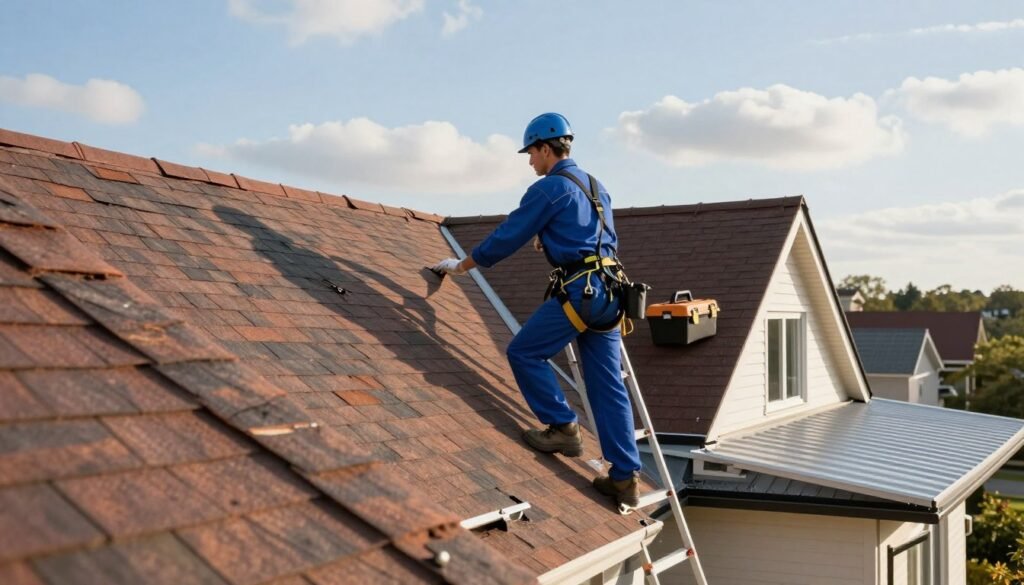
Regular checks protect the structure and spot small issues before they grow. Clear leaves and branches to prevent water pooling and blocked drainage. This matters in wet weather and after storms.
Hip designs need more attention because their complex joints create extra seams that can trap water and promote damage. The larger surface area also raises material and inspection needs by a noticeable margin.
A gable option is simpler to maintain. Fewer seams reduce leak risk during heavy rain and snow. Proper flashing and correct installation of shingles remain essential for all types.
“Simple, frequent maintenance is the best way to extend life and lower unexpected cost.”
- Inspect after wind events and heavy snow.
- Keep gutters and surfaces free of debris.
- Check flashing, fasteners, and exposed materials yearly.
| Requirement | Gable | Hip |
|---|---|---|
| Inspection frequency | Biannual + after storms | Quarterly + after storms |
| Common issues | Shingle wear, flashing | Seam leaks, larger debris load |
| Maintenance cost | Lower long-term | Higher due to materials |
Impact on Attic Space and Ventilation
Maximizing usable attic volume starts with choosing a profile that opens up interior space beneath the slope. A higher profile creates more headroom, making storage and mechanical runs easier to place.
Gable designs with two sloping sides give more attic space than many other profiles. The higher ridge often results in usable cubic feet for storage or ductwork.
Better ventilation follows naturally. Gable vents or soffit intake combined with a ridge exit improves airflow. That reduces heat buildup and lowers energy costs.
“Good ventilation prevents moisture buildup and protects the structure over time.”
- More usable space under the pitch helps families store items safely.
- Higher ridge height improves natural convection and ventilation.
- Proper slope and pitch choices affect how much functional attic space you gain.
Maintenance is simpler when airflow keeps wood dry and insulation effective. Choose a design that balances usable space with reliable ventilation for a healthier home.
Aesthetic Appeal and Curb Appeal
The silhouette of the upper structure often defines a home’s curb appeal more than paint or landscaping.
Visual impact matters. The chosen roof sets the tone for the entire property and becomes the focal point for neighbors and buyers.
A hip profile is prized for its balanced, symmetrical look and tends to read as elegant on many architectural styles. The triangular gable option gives a crisp, traditional look that suits classic homes and adds visible height and space beneath the slope.
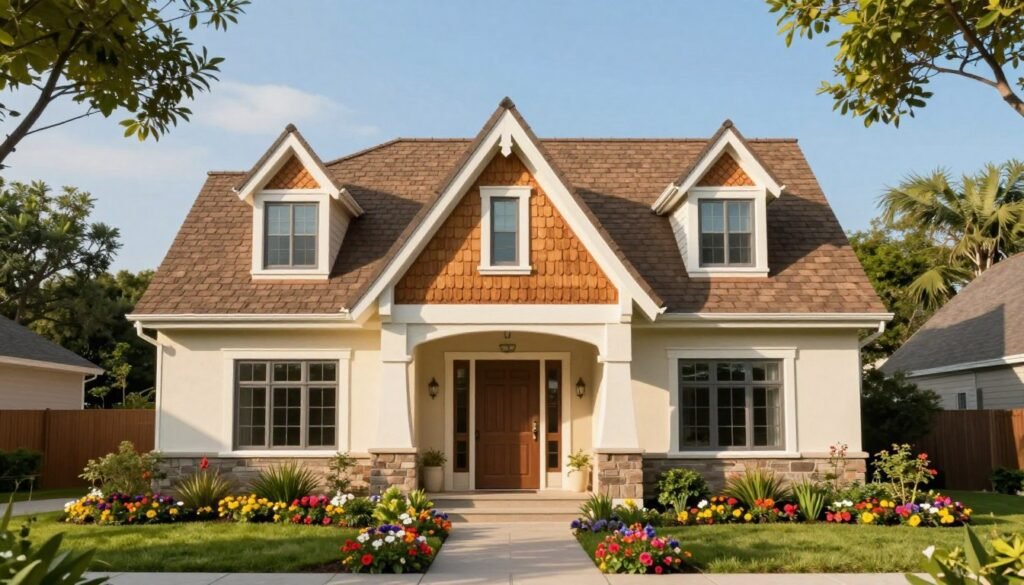
Choosing the right form can raise property value by improving curb appeal and perceived quality. Homeowners often pair different designs and materials to create a distinct look that complements existing architecture.
“A well-matched top improves resale value and creates a cohesive, attractive presence on the street.”
- Match the structure to the home’s style for a unified appearance.
- Invest in quality materials to lift both look and longevity.
- Blend styles carefully to add character without clutter.
| Feature | Hip | Gable |
|---|---|---|
| Visual impression | Symmetrical, elegant | Classic, striking |
| Best for | Formal and modern homes | Traditional and cottage styles |
| Value impact | High—refined appeal | High—timeless charm |
For details on how eaves and detailing influence curb appeal and durability, see guidance to protect eaves and detail.
Conclusion
A smart selection balances ventilation, drainage, and material choices to suit local conditions. This helps you match the design to weather, maintenance ability, and long‑term cost.
Gable-style options often give extra attic space and simpler construction, while hip styles add durability and wind resistance. Proper installation and timely maintenance ensure the best performance regardless of the type you choose. For ventilation ideas, see ventilation hacks.
Consider pitch, material, and snow loads when planning. These factors affect insulation, look, and curb appeal. For painting and weatherizing tips that protect materials, see this painting guide.
Choose the option that fits your budget and conditions to protect your investment and avoid future damage. With the right choice, installation, and upkeep, you get lasting durability, strong performance, and attractive appeal.