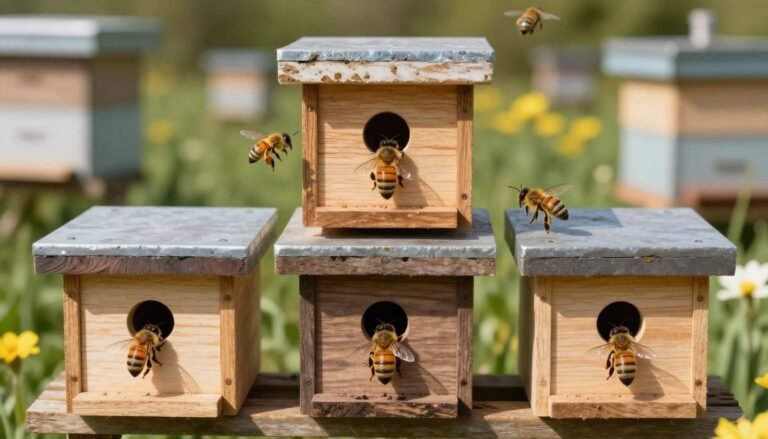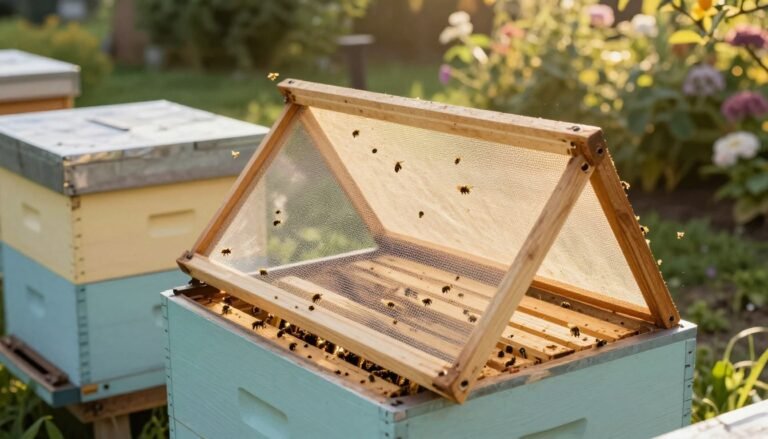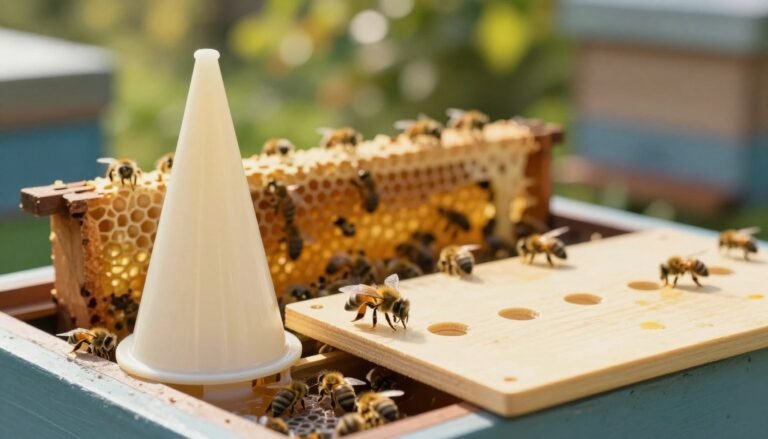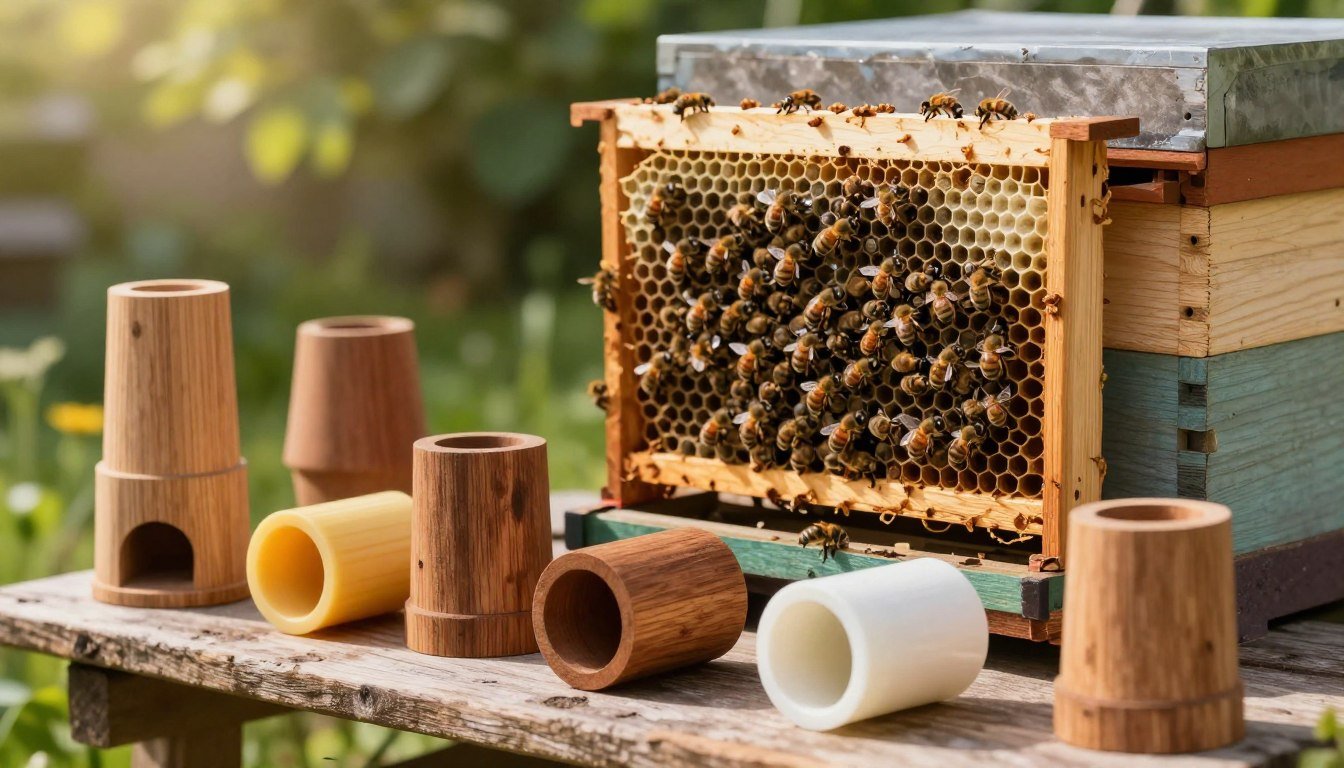
Small colonies need careful attention when cold weather arrives. A correctly sized slot at the hive front helps keep drafts out and warmth in. This simple tool can make the difference between a thriving spring and a lost colony.
Beekeepers rely on practical steps to help bees conserve energy and control moisture during winter. Rusty Burlew of Honey Bee Suite stresses that managing these openings is a vital part of hive health. Limiting exposure also reduces the chance of pests gaining access.
In 2024, pros emphasize that attention to size and ventilation supports the cluster and protects stored honey. Use best practices and a pre-winter checklist to set up the box correctly. Learn more about winter preparation and moisture control in this helpful guide.
Key Takeaways
- Properly sized openings help the colony retain heat and reduce drafts.
- Managing the hive front aids ventilation and prevents moisture buildup.
- Smaller, defensible access points protect against invaders in cold months.
- Routine pre-winter steps improve long-term viability of small colonies.
- See a practical wintering checklist at wintering honey bees.
Understanding the Role of Entrance Reducers for Overwintered Nucs
A properly sized slot at the face of a small colony supports thermal balance and reduces intruder risk.
These devices act as barriers that limit the size of the opening to manage traffic and defense. They often come in wood, metal, or plastic and fit many box styles.
The main goal is to help the bee group maintain internal warmth and security while keeping adequate ventilation. Good management reduces stress and conserves honey stores.
According to Honey Bee Suite, an entrance reducer is a barrier that restricts the size of the opening to help bees manage their hive.
Beekeepers commonly use them to protect a weak nuc colony during cold months. The box design and colony needs guide which shape and material work best.
- Helps the colony control internal environment and defense.
- Matches box layout and bee behavior for best results.
- Supports ventilation while limiting access to pests.
Learn more about the benefits of using an entrance reducer in cold.
| Feature | Typical Material | Primary Benefit |
|---|---|---|
| Size control | Wood, metal, plastic | Reduces drafts; eases defense |
| Ventilation balance | Wood or plastic | Prevents moisture build-up |
| Security | Metal or wood | Limits invader access |
Why Small Colonies Require Specialized Entrance Control
Small, five-frame colonies need tailored front openings to keep brood warm and the hive secure.
Defining Nuc Colony Needs
Defining Nuc Colony Needs
A 5-frame unit has far fewer adult bees than a full-size hive body. That lower population changes how the group defends itself and manages temperature.
Smaller openings help the colony defend against robbing bees and cut drafts that waste stored honey. A reversible design gives flexibility as populations grow.
Matching Entrance to Population
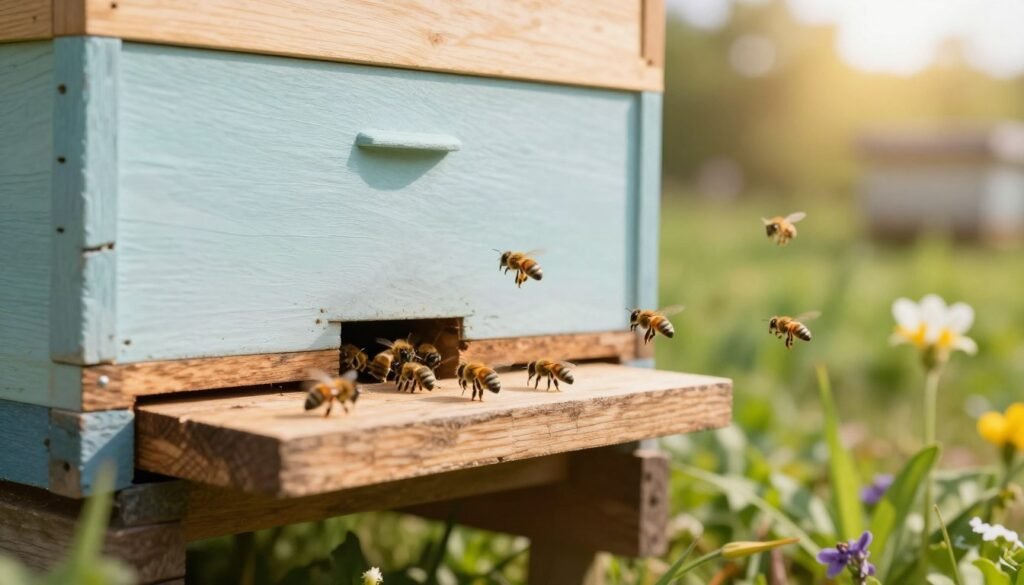
The common 5-frame reducer offers two widths: a 1″ small side and a 1 1/2″ large side. Use the 1″ side when a newly installed nuc colony needs defense.
Switch to the 1 1/2″ side during warm weather to improve ventilation and allow for busy returning bees carrying nectar and pollen.
Match the opening to the colony’s strength so bees can move freely but still defend brood and stores.
| Reducer Side | Width | Primary Benefit |
|---|---|---|
| Small side | 1″ | Greater defense; conserves heat |
| Large side | 1.5″ | Improved airflow; easier traffic |
| Reversible use | Both | Adjusts as colony size changes |
Learn more about the function of an entrance reducer and when to switch settings.
Protecting Your Hive Against Robbing and Pests
When a colony is thin, shrinking the front gap gives bees a better chance to hold the line.
Small colonies struggle to defend a large opening against robbing honey bees and yellowjackets. A compact opening concentrates guard bees so they can repel invaders and protect brood and honey.
Rusty Burlew notes that a reduced mouth gives a weak nuc colony a fighting chance against aggressive robbers.
- Rodents can gnaw wooden boxes in winter; a smaller front gap blocks their access and keeps mice out.
- Certain mite treatments need less airflow; using a tight opening turns the hive into an effective fumigation chamber.
- Proper management lets bees still get in and out safely while keeping a secure perimeter.
“Even though the colony may be small, a reduced opening helps them defend the entrance hole against pests that seek to steal honey.”
To learn practical tactics for managing hive robbing, see how to manage beehive robbing. For alternative hardware and ideas on adjusting openings, review entrance reducer alternatives.
Managing Ventilation and Drafts During Winter
Cold air and trapped moisture are the twin threats that can undermine a small hive during winter. Good control of the front opening keeps the cluster snug and reduces stress on the bees and brood.
Preventing Moisture and Cold Air Infiltration
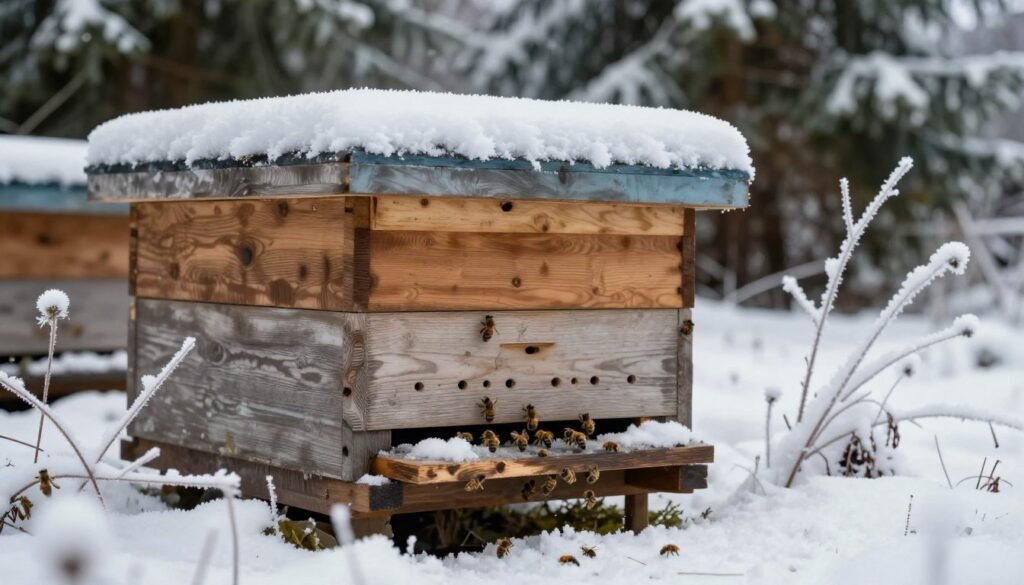
Use a properly sized entrance reducer to reduce drafts while allowing minimal airflow. A controlled gap helps keep honey stores dry and the box temperature stable.
Place the opening at the top of the reducer so a layer of dead bees does not block passages during deep cold. That simple placement preserves ventilation and prevents dangerous choke points.
- Keep the opening small in winter to limit cold air that can chill the cluster.
- Check the entrance periodically and clear any dead bees that might stop airflow.
- Controlled ventilation helps some mite treatments work by managing airflow through the hive.
- A proper reducer design balances defense and steady air exchange for a healthy colony.
“Managing airflow is a key factor in the successful overwintering of a small nuc colony.”
The Importance of Correct Reducer Sizing
Matching the reducer to a five-frame box prevents gaps that invite pests and chill the cluster.
Correct fit matters: a 5-frame nuc device is engineered to the 8″ x 3/4″ x 3/4″ dimensions used on standard five-frame boxes. Using a part made for a full-size hive will leave openings or misalign the opening.
Size must reflect colony strength, not just box style. A reducer that is too long or too short will not manage airflow or guard traffic well. That harms brood warmth and wastes honey stores.
| Reducer Type | Typical Dimension | Main Benefit |
|---|---|---|
| 5-frame nuc reducer | 8″ x 3/4″ x 3/4″ | Secure fit; blocks pests; proper ventilation |
| Full-size reducer | Varies (larger) | Too big for nuc box; gaps may form |
| Ill-fitting length | Short or overlong | Poor seal; uneven airflow; security risk |
Choose the correct entrance reducer to let bees manage traffic and keep ventilation stable. For related hardware like mouse guards, see best mouse guard options.
How to Properly Install and Position Your Reducer
A correct fit at the front of the hive body keeps traffic safe and defense tight. The common 5-frame pine piece is reversible and provides two clear settings. Set it so the gap faces up to keep passages open.
Top Versus Bottom Placement
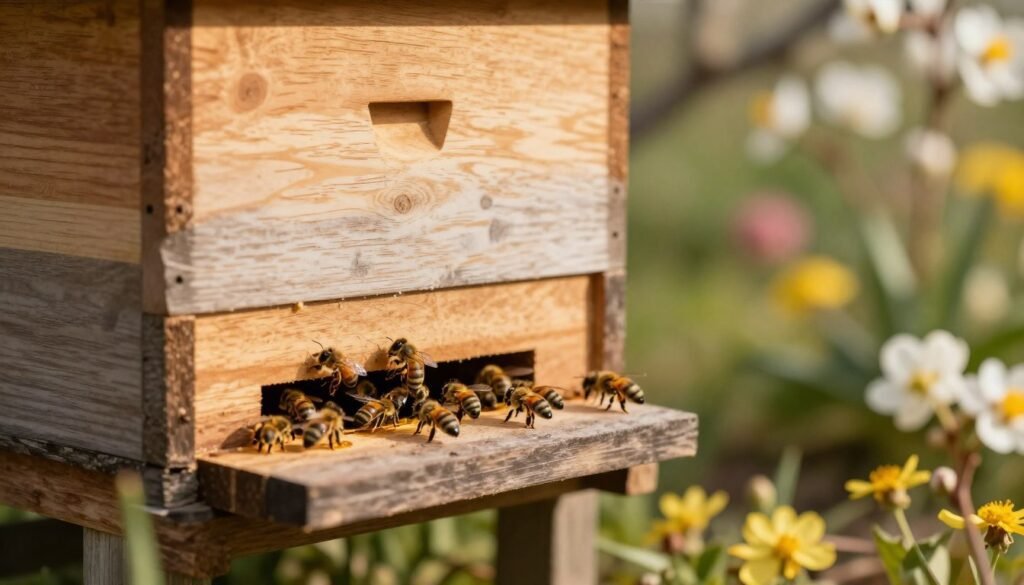
Always mount the opening at the top. When the gap is low, dead bees can pile and block the entrance hole. A top placement preserves steady ventilation and reduces the chance of choke points.
Ensuring Bee Passage
The reversible design lets you choose a smaller opening to aid defense or a larger entrance for higher traffic. Place the reducer at the front of the box so bees move in and out without congestion.
- Position the gap upward to prevent blockage by dead bees.
- Flip the piece to switch between a smaller opening and a larger entrance quickly.
- Install at the front of the hive body so the nuc colony can defend brood and honey.
- The white entrance option is durable and works well when fitted correctly.
“Set the 5-frame entrance reducer with the opening at the top to keep bee passage clear and ventilation steady.”
Seasonal Adjustments for Changing Weather
A reversible front piece gives rapid control over drafts and flight activity as the season shifts. Use the smaller opening in cool weather so the bees can hold heat and protect brood. This helps a newly installed nuc defend its stores with limited numbers.
As early spring turns to summer, flip the part to the larger entrance to ease traffic during nectar flow. A larger gap improves airflow and lets foragers return with pollen without bottlenecks.
Monitor the colony size and adjust often during inspections. A growing nuc needs a gradual change in size rather than a sudden full opening. The reversible design removes the need to swap parts during routine checks.
- Use the small entrance in cool weather to conserve warmth and boost defense.
- Switch to the larger entrance in warm weather to support heavy foraging.
- Check the box in early spring and again as population grows.
“Quick, seasonal tweaks at the front help bees balance warmth, ventilation, and defense.”
For a practical checklist on preparing hives through cold months, see the winter prep guide.
Avoiding Common Mistakes with Hive Entrances
A restricted front can turn a productive season into a bottleneck for returning foragers. Small colonies suffer when traffic stalls at the opening during a heavy nectar flow.
Rusty Burlew warns that using an entrance reducer at peak bloom can slow honey production and raise stress in the hive. Bees may try to chew painted parts when the gap is too tight, damaging the unit.
Watch these common errors:
- Keeping the opening too small even though the colony needs more space during a nectar flow.
- Leaving a large gap on a weak nuc during robbing conditions instead of narrowing it.
- Ignoring signs of congestion — piled bees at the hole or long return delays.
The simple fix
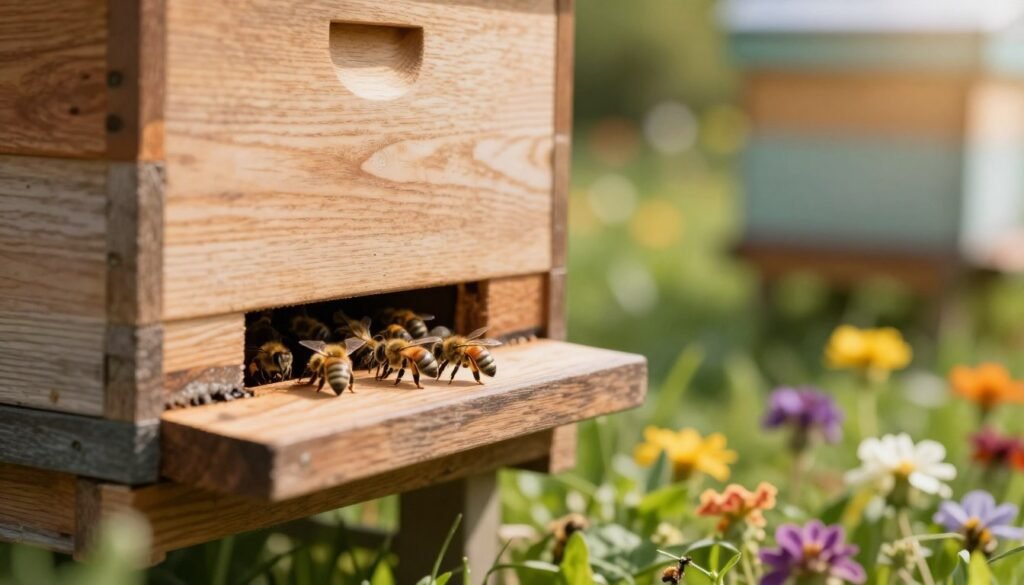
If traffic seems like it is backing up, flip the piece to the larger opening or switch to a wider part. Proper management prevents chewing, protects the brood and keeps the colony productive into late season.
“Using a tight opening at the height of nectar flow can slow honey production by causing congestion.”
Recognizing When to Remove Reducers in Spring
Early spring checks help you decide when the time is right to open the hive wider. Look at bee activity, the state of the brood, and whether the group can repel intruders before making changes.
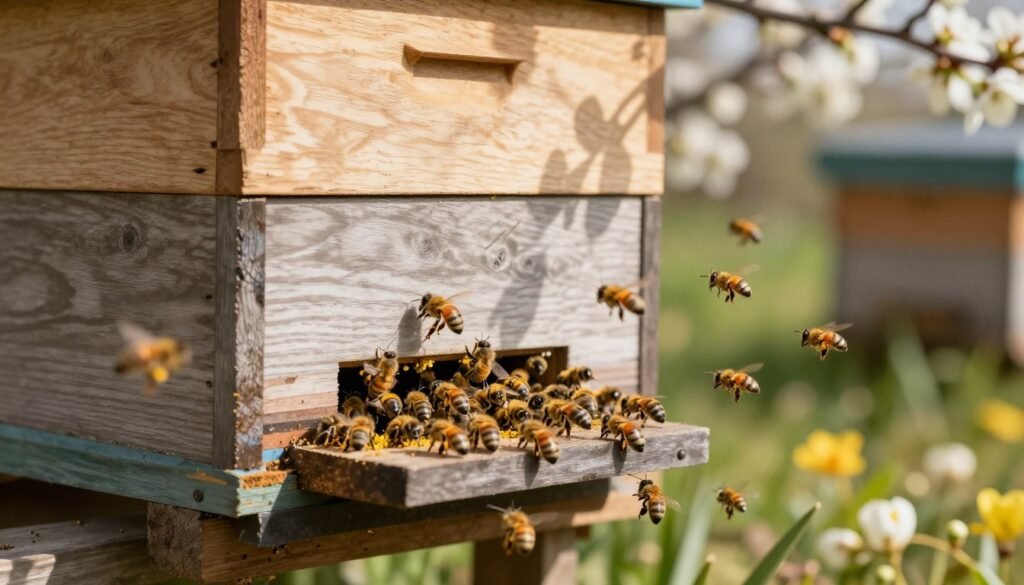
The Danger of Over-Restricting During Nectar Flow
Keeping a too-small gap during a heavy nectar flow can create congestion. Returning foragers may pile up, which raises stress and slows honey production.
Before removing an entrance reducer, confirm the nuc colony is big enough to defend a larger opening. Watch guard behavior and the number of foragers entering and leaving the box.
- In early spring, evaluate whether the colony can fend off robbing honey bees.
- Removing the reducer too early leaves the group vulnerable; leaving it too long limits growth.
- Ensure the colony is strong and traffic can move through a larger entrance without bottlenecks.
- If bees bring in steady nectar, it may be time to make big changes to the front part.
- Check for dead bees behind the piece — active passages show the colony is ready for full access.
“Timing the transition is as important as the size of the opening; watch activity and act when the colony shows strength.”
When you need a guide to signs of a strong buildup, see a short checklist on how to tell if your hive is preparing to. Use that context to judge if a larger entrance suits the season and the bees’ needs.
Maintaining Cleanliness Behind the Entrance Block
A monthly check behind the hive block keeps the passage clear and helps the colony stay healthy through winter.

Pull out the entrance reducer every month during cold months and remove any dead bees or debris that accumulate. A tidy area behind the part ensures bees can still get in and out and avoids sanitary issues in the box.
If it seems like the nuc is slow to exit, inspect the gap and clear any buildup right away. Blocked passages stress bees and raise the risk of moisture problems.
- Clean behind the reducer to prevent dead bees from blocking the entrance hole.
- Keep the front hive area free of debris so opening bees move freely.
- Check monthly in winter and any time activity slows.
“A clear entrance hole is vital for colony health and efficient daily operations.”
For tips on using modular gear and seasonal care, see a modular reducer guide and advice on managing hives in damp weather.
Selecting the Right Material for Your Apiary
Material choice affects how well a small colony copes with moisture, cold, and pests.
The common 5-frame piece is crafted from pine and finished with a white entrance coat. Pine offers a sturdy, weather-resistant option that stands up to seasonal use. Its finish makes the part easier to spot during quick inspections.
Wood remains the go-to option for many keepers, but metal and plastic variants exist to meet different needs. Metal gives durability against gnawing rodents. Plastic resists rot and is simple to clean.
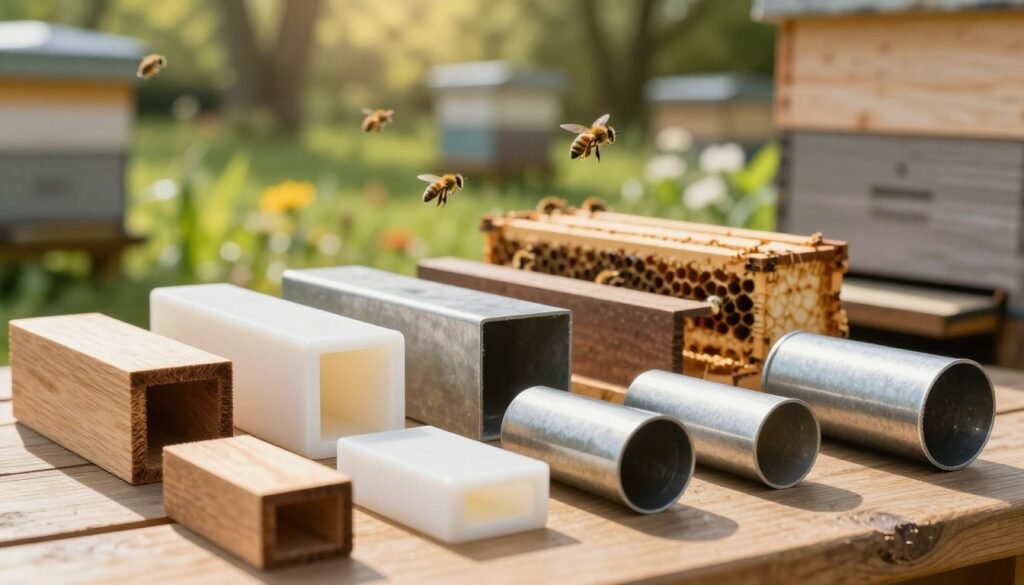
Choose based on the box you use and the goals of your apiary. If you need a two entrance design, pick a reversible piece that gives both narrow and larger gaps. A well-made pine unit with white entrance paint balances durability and tradition.
- Pine construction — sturdy and reliable year after year.
- White finish — easier to inspect during routine checks.
- Two entrance option — gives the colony flexible size control as it grows.
“Selecting high-quality materials reduces maintenance and helps bees maintain a stable environment.”
When comparing options, consider how the part fits the hive body and whether it will need regular cleaning. For related gear that helps manage pollen and traffic, see the best pollen trap guide.
Conclusion
Effective front control keeps small nuc colonies warm and ready to thrive. Proper sizing helps honey bees conserve stores and limits robbing. Small, steady steps protect the group during cold spells and busy seasons.
Regular checks clear any build-up of dead bees behind the part and keep traffic moving. A correct entrance reducer preserves ventilation and improves defense for a weak nuc.
Choose the right fit for your box and monitor activity each visit. Learn more about hive entrance management and consider gear like a cold-climate hive wrap when prepping for winter.
With simple maintenance and the right parts, beekeepers can support healthy bees and a productive season ahead.