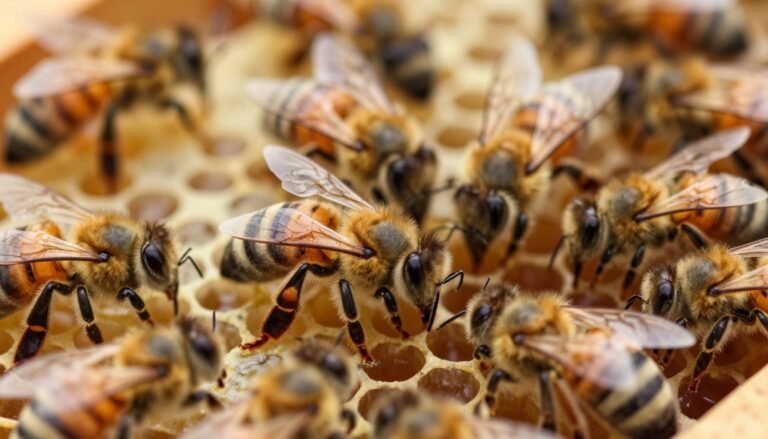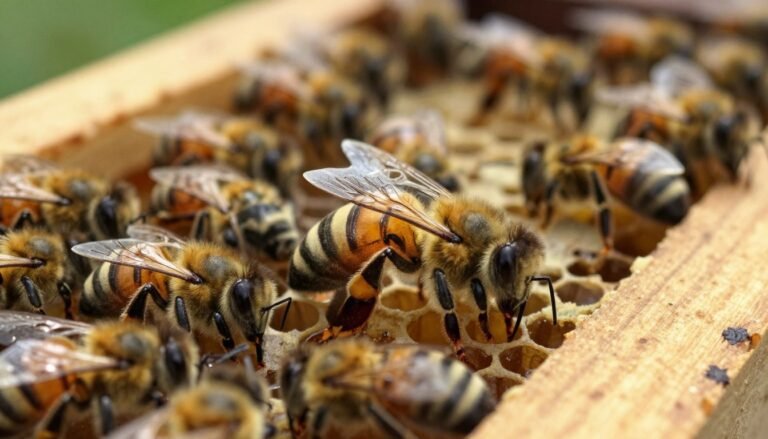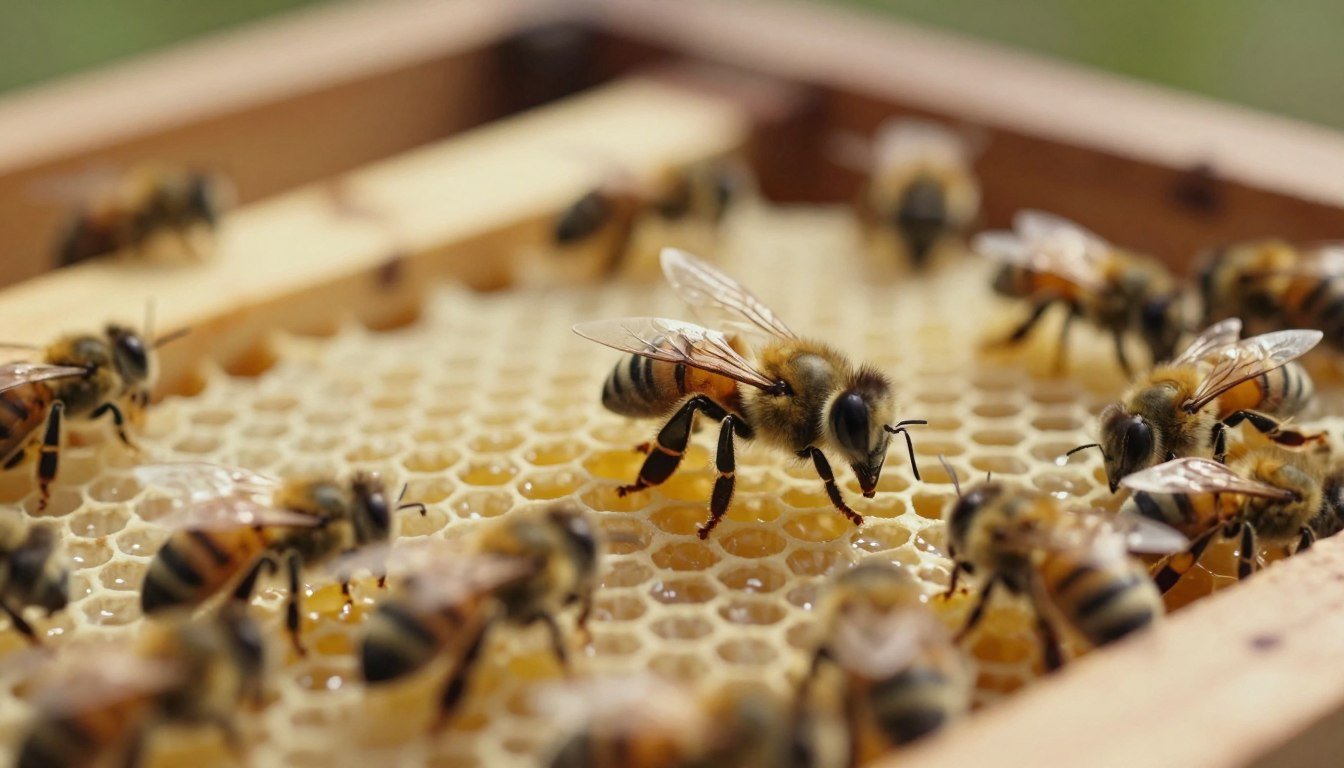
Immediate action can save a struggling hive. A reproductive female that has exhausted stored sperm will produce only unfertilized eggs, and the brood pattern shifts. Watch for scattered drone brood in comb and many eggs per cell; this signals a serious colony problem.
Regular inspections help you spot a failing breeder before the worker population drops. Providing a frame with eggs and young larvae encourages the workers to raise a replacement. In some cases, moving the original hive 50–100 yards can force reorientation and restore normal behavior.
Learn to tell a failing mother from laying workers. A compact worker brood pattern means health. A random drone brood pattern and multiple eggs per cell means intervention is needed. Act swiftly: without a viable egg-layer, the colony faces collapse in a few weeks.
Key Takeaways
- Early inspections catch brood pattern problems before numbers fall.
- Multiple eggs per cell and scattered drone brood are red flags.
- Offer a frame of eggs and young larvae to prompt rearing a replacement.
- Moving the hive a short distance can help bees reorient.
- Distinguish a failing mother from laying workers to pick the right fix.
Understanding the Role of the Queen
Every healthy hive depends on a consistent supply of fertilized eggs for its future. The reproductive female is the only member that can produce both worker and male offspring and so directs the colony’s growth.
The Biology of Fertilized Eggs
She mates with several males during a short mating period and stores semen in a special organ. This reserve lets her fertilize eggs over many months, ensuring genetic variety across the brood.
Fertilized eggs become workers. These workers gather food, care for young, and maintain the hive. Unfertilized eggs develop into male bees used for mating.
Cell size guides her choice: small cells yield workers, larger cells result in males. If sperm supplies drop, fewer fertilized eggs are produced and the worker pool shrinks.
- Check brood patterns to confirm she is producing worker brood.
- Loss of fertilized eggs signals urgent management to save the colony.
For practical guidance, see this short guide on understanding drone laying queens.
Identifying the Signs of a Failing Queen
Spotting trouble early is vital. Start with a calm, focused frame inspection and look for physical cues in the comb and caps. Small details tell you if the egg-layer is still fertilizing eggs and maintaining a healthy worker brood.
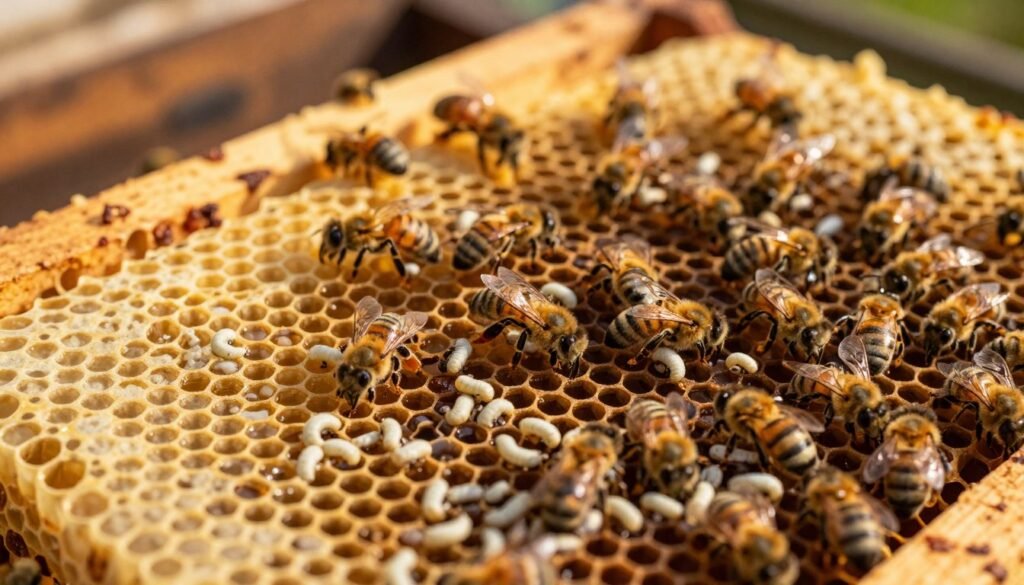
Visualizing Drone Brood
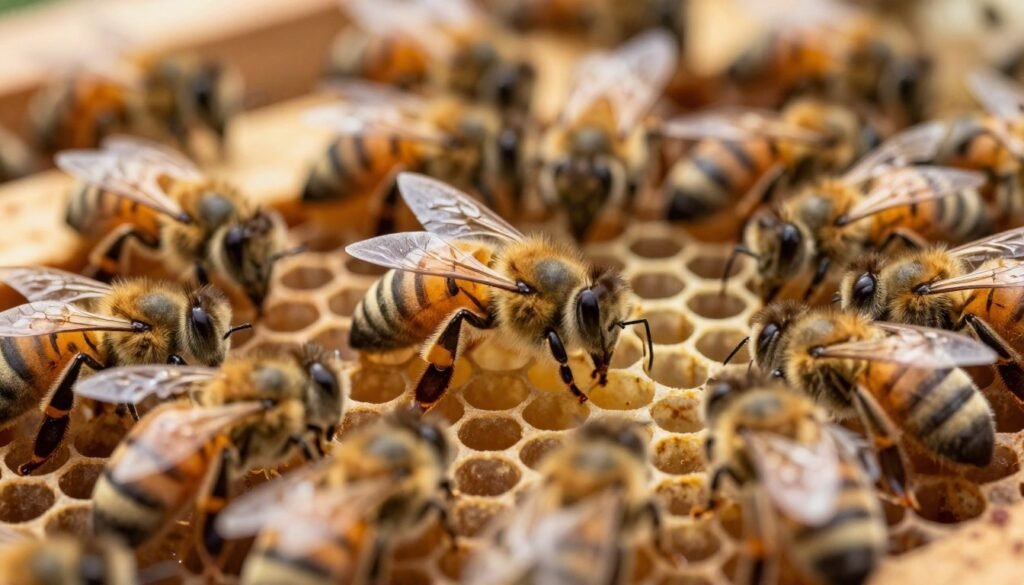
Bullet-like caps are the clearest sign: they protrude from the honeycomb and feel firmer than smooth worker caps. When these rounded caps appear across the frame rather than grouped at nest edges, the colony may be producing only males.
Assessing the Brood Pattern
Look for a solid, compact block of worker brood. A healthy egg-layer places one egg per cell in tight, orderly areas.
If you find scattered drone brood, many empty cells, or multiple eggs per cell, you may face a laying workers problem or a failing reproductive. Act within a few weeks for the best outcome.
“Early detection of a poor brood pattern gives you time to save the colony.”
For a practical assessment method, review this brood pattern heat-mapping guide.
Drone Laying Queen What to Do
A controlled reorientation technique often triggers workers to begin rearing a replacement female.
Step 1: Move the original colony 50–100 yards away and place an empty hive with drawn comb and some stores in the original spot. Add a single marked frame with eggs and young larvae in that new setup.
Step 2: Vigorously shake bees off every frame from the moved colony so the failing egg-layer and any laying workers stay behind. This forces the transported group into a queenless state.
Inspect the colony in 2–3 days for new queen cells on the marked frame. If no cells appear, repeat the shake-out in front of strong hives to encourage adoption of the marked eggs young larvae.
- Provide drawn comb, stores, and one frame of eggs and young larvae.
- Be prepared with extra equipment and time; careful handling matters.
- This method forces recognition of the problem and often leads to successful rearing of a new queen.
“Forcing a queenless state is the first step toward restoring a healthy brood pattern.”
For more on early detection and timing, see this guide on how to tell if your hive is preparing to.
Distinguishing Between a Failing Queen and Laying Workers
Brood arrangement and egg placement are the simplest field tests for a troubled colony.
Laying workers usually appear after 2–3 weeks with no worker brood. The lack of brood pheromone lets ovaries develop in some workers.
Check cells closely. A functioning mother places one egg per cell in a tidy block of brood. Workers, by contrast, scatter multiple eggs in random cells.
A failing reproductive often shows a clustered patch of drone brood near the frame center. If many adult bees on the comb are drones, the colony is near collapse.
| Sign | Failing reproductive | laying workers |
|---|---|---|
| Egg placement | One egg per cell, compact pattern | Multiple eggs per cell, scattered |
| Brood type | Clustered drone brood in center | Chaotic brood, mixed cells |
| Timing | Gradual decline | Appears after 2–3 weeks without worker brood |
| Urgent sign | Few workers and many drones | Multiple eggs per cell, cannot rear a new female |
“Inspect brood patterns early; the correct diagnosis guides the right rescue method.”
Key action: inspect frames and comb to confirm whether the mother remains or workers have taken over egg duties. This determines the remedy and the hive’s chance of recovery within a couple of weeks.
The Impact of Delayed Intervention
Delays in treating brood problems let small issues become colony-wide crises. A drone laying condition can spread quickly when action is slow. The longer a hive lacks a fertile female, the faster worker numbers fall.
Absence of brood pheromone is a key tipping point. Without that signal, some workers begin laying workers eggs in multiple cells. Scattered drone brood and abnormal eggs on the frame follow, and larvae survival drops.
If you wait, more workers will take up egg production and the colony weakens. Disease and pests find it easier to invade a small, stressed colony. Early diagnosis and swift action protect your investment and preserve productive colonies.
- Act quickly to preserve workers and maintain comb integrity.
- Ask an experienced beekeeper for a second opinion if you are unsure.
- For practical background on brood development, see this brood development reference.
“Every day without a healthy egg-layer increases the risk that rescue becomes impossible.”
Preparing the Hive for Rescue
Set up a fresh brood box at the hive’s original spot to give the colony a clear chance to rebuild. Include drawn comb, some stores, and a single frame of eggs and young larvae. This one frame acts as a focal point for workers to begin emergency rearing.
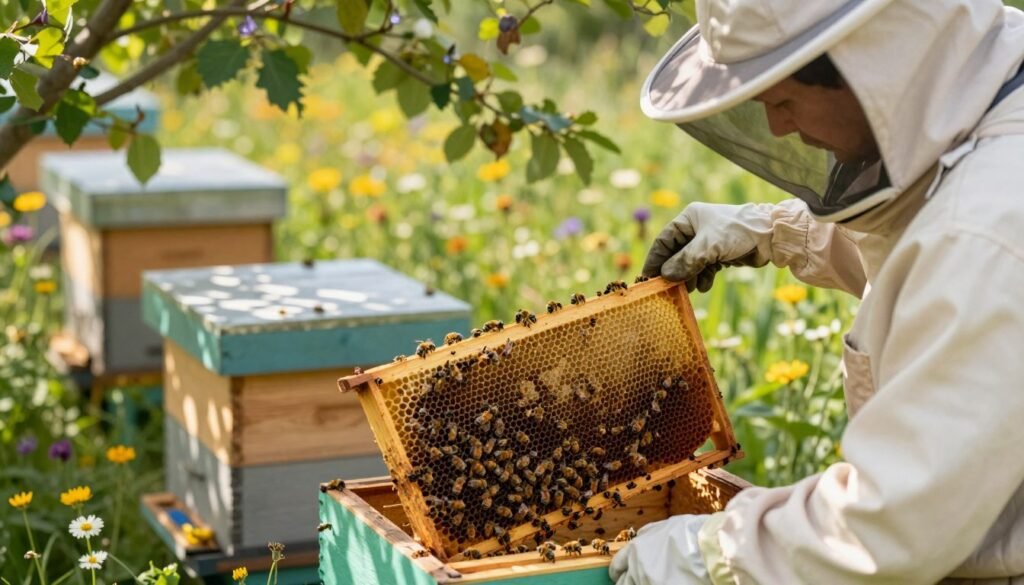
Fit the new box with a crownboard and roof so the bees can work inside without disturbance. Protecting the brood box helps nurses concentrate on cells and queen rearing rather than temperature control.
If you face laying workers, remove the original hive and carefully shake the bees off the frames. That reset forces returning bees to recognise the colony is without a fertile female and encourages building emergency cells.
- Place the prepared brood box in the original location so most foragers return there.
- Keep inspections brief; give the group several days to start making cells.
- Watch nearby colonies—an influx of bees can stress weak nuclei.
“Proper preparation gives the colony its best chance to transition back to a queenright state within weeks.”
For practical notes on handling laying workers and rescue timing, see dealing with DLWs.
Evaluating the Success of Your Efforts
Inspect the marked frame early; the colony’s response in days tells you if the rescue is working. Check three days after your intervention for the first clear signs.
Signs of Queen Cell Development
Primary signal: one or more new cells on the marked frame of eggs and young larvae. Their presence shows nurses accepted the queenless cue and began rearing.
Other positive signs include a drop in mislaid eggs on unmarked frames and fewer scattered brood cells across comb. These changes mean the group is shifting back toward a queenright state.
If no cells appear, the colony likely still considers itself right. Repeat the shake-out or consider uniting with a strong, queenright hive to save stores and bees.
| Check (3 days) | Positive Result | Action if Absent |
|---|---|---|
| Marked frame | One or more new queen cells | Wait and monitor; protect cells from disturbance |
| Unmarked frames | Fewer mislaid eggs; improving brood pattern | Repeat shake-out or provide another frame of eggs |
| After weeks | Compact worker brood pattern | Consider requeening or uniting if pattern fails |
“Presence of cells confirms the colony accepted queenless status and can often be saved if weather and mating conditions are favorable.”
For practical guidance on rearing, see queen rearing basics for U.S.
Options for Requeening the Colony
Choosing the right requeening method depends on season, supplies, and colony strength.
Allow the group to raise its own replacement. Once nurses accept a queenless state, they can rear a new female from eggs and young larvae. This takes about 3–4 weeks and depends on good weather and sufficient nearby drones.
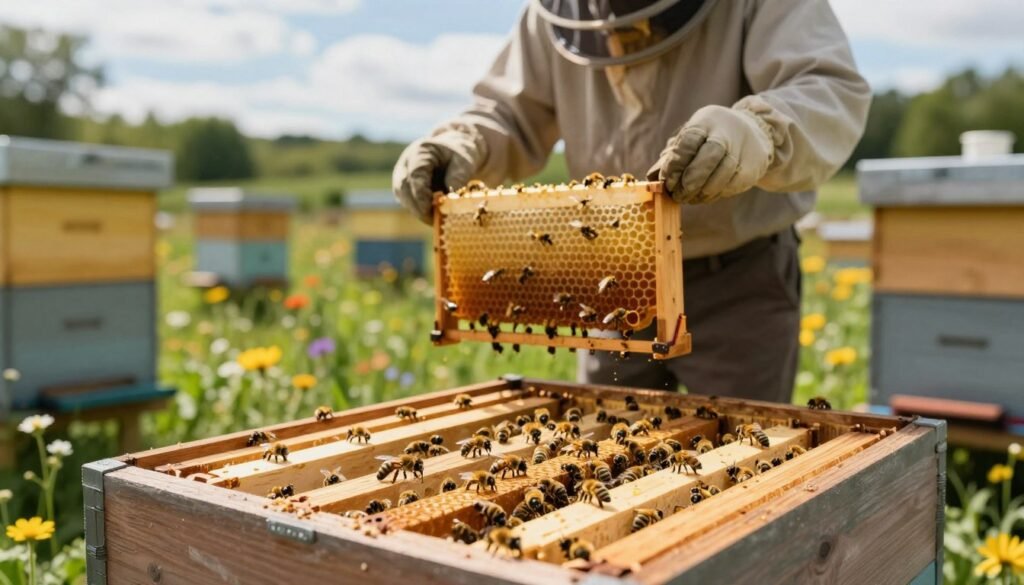
Introduce a purchased mated queen in a cage placed near the brood. This often restores normal worker brood patterns faster, but verify the new leader is healthy and disease-free.
Unite with a queenright nucleus if you lack a replacement. Use the newspaper method for a gentle merge and to prevent fighting between bees.
| Method | Speed | Risk | Best use |
|---|---|---|---|
| Raise own queen | 3–4 weeks | Weather and drone availability | When local mating is reliable |
| Purchase mated queen | 1–3 weeks | Acceptance, disease risk | Fast recovery, controlled result |
| Unite with nucleus | Immediate | Resource sharing, integration | When stores and bees must be saved |
“Requeening often restores productivity faster than prolonged intervention.”
After introduction, inspect in a couple of weeks. Confirm the new layer is accepted and producing a compact worker brood pattern.
Managing Frames and Resources
Effective frame management reduces stress on workers and speeds recovery. Sort frames quickly after you spot poor brood patterns. Prioritize clean, drawn comb and remove damaged or pest-hosting pieces.
Discard frames with large amounts of drone brood in worker cells. These combs can hide pests and do not help colony growth.
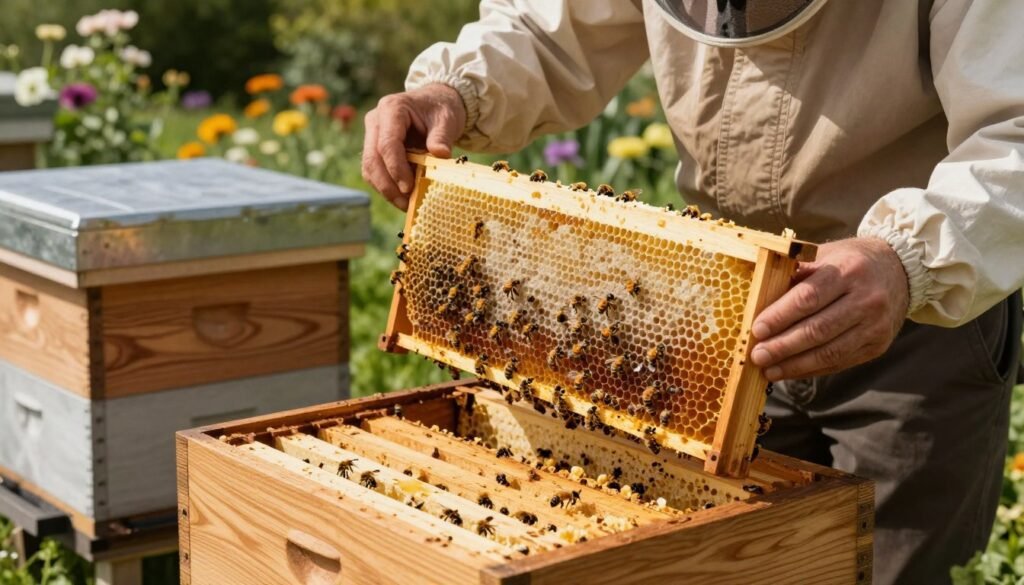
Share resources wisely. Distribute frames of stores to healthy hives in the same apiary only when disease risk is low. Protect honey and pollen frames from robbing by stronger hives and wasps.
- Keep brood boxes with enough frames so the group can expand once a new mated female begins laying.
- Sort and clean frames to reduce work for the bees and speed recovery.
- Treat multiple colonies as a single resource pool, but avoid moving comb between different apiaries.
| Action | Why | When |
|---|---|---|
| Remove pest-ridden frames | Reduces disease and parasite load | Immediately after inspection |
| Share stores with healthy hives | Saves food and space in weak hive | If no signs of disease |
| Protect honey and pollen | Prevents robbing and loss | Throughout recovery time |
| Monitor frame count in brood box | Allows for worker expansion | Weekly until stable |
“Clean frames and steady stores give a recovering colony its best chance.”
For a practical refresher on identification and causes, see understanding drone laying queens.
Advantages and Disadvantages of the Shaking Method
The shaking method gives beekeepers a focused, hands-on way to reset a struggling colony. It relies on one frame of eggs and young larvae and a careful removal of adult layers.
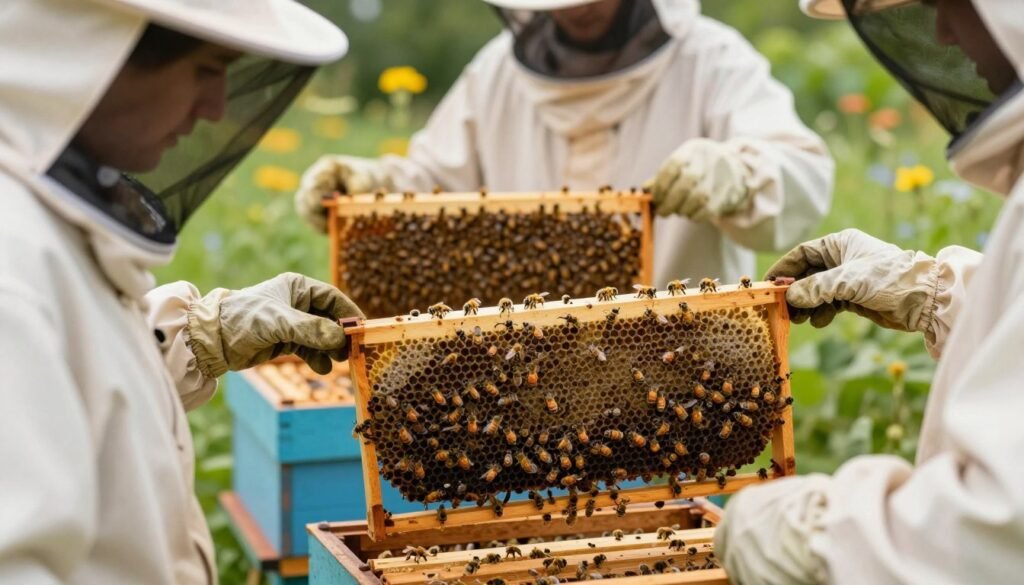
The main benefit is efficiency. With a single frame you avoid weakening nearby healthy colonies. You can often see if the hive will rear a replacement in just three days.
- Quick feedback: inspect the marked frame after 72 hours for signs of cell building.
- Suppresses laying workers: shaking the bees reduces the number of workers with developed ovaries and helps reset behavior via brood pheromone.
- Better for brood health: it limits scattered drone brood and mislaid eggs across comb.
- Higher success: repeated visits and careful handling generally raise success above gentler fixes.
Drawbacks include extra physical work and gear: a spare floor, a clean brood box, and time for repeated visits. Plan each step and review local splitting guidance before you begin.
“Prepared, timely action with steady follow-up often saves colonies that otherwise fail.”
Conclusion
Swift, decisive action often makes the difference between saving a small colony and losing it entirely.
Addressing a drone laying queen requires prompt field work and clear choices. Identify signs early, use proven methods like the shaking technique, and monitor results closely.
Whether you requeen, unite with a strong hive, or let the bees raise a new queen, your intervention is the key to recovery. Regular inspections and careful notes speed future decisions and protect stores.
Every colony is unique. Adapt your approach, follow practical guidance (see the drone laying and queen cells discussion) and review basic checks at beekeeping basics.