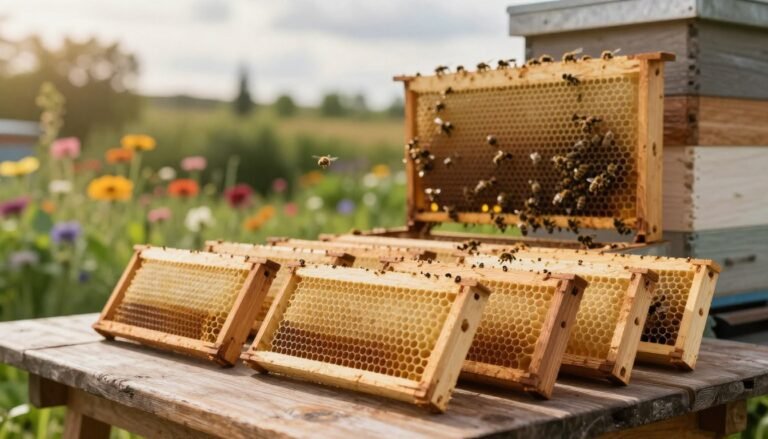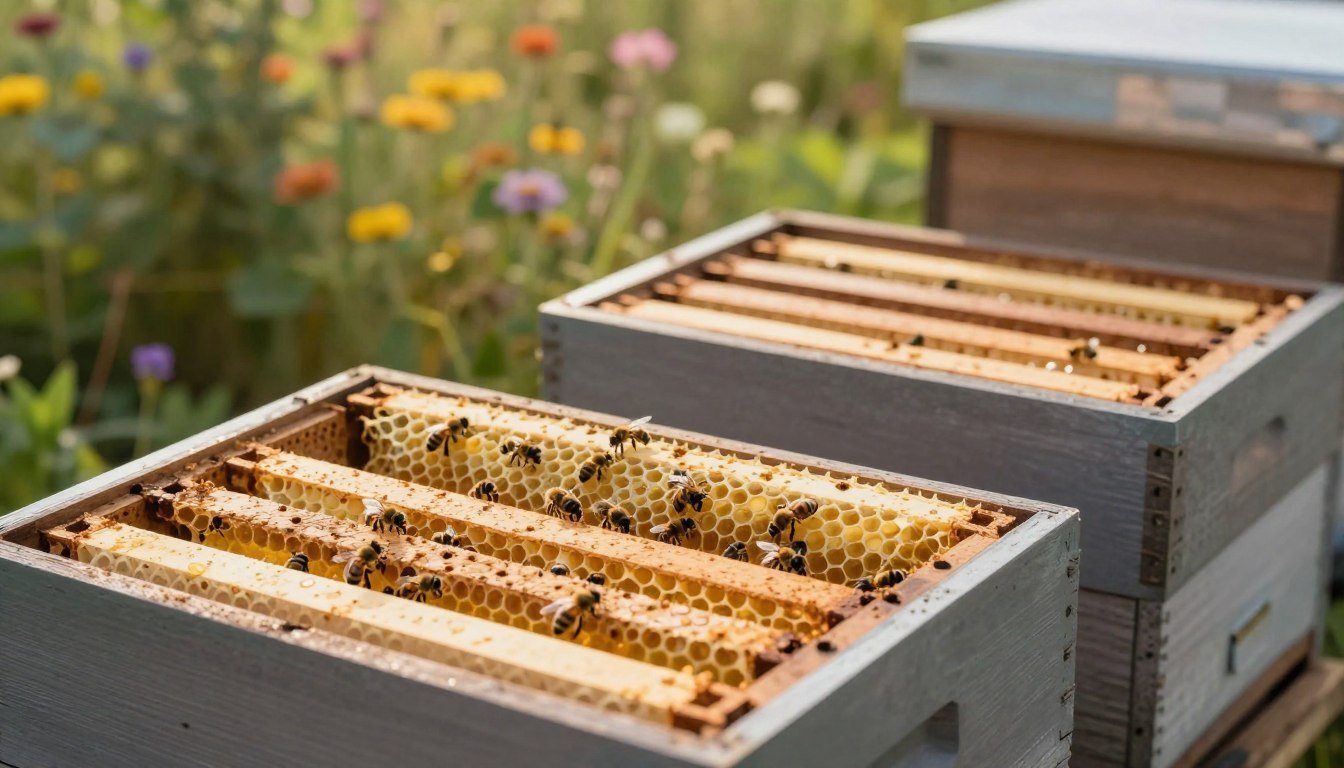
Choosing the right box size shapes how your hive grows, how the queen lays eggs, and how much honey the colony stores. This is a core decision that affects beekeepers across the United States.
Most hobbyists use the Langstroth hive; over 90% rely on its standard brood box design. In 2012, Foxhound Bee Company switched to all medium boxes to simplify handling and reduce heavy lifts during harvest.
Some keepers favor a larger brood area to give the queen room to lay, while others choose lighter boxes to make inspections easier. A deep medium mix is also common to balance weight and space during peak nectar flow.
Understanding 8- and 10-frame configurations, how supers and honey supers fit above brood, and how box size affects hive management will set you up for success. This guide compares options so you can choose what suits your apiary and time.
Key Takeaways
- Box choice impacts queen lay, honey storage, and handling weight.
- Langstroth boxes remain the U.S. standard for most colonies.
- Medium boxes reduce lift stress; deep brood boxes give uninterrupted brood area.
- Many beekeepers use a mixed approach to balance full honey boxes and brood needs.
- Know your 8- vs 10-frame setups and plan supers accordingly during peak time.
Understanding the Role of the Brood Nest
The brood nest acts as the hive’s living room, where the colony focuses growth and daily care. This chamber must balance space for eggs, pollen stores, and room for nurse activity. Beekeepers choose box sizes to match colony needs and handling limits.
Defining the Brood Chamber
The brood box is the heart of the hive. It holds the queen, larvae, and developing bees. Proper layout keeps the queen lay consistent and prevents honey from interrupting rearing space.
The Importance of Cavity Size
Bees live in cavities in nature, so hive box size matters. A chamber too small limits colony growth. Too large and the cluster struggles to keep brood warm.
“According to Jan Dzierzon in 1882, a fertile queen can lay up to 3,000 eggs per day under favorable conditions.”
| Factor | Smaller Box | Larger Box |
|---|---|---|
| Ease of handling | Light, simple checks | Heavier lifts, more effort |
| Colony expansion | May need extra supers soon | Room to expand before adding boxes |
| Honey storage impact | Full honey weighs less | More uninterrupted brood area |
For practical guidance on reversing and arranging brood boxes, see reversing brood boxes. If you move bees or need transport options, check advice on a best nuc box for transporting bees.
Deep Frames vs Medium Frames for Brood Nests
A hive’s internal layout, set by frame and box height, guides the queen’s lay pattern and resource placement.
Key physical differences matter: a larger frame with 5.4mm foundation holds about 7,000 cells, while a medium frame holds roughly 4,620 cells. Box heights also differ — 9 5/8 inches versus 6 5/8 inches — and that affects total volume and weight when stores fill.
Practical trade-offs influence many beekeepers. Larger boxes give a continuous area for the queen and more pollen and honey storage. Smaller boxes make inspections easier and reduce lifting strain during harvest.
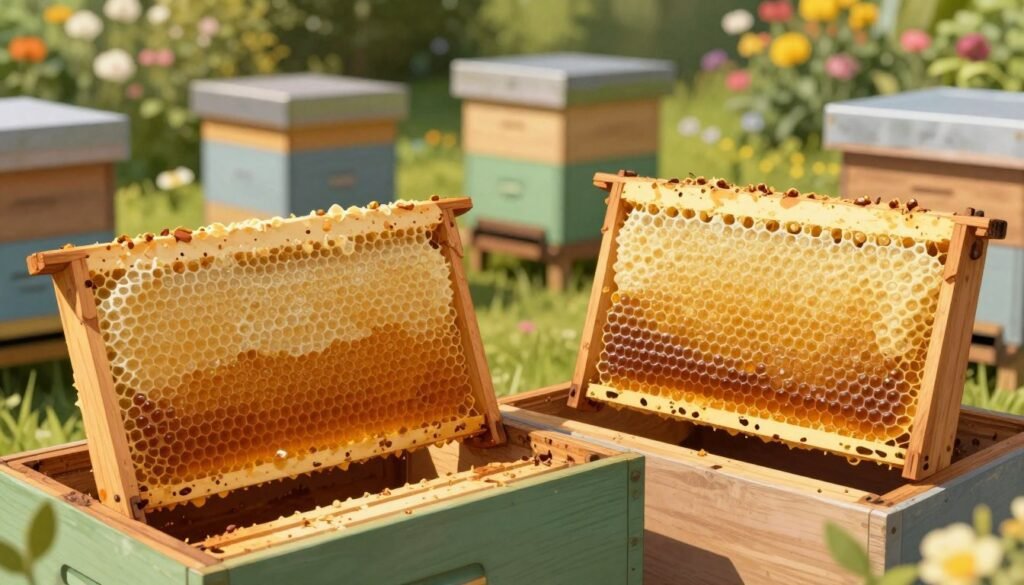
“Using a mix of body sizes often balances colony needs with the beekeeper’s ability to handle full honey supers.”
- Continuous brood area: larger frames support compact brood chambers and steady queen lay.
- Weight concerns: a full box can exceed 100 lbs, so handling matters.
- Flexibility: a deep medium approach lets beekeepers use medium boxes above brood for easier honey removal.
| Feature | Larger Frame/Box | Smaller Frame/Box |
|---|---|---|
| Cell count (approx.) | 7,000 | 4,620 |
| Height | 9 5/8 in | 6 5/8 in |
| Handling | Heavier when full | Easier to lift |
| Storage | More pollen and honey volume | Less volume, more supers needed |
For deeper assessment of patterns inside the colony, try heat mapping for brood pattern assessment to check distribution and queen performance: heat mapping for brood pattern assessment.
Advantages of Using Deep Hive Bodies
A roomy lower box gives a queen uninterrupted space to lay and helps a colony expand without frequent intervention. This larger brood box often becomes the central brood chamber and supports a steady queen lay cycle.
Why many beekeepers choose taller bodies: a single large chamber lets the queen lay across long combs, keeps eggs and pollen close to nurse bees, and reduces how often you add extra boxes brood.
Weight and Handling Challenges
Practical trade-offs matter. A full box can exceed 100 lbs when capped with honey. That weight makes inspections and hive moves physically demanding for the average beekeeper.
- Using larger boxes at the bottom gives the hive a stable foundation and natural-feeling space where bees live and rear young.
- The increased storage cuts the number of boxes you manage, but lifts become harder during harvest and when checking frames.
- If lifting is a concern, review options and starting setups such as start with all medium or deep.
“A larger brood chamber can simplify colony management but requires readiness for added physical labor.”
Benefits of an All Medium Box Configuration
Adopting an all one-size system makes routine work quicker and safer. Each full medium box weighs about 40–60 lbs, which stays well under the heft of a full deep box. That reduces injury risk and keeps inspections manageable.
Interchangeability is a major perk. Because every box and frame matches, you can move frames between the brood box and honey supers without fuss. Inventory is simpler and spare parts fit any layer.
Colony flow and queen lay adapt well to this setup. The queen may need two boxes to reach her ideal egg output, but the colony uses space more evenly. During nectar flow, adding a honey super is straightforward and predictable.
“Standard boxes let colonies shift between layers smoothly and make seasonal work faster.”
- Lighter lifts: safer handling at harvest time.
- Simple swaps: frames and boxes are fully interchangeable.
- Efficient storage: uniform equipment cuts complexity and saves time.
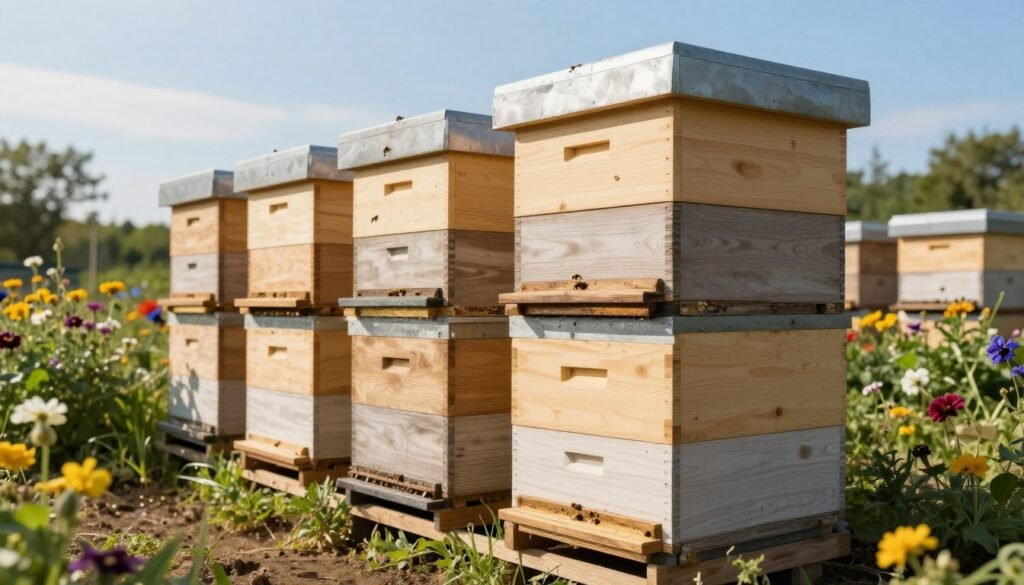
Managing Colony Growth Throughout the Seasons
Seasonal shifts force beekeepers to adjust hive layers and storage to match colony demand. Good timing keeps the queen laying well and the colony strong. Plan additions before population surges or declines.
Spring Expansion Needs
In spring the queen increases egg production. That rise pushes brood into more comb quickly.
Add honey supers early so the colony has room to store nectar and the hive does not crowd the brood chamber. Monitor the brood box closely to ensure the queen has space to lay eggs and that pollen stores sit near developing larvae.
Tip: Add a super before frames become full. This keeps workers from storing honey in the brood chamber.
Winter Cluster Requirements
As cold weather sets in, bees form a tight cluster to stay warm. The colony needs insulation, ventilation, and food.
Most hives require about 50 lbs of stored honey to get through winter. Adjust the number of boxes by climate—northern hives often need extra layers compared to southern ones.
Manage space so the cluster can move to food without breaking cluster heat. Provide proper ventilation and consider a deep medium mix to add flexibility when removing or adding boxes during the year.
- Spring: add honey supers with rising population.
- Summer: use the honey super to hold surplus honey for harvest.
- Winter: secure at least 50 lbs of stores and reduce drafts.
| Season | Main Needs | Recommended Action |
|---|---|---|
| Spring | Queen lay rises; brood expands | Add supers early; monitor brood box space |
| Summer | Surplus honey accumulates | Provide honey super and maintain ventilation |
| Winter | Cluster forms; energy use rises | Ensure 50 lbs+ stores; insulate and limit cold drafts |
“Adjusting boxes before needs peak prevents crowded brood and lost honey storage.”
For guidance on choosing starting equipment and box sizes, review the advice to start with all medium or deep.
Impact of Box Size on Queen Egg Laying
Providing the right internal space helps the queen maximize her monthly egg potential.
A healthy queen can lay an astonishing number of eggs. In a spacious hive she may reach about 60,000 eggs in a month during peak season.
The queen prefers a continuous comb area to keep an even, compact pattern. That is why many beekeepers install larger lower chambers like deep boxes or use a deep medium mix to avoid crossing box joints.
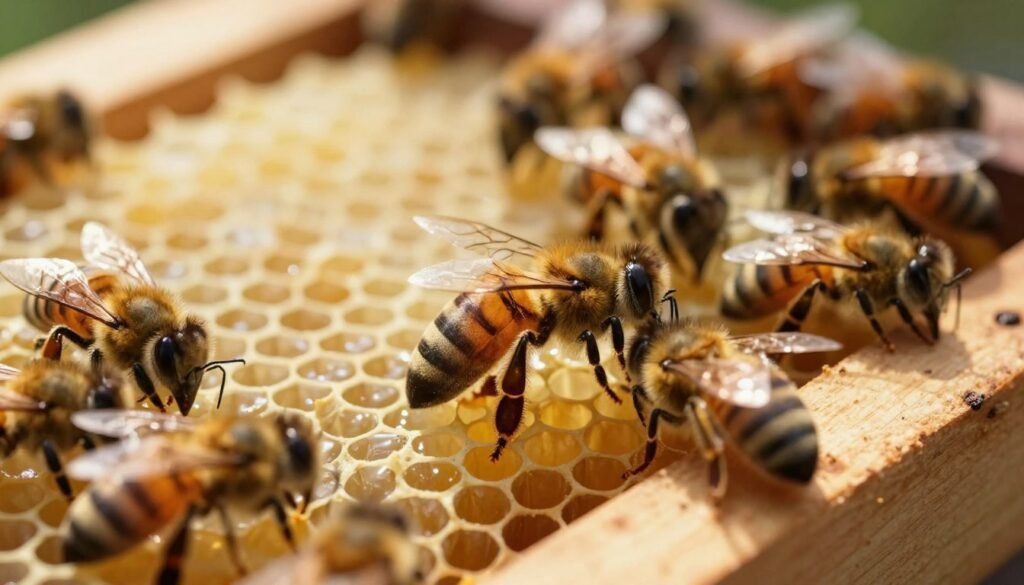
When the brood box becomes honey-bound, the queen loses laying space and the colony may prepare to swarm. During spring, watch for congestion and add a honey super or an extra box before room runs out.
“When the queen has space, she deposits eggs in regular rows. That regularity helps the colony develop more efficiently.”
- Queen lay rate follows available space and colony health.
- Pollen and honey storage impact where eggs can go.
- Use a balanced setup to give the queen room while keeping handling manageable.
| Factor | Effect on Queen | Action |
|---|---|---|
| Available comb area | Supports continuous laying | Add box or super early |
| Honey-bound brood box | Limits egg placement | Move stores up; add honey super |
| Box mix (deep medium) | Combines space and lighter lifts | Use to manage weight and continuity |
For seasonal handling tips that help maintain egg-laying capacity, see 10 beekeeping tips for humid climates.
Physical Considerations for the Beekeeper
Good ergonomics often make the difference between beekeeping as a lifelong hobby and giving it up due to injury. Choosing lighter equipment and proper lifting habits keeps inspections safe and routine tasks sustainable.
Ergonomics and Lifting
A full medium box of honey weighs about 40–60 lbs, which is far easier to handle than a full deep box that can top 100 lbs. That single fact drives many beekeepers to choose lighter boxes.
When you inspect the hive, being able to lift a box or a frame quickly reduces fatigue. During spring and summer you will lift many boxes, so plan to protect your back.
- Prioritize ergonomics: lift with your legs, keep the load close, and use two people for heavy lifts.
- Choose manageable sizes: lighter boxes shorten inspections and lower injury risk.
- Balance colony needs: a deep medium mix can give space to the queen while easing lifts.
Even in winter, checks may be needed; manageable boxes make these tasks safer. For guidance on starting equipment choices, consider this concise guide to start with all medium.
“Proper lifting techniques and lighter equipment help beekeepers stay active in the hobby for many years.”
Long Term Hive Management and Standardization
Standardizing your apiary equipment saves time and prevents avoidable mistakes as your operation grows.
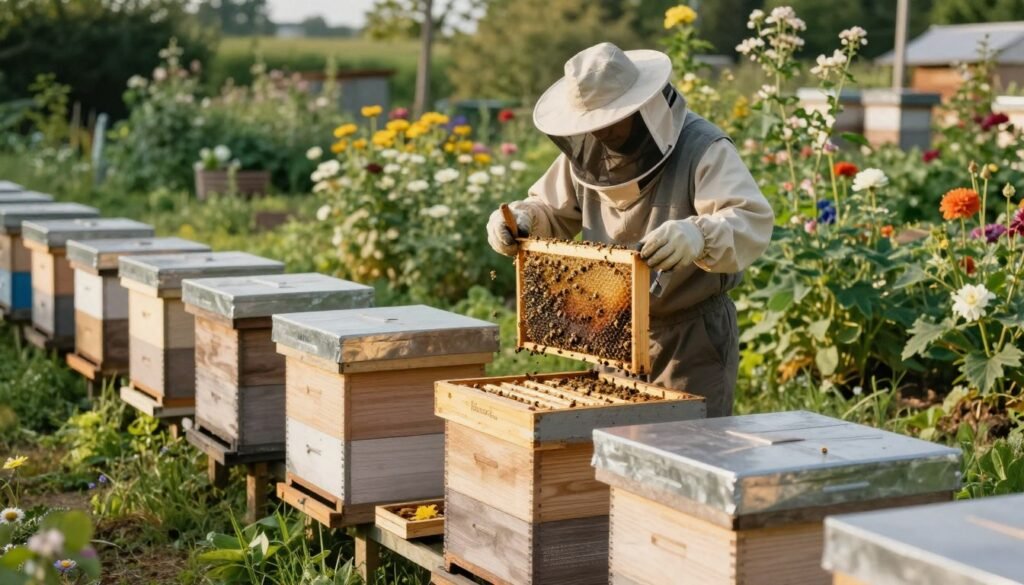
Consistency matters: using the same brood boxes and a single box height makes inspections faster. It also lets you move a frame between any hive without awkward fits.
Mixing deep and medium boxes can work short term, but it often creates inventory headaches as the apiary expands. Swapping parts becomes slower and mistakes rise during busy nectar flow.
- Standardized boxes keep spare parts ready and cuts downtime during peak honey harvest.
- The colony benefits from stable space, which helps the queen lay and keeps eggs and pollen in predictable spots.
- Winter prep is simpler when insulation and covers match every box in the yard.
| Benefit | Single Size | Mixed Size |
|---|---|---|
| Interchangeability | High | Low |
| Inventory management | Simple | Complex |
| Colony stability | Consistent | Variable |
“Investing in standardized, quality equipment pays off as your apiary grows.”
For a practical guide when choosing equipment, consider whether to start with all medium or mix sizes.
Material Durability and Maintenance
Hive materials and upkeep determine how long your boxes stay serviceable and how safe the colony remains.
Wood hives are renewable and repairable. You can sand, glue, and replace boards when needed.
Plastic gear lasts longer against rot and pests, but it is harder to recycle. Beekeepers must weigh longevity against environmental impact.
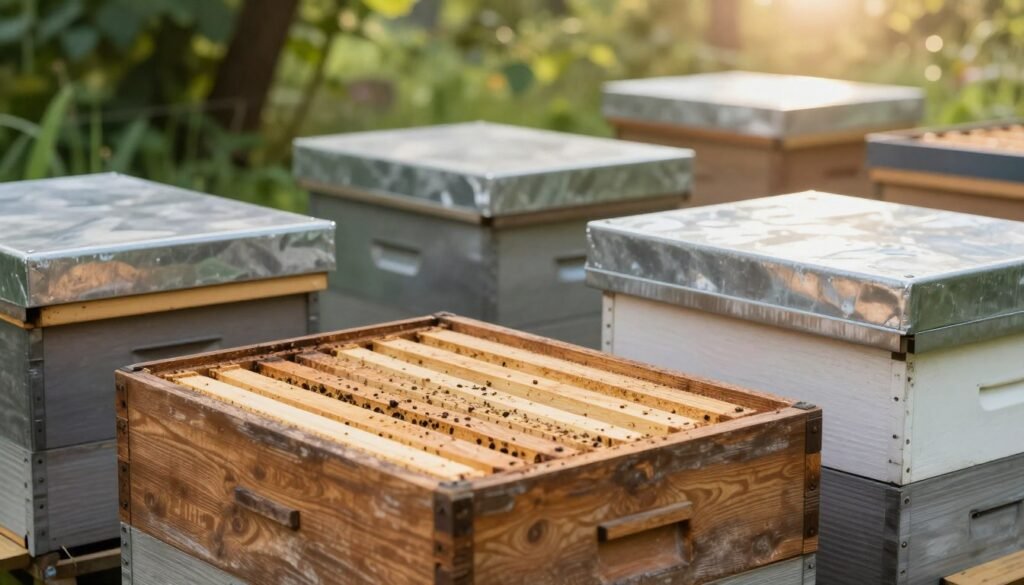
Regular maintenance prevents bigger problems. Paint exteriors to block moisture, check joints, and seal cracks each year.
- Durability: materials must resist weather all year.
- Routine care: inspect honey storage frames for pests and clean supers before storage.
- Keep the brood area dry and ventilated to limit mold and disease.
- In winter, ensure good insulation so bees stay warm and food remains accessible.
“Good equipment care gives the colony a safe, healthy place to raise eggs and rear young.”
For guidance on whether to start with all medium or consult frame types, review supplier advice and choose materials that fit your climate and handling needs.
Conclusion
Simple habits and consistent care usually matter more to hive success than any single piece of gear.
Choosing between larger and lighter equipment depends on your strength, goals, and climate. Both box types have benefits, and many beekeepers succeed with either setup.
Give the queen enough room to lay and the colony enough space for honey. Watch seasonal cues and add supers early to avoid crowding the brood area.
For help when you start, read this guide on how to choose a beehive for. With consistency and routine maintenance, your hive will reward you year after year.
FAQ
What is the brood nest and why does it matter?
The brood nest is the area of the hive where the queen lays eggs and the colony raises young. A well-sized brood chamber helps the queen lay in compact clusters, aids nurse bees in feeding larvae, and supports steady colony growth through spring and summer. Proper brood space also helps bees manage temperature and brood health.
What defines a brood chamber in a Langstroth hive?
The brood chamber is the box or stacked boxes where brood comb is concentrated. It can be one deep body or two medium boxes, depending on beekeeper preference. The chamber should give the queen room to lay and provide workers easy access to pollen and nectar stores used for feeding brood.
How does cavity size affect colony behavior?
Cavity volume influences cluster formation, thermoregulation, and storage patterns. A larger continuous space lets the colony expand its brood area and store honey nearby. Too little room leads to congestion, swarming impulses, or comb construction in undesired locations.
Which box combination is commonly recommended for brood rearing?
Many beekeepers choose either standard deep-single brood bodies or two stacked medium boxes to form the brood chamber. Each approach offers trade-offs in brood capacity, handling weight, and equipment flexibility. The right choice depends on hive size, management style, and physical ability.
What are the advantages of using a deeper brood body?
A larger single-body chamber holds more comb area for brood and stores, reducing the need to add boxes as quickly during buildup. It can help maintain brood continuity and limit queen movement between boxes. Deeper chambers often require fewer box changes during peak season.
Do larger brood bodies create weight and handling challenges?
Yes. Fuller boxes become heavy and may exceed comfortable lifting limits for many beekeepers, especially during honey flow. Handling heavier boxes increases risk of strain and makes inspections and transport more difficult.
What are the benefits of using only medium-sized boxes for the brood area?
Using medium boxes makes lifting and inspections easier because each box is lighter. This modular approach simplifies equipment interchange with honey supers and can reduce the chance of injury. It also allows more gradual expansion of brood area across boxes.
How should hive configuration change during spring expansion?
In spring, add space ahead of brood rearing by inserting an empty box or frame of foundation above the brood nest. Monitor queen laying and brood pattern, then provide more area before congestion appears. Timely space additions reduce swarming risk and support colony growth.
What do bees need from the brood area during winter clustering?
During winter, bees cluster tightly and require compact, well-insulated brood space with accessible stored food. Reducing unneeded space and ensuring honey stores are near the cluster helps colony survival. A continuous brood volume that the cluster can move through is beneficial.
Does box size affect the queen’s egg laying rate?
Indirectly. The queen lays best when the colony maintains good temperatures and has access to resources. Sufficient contiguous comb area encourages dense laying, while cramped or scattered space can interrupt normal patterns. Box strategy should support a stable brood environment.
What ergonomic factors should be considered when choosing brood box sizes?
Consider the beekeeper’s lifting capacity, inspection frequency, and handling tools. Lighter boxes reduce strain and lower injury risk. Use hive stands, hive lifters, and correct body mechanics. Choose a system you can manage comfortably year-round.
How does standardizing box sizes help long-term hive management?
Standard sizes simplify equipment interchange, reduce inventory needs, and streamline seasonal tasks. Consistent sizing makes feeding, splitting, and honey harvesting more efficient and lowers the learning curve for assistants or new beekeepers.
Are there material or maintenance differences between box sizes?
Material choices and build quality affect durability more than size. However, more boxes mean more surfaces to maintain, paint, and repair. Consider weatherproofing and using durable wood or commercial plastic options to reduce long-term upkeep.
Can I mix box types in a single hive and still manage effectively?
Yes. Many beekeepers mix box sizes to balance brood capacity and handling. Keep records of colony behavior after changes and maintain standardized frame types to avoid management confusion. Thoughtful mixing can offer the best of both approaches.