Understanding proper colony strength grading before pollination contracts is essential for growers and beekeepers in the United States. The managed honey bee industry supports roughly $15 billion in annual crop value. Clear measures help ensure that rented hives deliver the biological value that growers expect under rental agreements.
This short guide outlines why accurate assessment matters during the bloom period. It covers how hive health, worker numbers, and brood patterns affect crop visitation and yield. Using verified measures reduces disputes and builds trust between growers and beekeepers.
We also link practical resources for arranging service and verification. For guidance on renting managed hives in the U.S., see this helpful resource on rental services and logistics: renting bees for pollination services.
Key Takeaways
- Accurate grading protects payments and crop outcomes.
- Managed hives underpin many major U.S. crops and seed systems.
- Simple, repeatable checks make agreements fairer.
- Documentation at placement limits disputes during bloom.
- Growers and beekeepers gain by using standard measures.
Understanding Honey Bee Colony Biology
Knowing how a bee community organizes itself gives practical insight into hive productivity and timing.
Social structure: A healthy honey bee colony has a single queen, thousands of sterile female workers, and male drones in spring and summer. The queen is the only reproductive female and is the mother of all workers.
Worker bees move through tasks as they age. During the active foraging season, a worker typically lives five to six weeks. They start with nest work and move to guarding and foraging as they mature.
The dynamics of population and brood
Winter worker numbers often range from 10,000 to 15,000 and grow to 50,000–60,000 by midsummer. That change reflects brood production, available nectar and pollen, queen health, and environmental conditions.
- Bees show flower fidelity, which boosts pollination efficiency for specific crops.
- Monitoring brood stages (eggs, larvae, pupae) helps maintain stable adult populations.
- Beekeeper skill and forage quality shape the final hive size and honey stores.
The Economic Value of Pollination Services
The market for managed pollination supports roughly $15 billion in U.S. agricultural value. Almond production accounts for a major share of that demand, and many operations place about two colonies per acre to hit yield targets.
Reliable bee services let growers plan production and reduce risk of low set during bloom. Long-term relationships between growers and beekeepers lower negotiation friction and improve access to high-quality hives.
Research ties stronger hives to increased honey production and better crop visitation. Beekeepers weigh shipping and prep costs against fees from almond pollination and honey sales.
- Market data: growers use professional surveys and reports, such as the USDA pollinator market analysis, to set colony density.
- Mutual benefits: steady services raise farm yields and stabilize beekeeper income.
Factors Influencing Colony Strength
Seasonal management determines how quickly hives grow their working population. Time of year matters: units placed early in spring are often smaller than those moved later.
Temperature controls daily foraging. Honey bees rarely fly under 55°F and activity rises sharply by 70°F. Growers should plan placement around local daily highs.
Seasonal Management Techniques
Beekeepers use targeted steps to speed growth. Supplemental feeding with sugar syrup or pollen substitute can jumpstart brood rearing and increase the number of foragers sooner.
Research finds larger units send a higher share of their population out to collect pollen and nectar, which raises overall production and field visitation rates.
- Check brood amount: more brood generally predicts higher pollination activity later.
- Watch for disease and stressors; these cut the number of active bees quickly.
- Use data-driven feeding and timing to meet early-season requests from growers.
For technical background on buildup and decline, see this overview on managed hive dynamics and a practical guide on queen programs for population control: hive buildup resource and queen breeding guide.
Colony Strength Grading Before Pollination Contracts
Clear numeric standards let growers and beekeepers set fair expectations for service at bloom. States such as Oregon (1960) and Washington (1978) defined minimum biological measures that guide commercial arrangements.
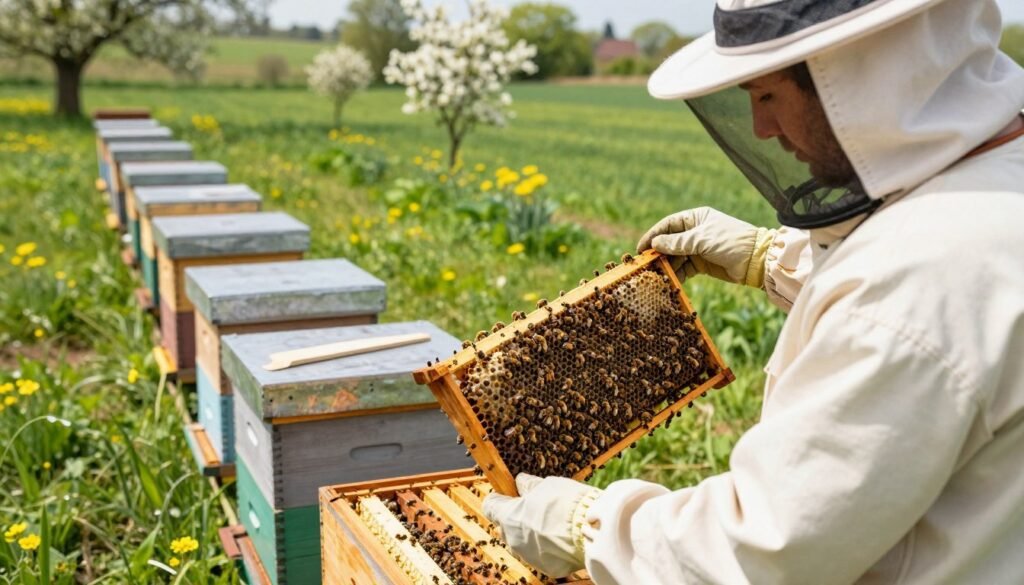
Regulations offer practical benchmarks. A Grade A orchard unit must have at least 600 square inches of comb with healthy developing brood. A Grade A field unit requires 1,000 square inches.
These yardsticks let beekeepers document the hive population and brood area in writing. Growers then pay for verified pollination services that match orchard needs.
- Transparency: Put expected bee counts and brood measurements in the agreement.
- Value: Graded hives justify service fees and reduce disputes.
- Health: Disease checks matter — American foulbrood is unacceptable in any commercial unit.
Following state protocols helps ensure the population and brood are sufficient for almond pollination and other crops. Use these standards to create clear, data-driven contracts that protect both parties.
Regulatory Standards for Hive Quality
Standards for hive quality help ensure rented units perform during almond bloom.
Historically, federal and state rules protected growers from weak or unproductive honey bee units. Oregon, for example, requires about 3,000 square inches of comb for a pollination unit, commonly reached with two standard deep hive bodies.
Grade A orchard units must show six standard Langstroth frames well covered by adult bees to deliver effective almond pollination. A Grade A field unit usually requires 1,000 square inches of comb space and healthy brood patterns.
Practical metrics help inspectors convert comb area and frame coverage into verifiable data. Research-based figures—about 2,400 adult bees per well-covered frame—assist field checks and support fair assessments.
- Why it matters: clear standards let growers book reliable services and set fees tied to actual production value.
- What beekeepers must do: ensure physical size and adult populations match state measures and are free of serious disease.
For technical guidance on measuring units and documenting results, see this resource on evaluating honey bee colonies for pollination.
The Role of Brood in Pollination Efficiency
The amount of developing young in a hive predicts foraging intensity during bloom. A higher brood area usually means more returning pollen and a larger active work force.
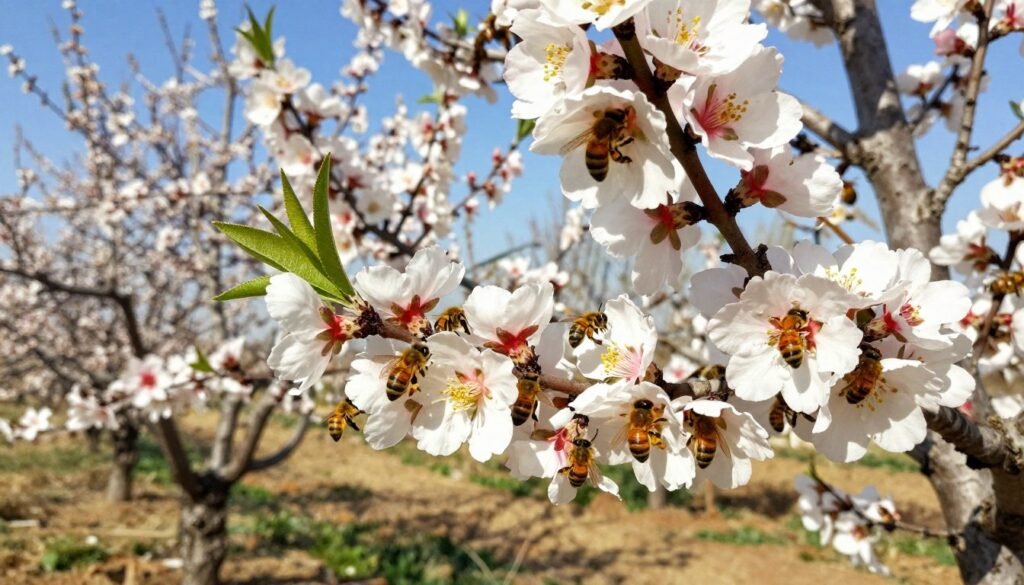
Why brood matters: larvae need pollen to grow, so hives with lots of brood stimulate adult workers to collect more. A good queen on healthy comb often fills 90%–95% of the available space, which signals a growing population ready for almond pollination.
- The presence of healthy brood drives greater pollination output and higher pollen returns.
- Beekeepers should monitor brood pattern to confirm the queen is laying effectively and numbers will hold during bloom.
- Growers can verify brood amount during inspections to ensure they get the service they paid for.
- A typical unit for almond pollination will show several frames well filled with brood, indicating ample worker recruitment.
- Strong brood patterns also help reduce disease risk because a healthy population maintains hive hygiene.
Use these brood checks as simple, verifiable data points when arranging services.
Assessing Adult Bee Populations
Counting adult workers on frames gives a quick, field-ready estimate of foraging potential.
Use visible coverage on standard Langstroth frames to estimate total numbers. Research at Oregon State shows one fully covered comb holds about 2,400 adult bees. That metric lets growers and beekeepers convert frame counts into a practical total number.
Practical benchmarks: a Grade A orchard unit needs about 14,000 adult bees; a Grade A field unit approaches 24,000. Inspect on a warm day so you see bees that would otherwise be out foraging.
| Metric | Frame Coverage | Estimated Adults |
|---|---|---|
| One standard comb | Fully covered | ~2,400 |
| Grade A orchard unit | ~6 well-covered frames | ~14,000 |
| Grade A field unit | ~10 well-covered frames | ~24,000 |
Account for bees out foraging; counts on frames understate total population. Also check brood and signs of disease to ensure the workforce will hold through almond pollination.
For seasonal prep and timing tips, see this guide on seasonal beekeeping tasks to align inspections with local temperature and bloom time.
Managing Food Reserves for Hive Health
Ensuring enough stored food in comb is a practical step that protects hives from sudden foraging loss.
Overwintered colonies should never drop below 10 pounds of honey reserves. A unit that cannot forage for two or three days can burn through that amount and risk collapse.
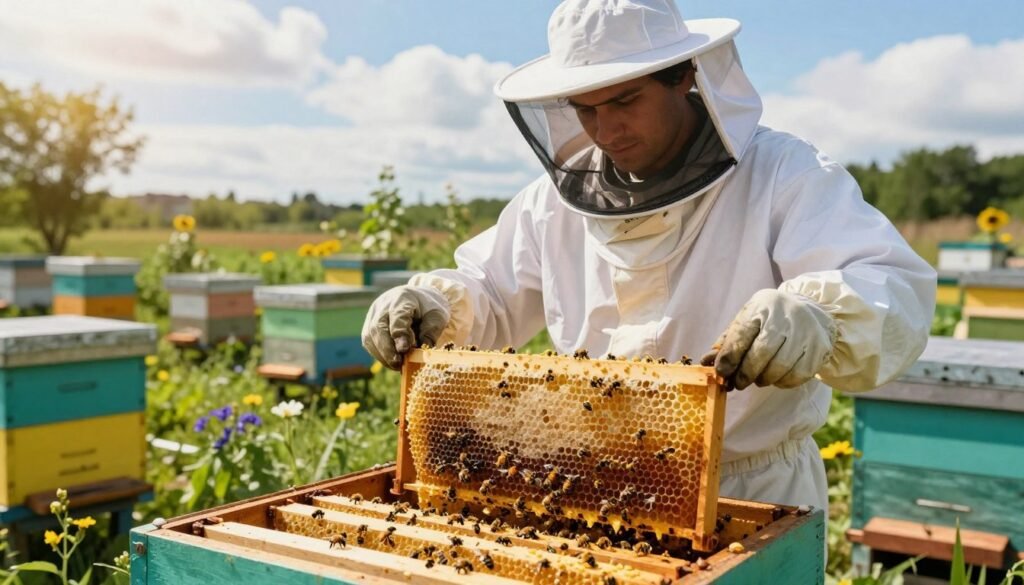
Regular inspections in early spring are essential. Check frames for capped stores and assess the brood area to estimate future needs.
“A ten-pound buffer often makes the difference between survival and starvation during bad weather.”
| Condition | Minimum Stores | Action |
|---|---|---|
| Overwintered unit | 10 lb honey | Feed fondant or syrup if below minimum |
| Two-day rain spell | ~10 lb used | Provide emergency feed and reduce entrance |
| Early spring with brood | Maintain 10–15 lb | Supplement pollen substitute if needed |
- Beekeepers must monitor stored honey and act quickly when amounts fall.
- Food security supports adult population and healthy brood development.
- Managed reserves protect the unit’s value for commercial services.
Identifying and Mitigating Bee Diseases
Early detection of brood disorders stops small problems from becoming apiary-wide crises.
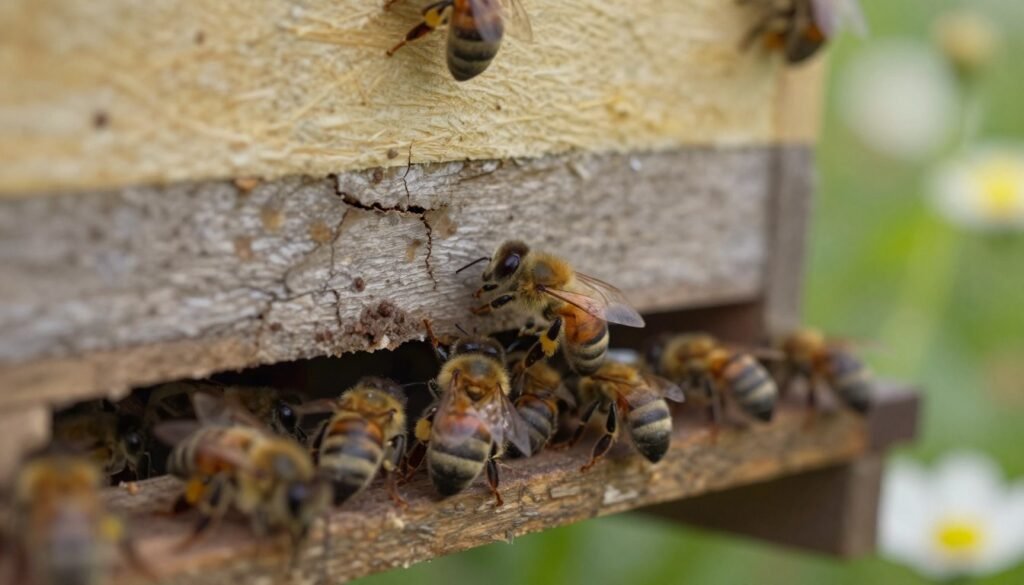
Identifying and mitigating bee disease is a key duty for every beekeeper who supplies commercial growers. Regular comb checks reveal abnormal brood patterns or signs of infection long before losses grow large.
American foulbrood is the most destructive disease in North America. It can kill an entire honey bee colony and needs immediate, decisive action.
By contrast, European foulbrood may be tolerated at low levels early in the season. It often declines within weeks with good nutrition and monitoring.
| Issue | Typical Signs | Recommended Action |
|---|---|---|
| American foulbrood | Sunken cappings, foul odor, dead brood | Isolate and follow state eradication rules |
| European foulbrood | Spotty brood, uneven pattern, weak larvae | Improve feeding, retest in 2–4 weeks |
| General hygiene | Sticky combs, weak populations, low honey stores | Inspect weekly; remove infected combs; train beekeepers |
“A trained eye and prompt action protect both apiary health and service value.”
A healthy colony with solid numbers resists spread better. Routine inspection, good nutrition, and proper record keeping keep colonies ready to perform.
Field Inspection Techniques for Growers
Simple, repeatable checks help growers confirm hive quality on the day of placement.
Preparation and Safety Gear
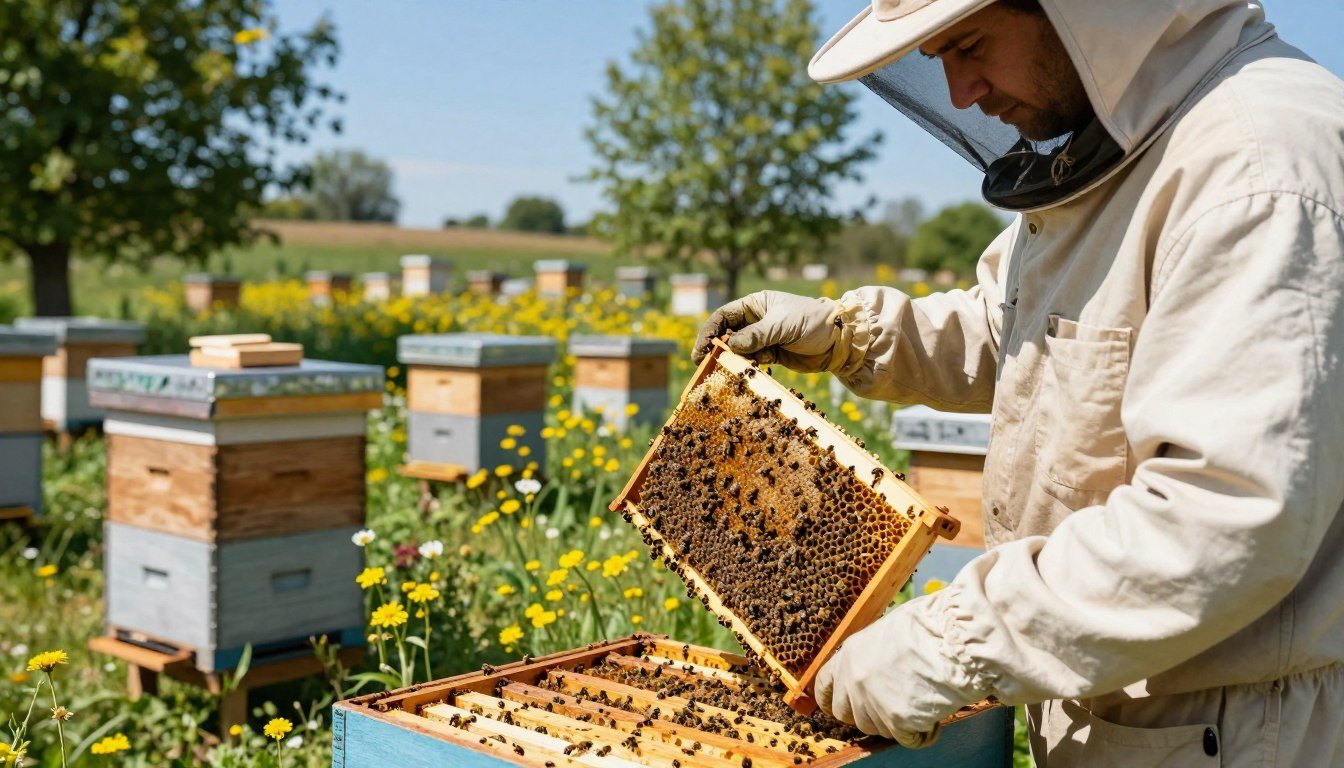
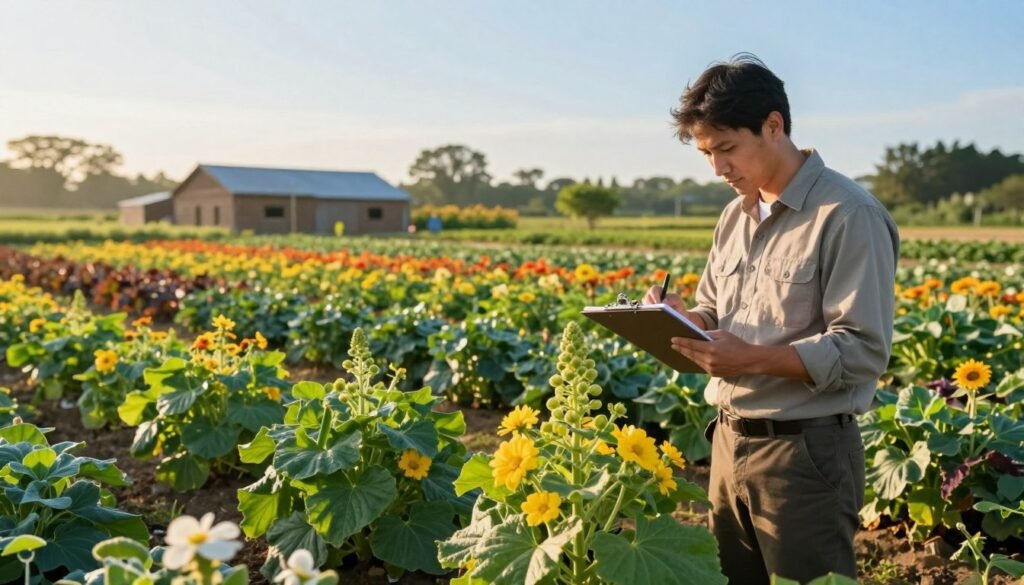
Wear a veil, gloves, and light-colored clothing when inspecting hives. These items reduce stings and let you work calmly.
Bring basic tools: a hive tool, a smoker, and a notebook or phone for recording data. Choose a warm day near 65°F so flight activity reflects normal behavior.
Random Sampling Procedures
Ask the beekeeper to open a random 10%–25% of hives. Random sampling prevents cherry-picking and gives more reliable data on overall apiary condition.
Observe flight at the entrance. A useful field rule: more than 100 incoming bees per minute at ~65°F signals a good pollinating unit.
| Check | What to record | Why it matters |
|---|---|---|
| Entrance flight | Incoming bees/min | Shows active forager numbers and hive vigor |
| Frames inspected | Number of well-covered frames | Converts to estimated adult population |
| Brood presence | Frames with healthy brood | Predicts near-term production and worker recruitment |
| Stores and disease | Honey stores & signs of illness | Ensures units can sustain through short forage gaps |
Share findings with the beekeeper and document results. A clear, professional relationship grows when both parties inspect and record the same data.
The Cluster Count Method Explained
The cluster count is a rapid, low‑impact way to estimate hive workforce. Tilt the upper box and view bees from above and below without removing individual frames. This reveals how many frames are actively covered by bees and comb.
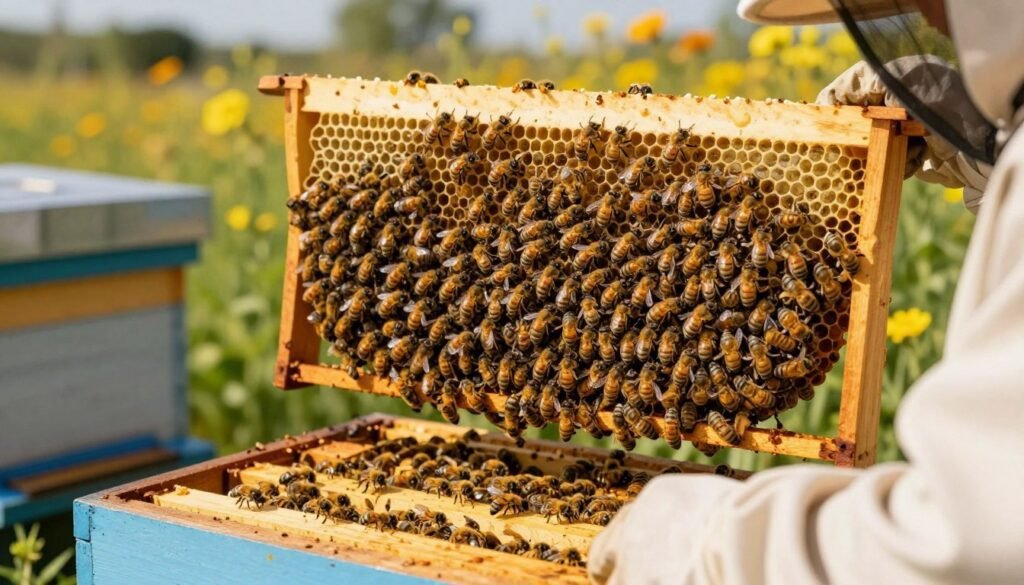
Why it works: a standard frame is considered well covered when about 75% of both sides host bees. Counting those frames converts visible coverage into a practical total number for field checks.
- The technique is faster and less stressful than full inspections, protecting the queen and brood.
- Strong units for almond typically show about 15–18 well‑covered frames; growers can use this to verify size at placement.
- Keep records: noting comb coverage and temperature during the count gives repeatable data for later review.
Practical tip: perform counts on warm afternoons when foraging is active. Agree on the method ahead so growers and beekeepers share the same standard for measuring bee colony strength.
Accounting for Foraging Bee Activity
Counting returning workers for 60 seconds on a warm day gives a repeatable adjustment to on-frame estimates.
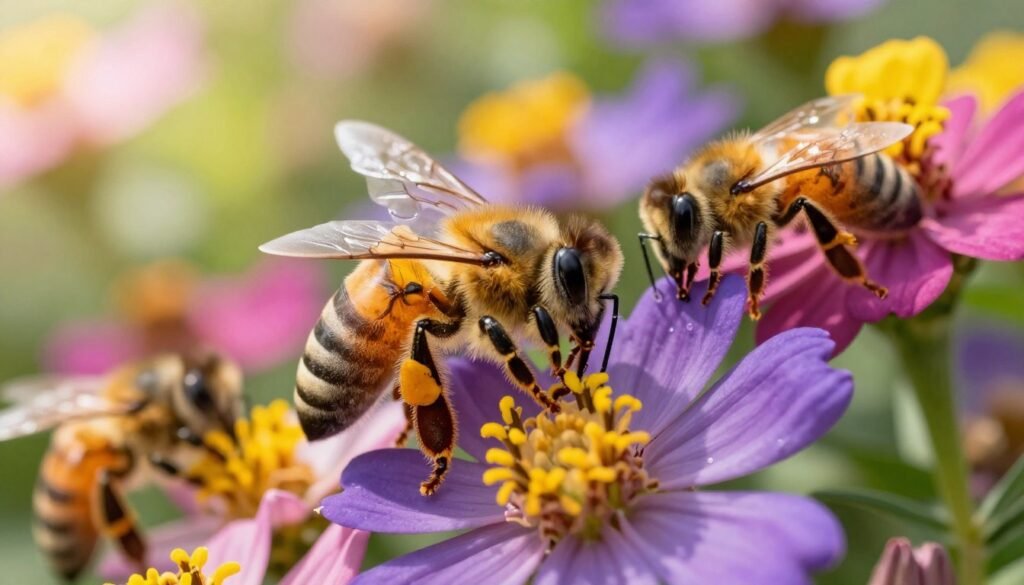
On a sunny day, expect roughly a dozen bees entering and exiting at once for a well‑prepared unit. Growers can sit by the entrance and count bees returning in 60 seconds to estimate forager numbers.
Simple calculation: multiply returning bees per minute by the average round‑trip flight time (in minutes) to estimate how many are out foraging. Add that figure to on-frame counts to reveal a more accurate total.
- Accounting for foragers matters because many workers are off the comb during inspection.
- Research shows high field activity improves almond pollination even when frames look lighter.
- Beekeepers should share typical foraging rates and flight times so growers see the true value of honey bee units.
Record the data: note temperature, time of day, and the returning rate. Adjust the frames covered by bees to include the estimated foragers and use that number when setting expectations for almond pollination services.
Best Practices for Pollination Agreements
Practical, written arrangements help translate field checks into enforceable service value. A concise agreement protects grower yields and beekeeper assets by setting clear duties and expectations.

Key Contractual Components
Define the number of colonies and guaranteed colony strength with measurable metrics such as frames well covered and brood area. List the target number of hives and acceptable variance at placement.
Set timing precisely: state arrival and removal dates, check windows, and who pays for late moves or weather delays.
- Include provisions for third-party inspections if a dispute arises.
- Add clauses on pesticide application, access to fields, and steps for theft or vandalism.
- Assign responsibilities for feed, disease treatment, and record sharing during the service period.
Survey data shows many almond growers rent directly from beekeepers or use brokers. Repeat partnerships often improve outcomes and reduce negotiation time.
“A clear agreement is the best way to ensure the pollination value is realized and that the bees are protected.”
For beekeepers exploring sources of bees and nucleus colonies, consider guidance on buying packaged bees and nucs to align supply with contract commitments.
The Role of Pollination Brokers
A skilled broker can turn a fragmented supply of hives into a reliable service for a large orchard.
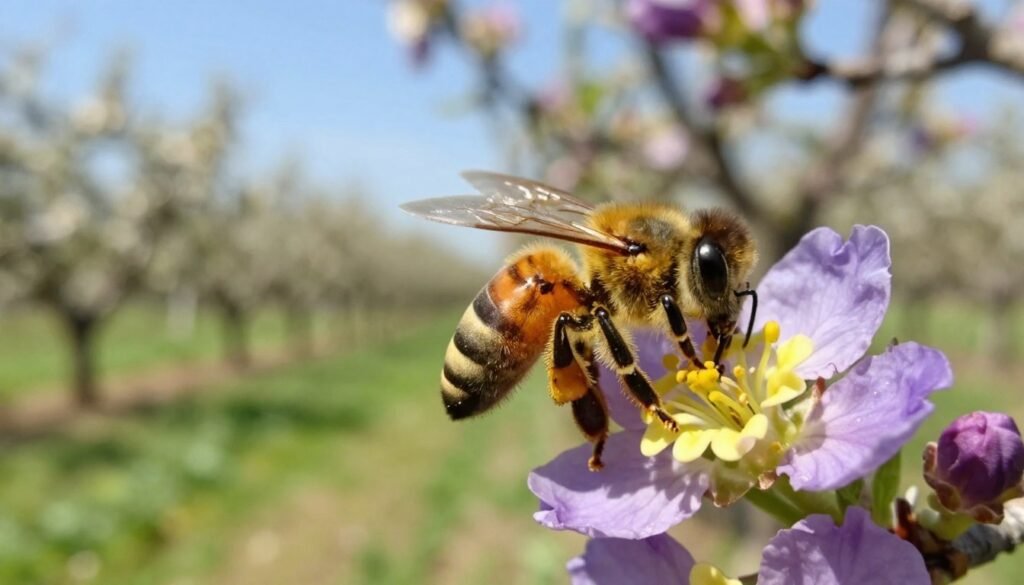
In the United States, about 82% of the honey bee population is used for almond pollination. Brokers coordinate logistics, matching growers with beekeepers who can deliver the required number of colonies on schedule.
How brokers add value:
- They manage transport and timing so growers get timely hive placement.
- They often guarantee a minimum level of colony strength to meet orchard needs.
- By sourcing from multiple suppliers, brokers reduce the risk of shortfalls from high mortality.
Brokers usually charge a fee ranging from $2 to $20 per colony to arrange these services. For beekeepers, brokers provide faster payments and fewer logistic hassles during the intense almond pollination season.
“Using a broker lets growers focus on production while a professional handles thousands of honey bee colonies and the complex coordination of pollination services.”
Tip: Include clear terms in contracts about arrival dates, verification methods, and remedies if service levels fall short. This keeps expectations transparent for growers and beekeepers alike.
Navigating Pesticide Risks and Safety
Pesticide planning is one of the most practical ways to protect honey bee health during bloom. Several fungicides, herbicides, and growth regulators can cause lethal or sublethal harm to foragers and the hive.
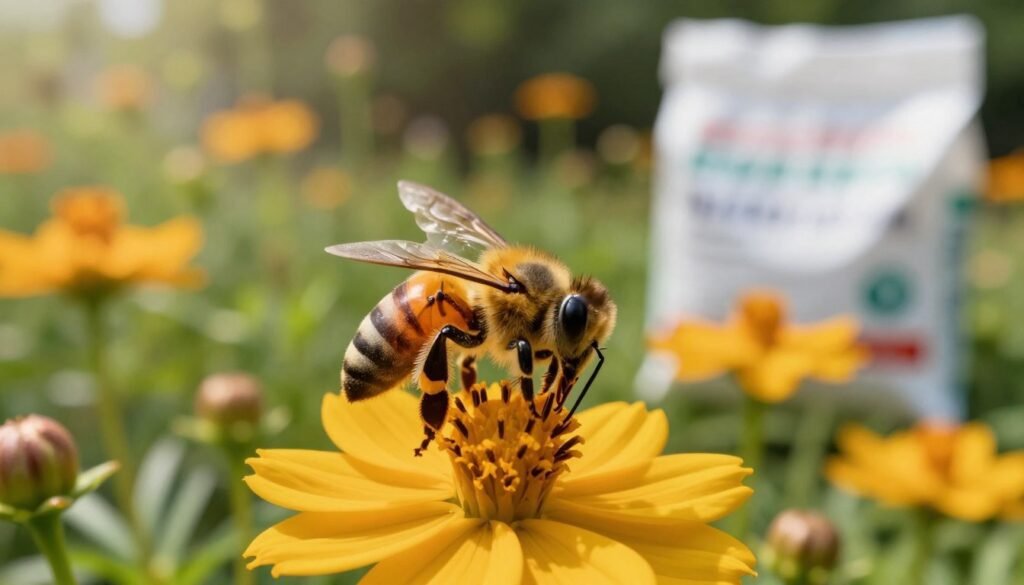
Residues may collect in the comb and on frames. Over time these residues harm brood development and reduce overall hive strength.
Clear communication matters: growers must give advance notice if a toxic product will be applied while bees are present. That simple step lets beekeepers move or cover units and avoid losses.
- Protective practices: time sprays for late evening or after bees leave the field when feasible.
- Adopt integrated pest management to limit chemical use and favor bee-safe alternatives.
- Record treatments and track the number and location of hives for post-season review.
Work together: growers and beekeepers who share records and follow safety protocols cut accidental poisoning and keep almond pollination reliable.
For practical guidance on reducing chemical risk to pollinators, see minimizing pesticide risk to bees.
Conclusion
When both parties agree on methods, disputes drop and services perform as promised. Clear measurement and routine checks help deliver reliable pollination services and protect farm schedules. Use simple records so the agreed number of active frames and the verified strength of each hive are easy to confirm.
Growers and beekeepers across the United States must keep lines of communication open. Regular inspections and shared notes on honey bees and field activity keep services consistent and predictable. Standard metrics make it easy to value work and resolve issues quickly.
Adopt clear pollination contracts with measurable items, document arrival checks, and keep one shared file for results. For beekeepers starting a business or expanding supply, see this guide to start an apiary to align your hives and services with market demand.