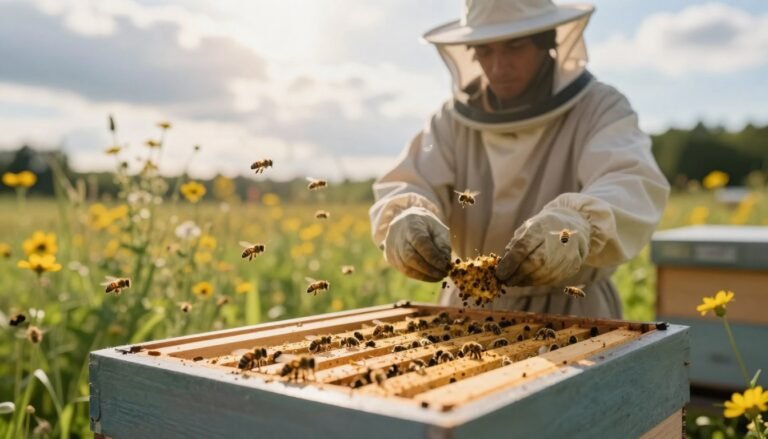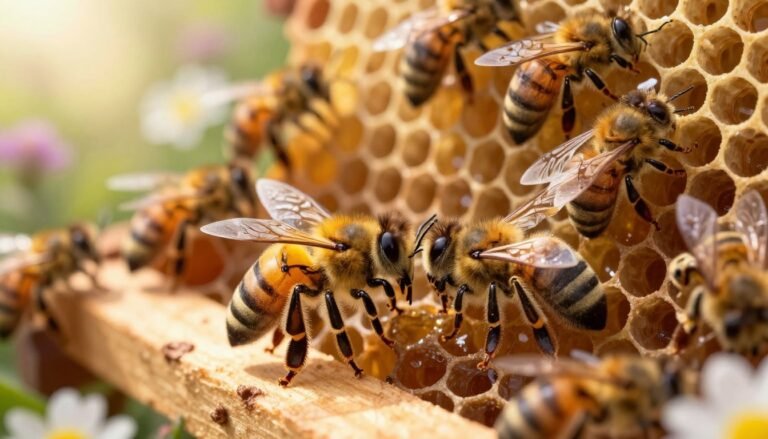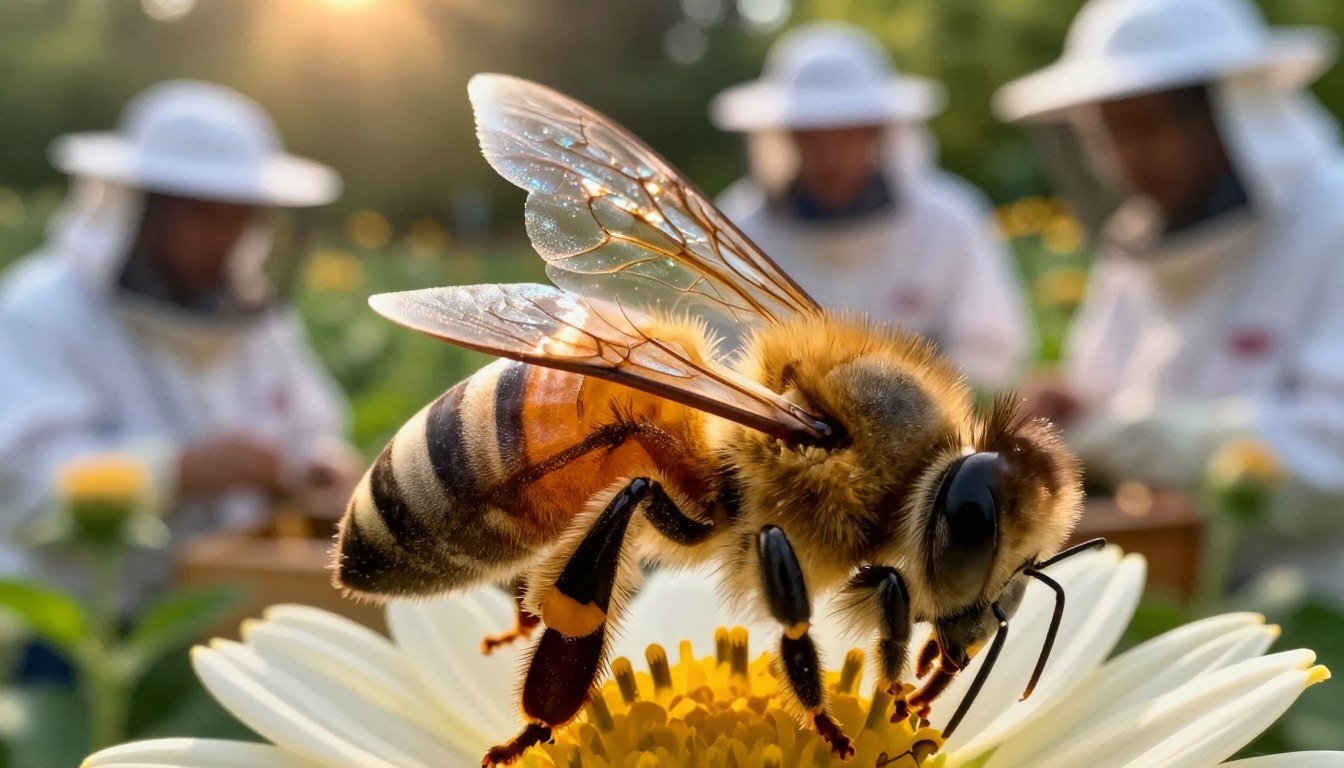
Queen clipping is a common hive management technique used by many beekeepers to limit the flight of a laying queen during swarming season. The method trims part of a forewing so the mated queen cannot depart on a long flight. It aims to reduce lost colonies and protect honey stores while keeping worker numbers intact.
Debate centers on welfare and effectiveness. Some beekeepers argue it prevents costly losses and helps with swarm control. Others question whether the procedure causes distress or alters colony behavior.
Scientific work, including studies by Dr. I.W. Forster, found little difference in honey yield or colony strength between clipped and unclipped hives. Still, any decision should rest on anatomy knowledge, careful handling, and a clear management plan.
For more detailed discussion of the ethics and evidence, see a balanced review at is queen clipping cruel?
Key Takeaways
- Purpose: the practice aims to limit swarms and reduce lost colonies.
- Welfare: debate exists, though pain in queens is not clearly shown.
- Evidence: studies report similar honey and colony strength after the procedure.
- Skill matters: proper technique and handling are essential.
- Decision: choose based on facts, apiary goals, and local practice.
Understanding the Practice of Queen Clipping
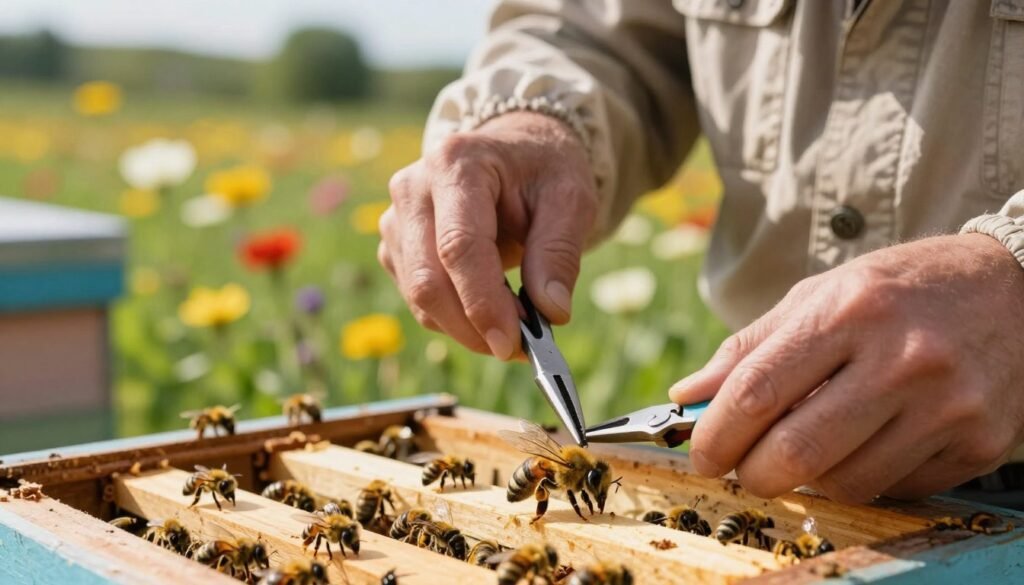
Clipping queen refers to a careful management method some beekeepers use to keep the laying female in the hive during swarm season. The technique removes a small portion of a forewing with sharp scissors so the queen bee cannot fly long distances.
Many practitioners view this as humane because it does not stop egg laying or routine duties. Keeping the queen inside helps maintain the colony’s size and steady honey production through peak months.
Some beekeepers also use the trim as a lasting mark. Unlike paint, a wing modification lasts and helps identify queens across hives. The decision often comes down to the beekeeper’s goals for harvest, swarm control, and colony stability.
- Reason: limit loss from swarms
- Tool: sharp scissors and calm handling
- Skill: training reduces risk to bees
The Anatomy and Mechanics of Wing Clipping
Understanding flight anatomy helps explain why a small alteration changes range. The forewings of a queen are larger than the hindwings and provide most of the propulsive power for flight.
Each wing is supported by a network of veins that house nerves and tracheae. These structures are vital for motion and sensory feedback in bees. Damage beyond the tip can impair function or harm the central body.
The Role of Forewings
The larger forewings generate lift and control. Removing one-third to one-half of a single forewing reduces long-distance flight but leaves walking, egg laying, and local duties intact.
Proper Clipping Technique
Safety and precision matter. Use sharp scissors and a marking pen. Hold the queen in a Turn and Mark cage on a frame to steady her.
- Avoid touching the abdomen or legs with scissors to prevent injury.
- After the procedure, mark the thorax with a paint spot for easy identification.
- Return the cage to the top bars of a brood frame so the colony accepts the queen quickly.
Right tools and a calm beekeeper reduce risk. When done correctly, this method offers a controlled way to limit swarm departure while keeping hive function and honey flow largely unchanged.
Analyzing the Clipping Queen Wings Pros and Cons
Preventing a laying female from flying away during a swarm season offers a clear operational benefit for many in beekeeping.
Benefit: By keeping the adult inside the hive, a beekeeper can avoid sudden population loss and often protect honey stores. Retrieval is simpler when a displaced group remains nearby.
Criticism: Some worry about stress or injury during the procedure. Critics argue that even minor handling may affect behavior in a small number of bees.
Evidence so far shows limited differences between clipped and unclipped queens in colony strength and honey production when the task is done correctly.
“Decisions usually rest on personal goals, local practice, and careful technique.”
Ultimately, the choice to use wing clipping is a management decision. Evaluate risks, monitor colony health, and pair the method with good handling to reduce harm.
Does Clipping Actually Prevent Swarming
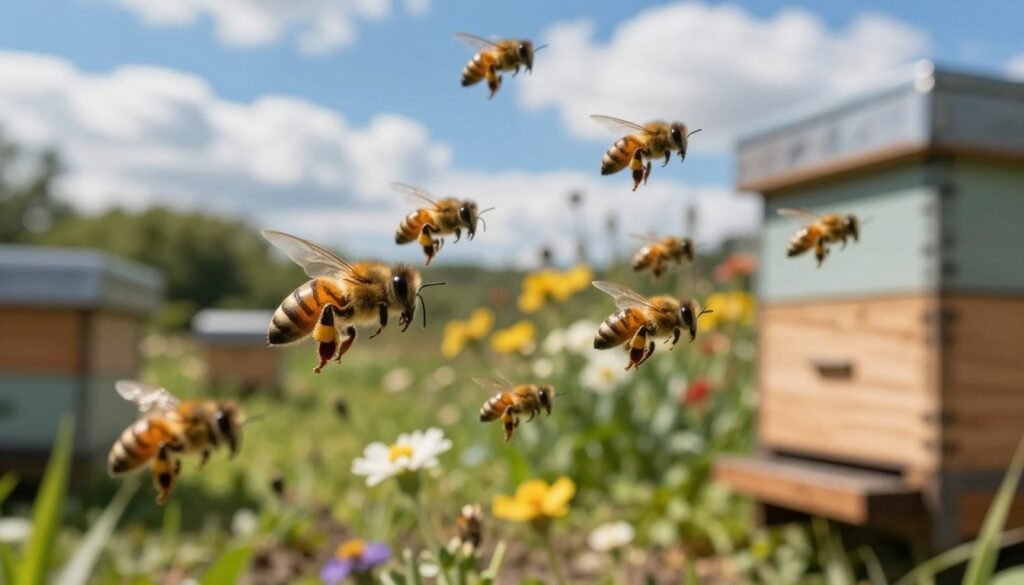
In practice, removing part of a flight surface rarely stops the hive’s urge to leave. A physical restriction may change where a group lands, but it does not remove the instinct to swarm.
The Reality of Virgin Queen Emergence
Ted Hooper noted that a colony led by a clipped queen will often attempt to swarm when a virgin is close to emerging. Queen development from egg to adult takes 16 days, a key period for inspections.
When a swarm leaves with a clipped queen she often falls to the ground because she cannot fly. Workers may cluster near the entrance or return to the hive without her.
- Swarm size: up to 75% of worker bees may depart, reducing honey production.
- Monitoring: regular checks during the 16-day window cut risk.
- Behavior: understanding the virgin queen’s timing helps the beekeeper manage colonies.
“Clipping may change logistics, but it does not eliminate the colony’s swarming instinct.”
Addressing Ethical Concerns Regarding Pain and Distress
Questions about harm and distress arise often when beekeepers consider a small wing trim.
Scientific studies find no clear evidence that worker bees feel pain, and the same biology likely applies to reproductive females. Observers note that a treated queen usually returns to the hive and resumes laying without obvious decline.
It is easy to be anthropomorphic about bee behavior. Scientists caution against assigning human emotions to insects.
Practical signs of distress would include lower egg production or reduced activity. Research has not documented such declines when the procedure is done carefully.
| Observation | Evidence | Practical takeaway |
|---|---|---|
| Treated female resumes egg laying | Field notes and small studies report normal performance | Monitor laying rate to confirm welfare |
| No clear pain markers | Worker bee research shows no pain perception | Assume similar response for queens unless data emerges |
| Ethical label concerns | OED defines cruel as causing great suffering | Decide based on evidence, hive goals, and care standards |
“Responsible beekeeping balances colony health, minimal harm, and clear monitoring.”
Scientific Evidence on Colony Performance and Supersedure
Long-term field data helps us judge whether small wing trims change hive productivity.
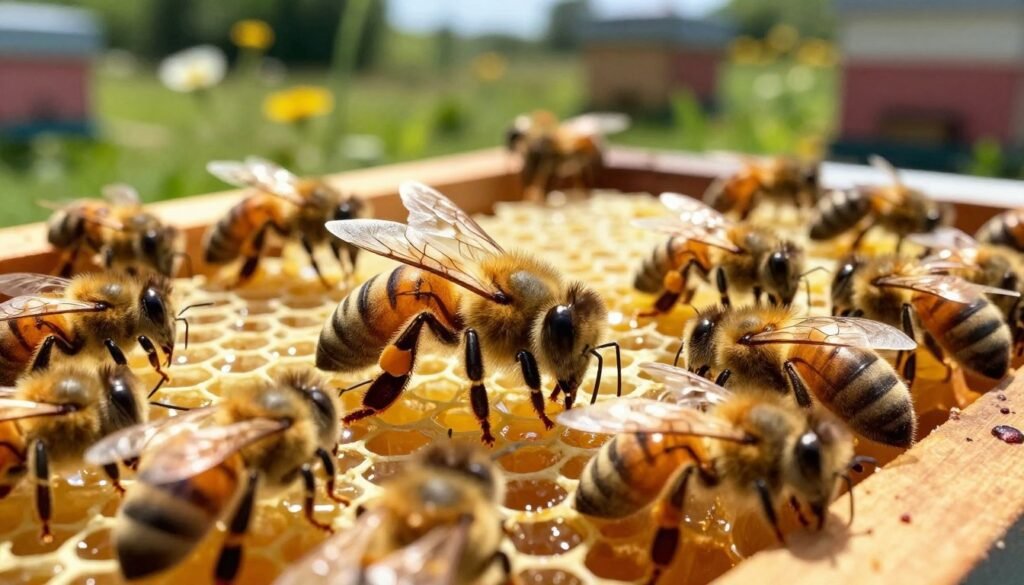
The Wallaceville study by Dr. I.W. Forster tracked 124 colony years over three seasons. Results showed no significant difference in honey production between hives led by clipped and unclipped queens.
Supersedure rates were recorded and likewise showed no clear increase for treated females. Finding unmarked queens in the spring is often a sign of natural replacement rather than an effect of handling.
Honey Production Metrics
The study found similar honey yields across groups, confirming that the practice did not reduce harvest in normal seasons.
Supersedure Rates
Supersedure occurred at comparable frequencies in both sets of colonies, indicating clipping does not raise the likelihood of replacement.
“Maintaining strong colonies is a priority; the Wallaceville data show clipping does not impair colony strength.”
| Metric | Clipped | Unclipped |
|---|---|---|
| Honey production (season average) | No significant change | No significant change |
| Supersedure rate | Comparable frequency | Comparable frequency |
| Colony survival & strength | Maintained across seasons | Maintained across seasons |
For beekeepers seeking practical guidance on confined apiaries, consult resources like small-space beekeeping strategies for compatible management ideas.
Practical Techniques for Safe Queen Handling
A calm, steady hand and the right tools make safe handling the foundation of good hive work.
Start by preparing a small clean area. Use a Turn and Mark cage to steady the insect and protect it from sudden movement.
Wear nitrile gloves to limit human scent and propolis transfer. Sharp, high-quality scissors give a clean cut and reduce trauma.
Practice the motion on drones until you can work smoothly. That practice builds dexterity and confidence before you work with a reproductive female.
- Clip early in the season to avoid peak swarm days.
- After marking, leave the animal in the cage until paint dries—this avoids smudging and rejection.
- Return the cage to a brood frame so workers accept her naturally.
“Proper handling techniques reduce the risk of harming the leader and make the process as stress-free as possible.”
| Step | Tool | Reason |
|---|---|---|
| Secure in Turn and Mark cage | Turn and Mark cage | Prevents injury and stabilizes movement |
| Practice on drones | Nitrile gloves, sharp scissors | Builds skill and reduces mistakes |
| Return on brood frame | Paint mark, cage | Encourages fast acceptance by workers |
For a practical read on technique and timing see should I clip my queen’s wing.
Managing Swarms When the Queen is Clipped
When a swarm leaves a hive led by a clipped leader, the insect often falls near the apiary. This makes recovery quicker and limits loss of honey and brood.
Act fast. If you spot a cluster, check the ground near the hive entrance. A nearby, grounded leader is the easiest way to stop a full colony loss.
Retrieval Strategies for Apiary Stability
Use a nuc box ready on the workbench. Knock the clustered bees from under the floor or from the frame into the box. Close the lid once the leader is inside.
- Work calmly to avoid scattering bees.
- If the leader is missing, the cluster may return to the hive but could swarm again when a virgin appears.
- Retrieval keeps colony numbers steady and protects stored honey.
Regular inspections reduce surprise swarms. Still, keep a box and simple tools near each apiary. Quick action is the best way to preserve colonies and maintain apiary stability.
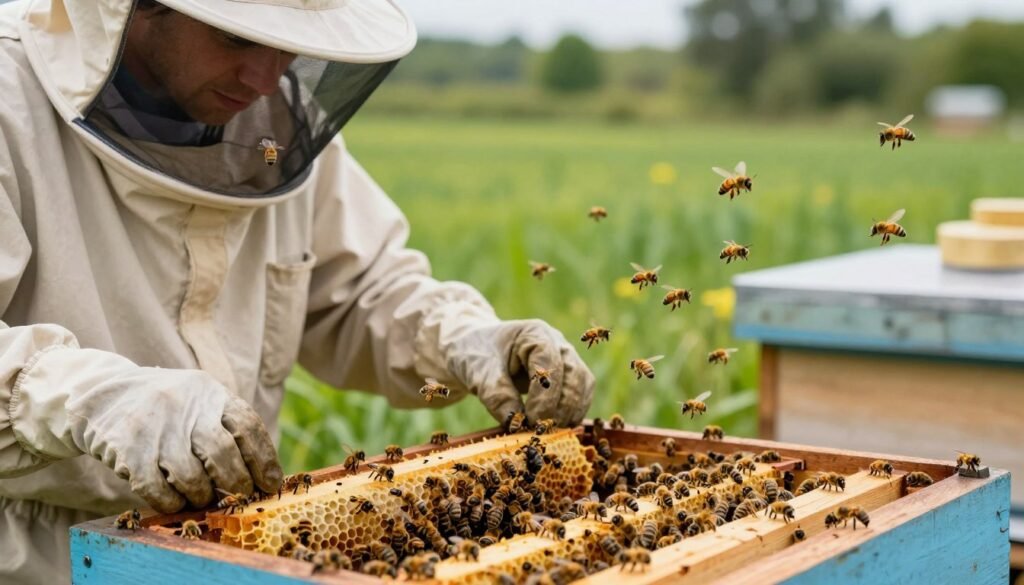
“Having a nuc box ready is a practical strategy for managing swarms and ensuring the stability of the apiary.”
Why Some Beekeepers Choose to Clip
Keeping the leader inside the nest is a practical way to reduce colony losses during spring.
Responsible beekeeping often means making decisions that protect workers and stores. Many choose the practice to keep the worker population together. This stability can boost honey production and reduce the risk of total loss.
Preventing swarms is also a neighborly choice. A swarm in a garden can alarm people and cause complaints. For this reason, some beekeepers act to avoid imposing bees on nearby yards.
Survival matters. Only about 23% of natural swarms survive their first winter. With tens of thousands of beekeepers, cumulative losses are significant. Limiting swarm departure helps more colonies survive.
Many use the cut as a lasting mark to track age and performance; a painted thorax also helps. The method is a personal choice. For a thoughtful perspective, read when the beekeeper clips the queens.
| Reason | Evidence | Practical takeaway |
|---|---|---|
| Protect worker numbers | Leads remain; fewer departures | Better honey production and brood care |
| Reduce swarm nuisance | Fewer complaints to neighbors | Improves community relations |
| Improve survival | Low winter survival for wild swarms (~23%) | Helps preserve colony numbers across an apiary |
Conclusion
Choosing to trim a queen’s flight surface is a management decision that should match your goals for colony size, honey yield, and local expectations.
Evidence from field studies, including work by Dr. I.W. Forster, shows no clear harm when the procedure is done carefully. Beekeepers should weigh easier swarm retrieval against ethical concerns before acting.
Proper training, steady hands, and the right tools are essential for safe work. For practical guidance and requeening ideas see this beekeeping Q&A with Stu Anderson.
Ultimately, manage swarms responsibly to protect colonies and support healthy bee populations.