Every new beekeeper must learn to tell the types of wax that appear in a healthy hive. This skill protects colony health and improves the quality of your beeswax harvest.
The Cathedral Hive design shows how honeycomb acts as a heat sink and insulator. Bees keep the brood area near 91–96°F (32–35°C), so the material and location of seals matter for nest function.
Understanding which material stores honey and which supports young bees helps with sustainable beekeeping. Proper identification boosts product purity and keeps your operation productive.
For practical guidance on moving brood frames and preserving cell integrity, see this note for the responsible frame transfer checklist. For tips on recovery and sanitation during processing, review the capping care and workflow described by experienced extractors at beekeeping processing tips.
Key Takeaways
- Learn to spot the different types of wax to protect colony health.
- The hive’s architecture helps regulate brood temperature and material performance.
- Proper handling preserves the purity of beeswax and honey stores.
- Use best practices when transferring frames to avoid stress on bees.
- Sanitation and careful recovery improve product yield and value.
Understanding the Anatomy of the Hive
The hive’s layout is a working map. It directs where the queen lays eggs, where stores accumulate, and how worker bees move heat and food through the frames.
The Brood Nest Environment
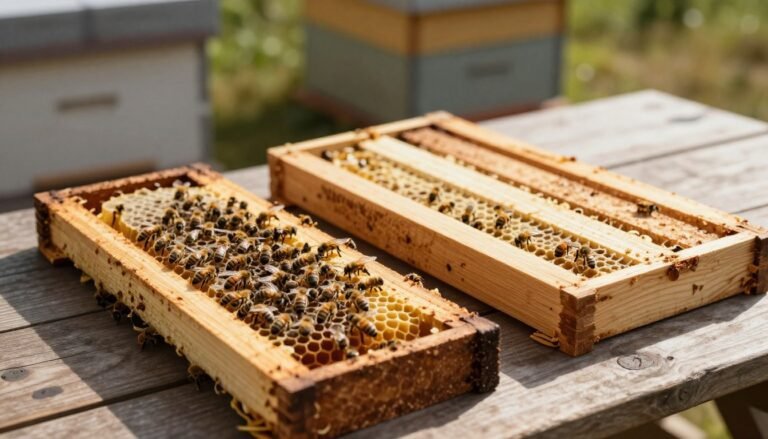
The queen often begins laying near the center of a standard 10-frame hive, producing a band of eggs and larvae shaped like an embedded football across the frames.
Heater bees keep the brood nest warm by vibrating in empty cells to hold a steady 91–96°F. This precise heat supports proper development of eggs and larva.
Inspecting the brood pattern helps beekeepers spot problems early. Spotty coverage can signal queen lay issues or disease.
Honey Storage Patterns
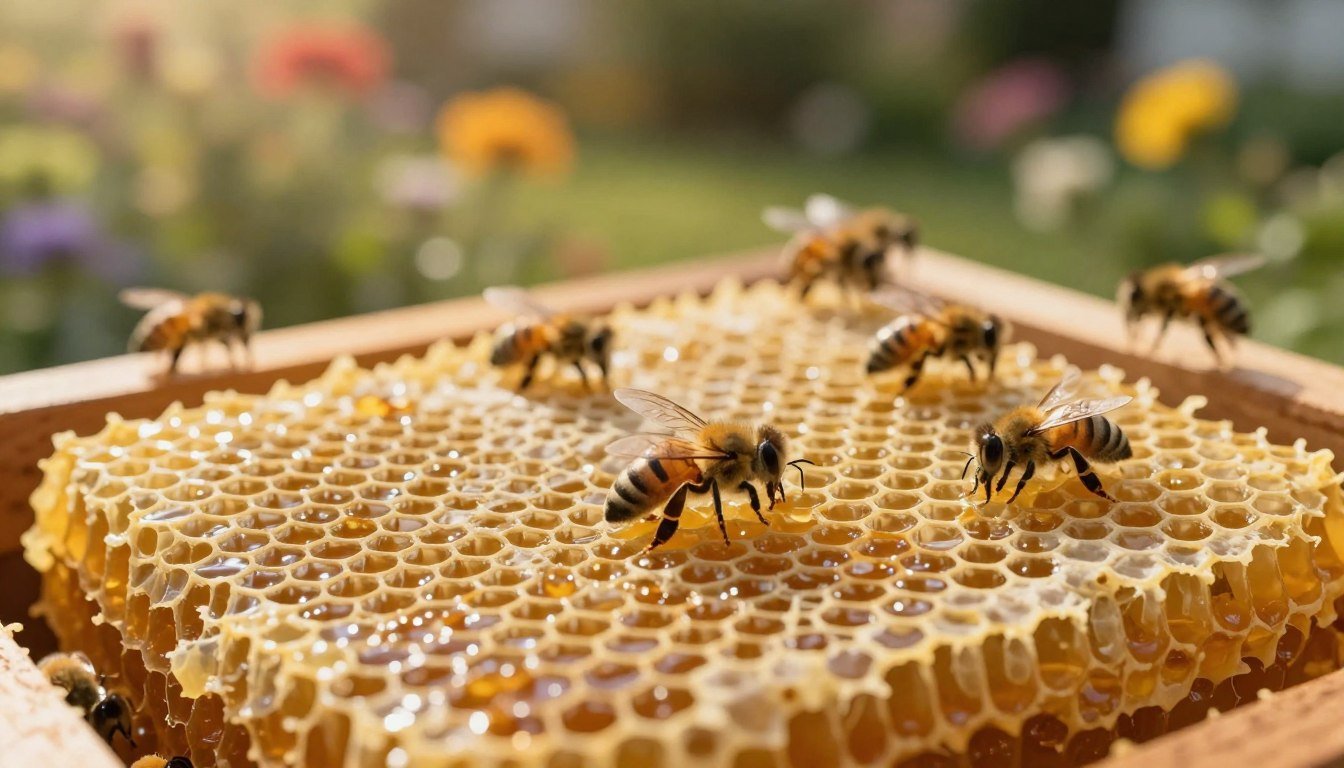
Worker bees build cells above and around the brood to store nectar and pollen. Honey acts as a vital heat sink and adds insulation during cold months.
- Pollen sits next to the nursery to feed developing larvae.
- A top bar hive often shows a large band of honey at the top that serves nutrition and insulation.
- Capped honey cells look slightly indented, while capped brood cells have a small dome—learn this to avoid mix-ups.
For more on comb structure and how it functions, see the secrets of honeycomb. To protect frames and prevent pests during storage, review best practices at how to store frames to prevent.
Analyzing Cappings Wax vs Brood Comb Wax Differences
Color, smell, and grit tell a lot about whether a frame section once held nectar or supported developing bees. Thin honey seals are pale, nearly pure, and yield a clean render. The lower nursery foundation darkens from propolis, pollen, and residue left by larvae and eggs.
Quality matters: clean seals from honey cells produce beeswax suitable for cosmetics and fine candles. Material from the brood area carries impurities that are hard to separate and lower final product quality.
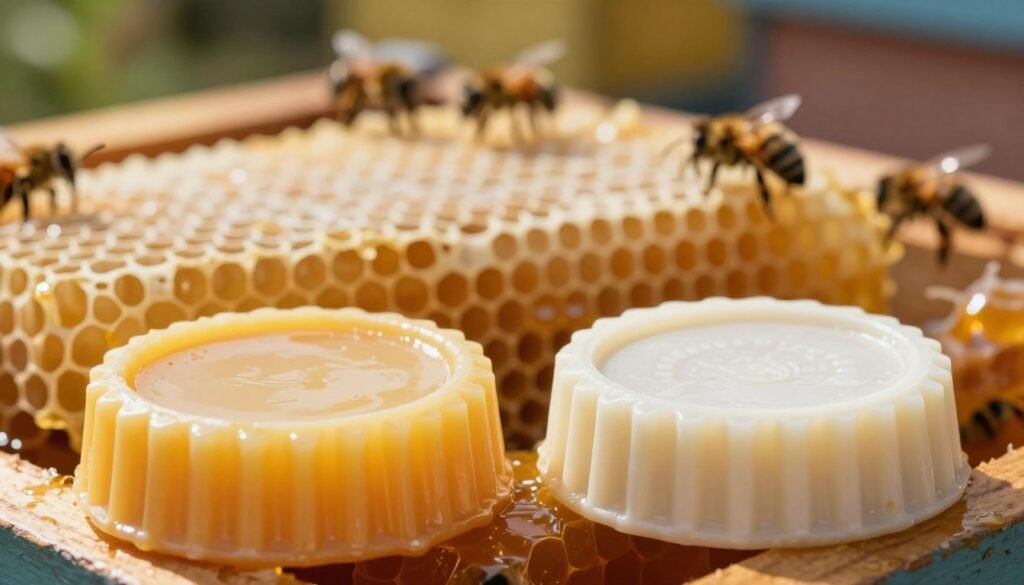
Processing contaminated foundation often gives a low net yield because so much sludge must be discarded. Mixing contaminated pieces with clean caps will degrade the whole batch and ruin clarity and scent.
- Harvest caps first: prioritize collecting thin seals over nursery sections to protect product purity.
- Keep frames separate: store honey seals apart from rearing frames to avoid cross-contamination.
- For related hive management, read about treatment options at formic pro and oxalic acid comparison.
Functional Roles and Hive Health
Propolis and the bee’s own shellac line the inside of nursery cells to keep the nest sterile and stable.
How this helps the colony: bees coat each cell in the brood nest with propolis. This material acts as an antimicrobial, anti-fungal, and antiviral barrier.
The Role of Propolis and Shellac
Each time a bee emerges, workers recoate the cell with a thin shellac. This rehousing keeps the cell ready for the queen lay and reduces pathogen buildup.
- Defense: the coatings lower disease risk for the larva and protect the worker bees.
- Sanitation: frequent recoating maintains a clean brood nest and supports strong brood patterns.
- Harvest note: beekeepers should avoid harvesting heavily coated brood areas when seeking high-quality caps or rendered products.
| Role | Frequency | Benefit | Harvest Impact |
|---|---|---|---|
| Propolis coating | Continuous | Antimicrobial barrier | Reduces purity when mixed |
| Shellac recoating | After emergence | Maintains clean cell | Affects color and scent |
| Cell maintenance | Ongoing | Supports queen lay and larva health | Keep separate from capped honey for quality |
Tip: For ways to support these defenses naturally, see a guide to increase propolis production.
Best Practices for Harvesting and Processing
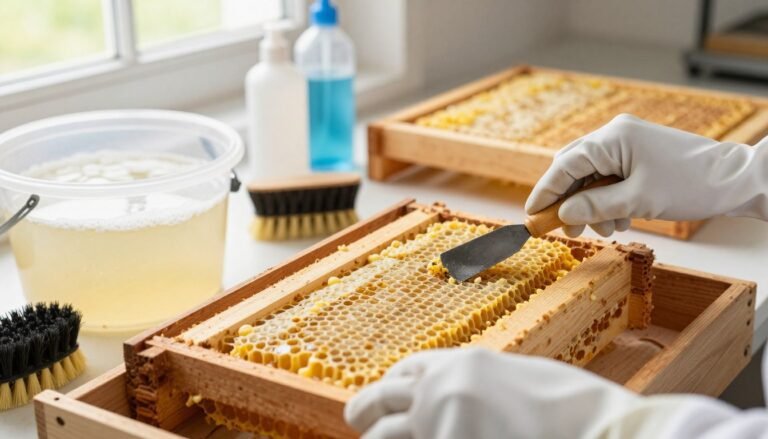
Harvesting selectively preserves the hive’s infrastructure and yields cleaner product for sale. Focus on removing only the thin seals from honey cells and leave brood comb alone. This approach supports colony growth and keeps frames ready for new nectar.
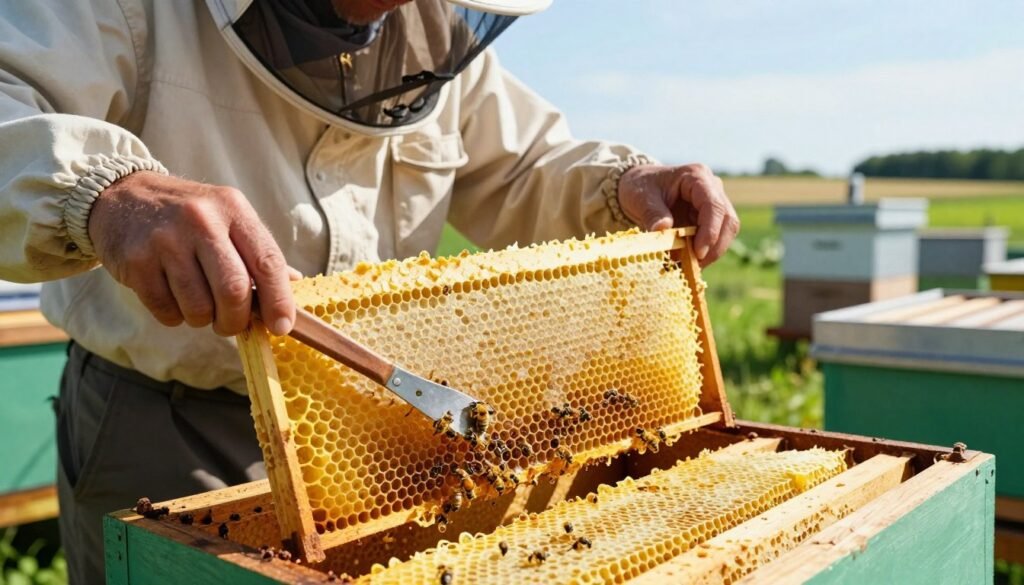
Maintaining Hive Infrastructure
Leave the brood nest intact so workers can rear larvae without interruption. Taking brood comb forces the colony to rebuild and wastes the colony’s energy.
Top bar and bar hive systems need careful handling during harvest to avoid disturbing the nursery band. Use steady, calm movements to limit stress on the bee population.
Avoiding Contamination
Only process caps to get high-grade beeswax and to avoid embedded debris, pollen, and pesticide residues that lower quality.
- Keep honey cells and brood frames stored separately after removal.
- Use specialized processing gear to improve yield and cleanliness; providers like HONESTBEE offer efficient machines for filling and rendering.
- For top bar specific techniques, review the guide on handling cross comb in top bar.
| Practice | Why it matters | Action |
|---|---|---|
| Harvest caps only | Preserves colony effort and product quality | Remove thin seals; leave brood areas |
| Separate storage | Prevents cross-contamination | Keep frames labeled and apart |
| Use proper gear | Improves throughput and cleanliness | Invest in specialist equipment; see processing methods |
For step-by-step processing methods, see a practical walkthrough on collecting and rendering beeswax at collecting and processing beeswax.
Conclusion
A careful eye for cell color and texture helps beekeepers keep high-grade capped honey separate from nursery areas.
Distinguishing sealed honey from rearing cells is a core skill for responsible beekeeping. Protect the queen and developing eggs by leaving the brood area intact and harvesting only light, clean seals. This preserves the nest and supports colony productivity.
Prioritize product purity: thin caps yield cleaner material and lower contamination risk. See the SARE study on less-contaminated cappings for evidence that seals can be a safer source for foundation. Also review choices for foundation and frame color to speed inspections and reduce rework with the best foundation choices.
Consistent checks of brood pattern, capped honey, and worker activity will keep your hive healthy and your harvest valuable.
FAQ
What are the main visual and structural differences between cappings and brood comb in a hive?
Cappings that cover stored honey tend to be lighter, thinner, and more translucent than the darker, thicker cells used for rearing young. Brood cells show a domed, often matte cap and sit within the brood nest where eggs and larvae develop. Honey storage cells cluster toward the periphery of the nest, while brood comb occupies the central frames or bars where the queen lays most often.
How does cell use differ for honey storage versus raising larvae?
Worker bees use storage cells to hold nectar, which they dehydrate into honey and then seal with a thin cap. Brood cells house eggs, then larvae, and finally pupae; those cells receive more frequent visits for feeding and warming. The colony arranges these zones to keep brood warm and stores accessible, optimizing brood rearing and honey production.
How does the presence of pollen and propolis affect the quality of harvested material?
Pollen and propolis can tint and flavor the material and introduce additional waxy and resinous compounds. When harvesting, beekeepers should avoid frames heavily laced with propolis or pollen to reduce contamination of rendered product and maintain higher clarity and oil content in finished beeswax products.
What precautions should a beekeeper take when removing capped honey frames from a top-bar or Langstroth hive?
Remove frames or bars gently to avoid crushing brood or spilling nectar. Work during warm, calm weather when many foragers are out. Store harvested comb promptly in clean, ventilated containers to prevent fermentation. Sanitize tools and separate brood-containing sections to protect the colony’s reproductive stock.
Can brood comb be recycled for foundation or does it pose risks to colony health?
Old brood comb often contains residues and may harbor disease spores or pesticide traces. Many beekeepers rotate out older brood sections on a schedule and replace them with new foundation or drawn comb to reduce disease pressure and pesticide buildup, improving overall colony vitality.
How do color and age indicate the history of a comb or cap area?
Lighter, pale areas usually indicate newer storage or fresh sealing activity. Darker brown or gray tones signal older comb that has hosted many brood cycles or accumulated debris such as cocoon remnants and pollen. Color helps assess when to rotate frames for maintenance or processing.
What is the recommended method for separating seals for honey extraction without damaging brood cells?
Use a heated uncapping knife or fork to slice thin caps off storage cells, taking care not to disturb adjacent brood areas. Work over a clean tray to catch material for rendering. In top-bar systems, tilt bars and carefully scrape only the honey-bearing sections to preserve brood integrity.
How do queen behavior and queen laying patterns influence where workers build storage versus brood areas?
The queen prefers to lay in warm, central combs with optimal cell size. Workers respond by building and maintaining brood nest heat and placing nectar and pollen around that core. Seasonal changes and colony strength shift these patterns—strong colonies expand storage into peripheral frames or bars faster than weak ones.
What steps reduce contamination when processing comb for product uses?
Remove hive contaminants like propolis and excess pollen before rendering. Melt at controlled temperatures, strain through fine mesh or cheesecloth, and avoid solvents. Label and store finished product in food-grade containers away from heat and pests to preserve quality and aroma.
How often should beekeepers inspect and replace brood-bearing sections to keep colonies healthy?
Inspect colonies regularly through the active season and plan to cycle out older brood-bearing sections every few years, depending on disease history and pesticide exposure in the area. Timely replacement reduces pathogen load and improves long-term productivity.