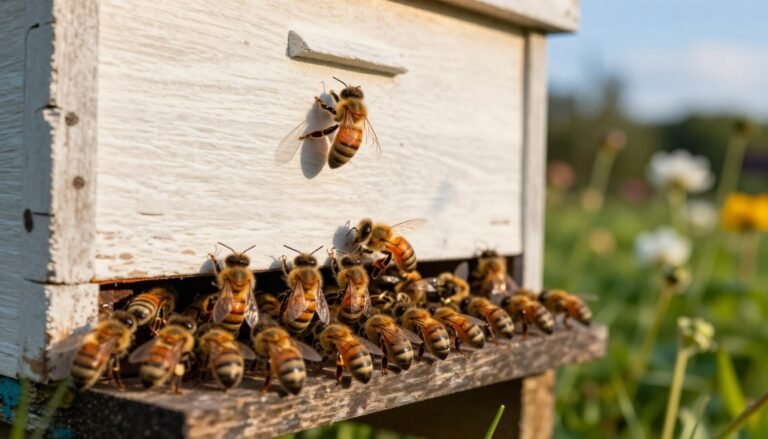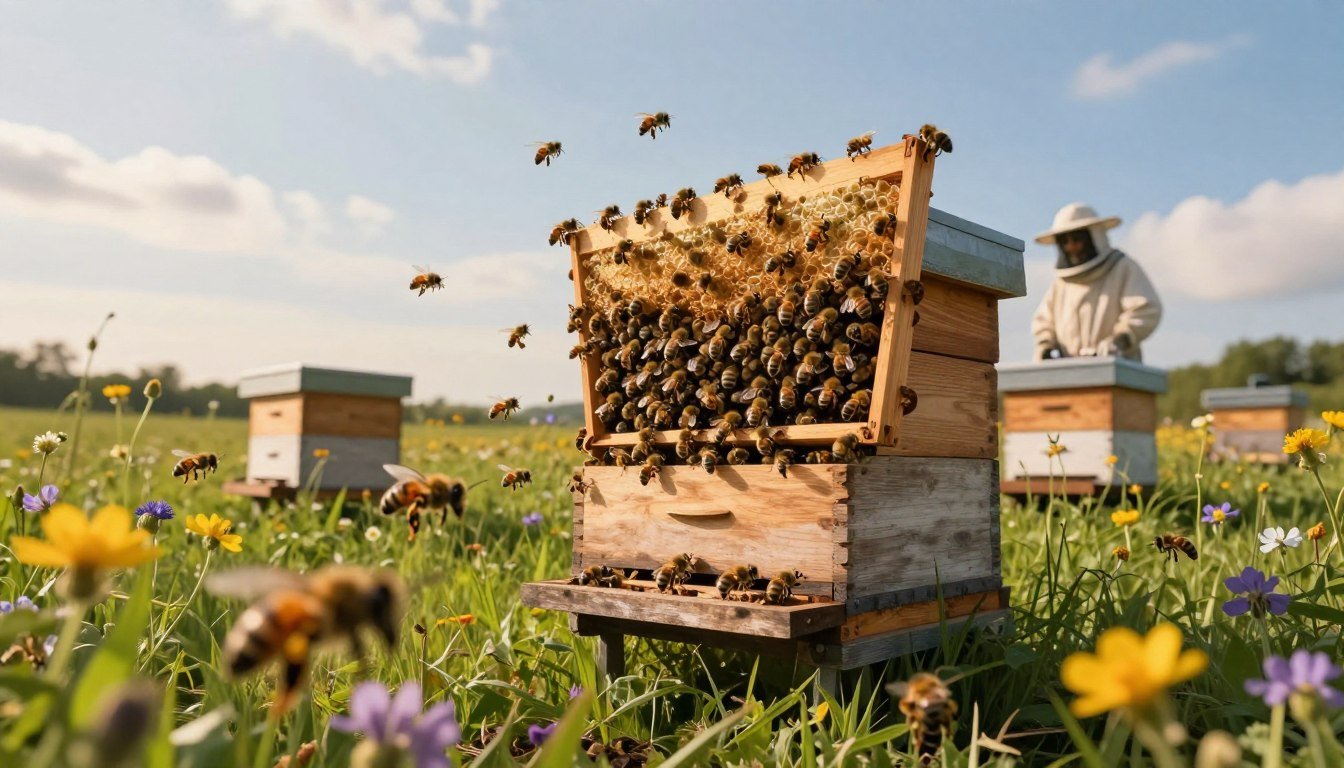
New beekeepers often worry about whether a five-frame nuc will leave its home during year one. Rusty Burlew notes that a five-frame nuc is unlikely to swarm, yet that outcome remains possible when certain signals appear.
When placing a nuc into an eight-frame box, watch brood patterns, frames use, and queen behavior. Inspect eggs and young larvae every few days to confirm steady growth.
Look for capped cells along bottom edges or multiple queen cells on adjacent frames. Those signs often prompt quick action to protect hive health.
If you want practical reports, read a real discussion on this topic at an active forum thread or consult advice on how to spot swarm signals at Beekeepers Realm. Staying vigilant helps keep bees productive and colony growth on track.
Key Takeaways
- Five-frame nucs less often leave, though signs may predict departure.
- Regular frame checks reveal eggs, brood, and emerging queen cells.
- Install into an eight-frame box adds space; monitor queen closely.
- Multiple cells at frame edges raise concern for imminent movement.
- Use forums and trusted guides for real-world examples and tactics.
Understanding the Risk: Can a Nuc Swarm in Its First Season?
Many new keepers wonder whether a young colony might depart before it fully settles. Early movement is rare, but not impossible when the population grows fast or space feels limited.
Key factors include queen health, colony strength, local forage, and timing. Decisions to leave often form days or weeks before bees actually exit the hive.
Rusty Burlew noted that rain does not stop this behavior. He recorded several instances where swarms settled during a rainy week, showing weather is not a reliable deterrent.
- Record inspections to spot buildup of queen cells and crowded frames.
- Watch flight activity around the entrance for unusual clustering.
- If a swarm appears on your property, remember capturing one from high branches is difficult without experience.
| Risk Element | What to Watch | Typical Timeframe |
|---|---|---|
| Queen condition | Egg laying rate, presence of supersedure cells | Days to weeks |
| Colony crowding | Filled frames, congestion at entrance | Weeks |
| Environmental factors | Forage abundance, weather patterns | Seasonal |
| Human response | Timely inspections, space management | Immediate to days |
Practical resources help when managing growth. Read tips on expansion and common beginner errors at beekeeping expansion tips and beginner mistakes in beekeeping. For an overview of swarm behavior, see everything you need to know about.
Identifying Potential Swarm Indicators During Inspections
A careful inspection of each frame reveals subtle signs that predict future colony moves. Inspect every comb edge and the underside of frames during weekly checks. Small, clear observations help you decide next steps.
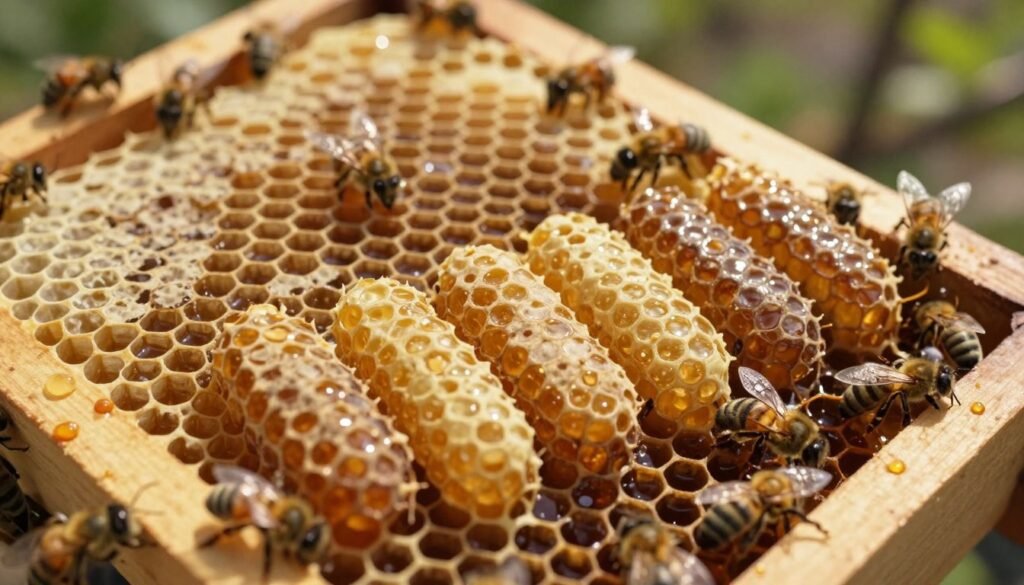
Interpreting Queen Cells
Queen cells require context before action. Multiple capped cells on adjacent frames likely indicate preparation for departure or planned replacement.
Note: it takes about 16 days for a queen to hatch from a cell. Finding uncapped cells during your weekly inspection means important time remains to respond.
- Do not remove every cell immediately; some are emergency cells following queen loss.
- Document each unusual case, especially after a split or colony move.
Monitoring Brood Patterns
Check brood layout for consistency. Eggs and small grubs show the queen is active even if you do not see her.
Healthy patterns are solid and compact. Patchy or spotty brood may suggest laying issues or stress.
For more inspection guidance and avoidance tactics, read this recognizing and avoiding swarms guide, or learn ways to support colony growth at boost colony population naturally.
Best Practices for Managing Your New Colony
Support during the first weeks gives the queen room to lay and workers energy to draw comb. Early feeding and regular checks are vital to steady growth.
The Importance of Supplemental Feeding
Supplemental feeding supplies carbohydrates new bees use to build comb and feed brood. A standard 3 lb package holds roughly 10,000 bees, and those workers need energy to establish the hive.
It takes 21 days for eggs to become adult bees. Within about 42 days most original package workers will have died. Timely syrup during those weeks keeps the colony strong.
- During inspections, check that bees are drawing comb on each frame and that the box has room for the queen to lay.
- Remove the queen cage carefully when installing a new colony to help acceptance.
- If nectar fills brood cells, watch closely; this may signal an upcoming swarm. Read a practical swarm season survival guide.
| Need | Action | Timing |
|---|---|---|
| Carbohydrate | Feed 1:1 syrup for comb drawing | First 2–6 weeks |
| Queen space | Ensure open cells and room on frames | Every inspection |
| Worker turnover | Monitor population, add feed as needed | Daily to weekly |
| Replacement stock | Consider buying packages or nucs | Before major foraging gaps — see buying packaged bees and nucs |
Conclusion
Consistent checks and timely actions are the backbone of successful hive stewardship. Watch brood, note queen behavior, and keep records so small trends become clear.
Monitor for queen cells and provide space or resources before congestion rises. Use practical methods such as the nucleus method when needed to protect stock and preserve productivity.
Remember that every hive is unique. If questions arise about bees or overall management, contact Countryside at 970-392-4419 for expert support. For advice on timing and setup, see this guide on the best time to start beekeeping.
Stay patient, keep learning, and expect steady gains each year as your skills and the colony mature.