Choosing the right unit shapes your production, quality, and price outcomes. This short guide helps beekeepers weigh capacity, valve control, and food grade construction so their harvest stays pure and market-ready.
Proper storage and a reliable gated bucket or pail keep jars clean and reduce waste during shipping. Use glass jars with a new lid when you want easy decrystallization and premium display. Plastic containers work for lower price points but may complicate reheating and long-term quality.
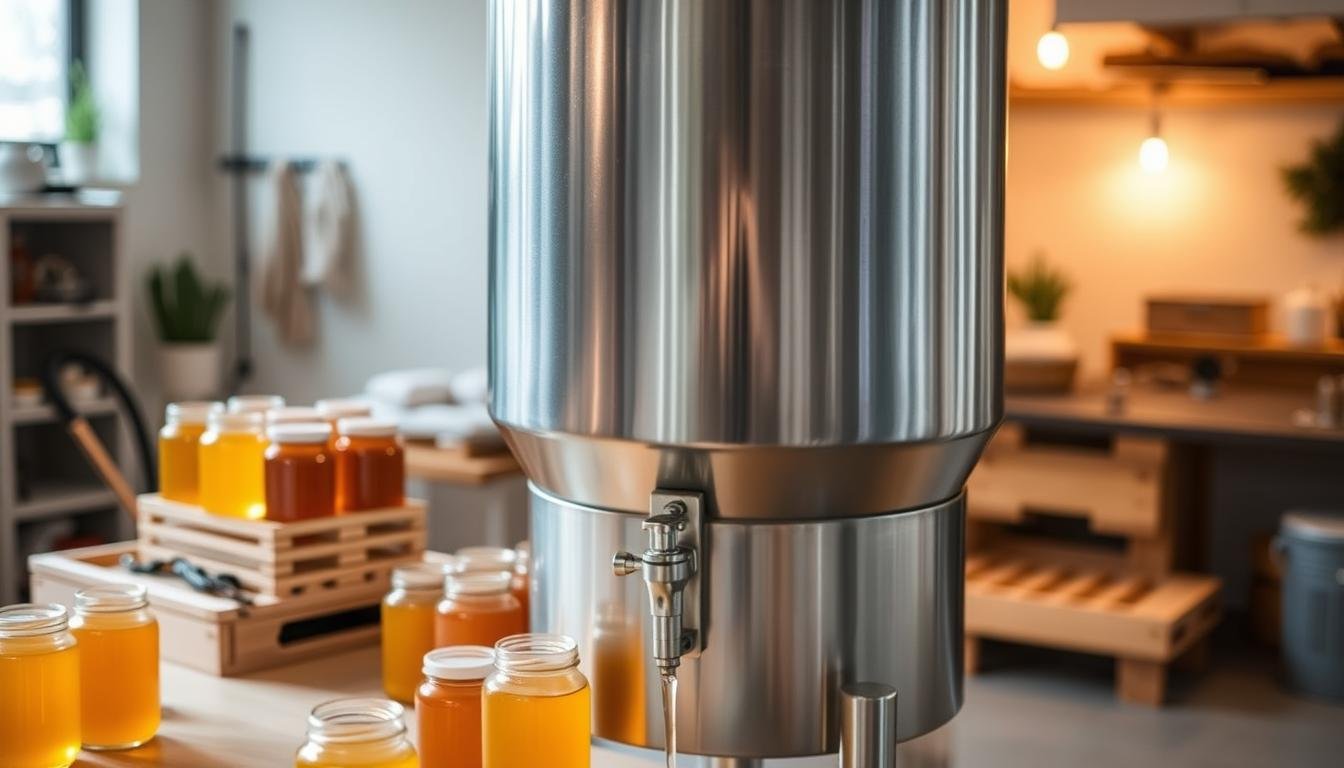
Heated bottling tank options and gravity fillers speed filling while preserving texture. Check valve performance and seal quality to avoid aeration and moisture pickup. For practical setup tips and container choices, see recommended containers at recommended containers and packaging workflows at packaging and labeling.
Key Takeaways
- Balance price and quality when selecting storage and equipment.
- Glass jars and fresh lids protect flavor and make reheating simple.
- Use a gated bucket or gravity filler to streamline the line.
- Heated bottling tanks reduce viscosity and improve flow.
- Inspect valves and seals to prevent contamination and moisture pickup.
Why Small Producers Need Dedicated Bottling Equipment
Dedicated filling gear preserves the clarity and flavor of each harvest while cutting handling time. Professional equipment helps keep moisture out during honey storage and prevents fermentation. That protects texture and preserves value at retail.
Using proper containers and food-grade lines keeps the product pure and supports each queen’s colony reputation. Good setup also speeds work after uncapping, so a single operator can manage more hive output without extra labor or a high price tag.
Glass and plastic containers each have roles: glass offers premium display and easy reheating, while plastic lowers upfront cost and weight. The right equipment handles viscosity and fills bottles cleanly, reducing waste and returns.
As you scale honey production, reliable gear justifies its price by improving speed and consistency. For practical packaging steps and container recommendations, see a guide on how to bottle and package and container types at container options for storage.
Key Features of the Best Honey Bottling Tank for Small Producers
Precise temperature and measured flow make the difference between a clean fill and costly rework.
Temperature Control Mechanisms
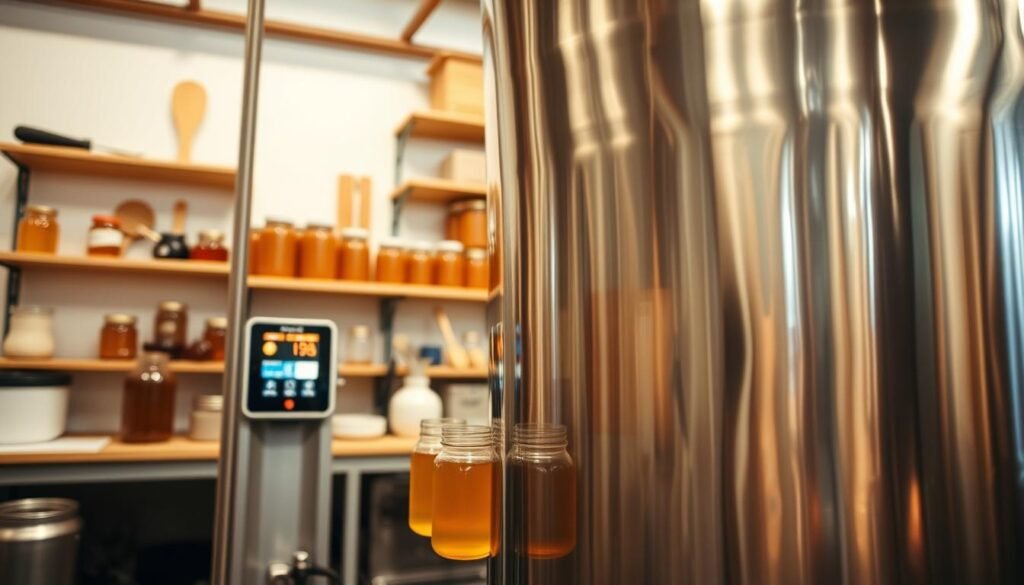
Accurate heating preserves texture and stops premature crystallization. Heated bottling tanks use thermostats and insulated walls to hold a steady working range. That reduces reheating cycles and shortens labor time.
Advanced units offer digital controls and safety cutoffs. Those features help maintain consistent honey viscosity during uncapping and while you move jars down the line.
“Consistent control keeps quality high and avoids over-processing.”
Capacity and Scalability
Choose capacity based on hive output and budget. A 7 Gallon Heated Bottling Tank at $699.00 gives precise control for moderate runs. Stepping up to 16 or 32 gallon heated bottling tanks suits growing operations that need fewer reloads.
| Model | Gallon | Price |
|---|---|---|
| 7 Gallon Heated Bottling Tank | 7 | $699.00 |
| Maxx Storage & Bottling Tank (stainless steel) | 9 | $195.00 |
| 60 Gallon Heated Bottling Tank | 60 | $2,299.00 |
For those starting out, the Maxx Honey Storage & Bottling Tank 9 Gallon at $195.00 is a practical stainless steel choice. Larger tanks lower handling time but raise price and space needs.
Compare options and shop features such as valve type, lid seals, and whether the unit pairs well with your uncapping tools. For more on equipment options, see a guide to different types of honey bottling equipment.
Comparing Stainless Steel Versus Plastic Storage Options
Material choice has a direct effect on storage life, warming speed, and long-term product quality.
Stainless steel is a top food grade option. It offers excellent durability and safer long-term storage than plastic. Steel units heat evenly, which helps when you need to decrystallize and move product fast.
Glass containers remain non-reactive and protect natural chemistry. Sanitize glass jars at 225 degrees Fahrenheit for 20 minutes to keep quality high during extended storage.
Thermal Conductivity and Durability
Plastic choices cost less upfront but warp and hold odors over time. They can be useful when price matters, yet they lag in thermal performance.
- Stainless steel — best thermal conductivity, long life, easy cleaning.
- Glass — non-reactive, ideal for retail jars after proper sanitation.
- Plastic — low price, lighter weight, lower thermal efficiency.
| Material | Durability | Thermal Conductivity | Food Grade | Typical Price |
|---|---|---|---|---|
| Stainless steel | High | Excellent | Yes | Higher |
| Glass | High (fragile) | Good | Yes | Moderate |
| Plastic | Moderate | Low | Varies | Low |
A 32 Gallon stainless steel unit is a solid investment when you want reliable storage bottling workflow and improved product longevity. Balance price, space, and the quality goals of your operation when choosing among the options available.
Essential Accessories for Streamlining Your Bottling Workflow
A handful of well-chosen accessories will cut fill time and reduce waste across your bottling workflow. These items pair with heated units and stainless steel storage to make each session faster and cleaner.
Honey Gates and Valves
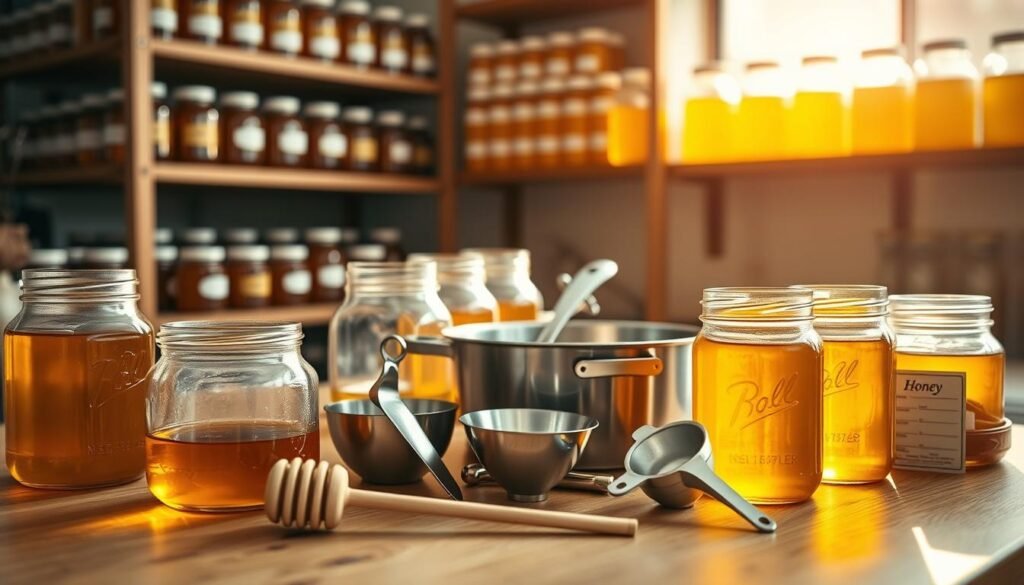
Gates and valves control flow. The 5 Gallon Honey Bottling Bucket with Deluxe “Perfection-Style” gate at $44.99 is ideal when you want steady pours without complex setup.
A Dripless Honey Bottling Valve priced at $99.99 prevents spillover and saves product during each bottle fill. Choose a valve with a tight seal to reduce cleanup and keep storage quality high.
Filtration and Strainer Systems
Filtering after uncapping is non-negotiable. A standard honey gate at $8.59 helps trap wax and debris before jars are filled.
Use a coarse strainer followed by a fine mesh filter to protect clarity. Clean, filtered honey shortens rework and supports consistent flavor that customers expect.
Pail Perches and Lids
Elevate your bucket with a Pail Perch ($18.59) to make filling jars ergonomic and accurate. This simple tool reduces the need for taller heated bottling tanks during low-volume runs.
Match lids and pail seals to your storage plan. Good lids preserve texture and lower the chance of contamination during storage or transit.
- Practical setup tip: pair a dripless valve with a pail perch to speed fills and cut waste.
- Price note: invest in one quality valve and a sturdy perch before adding larger tanks or heated bottling units.
For legal selling steps and labeling that pair with workflow upgrades, see how to start selling honey legally.
Conclusion: Selecting the Right Setup for Your Apiary
Choosing a fitting bottling tank setup shapes your workflow, product clarity, and long-term price outcomes. Match capacity and controls to your hive output so each run stays efficient and consistent.
Prioritize food grade storage and tools, and decide between glass or plastic containers based on retail goals and shipping needs. Solid temperature control and a reliable honey gate or valve keep honey viscosity stable and make each bottle fill cleaner.
Balance initial equipment price with expected labor savings and quality gains. For guidance on processing choices, see processing equipment factors, and review packaging and selling tips at selling guidelines.
With the right tanks and accessories, beekeepers can raise product quality, reduce downtime, and grow honey production.