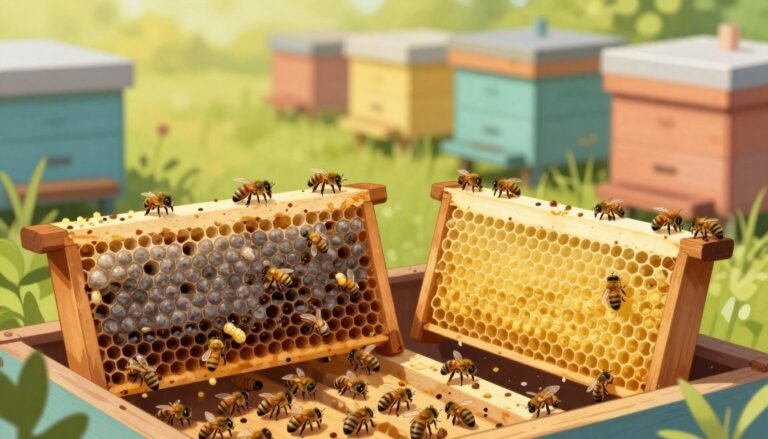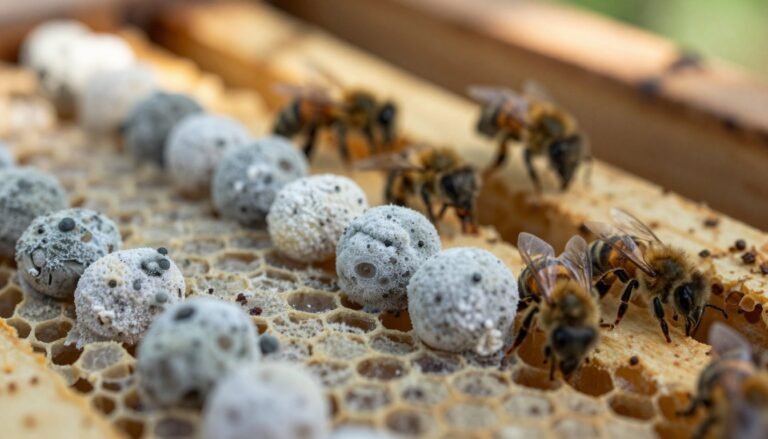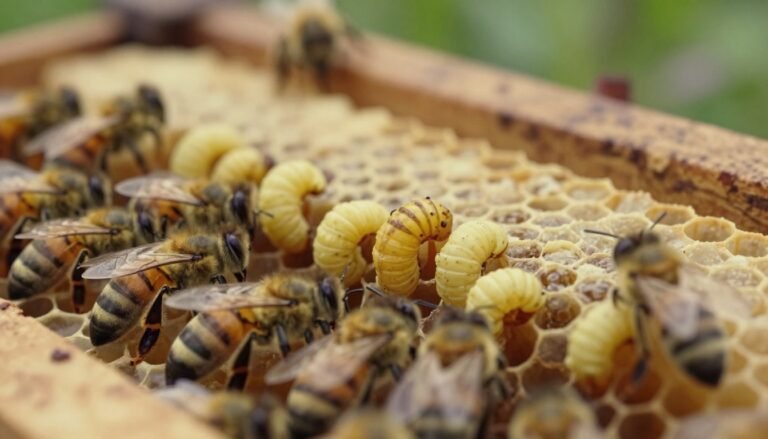
Managing colony health during and after cold confinement is essential for every beekeeper. Historical research by Erwin Alfonsus in 1935 linked this condition to excess moisture in the gut of wintering insects, offering a foundation for modern practice.
The clustered group must balance water and honey use to avoid messy outcomes when bees finally leave the hive for short trips. Optimal digestion depends on sugar concentrations in honey near 40–60%, which affects water production inside the group.
Practical steps include regular checks for signs of stress, ensuring accessible water near the apiary, and providing proper ventilation so the colony does not accumulate excess moisture. For community observations and discussions about whether a sortie is a normal cleansing action or a sign of trouble, see this forum thread on cleansing flights vs.
Key Takeaways
- Erwin Alfonsus (1935) showed moisture buildup is a prime cause of this condition.
- Honey sugar levels around 40–60% help proper digestion and limit excess water.
- Clusters need managed water access and hive ventilation during cold periods.
- Monitor colonies for stress signs that precede waste accumulation inside the hive.
- Community reports help distinguish normal sorties from problematic symptoms.
Understanding the Winter Cluster and Water Balance
The winter cluster acts as a small, organized ecosystem where heat and moisture must be balanced for survival. Metabolism of stores creates water inside the cluster, and that water needs a reliable escape route to keep comb and brood areas dry.
Water homeostasis in the hive
The cluster manages heat and humidity by changing shape and reducing activity in the core. Research by van Nerum and Buelens (1997) found bees in the core tolerate oxygen levels near 15%, allowing lower metabolic rates to save energy and reduce internal moisture.
Metabolic water production
One pound of honey metabolized yields roughly 0.6 pounds of water. A typical hive in a tight cluster loses about one pound per week as stores are consumed, so that metabolic water accumulates over time.
- Drawn comb helps buffer humidity and supports stable food access.
- Excess water can collect on the bottom board if hives tip backward, which stresses winter bees and other bodies in the cluster.
- Providing supplemental wintering in cold climates advice and winterizing hives in northern states tips can guide autumn preparations like drawn comb use or late sugar syrup decisions.
Identifying Bee Dysentery After Winter Cleansing Flights
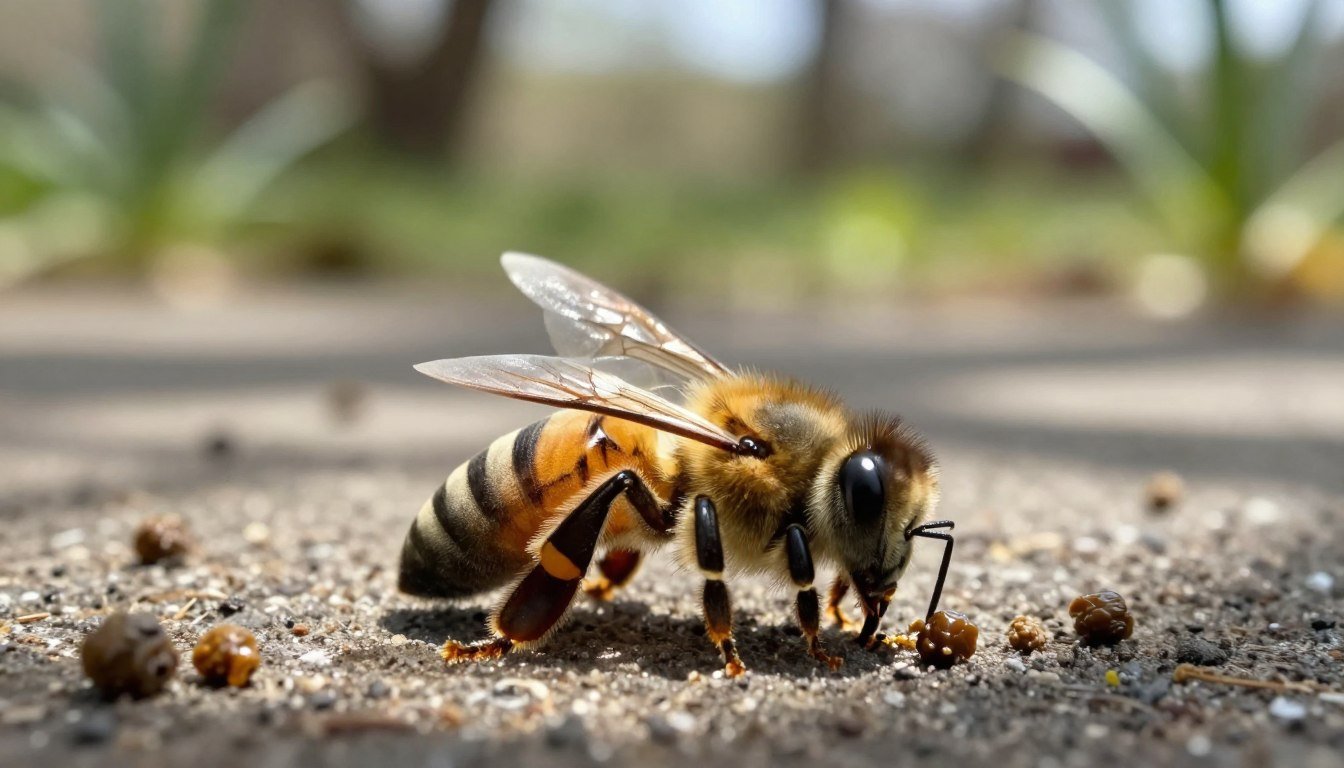
A few streaks on the landing board can signal a serious struggle inside the cluster. Look for yellow or brown marks at the hive entrance or on the landing board. These stains are often the first visible sign that feces are accumulating near the hive.
Erwin Alfonsus found that an emergency discharge happens when fecal build-up reaches about 33% of a bee’s body weight. By contrast, routine defecation in a healthy group usually waits until about 45% of body weight is reached.
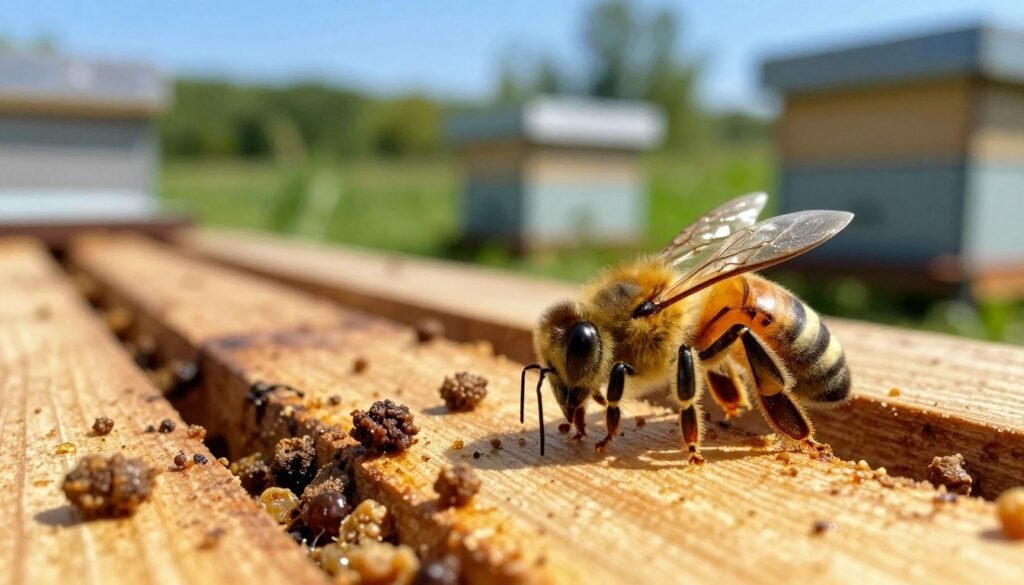
“Dysentery is a symptom of excess moisture in the feces rather than a primary disease.” — Erwin Alfonsus (1935)
Key field signs to watch:
- Yellow or brown streaks near entrances and on boards.
- Feces deposited close to hives rather than far away.
- Visible mess inside comb areas, indicating prolonged retention of fecal material.
Practical note: This condition is usually caused by the inability to take clearing sorties in cold weather, not pathogens. Careful monitoring helps you distinguish normal spring cleansing flights from a colony struggling with excess moisture and waste. For a seasonal checklist, see the spring beekeeping checklist.
The Role of Humidity and Respiratory Transpiration
Humidity inside the hive dictates how well the cluster can remove metabolic water. A.W. Woodrow’s 1935 work showed that air with high relative humidity blocks respiratory evaporation. This reduces the group’s ability to purge excess fluid produced while digesting stores.
Bees on the mantle face higher local humidity than those in the dry core. When relative humidity rises above 70%, Woodrow observed that insects struggle to keep water balance.
Respiratory transpiration is the primary way the cluster handles water from honey metabolism. If the air is saturated, outer workers cannot evaporate moisture through their spiracles.
The impact of relative humidity
- Mantle humidity often exceeds core levels, making outer bees prone to moisture buildup.
- High humidity (>70%) impairs water loss and can cause fecal retention in the hindgut.
- Management of internal air and ventilation helps the cluster shift positions so the core stays drier.
“Relative humidity above critical levels reduces the cluster’s ability to evaporate metabolic water.” — A.W. Woodrow (1935)
For more on prevention and management strategies, see this prevention guide.
Why Dark Honey and Stores Impact Hive Health
Dark, heavy stores change how colonies process food and raise the risk of messy waste inside the hive.
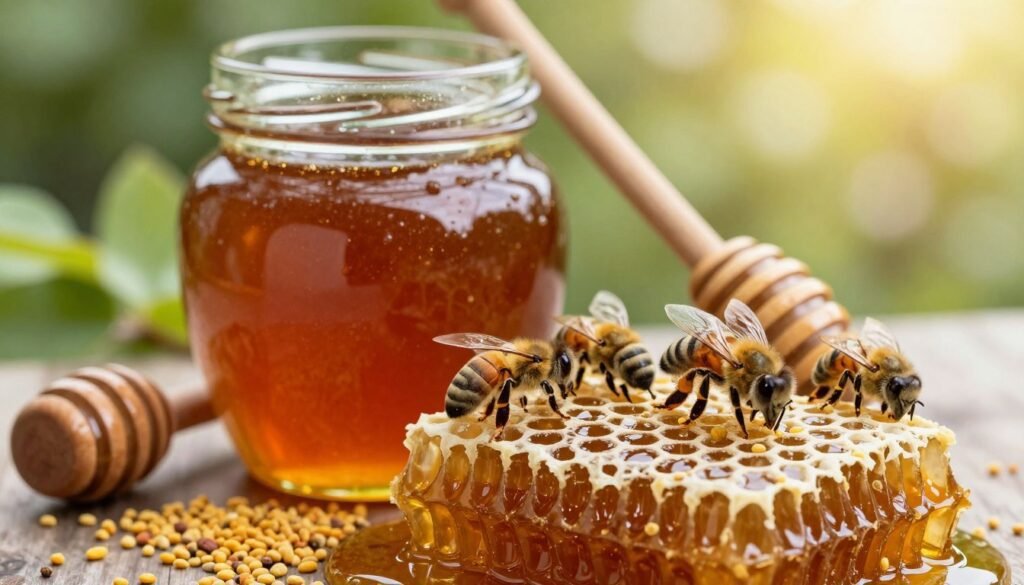
The problem with dark honey
Dark honey often contains more solids and roughage. This extra bulk increases the volume of feces each worker must hold.
Higher roughage forces many bees to drink more water to process the load. That added water raises internal humidity and stresses the cluster.
Erwin Alfonsus tested crystallized and fermenting feeds and found such stores can trigger moisture-related gut issues. This helps explain why heavy stores can be a primary cause dysentery in some hives.
Managing sugar stores
Remove excess dark frames in the fall when possible. Replace them with lighter honey or a clean sugar syrup to reduce digestive bulk.
Use drawn comb that is free of debris and limit pollen cakes near the cluster. These steps cut total waste volume and lower the chance of feces building up in comb areas.
- Tip: Rotate out dark frames and give the colony clean comb for better air and water balance.
- Note: Proper store management reduces stress on bodies and aids normal defecation timing.
Distinguishing Dysentery from Nosema Infections
Similar-looking fecal stains can mask either a parasite or simple moisture stress in a colony. Visual inspection alone often cannot tell which problem a keeper faces.
Nosema apis is a microsporidian parasite that causes nosemosis and can produce diarrhea identical to environmental waste. Only laboratory testing gives a definitive diagnosis.
Key practical differences matter for treatment and management.
- Cause: one is an environmental symptom tied to internal humidity; the other is a biological infection.
- Impact: nosema can weaken bodies and increase the number of dead bees found at the entrance.
- Behavior: dysentery bees may be sluggish from fecal overload rather than systemic illness.
- Detection: lab work confirms nosema; field signs only suggest possibilities.
Monitor hives closely and collect samples when many dead bees appear or when feces are widespread. Good hive management reduces stress and helps prevent conditions that make colonies more vulnerable to nosema.
“Laboratory testing is the only definitive way to confirm nosema, as visual inspection of feces is often insufficient.”
Practical Management Techniques for Wintering Colonies
Small, timely adjustments to hive access and microclimate help colonies keep stores dry and reduce waste problems. Good management makes it easier for workers to take short sorties with less chilling and lower risk of messy defecation.
Installing upper entrances
An upper entrance lets bees exit through a warmer part of the hive. This reduces the chilling effect when they make cleansing flights and keeps more heat in the cluster. Place the opening near the top box so workers avoid a cold trek past brood and stores.
Creating microclimates
Use dark wrap, wind breaks, or controlled insulation to warm the hive on sunny days. Warming the outer boxes prompts more movement and encourages safe sorties.
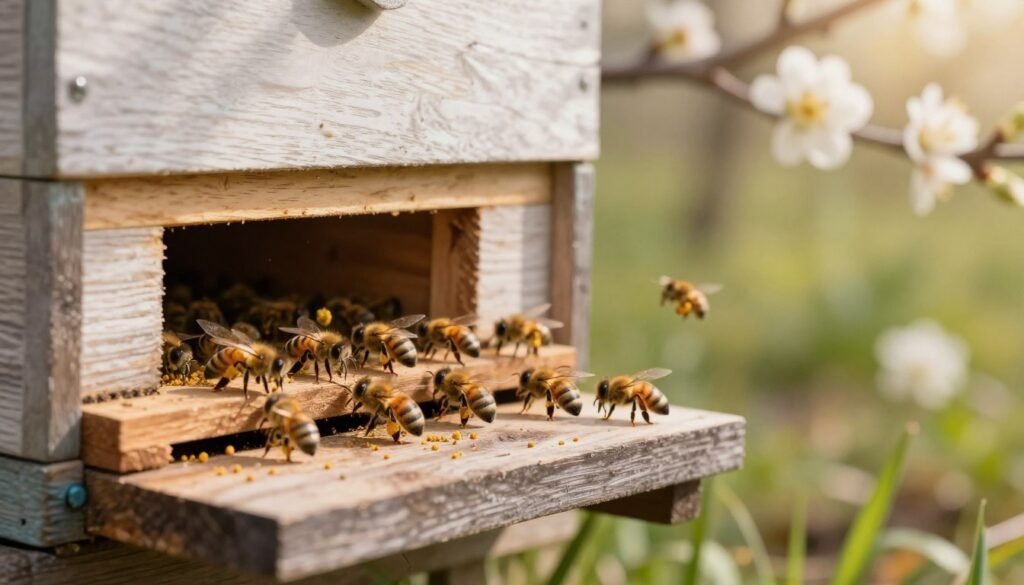
Monitoring hive weight
Weigh hives periodically to confirm food levels. A steady drop warns that you may need to add syrup in late autumn or shift frames to keep honey near the cluster.
| Technique | Benefit | When to use | Notes |
|---|---|---|---|
| Upper entrance | Warmer exit, less chilling | Late fall through early spring | Reduces traffic past brood; limits feces near bottom board |
| Microclimate control | Encourages sorties on sunny days | Cold, sunny days | Avoid trapping moisture; allow some ventilation |
| Weight monitoring | Confirms food, prevents starvation | Monthly checks | Add syrup carefully to avoid extra water |
| Bottom board checks | Tracks dead bees and feces | Routine inspections | Helps detect nosema and colony stress early |
“Simple ventilation and entrance choices prevent many moisture-related problems.”
Thanks to these methods, beekeepers can lower the chance of dysentery and support healthy winter bees. Regular checks of weight, comb, and the entrance give clear evidence of colony status.
Observing Cleansing Flights for Colony Health
Watching short sortie behavior gives clear clues about colony hydration and gut stress. Note whether workers cluster at the entrance on a warm day and where they go. This helps separate normal activity from signs of harm.
A healthy worker can hold about 30–40% of her body weight in fecal material before she must void. If you see yellow or brown streaks on snow or near the landing board, that usually means they are managing waste correctly.
Thanks to an upper entrance, exits are easier and fewer dead bees gather on the landing board. Provide a tiny amount of water or sugar syrup only if the colony looks stressed; overfeeding adds moisture and more risk of problems like dysentery.
Presence of pollen in the comb signals activity and good prospects for spring. When workers take cleansing flights, they typically fly well away from hives to keep the home clean.
“Observe exits on the first warm day—behavior there tells you whether the cluster is balancing stores, water, and air.”
| Sign | What it means | Action |
|---|---|---|
| Yellow streaks on snow | Normal voiding at distance | No action; monitor |
| Cluster at entrance | May be warming or stressed | Check food levels and ventilation |
| Many dead on landing board | Possible illness or chill | Inspect inner combs; consider lab testing |
| Active pollen stores | Colony is foraging/healthy | Maintain clean comb and monitor weight |
For practical guidance on timing and behavior, read more about honeybee cleansing flights.
Conclusion
Managing dysentery risk is a core part of good beekeeping. Watch stores, ventilation, and exits so the colony can take cleansing flights when weather allows. Early observation prevents small problems from becoming large.
Use an upper entrance, remove dark combs when practical, and avoid overfeeding syrup that raises internal moisture. These steps help the group void feces safely and keep the hive clean.
Remember that many cases resemble infection but stem from moisture and confinement. For detailed causes and data, read the causes of dysentery study. With steady checks and simple fixes, your colonies will reach spring strong.