Hive Entrance Reducer Alternatives and When to Use Them

Which hive entrance reducer alternative fits your problem? Compare robbing screens, fixed mouse guards, propolis and hardware cloth, with evidence from Nebraska Extension and Randy Oliver.


Which hive entrance reducer alternative fits your problem? Compare robbing screens, fixed mouse guards, propolis and hardware cloth, with evidence from Nebraska Extension and Randy Oliver.
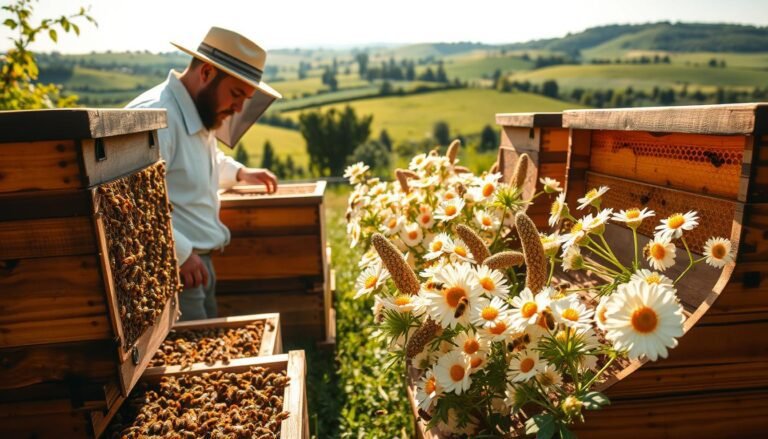
Honey yield is set before the flow: capped brood, bee numbers and mite load predict the crop. A backward calendar for queens, varroa, swarms, supers and siting.
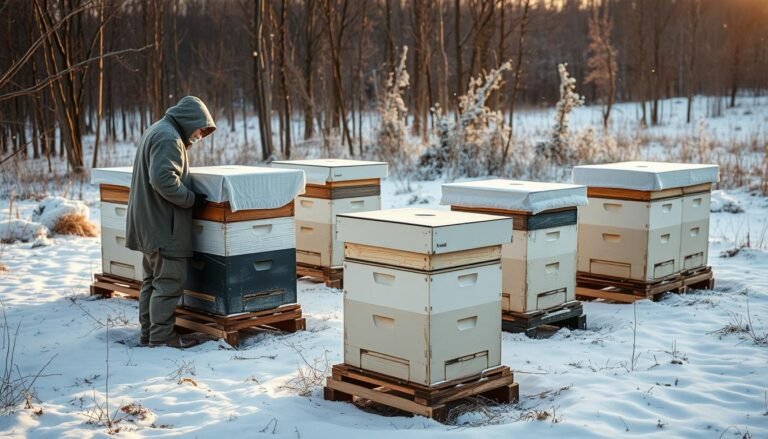
Northern hives need low mites by August, at least 75 pounds of stores, and a top entrance, moisture or foam board and wrap by November. Dates from NOAA normals and what Iowa and Illinois studies found.
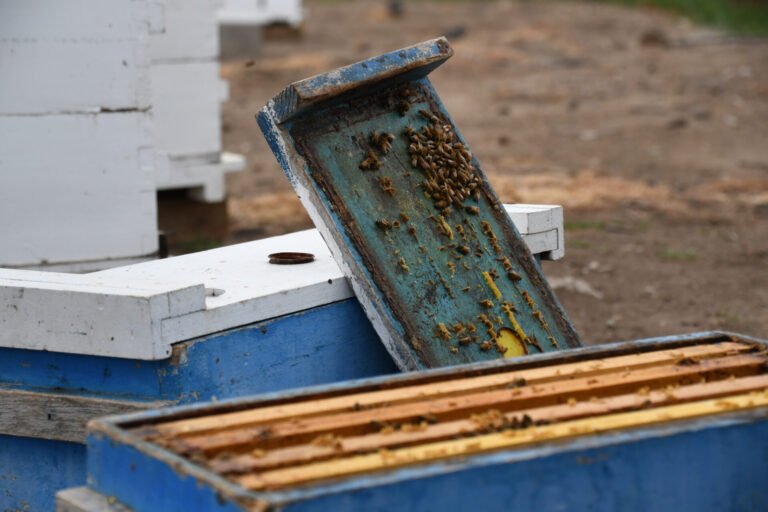
Renting bees for pollination, step by step: how many colonies per acre, when to book, bloom-stage delivery, checking hive strength, spray notice and removal day.

When to split a beehive and how: strength and timing rules from four university extension programs, three splitting methods, and a day-by-day timeline from split to laying queen.

Honey's best-supported health benefits are easing cough in children over 1 and, as a sterile medical dressing, healing burns. We grade every other claim, show the sugar math and list who should avoid honey.

A sourced guide to beehive maintenance: how to repair, paint and seal woodenware, rotate old brood comb, clean and sterilize equipment, and store drawn comb. Includes a seasonal checklist with a source for every task.
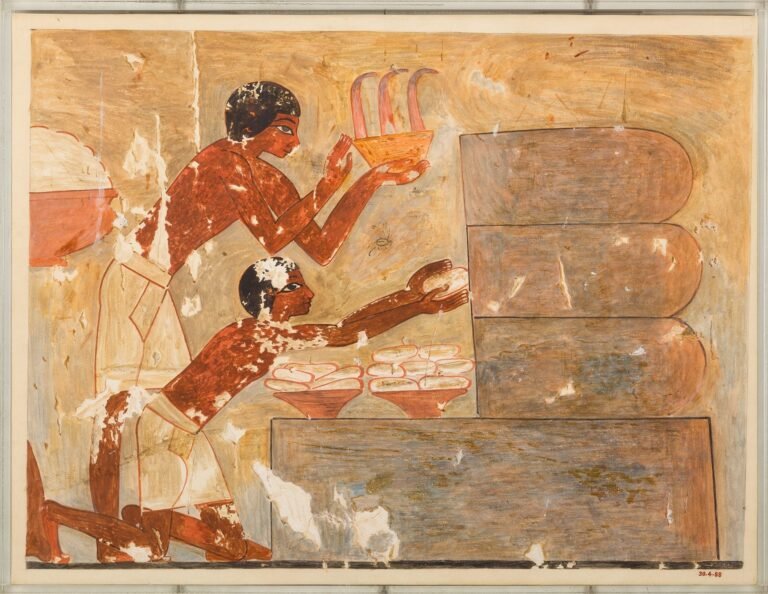
Ancient beekeepers kept bees in horizontal hives of clay, straw, bark, cork or hollow logs, calmed them with smoke, cut honeycomb from the back of the hive while leaving the brood nest at the front, captured swarms to increase their…

Beekeeping history runs from honey hunting, which is older than farming, to managed clay hives in Egypt by about 2400 BCE, then through centuries of fixed-comb log hives and straw skeps, a burst of discovery between the 1600s and 1840s,…