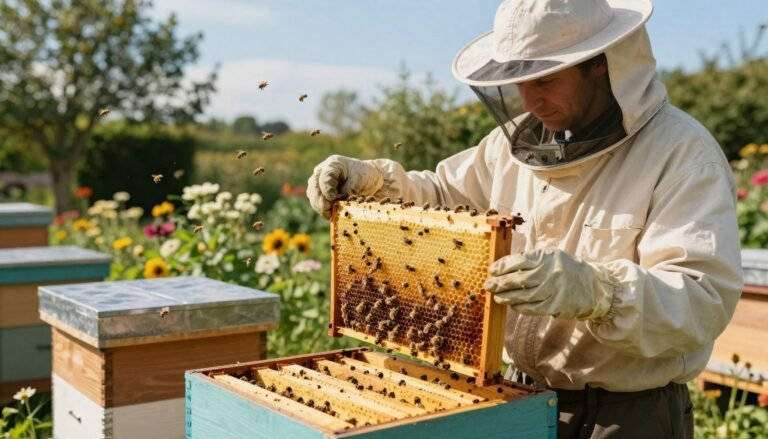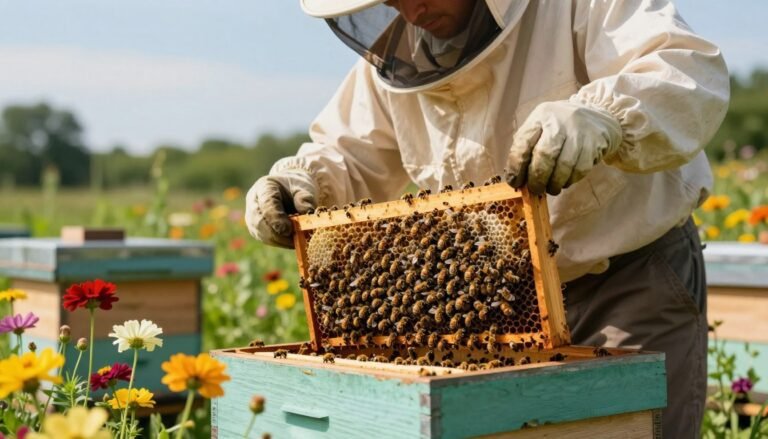
Understanding the pace at which a new colony builds honeycomb is essential for any new beekeeper setting up hives in spring. A strong population with young workers and steady food can pull a shallow super in a week to 10 days. This early stretch of work sets the foundation for brood, honey storage, and future expansion.
Good nutrition and a warm, active nest speed construction. Be sure to place new frames near the brood nest and offer nectar or 1:1 syrup during low flow. Seeded frames or a light wax coat on foundation also encourage acceptance; see notes on adding wax to foundation. If progress stalls, check queen vigor, population, and pests — common causes listed in reasons colonies won’t draw comb.
Monitoring the first few weeks helps the beekeeper provide space and food so the queen finds empty cells for eggs and the workers keep building through the nectar flow.
Key Takeaways
- A strong, well-fed hive can complete shallow supers in about a week to 10 days.
- Place new frames by the brood and offer syrup only when needed to simulate a flow.
- Seeded frames or wax-coated foundation speed acceptance and straight cell building.
- Check queen health, population, and mites if new frames sit empty after 1–2 weeks.
- Warm, calm conditions and pollen early in workers’ lives boost wax production.
- Watch the nectar flow and give space so the colony can expand without backfilling.
Understanding the Biology of Wax Production
A hive’s growth relies on a brief window of worker maturity that supplies the raw material for new structure. Young, active workers turn glandular secretions into the sheets of material that form each cell. This biological rhythm sets capacity for brood and stores.
The Role of Young Worker Bees
- Worker bees secrete wax from eight glands on the underside of the abdomen.
- Those wax flakes start clear, harden to white, and are shaped into hexagonal cells.
- Workers aged 10–18 days are the most productive; their work enables the queen to lay eggs.
- Festooning groups hold heat and stabilize the area for shaping new comb.
The Process of Wax Secretion
Mandibles are used to chew and press wax scales into precise forms. A healthy colony with steady pollen and nectar supplies will convert wax into storage and brood space efficiently.
Further reading: see practical notes on wax comb notes and tips for store frames to protect new construction.
Factors Influencing How Fast Package Bees Draw Comb
A mix of internal hive heat and abundant resources sets the pace for fresh cell construction.
The internal temperature needs to approach 95°F for wax to soften and be molded into cells. A strong colony with many adults holds heat better and speeds wax production.
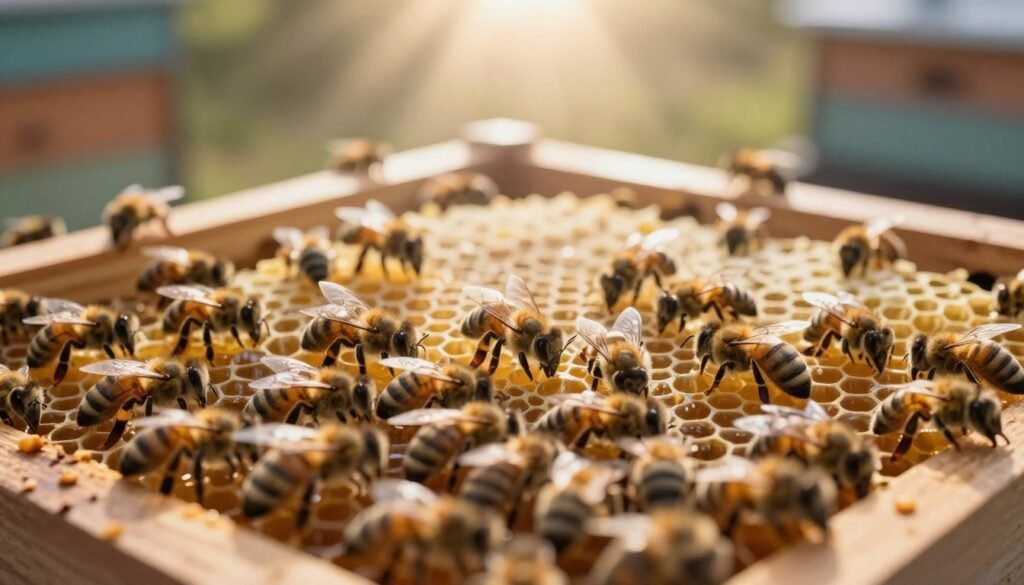
Cold or unsettled weather slows or stops building. Workers also need pollen and nectar to fuel wax secretion. If the colony lacks food, frames sit empty.
Plastic foundation often meets resistance; natural wax is accepted quicker. Supplemental feeding with 1:1 sugar syrup can simulate a flow and encourage work on new frames.
| Factor | Effect on Building | Practical Tip |
|---|---|---|
| Internal temperature | Critical — near 95°F speeds wax shaping | Ensure good population and insulation |
| Colony strength | More adults = more heat and labor | Combine weak hives or add brood frames |
| Food availability | Direct link to wax secretion and cells | Offer 1:1 syrup and provide pollen sources |
| Foundation type | Plastic slows progress vs. wax | Seed or coat plastic with wax before use |
Monitor the first weeks and give space when needed. For more tips to encourage bees to build comb, see encourage bees to build comb.
The Role of Nutrition in Hive Development
Nutrition drives early hive growth and sets the tempo for frame completion.
Benefits of supplemental feeding are clear for new and small colonies. A 1:1 sugar water recipe—equal parts cane sugar and water—gives workers immediate energy to support wax secretion and comb building.
Supplemental syrup is especially useful for splits, late-season swarms, or small boxes that lack stores. A steady food source keeps the queen laying eggs, which increases the brood population and the number of young workers producing wax.
Pollen is critical, too. A frame of pollen feeds open brood and sustains nurse bees. Without pollen, workers cannot convert syrup into brood food or wax effectively.
- Feed until at least eight frames are fully drawn to give the colony space and stability.
- Keep syrup available during variable weather or weak nectar flow to maintain building momentum.
- Monitor food and queen activity; lack of resources is a common reason frames sit empty.
For practical feeding guidance see feeding honey bees to prevent starvation, and for disease-risk checks on introduced stock consult nuc inspection tips.
Managing Hive Space for Optimal Construction
Moving drawn frames into a new box is a simple move that nudges the colony to expand upward into fresh foundation.
When you add a second box, pull two drawn frames up into the middle. This gives workers a nearby signal and encourages steady building on the new foundation.
Make sure you do not give too much empty space too soon. Young colonies need warmth to shape wax and rear brood.
Replace the moved frames with new foundation so the colony cycles work upward. Many beekeepers lightly coat plastic foundation with wax to speed acceptance.
Keep the bottom screen closed for small, weak hives until temperatures exceed 95°F. During peak nectar flow you may add another box or two as the population grows.
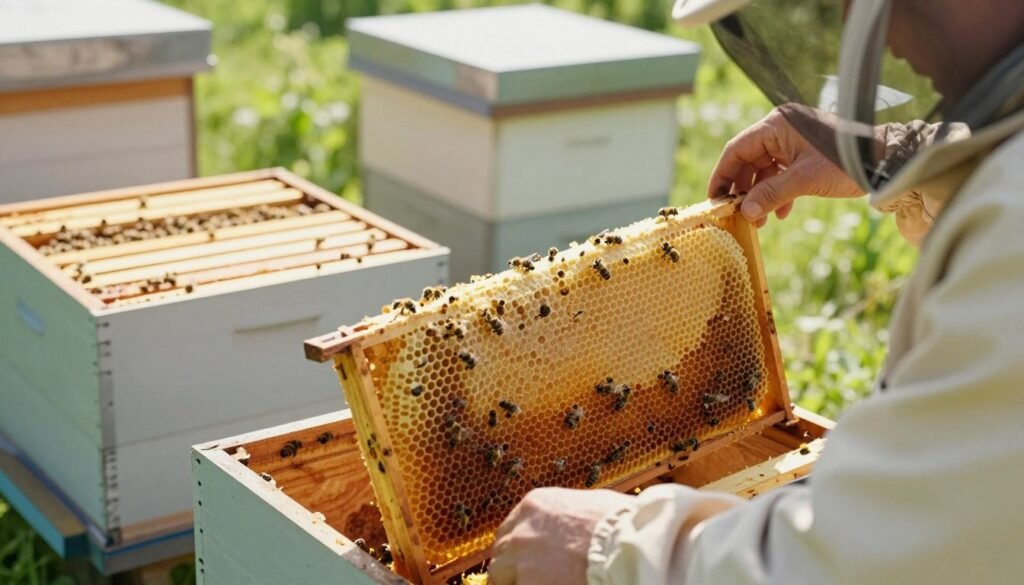
- Set syrup feeders to prevent drowning during supplemental feeding.
- Watch for honey-bound brood nests and give space before the week ends of heavy flow.
- Practice gentle frame manipulation to help the queen continue laying in new frames.
| Action | Effect | Timing | Practical Tip |
|---|---|---|---|
| Move two drawn frames up | Encourages upward expansion | When adding first extra box | Place in middle for natural migration |
| Replace with foundation | Creates continuous building cycle | Immediately after moving frames | Lightly wax plastic foundation if used |
| Keep screen closed | Preserves heat for wax production | Until temps exceed 95°F | Open later in hot weather |
| Add extra boxes during peak | Prevents crowding and honey-bound brood | Peak nectar flow | Monitor brood and stores weekly |
For detailed conditions that favor comb building, see conditions necessary for comb building. To align space management with production goals, review methods to increase honey production.
Seasonal Timing and Environmental Conditions
Seasonal timing governs the window for successful building foundation. Spring is the prime season for adding frames because warm weather and abundant blooms supply nectar and pollen. A growing colony hatches thousands of young workers each day to support intensive wax production.
By week six, a healthy hive often has between 7 and 13 frames drawn as it works at peak nectar flow. After late June the flow tapers and bees shift effort to capping honey. In many regions it becomes much harder to encourage construction after July 1, so plan foundation work early.
“Aim to get as much foundation completed before mid-summer; the April–June window supplies the time and forage you need.”
Watch weather and feeding needs closely. Stable warm weather means continued brood expansion and storage; cool or rainy stretches reduce building. Adjust management—add a new box or stop syrup feeding—based on observed activity and available space.
| Condition | Typical Effect | Practical Action |
|---|---|---|
| Peak spring flow | Rapid frame completion | Add foundation and monitor weekly |
| Late June taper | Less wax production; more capping | Prioritize drawing remaining foundation |
| Post-July low season | Harder to encourage new build | Plan work earlier next year |
For a seasonal planner and timing tips, consult the beekeeping calendar to align actions with local flows and maximize results.
Techniques for Encouraging Faster Comb Building
Strategic frame moves and baiting techniques give workers clear signals to expand upward and add new storage and brood space.
Baiting Bees Up
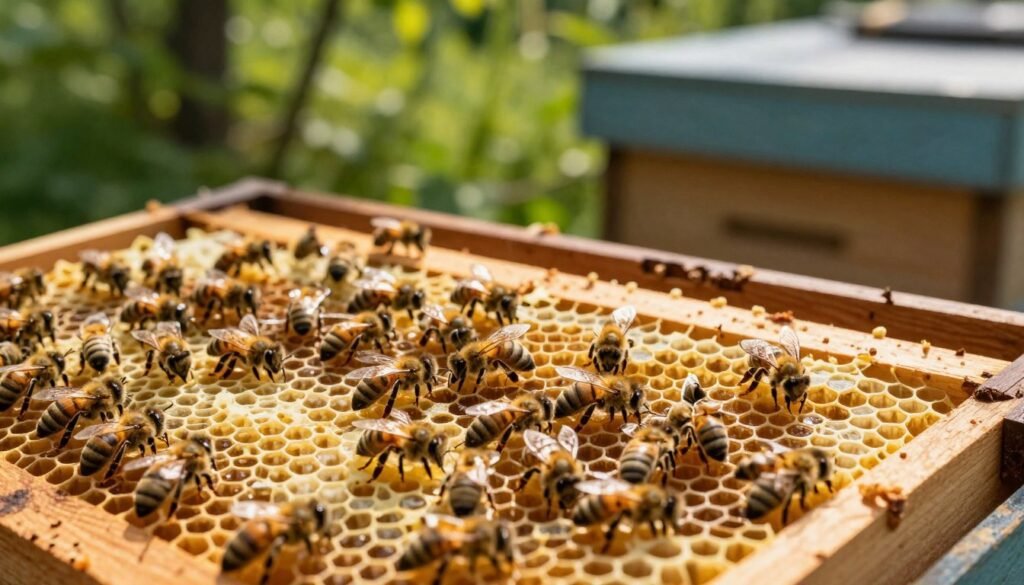
Baiting up means swapping a full honey frame from the super with a fresh foundation in the new box.
This creates a scent trail and a focal point that encourages workers to move up and begin building comb.
Utilizing Swarm Energy
Swarms arrive with wax glands primed and a strong urge to construct. Their workforce will often continue building long after others slow.
Train yourself to spot signs of swarming or review tips on preparing to swarm so you can harness that surge responsibly.
Frame Manipulation Strategies
Move drawn frames strategically: pull two drawn frames into the center when adding a box and place fresh foundation next to brood.
Many beekeepers brush a light coating of wax on plastic foundation to help acceptance and reduce hesitation.
- Swap a honey-filled frame for foundation to bait movement.
- Place foundation adjacent to brood to keep the queen laying.
- Ensure moved frames are clean and free of disease before reuse.
“We manage the colony; we do not control it—patience and steady technique bring steady results.”
Troubleshooting Common Obstacles
Early troubleshooting focuses on visible signs: empty frames, queen cells, or robbing at the entrance.
Begin with a calm, quick inspection. Look for eggs, the pattern of brood, and the number of drawn frames. Do not assume the hive lacks a queen just because brood is sparse.
If fewer than three or four frames are drawn after a couple of weeks, plan decisive action: consider re-queening or combining with a stronger colony. A weak queen or cold loss can stall progress even when workers are present.
Watch for queen cells or signs of a drone-laying queen; both need prompt attention. Robbing threatens weak colonies—use an entrance reducer and reduce disturbance during tense periods.
“Consult an experienced mentor at the first sign of queen trouble or unusual brood patterns.”
If disease is suspected, stop reusing suspicious frames and seek advice. For guidance on dealing with infected comb, consult this page on when to discard comb after disease. For common causes of stalled comb work and fixes, review the practical tips at why frames sit empty.
| Issue | Sign | Action |
|---|---|---|
| Queenless or poor queen | No eggs or patchy brood | Re-queen or combine within days |
| Robbing | Fighting at entrance, missing honey | Install reducer, reduce openings, feed at night |
| Disease concern | Unusual brood, foul smell | Isolate frames, consult an expert, discard if confirmed |
| Cold or low population | Few drawn frames, slow wax work | Provide syrup, protect from wind, consider fusion |
Stay patient and methodical. Most colonies recover with timely care. Seek help early and keep records so future decisions are clearer.
Conclusion
Small, steady actions over weeks produce the drawn frames that sustain a hive through the year. Give the colony a strong population, steady food and the right space so brood and honey can build naturally.
Use wax or plastic foundation thoughtfully, keep syrup and pollen available during the nectar flow, and move frames to guide upward building. Watch for a weak queen or lack of room and act quickly.
Every hive is unique. Stay patient, record observations, and get advice when needed — for a real-life progress report and tips from other keepers see a forum post on not building.
With steady care, your colony will produce the comb and stores it needs to thrive into winter. Thank you for following this guide.
FAQ
How soon can a newly installed package start building wax and cells?
Newly installed packages typically begin wax production within a few days if the colony has many young workers and a laying queen. Initial activity shows as small flakes and begins progressing to visible cell walls in about one to three weeks under good nectar flow and warm weather. Supplemental sugar syrup and pollen patties can accelerate cell construction when natural forage is scarce.
What biological factors determine a colony’s wax output?
Wax comes from glands on young worker bees, so a strong brood cycle and abundant numbers of nurse-age workers are essential. A recently mated queen laying well increases the number of young bees, which boosts wax secretion. Temperature and nutrition also influence the glands’ activity.
Why does the age composition of the worker population matter?
Workers shift tasks as they age; bees between about 12–20 days old are most active in wax secretion and comb construction. Colonies lacking this cohort will build slowly. Ensuring a healthy brood pattern and minimal stress helps maintain the right age balance for consistent comb work.
What role does feeding syrup play in supporting comb production?
Sugar syrup supplies immediate carbohydrate energy, allowing bees to focus on wax production and brood rearing when nectar is limited. Feeding 1:1 syrup during spring stimulates comb building; heavy or continued feeding beyond a nectar flow should be managed to avoid robbing and to encourage natural foraging.
Does foundation or plastic frames affect speed of cell building?
Pre-stamped wax foundation gives bees a template and generally speeds coverage compared with blank frames. Plastic foundation can work well if bees accept it, but some colonies are slower to draw plastic than wax. Using wired wax foundation often yields the quickest, most consistent results.
How does hive space influence construction pace?
Bees need the right amount of room: too little space causes congestion and brood problems; too much space disperses effort and delays comb filling. Start with one deep brood box and add a second or honey super when existing frames are about 70–80% filled to maintain momentum.
What environmental conditions encourage rapid cell building?
Warm temperatures (above roughly 55–60°F inside the hive), low humidity, and a strong incoming nectar flow create ideal conditions. Cold nights, prolonged rain, or scarce forage slow activity. Place hives in sun and near diverse floral sources when possible.
Can baiting or swarm capture methods help increase comb construction?
Bait hives or captured swarms often bring strong construction drive because swarms contain many foragers and a mated queen. Baiting with lure and timely transfer into frames can harness that swarm energy. However, ensure the new colony has enough resources to sustain rapid building.
What frame manipulation techniques support faster coverage?
Techniques include placing foundation in the center of the brood nest, spacing frames evenly to encourage uniform building, moving drawn comb from strong colonies to weaker ones, and combining frames with open brood to stimulate nurse behavior. Make changes gradually to avoid colony disruption.
What common problems slow down comb formation and how do I fix them?
Typical obstacles are weak queen performance, insufficient young workers, poor nutrition, cold weather, and pest pressure like wax moths or small hive beetles. Address these by requeening if necessary, providing supplemental feed, improving insulation or ventilation, and implementing integrated pest management.
How long should beekeepers wait before adding more boxes or supers?
Add another box or honey super when the current one reaches about 70–80% of frame building to keep the colony focused. Premature additions waste bee effort; waiting too long can cause congestion, supersedure attempts, or swarm preparations. Monitor brood and honey stores weekly during spring buildup.
Is it better to feed colonies with pollen substitutes or rely on natural pollen?
Natural pollen is ideal, but when local forage is limited, quality pollen substitutes or patties support brood rearing and wax production. Use substitutes temporarily during dearths and transition back to natural forage during a strong nectar flow to maintain colony health and immunity.