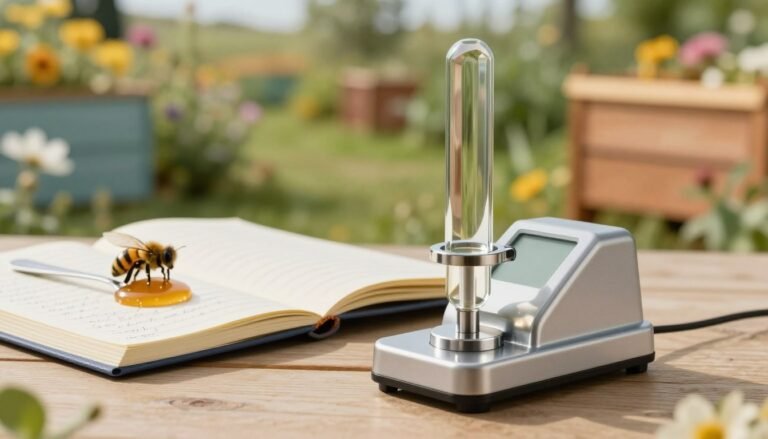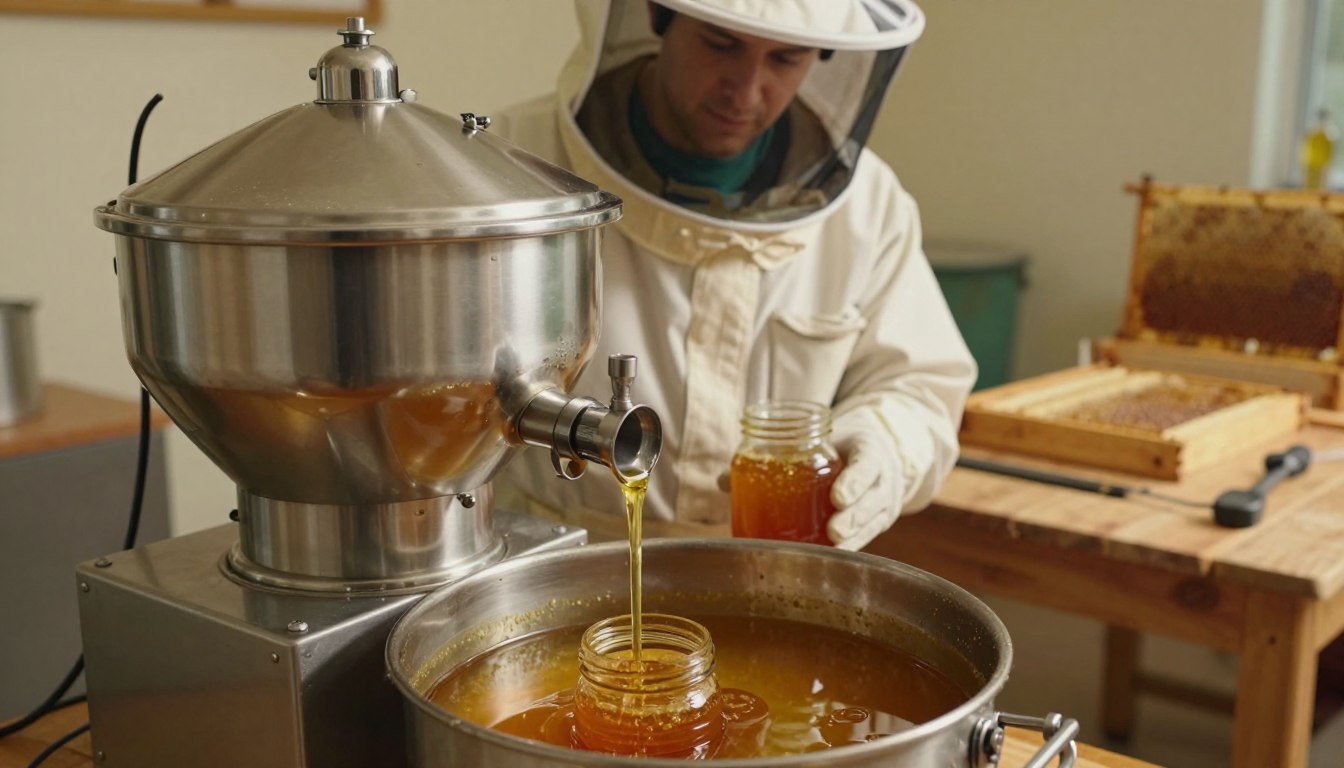
Processing honey at home is an art that turns raw nectar into a golden table treat. Scott Derrick’s step-by-step extraction guide, published March 17, 2025, explains why each step matters.
High quality depends on careful harvesting, proper extraction, and clean handling. Small mistakes in moisture control or straining can affect flavor and shelf life. Follow a tested workflow to maintain purity and aroma.
For practical bottling and labeling tips, refer to a full workflow that covers moisture testing, double sieving, and gravity-fed filling in a dedicated guide at packaging and labeling for sale. That resource also covers jar choice and sanitation for safe, attractive results.
Key Takeaways
- Proper extraction preserves flavor and avoids fermentation.
- Moisture testing and clean straining boost shelf stability.
- Choose jars and closures that protect aroma and appearance.
- Sanitation and batch records support food-safety practices.
- Use trusted guides to bring this craft into your home safely.
Understanding the Honey Extraction Process
Before any spinning begins, a quick inspection of the comb and supers sets the stage for clean extraction. Check that frames are full and capped; that seal means the moisture is right and the crop is ready. A 9-frame radial unit is a common choice for small operations.
The Role of the Honeycomb
Honeycomb is vital storage for winter stores and brood. Beekeepers must harvest with care so colonies keep enough food. Handle each frame gently to avoid tearing comb or wasting wax.
Harvesting Timing
Harvest when capping covers most cells. Remove wax caps with a sharp uncapping knife so liquid can flow during extraction. Spin frames in a centrifugal drum to separate liquid and comb. Leave a small amount for colonies in cold or wet periods.
- Tools: uncapping knife, frames, bucket for settling, extractor.
- Method: steady workflow for many supers keeps processing efficient.
- Care: avoid damaging comb to protect hive architecture.
For step-by-step guidance on full extraction routines, see a detailed extraction guide at a step-by-step guide and practical harvesting notes at harvest honey tips.
Can You Bottle Honey Straight from the Extractor
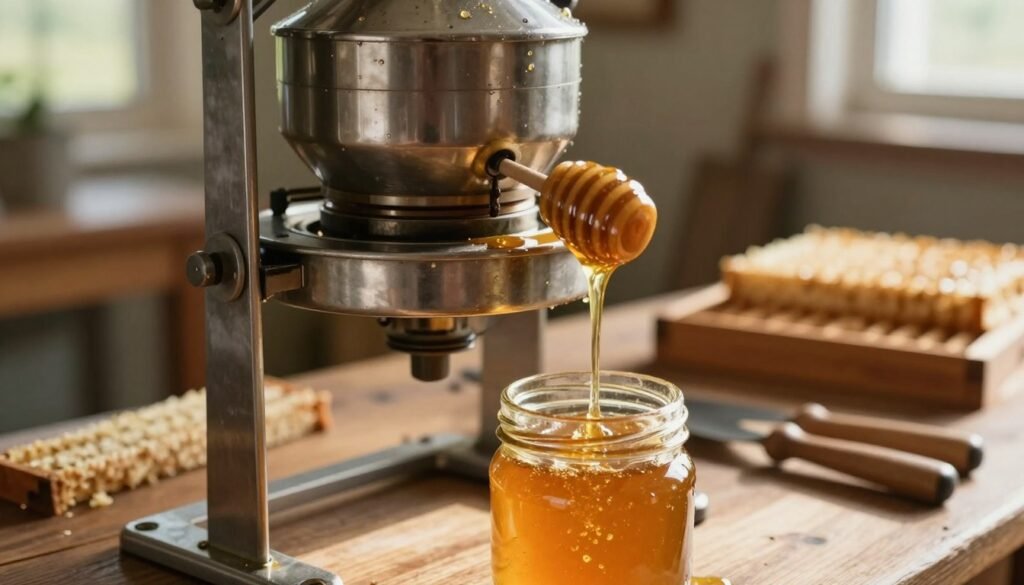
Yes, immediate filling is possible, but most professional beekeepers recommend a short settling period to protect quality. After spinning frames, air bubbles and tiny wax bits often remain suspended. Those rise slowly and collect as foam at the surface.
Clearing supers with a board before harvest helps keep bees off the frames and reduces debris during extraction. Proper clearing makes the harvest less stressful for colonies and staff.
“A short rest after extraction yields clearer jars and fewer returns for skimming.”
Typical workflow choices:
- Let extracted liquid settle for a few days to reduce bubbles.
- Skim foam and stray wax before filling jars for sale or storage.
- Plan harvests across supers and colonies so operations run smoothly over time.
| Approach | Pros | Cons |
|---|---|---|
| Immediate filling | Fast; fewer handling steps | More foam and debris; extra skimming later |
| Settling days | Clearer product; better storage quality | Requires holding space and time |
| Partial settling + filtering | Balanced speed and clarity | Needs filters and light processing |
For detailed steps on how to extract and store raw honey, consult a practical guide at extract and store raw honey. Proper timing and simple filtering preserve flavor and extend shelf life.
Essential Tools for Professional Honey Processing
A well-stocked kit keeps processing efficient and protects fragile honeycomb during extraction.
Selecting the Right Extractor
Manual models suit a small-scale beekeeper. They work for a few frames at a time and cost less.
Electric units speed up work for those with a lot of colonies. They reduce fatigue and boost throughput during harvest honey season.
- Food-grade plastic bucket to collect flow; keep it clean to protect quality.
- Sieves and spatulas for skimming and light filtering.
- Spare frames and gentle handling tools to preserve honeycomb.
Clean equipment matters more than size. A polished drum and sanitized bucket prevent off-flavors and spoilage.
“Investing in reliable gear simplifies extraction and improves final product clarity.”
For a detailed checklist of tools, consult this basic equipment guide.
Preparing Your Workspace for Clean Extraction
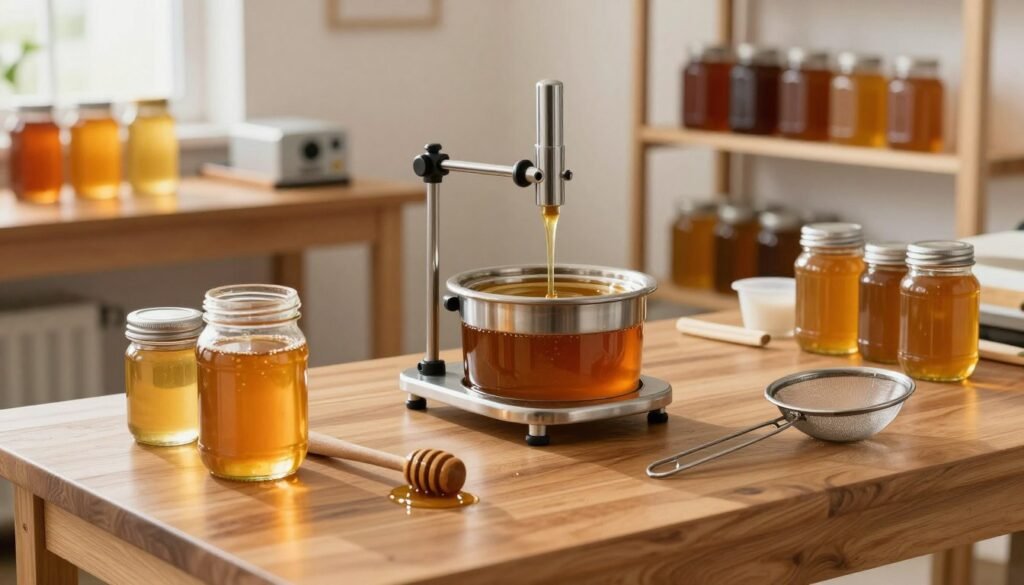
Start by arranging a clear workspace where tools, frames, and flow buckets sit within reach. Cover floors with newspaper or cardboard to make cleanup simple after processing. This small step saves time and keeps surfaces tidy.
Seal the room so bees cannot find scent trails near open containers. A closed door and screened vents reduce interruptions and help protect clean honey and honeycomb during work.
Organize frames on a rack or table to avoid tipping or damage. Keep uncapping tools, sieves, and buckets in order so each stage of the extraction process moves smoothly and safely.
- Designate space large enough for the extractor and collection buckets.
- Lay out tools to reduce reach and prevent spills.
- Sanitize surfaces before and after handling frames for best results.
| Preparation Step | Benefit | Tip |
|---|---|---|
| Floor coverings | Easier cleanup | Use corrugated cardboard or kraft paper |
| Sealing room | Fewer bees, less mess | Close doors and use screens on vents |
| Tool layout | Smoother workflow | Keep uncapping knife, sieve, buckets in order |
Good prep yields a clean honey product and reduces accidents. For sanitation between batches, consult a practical note on capping scratter sanitation.
Techniques for Uncapping Honeycomb Frames
A careful uncapping routine protects comb and reduces issues during centrifugal extraction. Proper technique limits wax debris and keeps frames reusable for the hive.
Using an Uncapping Fork
An uncapping fork is handy for cells that a knife misses. Glide the tines across the top of each frame to lift loose caps without tearing the comb.
Work with steady, small strokes. Inspect each frame after fork work to remove stray bits that might clog sieves or the extraction flow.
Maintaining Knife Temperature
Heat an uncapping knife to about 150°F so it cuts cleanly through wax caps. A properly warmed knife glides and leaves neat openings for fast extraction.
A steady hand matters. Apply light pressure to avoid crushing comb. After uncapping, check every frame and clear all debris before spinning.
“Maintain knife heat and gentle handling to preserve comb and reduce post-extraction skimming.”
For a step-by-step uncapping reference, see this uncapping beehive frames guide.
Managing Honey Flow and Centrifugal Extraction
Controlling the flow as liquid leaves the drum prevents sediment and keeps jars clear. Position a clean bucket directly under the gate so every bit funnels into the collection vessel without crossing floor paths.
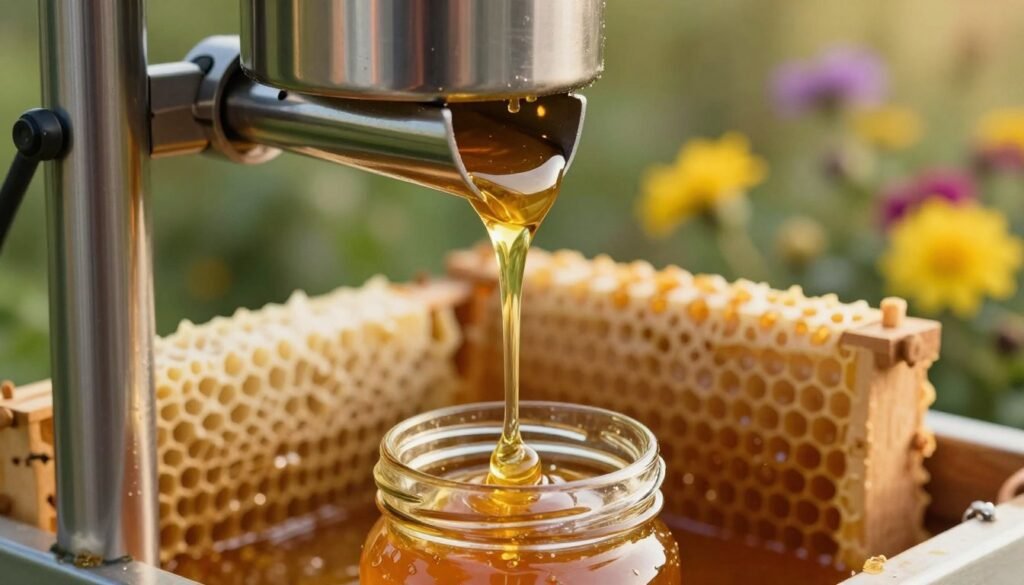
Start by preparing frames with an uncapping knife, then load a 9 frame radial extractor to handle a large amount across multiple colonies in a single day.
Spin at a consistent speed and flip each frame so both sides of the honeycomb empty fully. Monitor the honey flow and stop to skim if foam or a noticeable amount of debris appears.
- Route liquid through a coarse sieve before it reaches the main bucket to catch bits and wax.
- Use a honey bucket with a gate to control draining into the settling tank and avoid sudden surges.
- Employ a honey bucket tipper to empty the last amount without stirring surface scum into the batch.
Small debris is normal; planning for it keeps final containers clean and reduces returns. For a complete step-by-step extraction guide see step-by-step extraction guide, and for tips on avoiding heat issues review avoiding overheating during extraction.
“A steady drain, clean gate, and mindful skimming deliver clearer jars and better shelf life.”
Straining and Filtering for Optimal Clarity
Fine straining and a short rest in a settling tank turn cloudy extract into clear, sale-ready jars.
Choosing the right mesh is the first step. Start with a coarse sieve to catch large wax pieces, then move to a double-mesh setup to trap smaller debris.
Choosing Mesh Sizes
Use a 4–6 mm mesh for initial strain, followed by a 0.5–1 mm mesh for polish. This two-stage approach speeds flow while improving clarity.
| Mesh | Captures | When to use |
|---|---|---|
| 4–6 mm | Large wax chunks, comb bits | At extractor gate |
| 0.5–1 mm | Fine debris, small wax flakes | Before settling tank |
| Double-mesh | Both sizes | Best for retail jars |
Removing Surface Scum
After filtration, let the batch sit in a clean bucket or settling tank. A top layer of foam and wax will form within two to three days.
Skim the top carefully before moving liquid to jars. This step prevents bits from falling back into the bulk during filling and keeps every jar clear.
Settling Tank Benefits
Heating to no more than 120°F can lower viscosity and help flow through sieves, but do not exceed that limit to protect natural enzymes and flavor.
- Filter into a clean bucket or honey bucket with a gate so any remaining particles rise.
- Allow two to three days for wax to float; skim the top before transfer.
- Use a plastic honey bucket with a gate to fill jars smoothly and control honey flow.
“A short settling period yields clearer jars and reduces post-fill skimming.”
For routine maintenance tips that support clean filtration and smooth flow at the extractor gate, see a practical guide on cleaning and maintaining honey extractors.
Best Practices for Long Term Honey Storage
Proper shelving and temperature control keep jars clear and flavor intact.
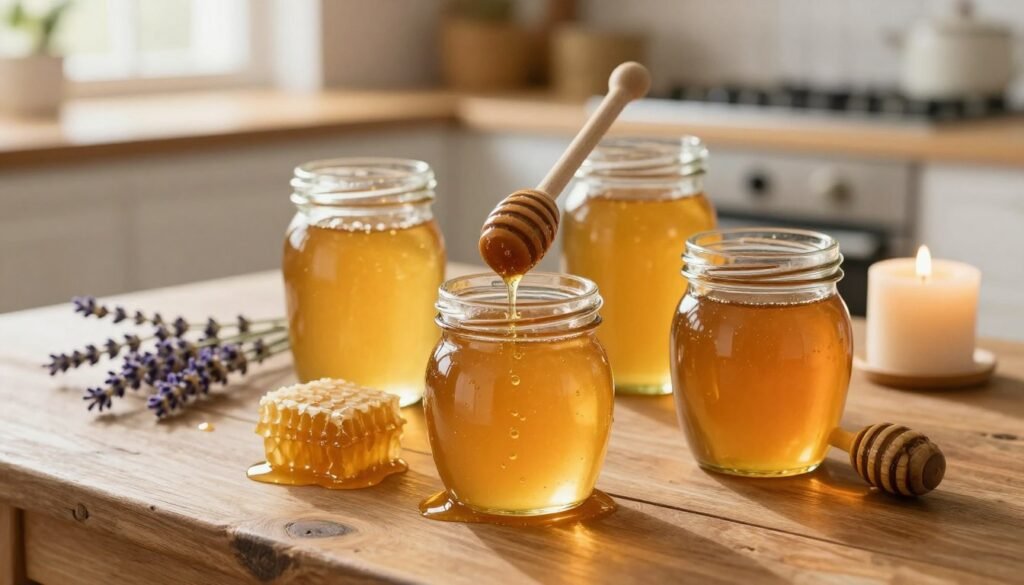
Store jars in a cool, dry place between 50°F and 70°F to slow crystallization. Keep containers away from direct sunlight and wide temperature swings.
Use quality lids and make sure seals are tight to prevent moisture and fermentation. Label each jar with harvest date and batch so freshness is easy to track.
- Standard retail sizes like 8 oz and 12 oz work well for sale and gifts.
- A food-grade plastic bucket is useful for bulk storage; smaller jars are better for home use.
- Stack jars or buckets carefully to save space while keeping top containers accessible.
Control moisture and debris by skimming before transfer and keeping storage areas clean. For a quick field test on moisture before final storage, see test honey moisture.
| Item | Benefit | Tip |
|---|---|---|
| 8 oz jar | Good for retail | Label with date |
| 12 oz jar | Popular for gifts | Use tamper-evident lids |
| Plastic bucket | Bulk storage | Keep covered and off-floor |
“Proper storage is the final step in extraction; treat every jar with care to preserve quality.”
Conclusion
Processing a harvest at home rewards patience with clear, flavorful jars ready for the shelf. Treat each step as part of a steady routine. Short rests, careful skimming, and gentle filtering improve final clarity.
Use a sharp knife and clean tools to limit debris and protect quality. Label each jar with harvest date so stock rotation stays simple.
Store harvest in cool, dark rooms and watch for early crystallization. Good lids and quality honey jars extend shelf life and presentation.
For extra tips on efficient finishing, consult a practical guide on extraction tips. The process deepens appreciation for this natural sweetener and the work behind every jar.
FAQ
Can honey be bottled immediately after extraction?
Most beekeepers wait before filling jars. Freshly spun product often contains fine wax particles, pollen, and air bubbles. Passing the flow through a coarse strainer into a settling tank for 24–72 hours lets debris rise and air escape, improving clarity and shelf life. If jars are filled too soon, cloudiness and rapid crystallization may result.
How does the honeycomb affect extraction quality?
Fully capped comb indicates ripeness and lower moisture, producing stable, long-lasting honey. Partially uncapped or wet comb yields higher water content, increasing fermentation risk. Proper assessment of frames and supers before uncapping ensures better final product and reduces filtration needs.
When is the right time to harvest frames?
Harvest when most cells are sealed with a thin wax capping. Inspect colonies during a honey flow and avoid taking frames during nectar dearths. Harvest too early and moisture is high; wait too long and robbing or honey hardening can occur. Timing depends on local forage, weather, and hive strength.
Is it acceptable to bottle honey directly after spinning in a manual extractor?
Manual extractors work well but agitation introduces bubbles and fines. After spinning, transfer liquid through a bucket fitted with a tap and a strainer or coarse filter. Allow settling in a clean, food-grade tank before jar filling. This reduces trapped air and suspended particles for a professional-looking product.
What extractor type is best for small-scale producers?
For hobbyists, a two- or four-frame tangential stainless steel extractor balances cost and efficiency. Radial extractors speed processing for larger volumes. Choose equipment with a smooth drain, built-in honey gate, and food-safe finish. Proper size saves time and preserves comb integrity for reuse.
How should a workspace be arranged for sanitary extraction?
Designate a clean, dry area away from hive traffic. Use washable surfaces, adequate lighting, and a draining honey table or sloped floor. Keep jars, lids, and tools off the ground and cover equipment to prevent dust, insects, and contamination during handling.
What tools are essential for uncapping frames?
Core items include an uncapping knife or hot knife, uncapping fork, uncapping tray, and a tub or tray to catch cappings. A heated knife smooths caps quickly; an uncapping fork helps lift stubborn wax. Use food-grade containers to collect cappings for wax rendering or straining.
How does an uncapping fork compare to a knife?
An uncapping fork excels at scraping cappings from irregular or heavily capped frames and preserves comb structure. A heated knife slices neat, continuous cappings and works faster on flat frames. Many beekeepers use both: fork for detail, knife for speed.
Why is maintaining knife temperature important?
A warm uncapping knife slices cleanly without tearing wax, reducing debris and minimizing tilt in the extractor. Overheating breaks down aroma compounds; underheated blades tear comb and create slivers that clog filters. Aim for gentle warmth rather than extreme heat.
How does centrifugal extraction influence honey flow?
Centrifugal force ejects liquid into the extractor shell, where it runs down to the drain. Proper frame placement, balanced load, and correct spin speed optimize yield and protect comb. Gradual speed increases prevent frame stress and avoid splashing that traps air and fines.
What mesh sizes work best for straining and filtering?
Start with a coarse 2–4 mm strainer to remove larger cappings and comb bits, then pass through a finer 150–250 micron mesh to capture pollen and small wax particles. Commercial packers may use multiple stages, ending with food-grade nylon or stainless steel filters for clarity.
How is surface scum removed effectively?
Skim scum after the first few hours of settling with a clean ladle or mesh skimmer. Surface foam and tiny debris float and can be discarded or filtered. Repeated gentle skimming during the settling period yields clearer product and reduces jar sediment.
What are the benefits of a settling tank?
Settling tanks allow air and micro-debris to rise and separate naturally. Using a gravity-fed draining valve preserves clarity when transferring to jars. Tanks also simplify bulk storage, help manage crystallization, and make quality checks easier before final packaging.
How should jars and lids be prepared for filling?
Sterilize jars and lids with hot water and let them air-dry on a clean surface. Avoid detergent residues. Warm jars slightly to reduce condensation and prevent rapid crystallization at the jar edges. Use airtight lids to protect aroma and moisture content.
What storage practices extend shelf life?
Store sealed jars in a cool, dark place between 50–70°F (10–21°C). Avoid direct sunlight and high humidity. Keep lids dry and check seals periodically. Properly ripened and filtered product stored this way can remain stable for years.
How much space is needed to set up extraction at home?
A small-scale setup fits in a garage or utility room with a 6–10 ft workbench, drainage area, and room for extractor, settling tank, and jar storage. Allow space to move frames safely and to clean equipment. For larger volumes, allocate a dedicated processing area.
Can comb cappings be reused?
Yes. Collected cappings contain beeswax and residual honey. Melt and render them into blocks, foundation, or skin-care products. Strain melted wax through fine mesh, remove debris, and cool in molds. Rendering recovers value and reduces waste.
What steps reduce contamination risk during harvest?
Wear clean protective gear, wash hands, and use sanitized tools. Keep lids and jars closed until filling and minimize exposure to open air. Work during low insect activity and avoid windy, dusty days. Routine equipment cleaning between loads prevents cross-contamination.
How does moisture content affect bottling decisions?
Moisture above 18% increases fermentation risk and shortens shelf life. Measure with a refractometer before packaging. If moisture is high, delay bottling and allow settling or gentle warming to reduce water content, or blend with drier batches to stabilize product.
Are plastic buckets suitable for holding product during processing?
Use food-grade, BPA-free plastic buckets for temporary holding. Stainless steel remains the preferred choice for long-term storage and processing due to durability and ease of cleaning. Ensure any plastic used is certified for food contact to prevent flavor transfer.