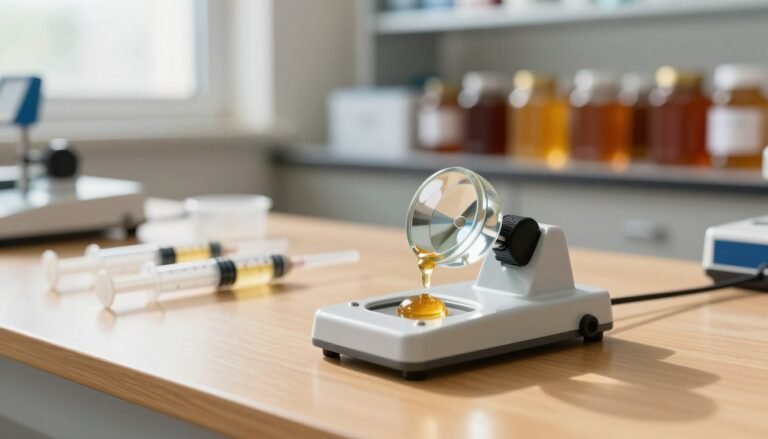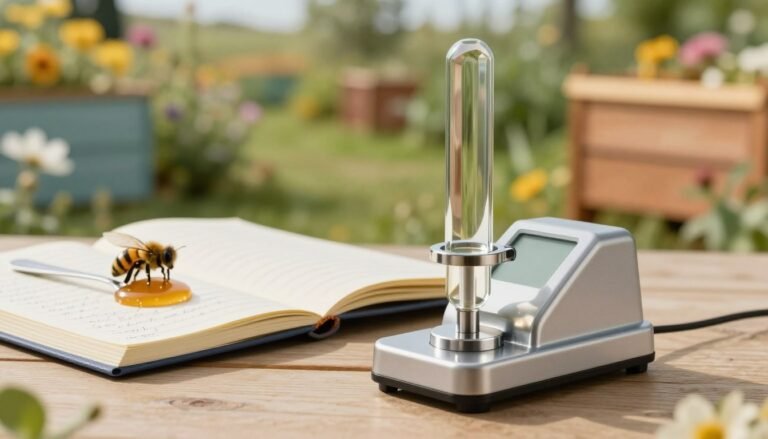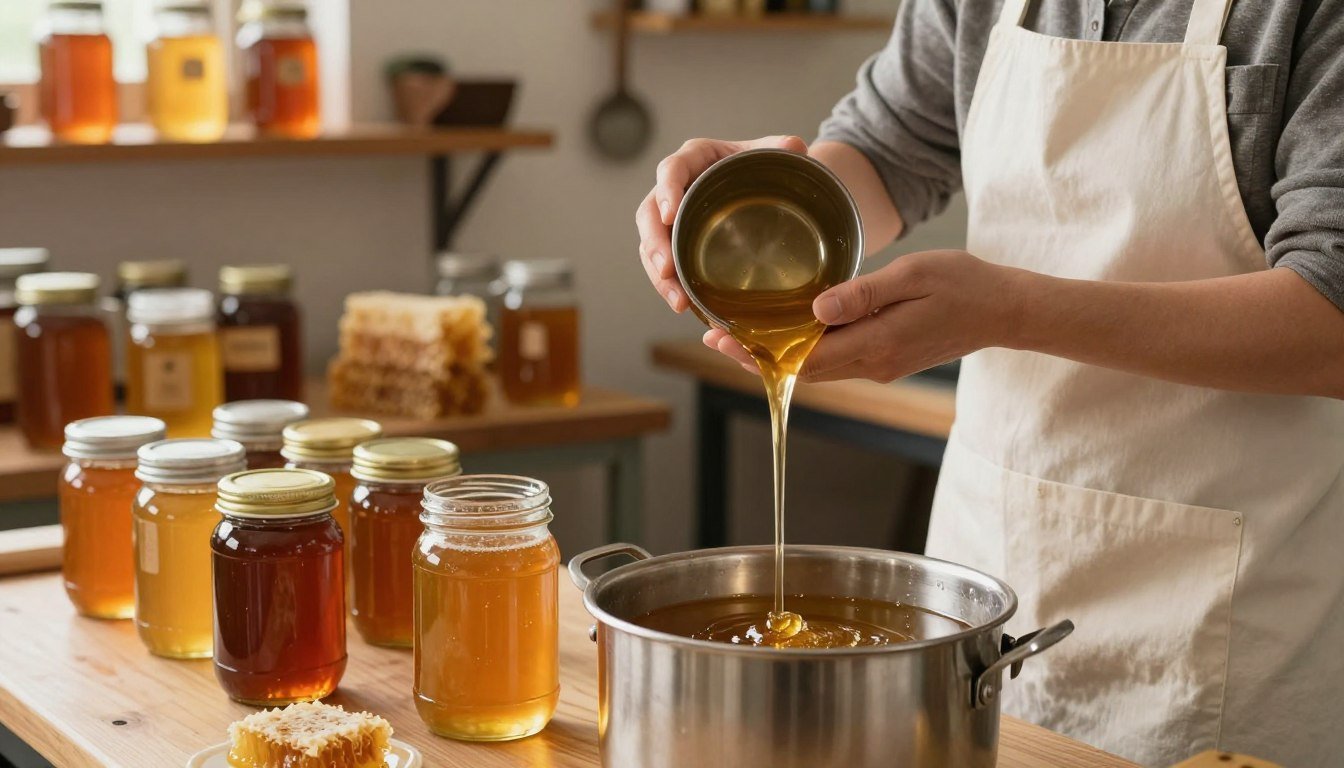
Preserving quality begins the moment honey leaves the hive. Gentle handling and clear control of heat and time keep natural enzymes intact. Raw product stays at its peak when warmed only to safe ranges.
Proper extraction and filtering rely on clean equipment and steady process steps. Use strainers and extractors that are sanitized and sized for your volume. A short settling period helps bubbles rise and improves clarity before jars are filled.
Managing water content and avoiding excessive heat prevents fermentation and enzyme loss. Producers should reference reliable guidance like the linked technical page for detailed controls and sealing recommendations: effective bottling and packaging techniques.
Key Takeaways
- Keep warming gentle to protect enzyme activity and color.
- Sanitize extraction tools to avoid contamination.
- Allow settling time to reduce foam before filling jars.
- Monitor water content to prevent fermentation risks.
- Choose inert, food-grade containers and reliable seals.
Understanding Honey Bottling Temperature Best Practices
Maintaining a steady, gentle warming range protects the natural character and clarity of the product. For raw honey, aim for 95°F to 110°F (35°C to 43°C) to keep enzymes and flavor intact.
Avoid overheating. Exceeding 120°F (49°C) risks degrading aroma, color, and beneficial compounds. Stay well below 140°F (60°C) to prevent irreversible damage.
Professional beekeepers balance speed with quality. Many target 110°F–120°F when they need fluidity for faster production without long heat exposure.
Effective filtering and smooth pours require the correct warmth. Use controlled cabinets or warming rooms so every batch sees the same conditions.
- Test small batches to learn how heating affects clarity and texture.
- Monitor heat with reliable probes and log each run.
- Follow guidance on extraction and storage — see extract and store raw honey for practical tips.
Why Temperature Control Matters for Quality
Monitoring process heat prevents chemical changes that reduce your product’s quality. Careful control limits damage to natural components added by the bee and keeps flavor intact.
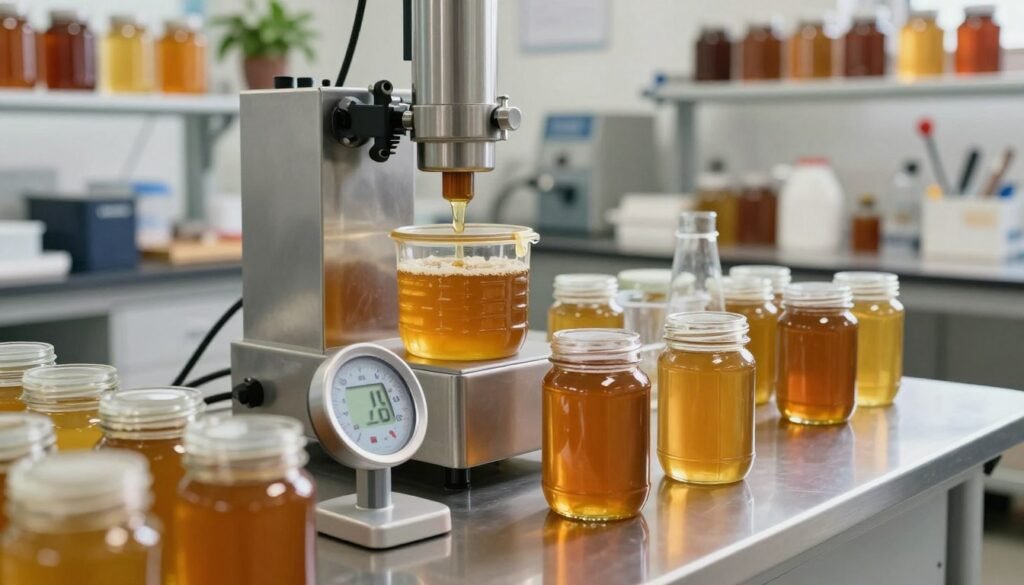
Preserving Beneficial Enzymes
Enzymes such as diastase and invertase are fragile. Exceeding about 110°F (43°C) quickly lowers their activity.
Beekeepers prioritize gentle handling to keep these proteins as proof of unprocessed jars from the hive.
- Short heat cycles protect enzyme activity.
- Use water-jacketed tanks to avoid local hot spots.
- Filter at safe warmth to maintain clarity without loss of value.
Preventing HMF Formation
Hydroxymethylfurfural (HMF) forms when sugars break down under excess heat.
Higher HMF signals heat damage and shortens shelf trust in a product. Every minute at elevated warmth raises that risk.
For guidance on precise control and moisture measurement, see automatic temperature control.
Essential Equipment for Professional Bottling
Select equipment that delivers even heat and easy cleaning to protect flavor and clarity.
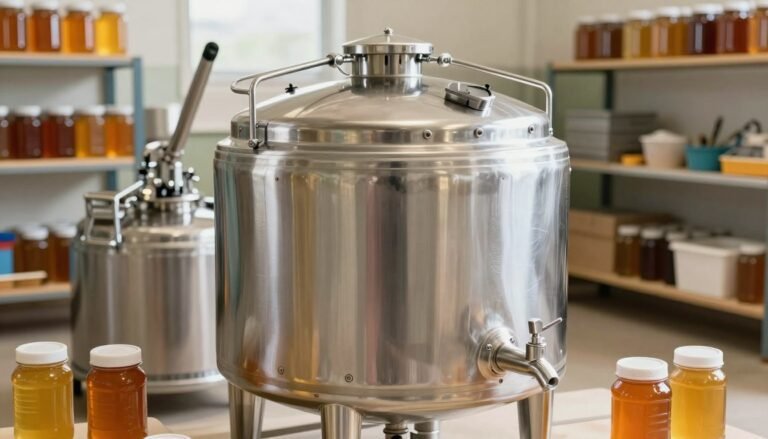
Water-jacketed tanks give uniform heat distribution across the load. This prevents scorch spots and preserves product quality during warming.
Stainless steel buckets, tanks, and fittings resist corrosion and clean quickly. That durability helps when scaling honey production and speeds up sanitation between runs.
- Extractor and frames: a reliable extractor removes comb contents fast and reduces handling time.
- Filtering and filtration: fine mesh filters remove wax and debris so jars look clear on shelves.
- Bucket and tap systems: sturdy bucket tippers and sanitary taps make transfers safer and consistent.
Ensuring honey quality means every tool from filters to tanks is maintained and sanitized. For small-scale sellers looking to upgrade, consider a recommended bottling tank for small producers to balance cost and capacity.
Preparing Honey for the Bottling Process
Preparing frames and supers carefully speeds extraction and protects comb structure.
Use a queen excluder when you remove supers so brood stays below and the comb in the super is pure for extraction.
Warming supers in a dedicated cabinet before extraction helps the flow and reduces strain on filters. This small step can save significant time during the overall process.
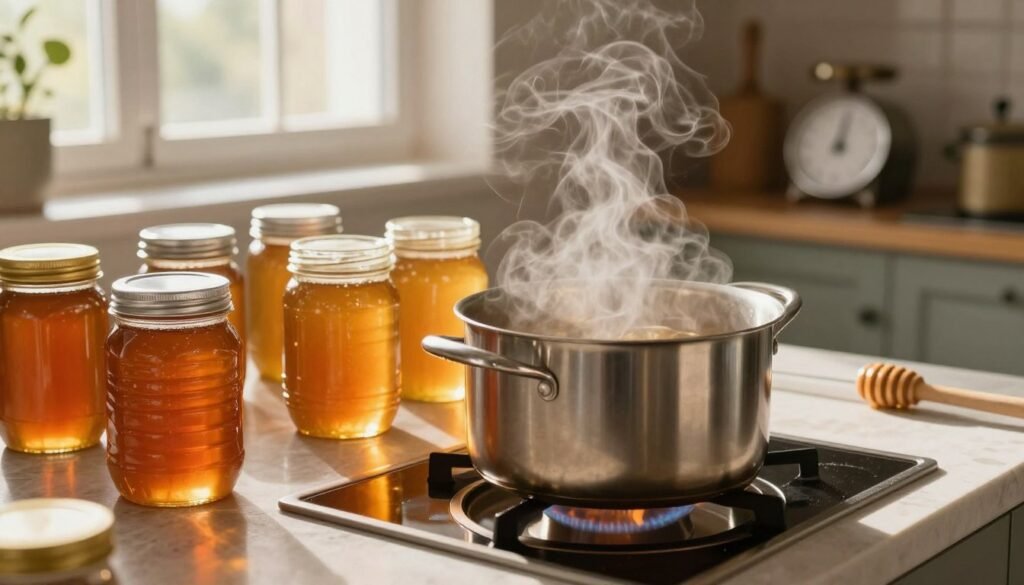
Warming Supers for Extraction
Experienced beekeepers place frames into a cabinet for a short, controlled warm-up. Warmed comb releases syrup more easily into the extractor and reduces comb damage.
- Use a high-quality extractor to protect the frame and speed extraction.
- Filter as honey leaves the extractor to catch wax and debris.
- Label each bucket with date and moisture content immediately.
| Step | Why it matters | Tip |
|---|---|---|
| Queen excluder | Keeps brood out of supers | Install weeks before harvest |
| Warm frames | Improves flow for filtering | Short cabinet warming only |
| Extraction & filtering | Protects comb and clarity | Use fine filters at outlet |
| Storage buckets | Traceability and quality control | Label date & moisture |
Keep the area clean and store buckets in a cool room until final bottling. For guidance on what temperature for bottling, consult the linked resource before you fill jars.
Recommended Temperature Ranges for Different Goals
Set clear heating targets so each batch meets your product goals without sacrificing natural character.
For raw jars aimed at premium markets, keep the warm range at 95°F–110°F (35°C–43°C). This mimics conditions inside the hive and helps preserve aroma and enzymes.
If your goal is faster production, target 110°F–120°F (43°C–49°C). This range improves flow for the extractor and speeds filling while keeping acceptable quality.
Avoid the danger zone above 140°F (60°C). Temperatures there cause rapid enzyme loss and harm flavor, which reduces product trust with customers.
| Goal | Range (°F) | Effect |
|---|---|---|
| Premium raw | 95–110°F | Preserves enzymes and unique flavor |
| Standard production | 110–120°F | Better flow for extractor and jars |
| Avoid | >140°F | Significant enzyme degradation |
Adjust settings by frame and harvest. Use a reliable thermometer on your equipment and share your ranges to build trust. For guidance on labeling and retail prep, see package and label honey for sale.
Managing Crystallization and Decrystallization
Controlling crystal formation lets you shape texture without harming flavor or nutrients. Proper control keeps jars uniform and ensures your product appeals to customers who expect a consistent spread.
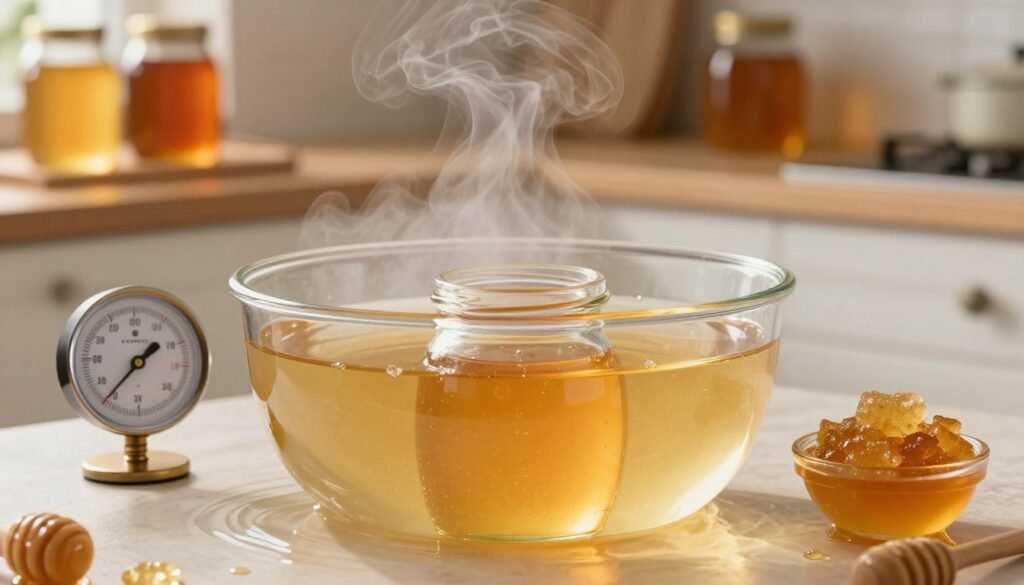
Soft Set Preparation
Soft set requires a predictable seed ratio and steady mixing. Blend roughly 10% seed by weight into your base and stir with a spiral mixer attached to a drill until fully incorporated.
Stir regularly over several days to encourage small crystals and a creamy texture. Use stainless steel buckets for even warming and to avoid hot spots during any gentle heating step.
Using a Water Bath
For decrystallizing, a water bath is safe when kept below 120°F (49°C). Higher heat risks flavor loss and nutrient damage.
- Warm slowly and monitor jars so bubbles rise and escape; a warming cabinet for a few hours will help remove trapped air.
- Filter while slightly warm to remove tiny crystals and impurities; fine mesh filters or graded filtration work best.
- If extractor use introduced bubbles, allow time or gentle pressure relief so clarity improves before final filling.
For step-by-step guidance on decrystallization, see how to decrystallize honey.
Filtering Techniques for Clarity
Clarity in jars comes from matching mesh size to the batch and filtering method.
Fine mesh strainers remove tiny wax and bee debris that cloud appearance. A 200 mesh screen is ideal for a polished jar and catches most fine particles.
Gravity filtering is gentle and suits small-scale beekeeping. It relies on weight to pass the product slowly through the mesh, preserving flavor and enzyme activity.
For larger runs, pressure filtration speeds throughput while keeping clarity. Maintain pressure systems carefully to avoid introducing bubbles or heat that affect quality.
- Filter each bucket or frame batch separately to protect unique flavor profiles.
- Keep extractor, buckets, and filters stainless and sanitized to prevent reintroduction of impurities.
- Proper filtration helps remove nuclei that trigger early crystallization.
| Method | Mesh / Filter | Throughput & Notes |
|---|---|---|
| Gravity | 200 mesh recommended | Low speed, gentle on flavor; ideal for small lots |
| Pressure | Grade filters with support plates | High speed for larger operations; monitor for bubbles |
| Sequential | Coarse to fine stages | Best for mixed frames; preserves clarity and texture |
| Final polishing | Fine mesh or paper filters | Produces clear jars ready for sale; minimal handling |
Share clear information on labels and process to build trust. For a practical walkthrough on filtering options see this filtering guide, and review how to avoid overheating during extraction at avoid overheating.
The Role of Time in Heat Exposure
Time under heat matters as much as the actual warmth applied during processing. Damage is a function of both temperature and exposure, so holding product at 120°F for many hours harms enzymes far more than a quick, gentle pass.
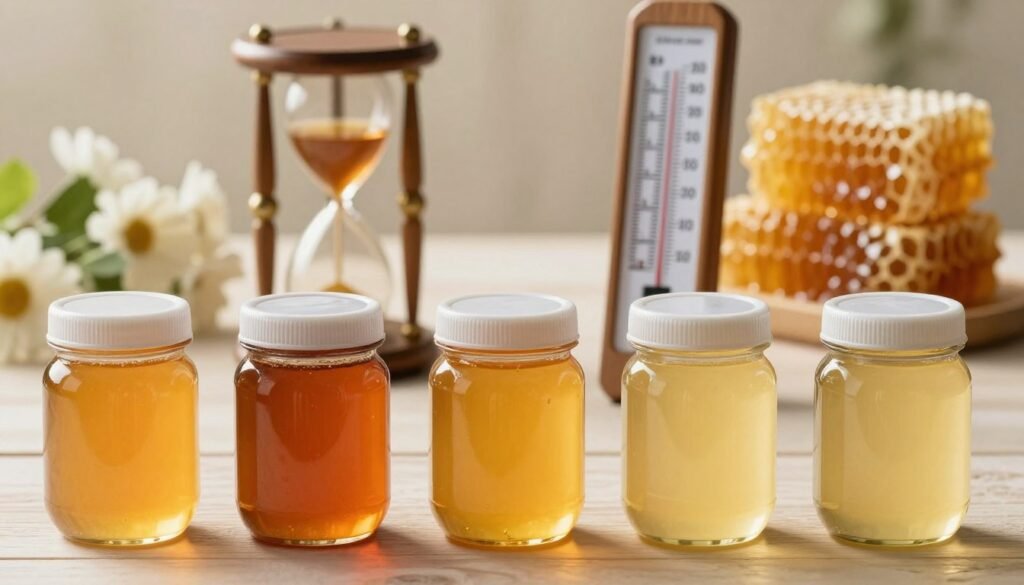
Minimizing Heat Exposure
Keep total exposure short. Apply only the heat needed to make flow consistent for filling. Every hour in a warming cabinet increases risk to flavor and enzyme activity.
Use a water bath to raise warmth gently rather than direct heating. This reduces hot spots and gives you smoother control during decrystallization or deairing.
- Plan production to move from extractor to jar quickly, reducing bucket dwell time.
- Monitor equipment so elevated settings never run longer than needed.
- Schedule batches to limit repeated warming cycles and avoid repeated filtering that requires reheating.
Efficiency protects quality. Treat heating as a short, targeted step to make the product workable, not to alter its composition. For related moisture guidance see humidity effects on curing.
Preventing Common Bottling Issues
Simple steps at the bucket stage stop foam, bubbles, and off-flavors before they reach jars.
Keep moisture under 18.6% to avoid fermentation. Check capped cells at the hive and test the product before transfer.
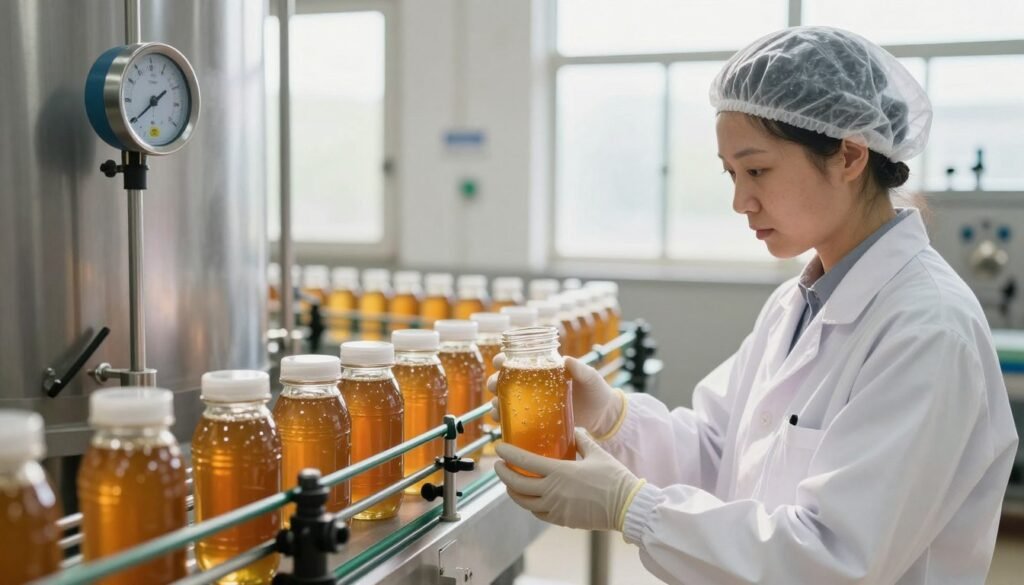
Let each bucket sit for a few hours so air and foam rise. That pause reduces bubbles and gives a clearer fill when you use a good bottling tap.
Use stainless steel buckets and tools to cut contamination risks. Proper filtering and graded filters remove wax and impurities that make jars look cloudy or spoil over time.
| Issue | Common Cause | Quick Fix |
|---|---|---|
| Foam / bubbles | Air introduced during extraction | Settle buckets for several hours |
| Fermentation | Moisture >18.6% | Dry or blend to safe moisture; test before filling |
| Cloudy jars | Debris or fine crystals | Sequential filtering and polishing |
| Slow flow | Cold or misaligned frames in extractor | Warm gently or reposition frames for even flow |
Record time and any heating so you can trace issues. For step-by-step advice on preparing honey, see preparing honey.
Labeling and Regulatory Considerations
Clear, compliant labels protect your brand and let customers trace each jar to its source. Labels must show net weight, country of origin, and a unique batch number to meet standard rules.
Many beekeepers now add QR codes to deliver harvest dates, floral source, and full production information. A scannable code reduces label clutter and gives buyers immediate provenance detail.
Ensure label size fits common containers such as the popular 227g jar. Print legibly so store staff and consumers can read contact details and batch codes during inventory checks or recalls.
Recordkeeping matters. Keep extraction logs that link extractor runs, frames, filtering steps, heating and time for each batch. These records let you generate accurate labels and trace quality issues quickly.

| Requirement | What to include | Why it matters |
|---|---|---|
| Net weight | Metric and imperial | Legal compliance and consumer clarity |
| Country of origin | State or nation | Transparency and traceability |
| Batch number & QR | Unique code + URL/data | Fast recall and provenance info |
| Harvest date & floral source | Optional but recommended | Adds value and builds trust |
Taking time to get labeling right is the final step in professional production. It protects quality and helps customers make informed choices.
Conclusion
A tight routine from extraction to fill ensures customers receive a reliable, flavorful product. Careful use of the extractor and gentle handling of frames preserve aroma and natural enzymes. Keep heating short and measured to protect overall quality.
Focus on consistency. Test moisture and separate suspect lots before you commit to jars — learn quick, non‑instrument checks and confirm results with proper tools. For a practical guide, see how to test moisture without an.
Follow clear records and repeatable steps so each batch matches your standards. Done well, these methods turn raw harvest into a clean, desirable final product your customers trust.
FAQ
What is the ideal range for warming honey before extraction and filling jars?
Aim to warm to about 95–105°F for extraction and filling. This range lowers viscosity so the product flows and filters well while minimizing enzyme loss and color changes. Use a thermostatic tank or hotplate with a probe to keep heat steady, and avoid open flames or direct stovetop contact that creates hot spots.
How long can the product be held at warm temperatures without quality loss?
Keep exposure short — typically under a few hours. Continuous monitoring matters: prolonged heat increases hydroxymethylfurfural (HMF) formation and changes flavor. Stir gently to distribute heat and use insulated stainless steel vessels to maintain even conditions.
Can raw, unfiltered product be warmed to improve clarity?
Yes, gentle warming helps settle wax, air bubbles, and debris for easier filtration. Warm to the lower end of the recommended range and allow resting time so solids sink. Then pass through appropriate filters and stainless steel buckets to preserve clarity without degrading beneficial enzymes.
What methods work best for decrystallizing set product intended for jars?
Use a controlled water bath or commercial warming cabinet set between 95–120°F depending on crystal size. For fine soft-set, lower temps and longer times preserve texture. For coarse crystallization, slightly higher temps and careful agitation speed up liquefaction. Avoid microwaves; they heat unevenly and can harm flavor.
How does heat affect beneficial enzymes and nutritional quality?
Enzymes are heat-sensitive. Keeping the process within recommended heat ranges and minimizing dwell time helps retain diastase activity and other enzymes. Higher heat accelerates HMF formation and reduces perceived raw quality, impacting product value to customers.
What equipment should small-scale producers use to control warming and filling?
Use insulated stainless steel tanks with calibrated thermostats, food-grade pumps, in-line heaters with temperature probes, and gravity or piston fillers for jars. Filters (plate, cone, or nylon) and stainless steel buckets help manage impurities. Accurate thermometers and timers are essential.
Are there special steps for preparing supers and frames before extraction?
Return cold supers to a warm room briefly or use a low-temperature warming cabinet to loosen comb for smoother extraction. Keep frames level during transfer to avoid spills and minimize heat shock that can alter viscosity unevenly. Extraction should follow immediately after gentle warming.
How should producers balance clarity with preserving raw characteristics?
Favor lower warming levels, longer settling, and finer filtration rather than high heat. Cold-crushing and skim filtration can remove debris while retaining enzymes. Communicate methods on labels when marketing raw or minimally processed products to customers who value natural attributes.
What temperature practices reduce foaming and trapped air during filling?
Warm the product slightly to reduce viscosity and release bubbles before filling. Allow a short degassing period in a warm holding tank or use an anti-foam stainless steel paddle at low speed. Fill slowly and leave appropriate headspace to prevent overflow and oxidation.
How does water content and humidity influence heating decisions?
Higher moisture increases fermentation risk; avoid exposing product to high ambient humidity during holding and filling. If moisture content approaches unsafe levels, pasteurization or adjustments are necessary. Use a refractometer to confirm safe water content before long-term storage or distribution.
What are safe practices to prevent overheating during commercial pasteurization?
Use precise temperature control and short-time protocols. Monitor product with calibrated probes and use water baths or indirect heat exchangers to avoid local hotspots. Follow industry guidelines for HMF limits and label claims when applying elevated heat for stability.
How should producers manage crystallization for a soft-set final product?
Seed with fine-grain crystals and maintain a controlled cool environment (around 57–65°F) to encourage uniform crystallization. Gentle agitation and consistent temperature produce predictable texture. Avoid reheating above your set threshold, which can reverse the process.
What filtration steps improve jar appearance without stripping flavor?
Start with coarse strainers to remove wax and large particles, then pass through progressively finer filters if clarity matters. Use cold settling to let solids drop out first, then warm slightly for final filtration. Choose filter media that don’t adsorb volatile compounds to protect aroma and taste.
How long should product rest after warming and before sealing jars for distribution?
Allow enough time for bubbles to escape and for temperature to fall near ambient so condensation doesn’t form on lids. Typically a few hours of resting at controlled room temperature works. Ensure lids and jars are dry and clean to prevent contamination during packing.
Are there labeling or regulatory concerns tied to heating processes?
Yes. If you heat to levels that alter raw status or pasteurize, labeling must reflect processing, and local food safety regulations may apply. Keep records of temperatures, times, and equipment calibration to meet inspection and traceability requirements for retail and wholesale distribution.