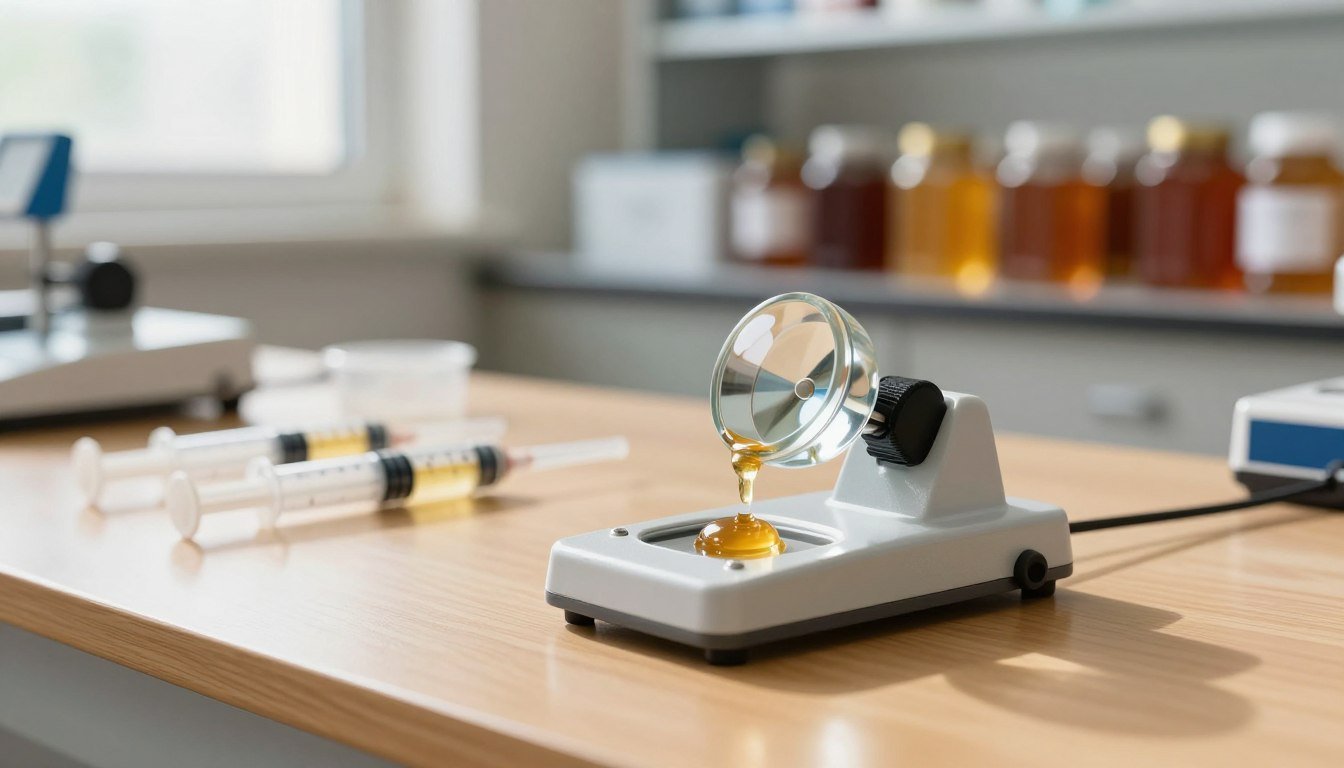
Accurate moisture readings protect your harvest and your reputation. This precision instrument needs baseline checks before first use, a tune-up at each season start, and attention after major temperature swings.
Professional beekeepers depend on steady readings to avoid fermentation and loss. Regular calibration keeps measurements consistent and helps maintain product quality and market trust.
HONESTBEE supplies durable, professional-grade beekeeping equipment through wholesale channels. Using reliable tools shortens troubleshooting and supports smooth operations during the busy season.
Simple routines—seasonal checks, after impact, and when temperatures change—save time and reduce risk. For practical guidance, see this FAQ on calibration intervals and a buyer’s guide for top units.
Follow these steps and your harvest will have a better chance of staying stable, saleable, and dependable for customers.
Key Takeaways
- Establish a baseline before first use and verify accuracy regularly.
- Check calibration at the start of each season and after temperature shifts.
- Keep the instrument clean and use certified fluids for validation.
- Reliable equipment from trusted suppliers like HONESTBEE reduces downtime.
- Accurate moisture readings prevent fermentation and protect quality.
- Re-check after drops or heavy handling to avoid false readings.
Calibration interval FAQ and a guide on the best units for beekeepers offer practical steps and product options.
Understanding the Importance of Honey Refractometers
Moisture level is the single biggest factor that decides whether a batch stays sellable or risks fermentation.
The moisture content of jarred product determines shelf life and safety. Values above 18.6% put an entire harvest at high risk of fermenting. Beekeepers must check each sample before storage or sale.
The Role of Moisture Content
Moisture content controls fermentation, crystallization, and overall quality. Low water percentages extend storage life and preserve flavor.
Proactive measurement prevents the common mistake of assuming content is dry enough when it is not.
How Refractive Index Works
A refractometer measures the refractive index: how much light bends when it moves from air into the sample. That bend correlates with water versus solids in the jar.
When light passes through the prism, the resulting index gives a clear reading of water content. Small shifts inside the prism will change the reading, so understanding the device matters for reliable measurement.
“A precise refractive index reading gives beekeepers a quick, accurate snapshot of moisture and product readiness.”
- The moisture content threshold for safety: 18.6%.
- Refractive index links directly to water content and value of the sample.
- Proper use of this equipment protects quality and marketability.
| Reading (% water) | Risk Level | Recommended Action |
|---|---|---|
| <17.5 | Low | Ready for storage and sale |
| 17.5–18.6 | Moderate | Monitor and test more samples |
| >18.6 | High | Dry further or withhold from sale |
For practical procedures and calibration importance, read our calibration importance FAQ and this guide on testing hive moisture moisture testing.
Determining How Often to Calibrate a Honey Refractometer
Consistent validation builds confidence in each moisture measurement and in saleable stock.
Randall Austin, an NC Master Beekeeper, stresses that regular calibration raises trust in moisture readings. Temperature shifts are the single biggest cause of drift. If the device moves between warm and cool environments, verify the reading again.
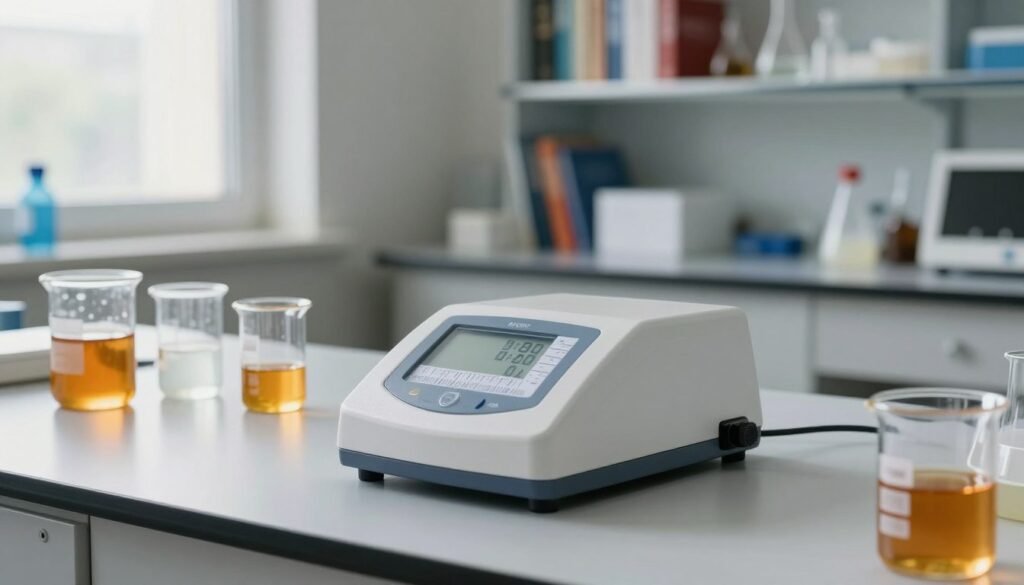
Practical schedule:
- Start each season with a baseline check to set a stable reference value.
- If the instrument is dropped, run a validation immediately before further use.
- Commercial operations should perform daily checks during processing peaks.
- Take multiple samples from one bucket; moisture content can vary by area.
- Allow the device and sample to reach the same ambient temperature before any reading.
“Recalibration after movement or impact is a small step that prevents major loss.”
| Condition | Action | Why it matters |
|---|---|---|
| Season start | Baseline calibration | Sets reliable reference value for the harvest |
| Device dropped | Immediate validation | Detects damage that alters readings |
| Commercial processing | Daily checks | Keeps quality consistent across batches |
Essential Tools and Reference Solutions for Calibration
A reliable reference keeps your instrument honest and your product safe.
Choose a stable substance when you check the refractive index. Extra-virgin olive oil is a trusted, low-cost calibration fluid. It should produce a reading of about 27% on the honey moisture scale.
Selecting the Right Calibration Fluid
Another valid reference solution is anhydrous glycerin found in drug stores. Its Brix value near 73.8 makes it useful for cross-checks.
- Olive oil offers consistent value and saves cost for hobbyist beekeepers.
- The adjustment screw under the cap aligns the blue border with your known reference value.
- Keep any reference sealed. Exposure to water will ruin the solution and skew readings.
Proper reference fluids and routine checks keep readings reliable and protect batch quality.
| Reference | Expected Reading | Best Use |
|---|---|---|
| Extra-virgin olive oil | ~27% | Cost-effective baseline for hobbyists |
| Anhydrous glycerin | Brix 73.8 | Cross-check and lab comparison |
| Official calibration fluid | Certified value | Commercial verification and warranty checks |
For stepwise guidance and certified procedures, consult this FAQ on proper calibration steps and our note on environmental curing at humidity effects on curing.
Step by Step Calibration Procedure
A careful routine yields repeatable moisture measurements and fewer surprises at harvest.
Begin by cleaning the prism and cover plate with a soft, damp cloth. Remove any sticky residue from prior tests so the optics stay clear.
Place a few drops of your chosen reference fluid on the prism. Ensure the surface is fully covered and no air bubbles are trapped under the liquid.
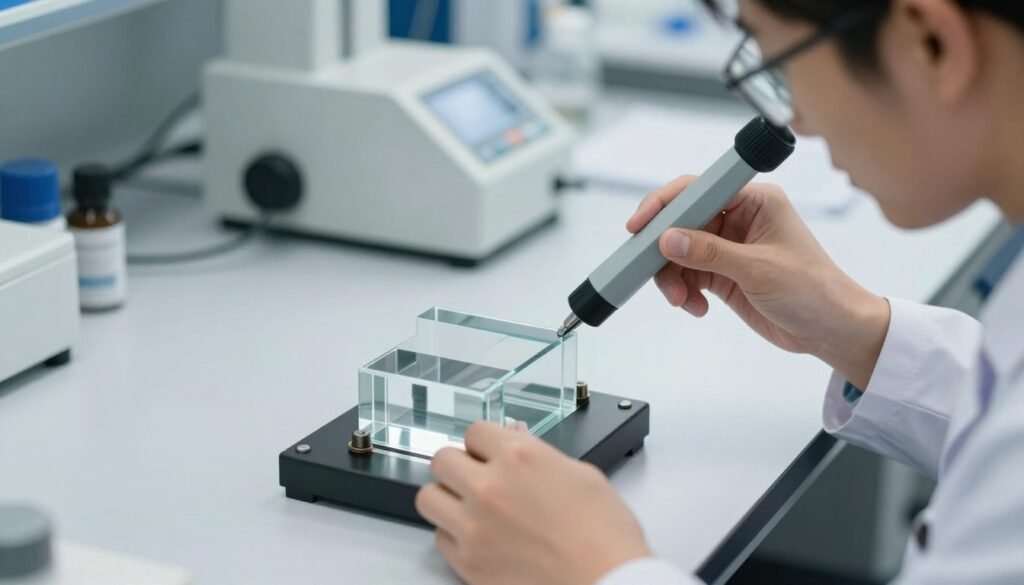
- Close the cover plate gently and point the device toward a bright light. Look through the eyepiece until the blue and clear fields are distinct.
- Use the small screwdriver to turn the adjustment screw until the line matches the known reference value.
- Verify the result by testing a known honey sample. Confirm the reading fits expected moisture and value ranges.
Record the date of this check in your log. Beekeepers who track instrument history spot drift early and protect batch quality.
“Consistent technique with clean optics and a trusted reference makes each reading useful for sale and storage decisions.”
For stepwise images and the manual, consult the manufacturer’s manual and a practical guide on extracting and storing raw product at extraction and storage.
Environmental Factors Affecting Measurement Accuracy
Small shifts in room temperature can change refractive readings more than you expect. The refractive index of any substance drops as temperature rises, which means a warm sample can show a lower index than its true value.
Temperature mismatch is a common error. Allow the instrument, the honey sample, and the reference fluid to sit in the same room for at least one hour before taking a measurement. If the device rode in a pocket, let it rest on a bench until it reaches ambient air temperature.
Light Source Considerations
Use a bright, steady light when viewing the prism. Good illumination makes the boundary between the blue and clear fields crisp, which improves the reading on darker samples.
Sample Application Techniques
Apply the sample so the cover plate sits flat and the prism is fully covered. Trapped air bubbles will scatter light and distort the index reading.
- Let instrument, sample, and reference reach the same ambient temperature before testing.
- Use steady light for clear field definition, especially with dark honey.
- Gently lower the cover plate and wiggle slightly to remove bubbles.
- Re-check your reference value after major temperature changes.
“Consistent environment and careful sample application produce repeatable, saleable moisture readings.”
For detailed procedures and a lab-style checklist, consult this use and calibration guide and consider a room thermometer guide for maintaining stable testing conditions: best digital thermometers for honey rooms.
Best Practices for Instrument Maintenance and Storage
Treat the device like laboratory gear: clean, inspect, and store carefully after each use.
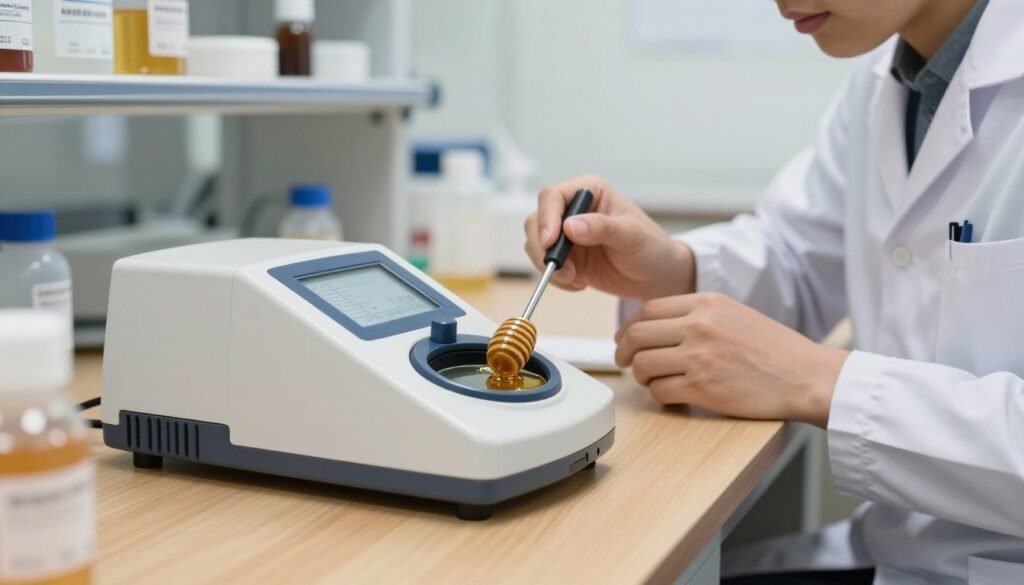
Wipe the prism and cover plate with a soft, damp cloth immediately after every reading. Dried residue will skew the next reading and shorten the life of the optics.
Never immerse the instrument in water. Moisture inside the body can damage internal prisms and ruin long-term accuracy.
- Store the device in a cool, dry place away from rapid temperature shifts.
- Keep the adjustment screw and eyepiece free of debris; inspect them before each use.
- Use a protective case when the unit is idle or in transit to avoid drops and shocks.
Consistent care reduces downtime and keeps your reference value stable across harvests. Well-maintained equipment gives reliable moisture readings and protects product quality for beekeepers and customers alike.
“Regular cleaning and careful storage are the best investments in long-term device performance.”
| Action | When | Benefit |
|---|---|---|
| Clean prism & cover plate | After every use | Prevents residue, ensures accurate reading |
| Inspect adjustment screw & eyepiece | Daily during processing | Maintains consistent calibration and function |
| Store in cool, dry case | Between uses and off-season | Protects internal prisms and settings |
For alternatives and field checks, see our guide to test moisture without an instrument.
Conclusion
Simple verification steps preserve flavor and market value across every batch.
Regular checks of your refractometer keep moisture readings trustworthy. This practice helps beekeepers prevent fermentation and protect product value.
Handle the instrument gently, store it in a stable spot, and run a known reference before major processing. Small tasks like cleaning optics and logging checks pay off with reliable readings and consistent quality.
Invest time learning to calibrate once, and your harvest will benefit year after year. Trust in proper care and routine checks to ensure honey stays saleable and prized by buyers.
FAQ
What is the recommended calibration interval for a honey refractometer?
Check and adjust the instrument at least once per week during active use. For occasional testing, verify calibration before each session. Calibrate immediately after any drop, strong vibration, or if readings seem inconsistent.
Why is keeping the refractometer accurate important for moisture content measurement?
Accurate refractive index readings ensure reliable moisture results, which affect honey quality, shelf life, and fermentation risk. Incorrect values can lead to poor processing choices or rejected product by buyers.
How does refractive index relate to honey water content?
Refractive index correlates directly with sugar concentration. As water content rises, the refractive index drops. Users convert index readings into percent moisture using standard tables or instrument software.
When should I calibrate after changing temperature or location?
Recheck calibration whenever you move the device between environments with different temperatures. Allow the refractometer to stabilize for at least 10–15 minutes in the new setting before validating with reference fluid.
What reference solutions are suitable for calibration?
Use distilled water (refractive index ~1.3330 at 20°C) for a quick zero-point check and certified calibration fluids or sodium chloride solutions for precise adjustments. For olive oil or other liquids, match a reference fluid to the expected index range.
Which calibration fluid should be chosen for testing viscous samples like frame honey?
Choose a certified calibration fluid with a refractive index near your sample’s expected value. Viscous samples benefit from multi-point calibration across the measurement range for better linearity and accuracy.
What are the basic steps for performing calibration?
Clean the prism, apply a drop of reference fluid, close the cover plate, wait a few seconds, read the scale, and use the adjustment screw or digital control to match the reference value. Wipe the prism dry and repeat for confirmation.
How should I apply honey or olive oil samples for measurement?
Warm sticky samples slightly to reduce viscosity, then place a thin, even layer onto the prism. Avoid bubbles and ensure full contact with the glass. Use the cover plate to spread the sample and remove excess.
How does temperature affect readings and calibration?
Temperature changes alter refractive index. Most instruments specify a reference temperature (commonly 20°C). Use temperature compensation features or perform calibration and measurement at the same temperature for best results.
Do light conditions or the light source change measurements?
Internal light sources and clean optics matter most. Avoid direct sunlight on the prism during reading. Replace lamps per manufacturer guidance and keep the optical path free of dust and scratches.
How often should I replace or check the prism and optical surfaces?
Inspect the prism before each use for chips, scratches, or residue. Replace or professionally service damaged prisms immediately, since surface defects cause inaccurate refractive index readings.
What storage and maintenance practices preserve accuracy?
Store the device in its case away from extreme temperatures and humidity. Clean the prism with distilled water and soft tissue after each use. Remove batteries if storing long-term and follow manufacturer service intervals.
Can refractometers measure olive oil refractive index reliably?
Yes; many digital and laboratory refractometers measure oil indices when calibrated with appropriate reference fluids. Use a reference that matches the oil’s expected index and follow the same sample application and temperature controls.
What should I do if readings drift between calibrations?
Re-clean the prism, perform a fresh calibration with certified fluid, check temperature stability, and inspect for mechanical damage. If drift continues, contact the manufacturer or a certified service center for repair.
Are multi-point calibrations necessary for beekeepers testing a wide range of samples?
For best accuracy across diverse moisture levels and substances, perform two-point or multi-point calibration. This reduces linearity errors and improves confidence when testing frame honey, extracted honey, or other viscous samples.