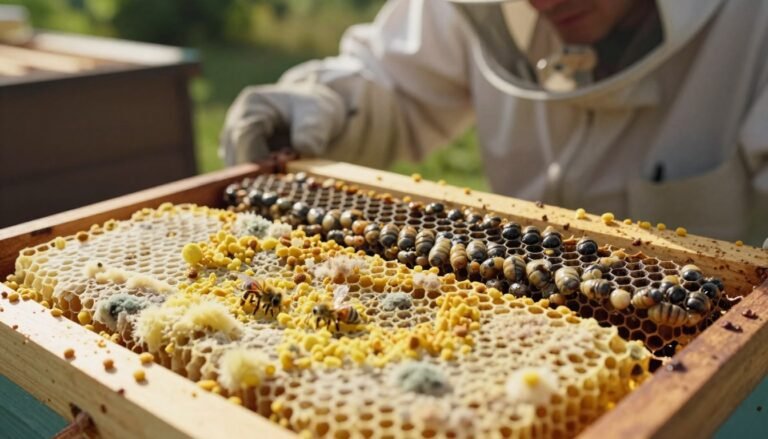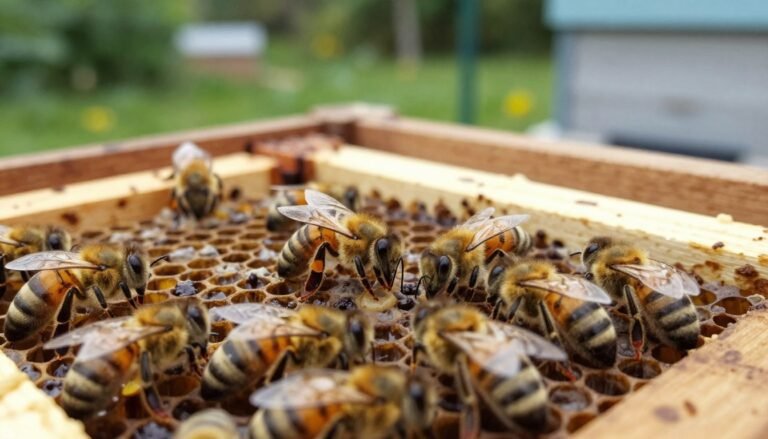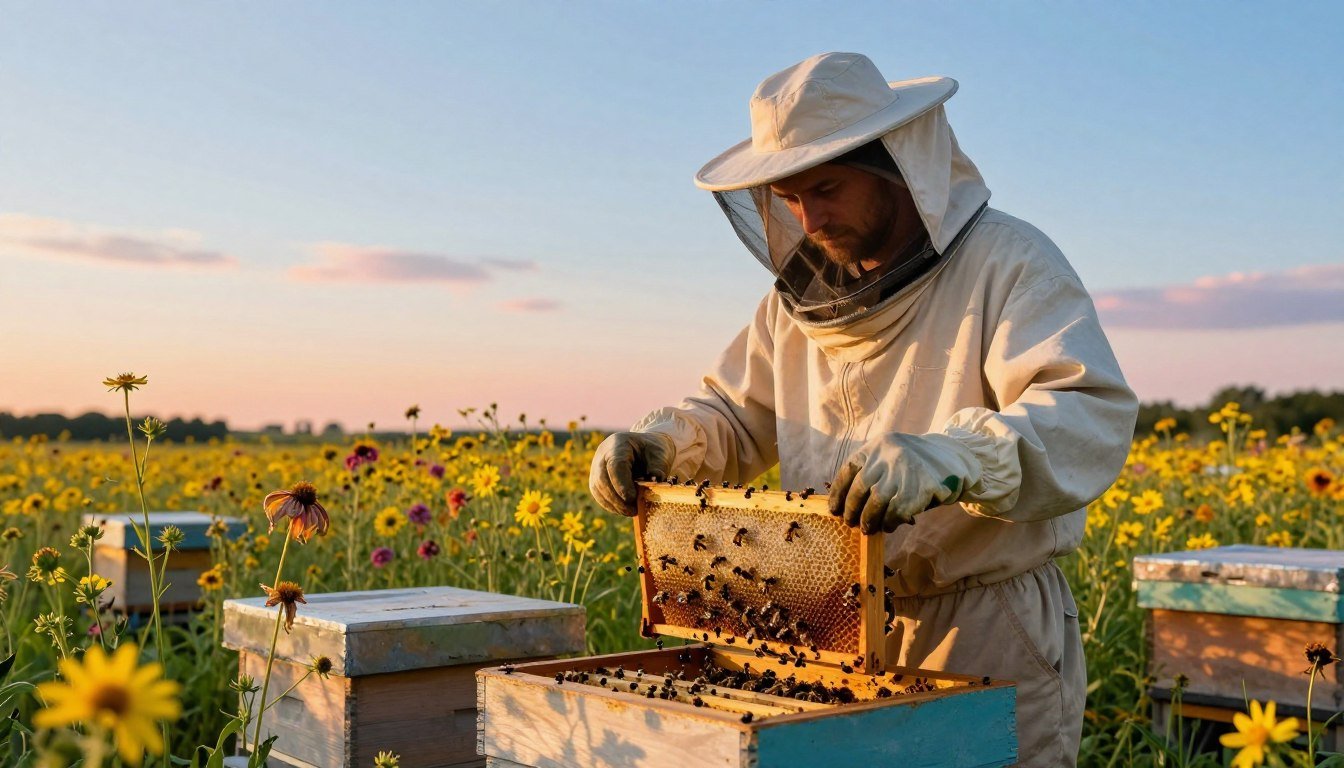
When flowering slows, colonies face a real test. A nectar dearth is a seasonal gap when few plants offer food, and this can force fast shifts in hive behavior. Beekeepers must spot signs early to protect honey stores and the queen’s ability to lay eggs.
Understanding biological shifts helps you act with confidence. Workers cut foraging and the queen may reduce egg laying, changing the number of cells with eggs and larvae. Daily checks of comb, frames, and foraging patterns guide whether supplemental feeding or consolidation is needed.
Practical management saves colonies through the fall and winter. Learn about monitoring, protecting wax comb, and controlling robbing. For steps and planning, see helpful tips on managing a shortage of resources during a nectar or pollen dearth.
Key Takeaways
- Monitor eggs, larvae, and worker activity daily to catch declines early.
- Protect stored honey and pollen to support development and winter size.
- Use in-hive feeding and entrance management to reduce robbing risk.
- Assess the queen’s laying by checking cells and overall population.
- Plan for seasonal gaps by leaving extra stores and adjusting inspections.
Understanding the Nectar Dearth Cycle
In Ohio, mid-summer often brings a clear pause in floral resources that tests hive resilience. This seasonal slow-down usually appears in July and August and signals a reduced nectar flow across many landscapes.
Seasonal Timing
The most important months for this gap are July and August in the Midwest. Beekeepers should watch colony size and stored honey as the summer heat peaks.
Daily checks of frames and comb reveal changes in eggs, larvae, and overall population. Tracking the queen’s laying rate helps you plan for fall and winter.
Impact on Foraging
Worker bees cut foraging when flowers fade. Foraging activity drops and the hive shifts to protecting existing stores from robbing.
When the flow pauses, some colonies will reduce development and may even recycle young larvae to conserve food. Every day of observation during these weeks helps the beekeeper decide whether to feed, consolidate, or re-balance frames.
- July–August is the critical time for many Ohio beekeepers.
- Watch cells and eggs to assess queen health and future size.
Biological Impacts of Resource Scarcity
When floral resources shrink, colonies shift brood rearing quickly to match available food. Worker bees will often digest eggs and very young larvae to free up nutrients when stores run low.
The queen responds by slowing egg laying, which reduces future population growth and helps the hive stretch honey and pollen stores through lean weeks.
Workers prioritize adult survival and guarding of comb over raising new young in cells. Keepers should check frames and look for thinning areas of larvae and fluctuating numbers of eggs.
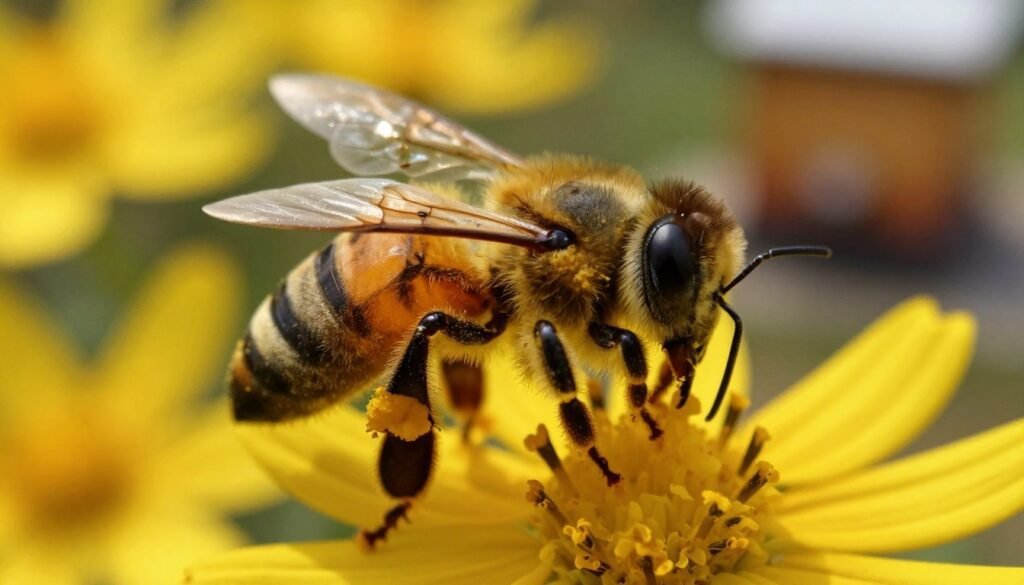
The behavior of bees is a direct reaction to cues like food shortage and reduced nectar flow. If the shortage continues for several weeks, the colony may lose size and become vulnerable to robbing and pests.
- Monitor larvae development in cells and inspect frames often.
- Note changes in worker activity and the queen’s laying rate.
- Read recent research on colony responses here.
Identifying Brood Pattern Collapse After Nectar Dearth
A careful inspection of the comb reveals early clues when brood areas thin and egg counts fall.
Start by opening the hive on a calm day and move slowly. Look for eggs set near-vertical in each cell. Eggs will tip to the side over three days and then form larvae.
Check frames for solid, continuous brood. Spotty areas or missing young can mean the queen is failing or the colony faces extreme stress.
Visual Indicators of Egg Laying
A beekeeper confirms recent queen activity when eggs and young larvae appear in cells. The presence of both means the queen laid within the last three days.
- If uncapped young are being removed, workers are conserving food and trimming development.
- Inspect honey stores when you notice low development; supplemental feeding may be needed.
- Empty queen cups or frequent crowding can signal a possible swarm.
“By monitoring the brood area and eggs each week, you can act before a colony loses too much size.”
Regular checks of eggs, larvae, and comb help beekeepers protect winter population and support healthy development through summer and into fall.
The Role of Queen Health in Colony Stability
A queen’s steady egg laying is the anchor that keeps a colony resilient through seasonal stress.
Finding eggs confirms the queen visited the frames within the last three days. That simple check tells a beekeeper the hive still has active reproduction and future workers on the way.
The health of the queen is the single most important factor in keeping colony population stable during a brief food shortage. A productive queen will keep laying in cells so long as workers supply enough food for larvae and developing bees.
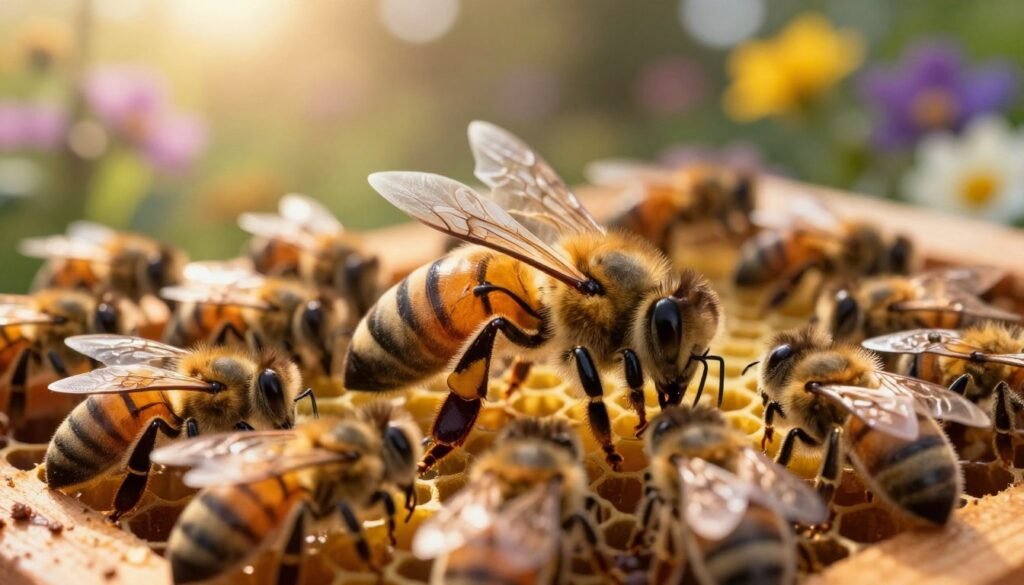
If egg laying slows or stops, the colony can shrink and become vulnerable to pests like Varroa. Replacing a failing queen may be necessary to restore population and protect honey stores for winter.
“Support the queen with adequate food and space to give your colony the best chance at recovery.”
| Sign | What it means | Action |
|---|---|---|
| Fresh eggs in cells | Queen present recently | Continue regular checks |
| Sparse eggs over frames | Reduced laying rate | Check food; consider feeding |
| No eggs visible | Possible failing queen | Inspect for queen; plan requeening |
For practical rearing and queen care steps, see Purdue extension guidance at queen management.
Managing Worker Bee Longevity During Stress
As summer wanes, colonies change how they produce workers to protect the hive through winter.
Late-season workers are physiologically different. While foraging-season honey bee workers often live up to 60 days, winterized workers can survive more than 200 days. This shift helps the colony maintain population and survive cold months.
Winterized Worker Phenotypes
Workers reared at the end of the flow develop larger fat bodies and slower metabolic rates. These changes increase longevity and support brood care in low-temperature conditions.
Pre-Foraging Mortality
About 40% of bees die during the pre-foraging stage. The age a worker begins foraging strongly influences its total lifespan. Starting earlier shortens life; delaying foraging lengthens it.
Practical steps for beekeepers: keep colonies well-fed during summer, monitor larvae and frames, and provide supplemental food when needed. These actions increase the chance of producing long-lived workers and protect colony population into winter.
“Supporting workers during their early development is the most effective way to preserve hive strength through seasonal stress.”
For techniques to boost late-season numbers, see advice on how to boost colony population naturally.
Assessing Hive Food Stores and Weight
Weighing hives by feel helps beekeepers decide when to start feeding for winter. A simple heft test tells you if the colony has enough honey and stores to last the cold months.
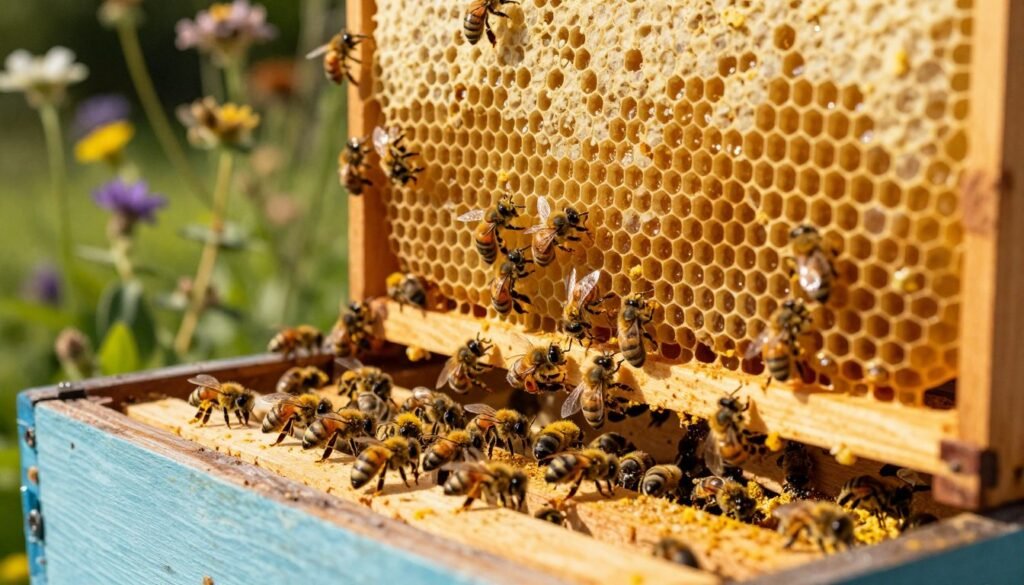
Sarah McKinney recommends taking colonies into winter at about 125 pounds. That total includes bees, equipment, and stored honey. If a hive feels light during an inspection, begin intensive feeding right away.
Check frames and comb for capped honey and open cells. Bees will pack syrup into cells, and that stored sugar keeps the queen and workers alive when the flow stops.
- Do a heft test on warm days over 60° F.
- Inspect frames for honey stores and capped cells.
- Start feeding if the hive feels light to prevent starvation.
“Proper management of food stores is the key to a successful overwintering process.”
For more on recognizing low stores and the signs of starving bees, see this guide: signs of starving bees.
Strategies for Supplemental Feeding
Choosing the right feed can change how a colony stores energy and survives the cold months.
Plan feedings by hive condition and time of year. Use heavier syrup in fall and lighter mixes when you need comb drawn quickly. Keep feeders clean and check often for pests.
Choosing Between Sugar Syrup and Fondant
Feed 2:1 sugar syrup in the fall to encourage bees to store honey for winter. This gives the queen and workers steady calories and helps fill cells with stores.
If the colony struggles to draw comb, offer 1:1 syrup to stimulate wax building. Use a top hive feeder so bees can access food without leaving the cluster.
- Fondant placed on the deep side of the inner cover helps manage condensation and provides a stable food source.
- Provide raw sugar or pollen patties for diverse nutrition that supports larvae and adult bees.
- Monitor feeders to prevent small hive beetle larvae and to reduce the risk of robbing.
Supplemental feeding is vital when the natural flow is low. For tips on feeder acceptance and common problems, read why bees won’t take sugar syrup.
A well-fed colony is much more likely to survive winter and emerge strong in spring.
Mitigating the Risk of Honey Robbing
When stores get low, robbing can wipe out a colony in hours. Watch for invaders that fly in a nervous zig-zag and carry no pollen. Those signs mean hungry bees are probing for weak hives.
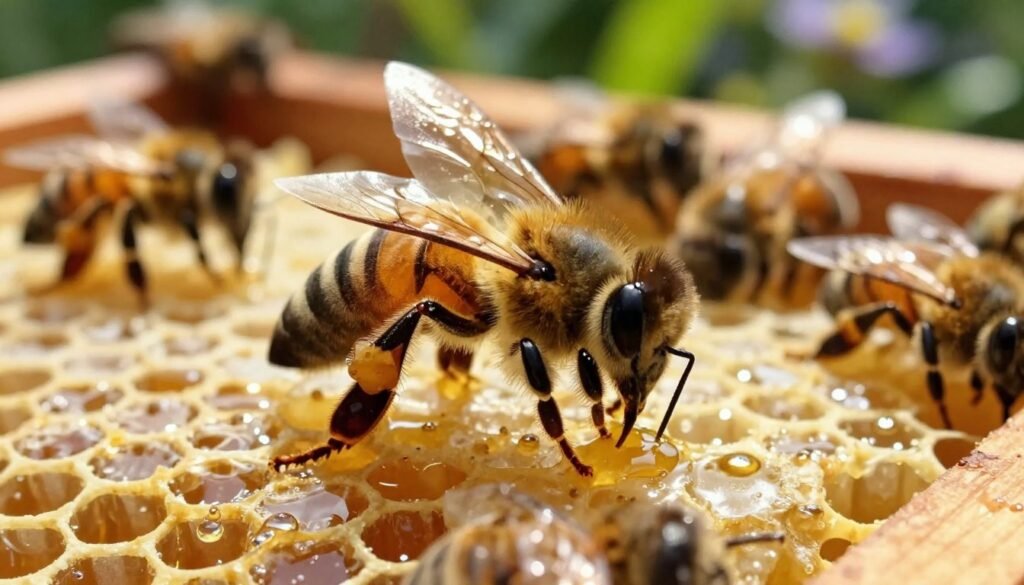
Quick action saves queens and stores. Reduce the entrance size to let defenders control traffic. A hive that is queenright resists attacks better than a queenless one.
- Smell a banana-like alarm pheromone? That means fighting is intense and the queen may be at risk.
- Find torn wax cappings on the bottom board; robbers may be ripping comb to reach honey.
- Close weak hives, or move them a short distance to stop an ongoing raid.
“Be observant during inspections; most robbing events can be stopped before they cost the colony its queen and stores.”
| Sign | What it means | Immediate action |
|---|---|---|
| Nervous zig-zag flight | Robbers scouting or attacking | Reduce entrance; increase guards |
| No pollen on invaders | Targeted for honey, not routine foraging | Close hive or mask scent |
| Wax cappings on bottom board | Comb being torn for honey | Emergency closure; relocate if needed |
Varroa Mite Management During Weakened States
Varroa pressure can turn a weakened hive into an emergency situation in just a few days. Mites target developing larvae and the cells where young bees grow, so high counts reduce the colony’s ability to produce healthy workers for winter.
Inspect your bees regularly in late summer and early fall. A mite riding on a worker’s thorax is an urgent sign that treatment is needed to protect the queen and future brood.
Using Apivar strips placed in the brood boxes is an effective, widely used miticide for stressed colonies. Follow the manufacturer’s timing and placement instructions to ensure safety and maximum efficacy.
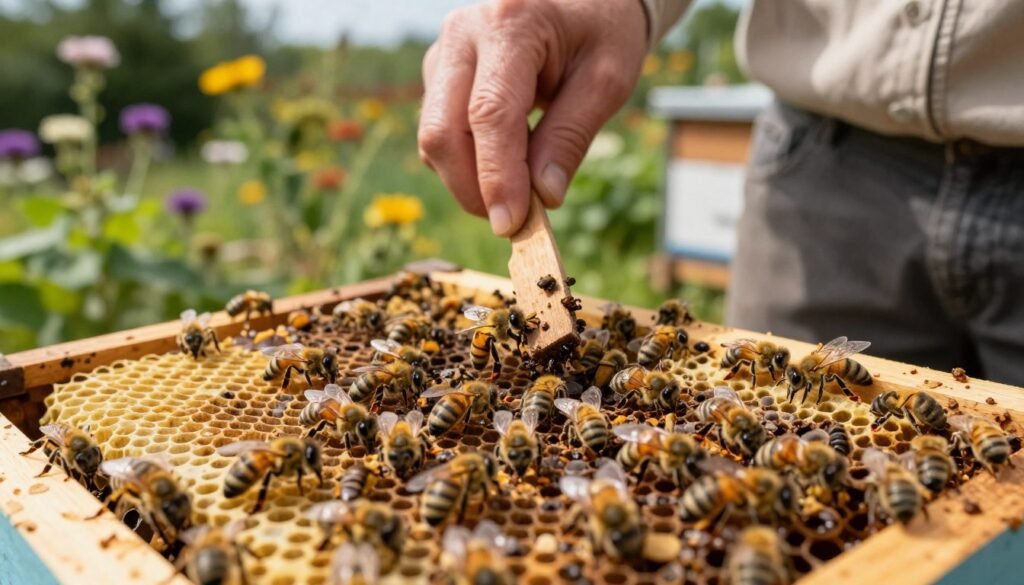
Managing varroa loads is also a duty to neighboring colonies. Treating promptly helps prevent spread and keeps local apiaries healthier. Some keepers use natural controls, but many rely on Apivar when survival is the priority.
“A healthy colony is better equipped to fight infestations, provided beekeepers act early and follow label directions.”
- Inspect often in late summer and fall.
- Use Apivar in brood boxes when mite levels are high.
- Document treatments and monitor mite counts in the days after application.
For context on how hive stress affects honey production and colony behavior, see this guide on why bees stop making honey.
Environmental Cues and Brood Regulation
Signals from the landscape guide a colony to slow reproduction as blooms fade and days shorten.
E-β-ocimene is a volatile pheromone produced by eggs and larvae that helps workers and the queen coordinate rearing. When the flow ends, this scent drops and the hive shifts behavior.
Bees interpret fewer foraging returns and lighter comb stores as a call to conserve honey and reduce young in cells. The queen responds by lowering egg laying, which preserves food for the winter cluster.
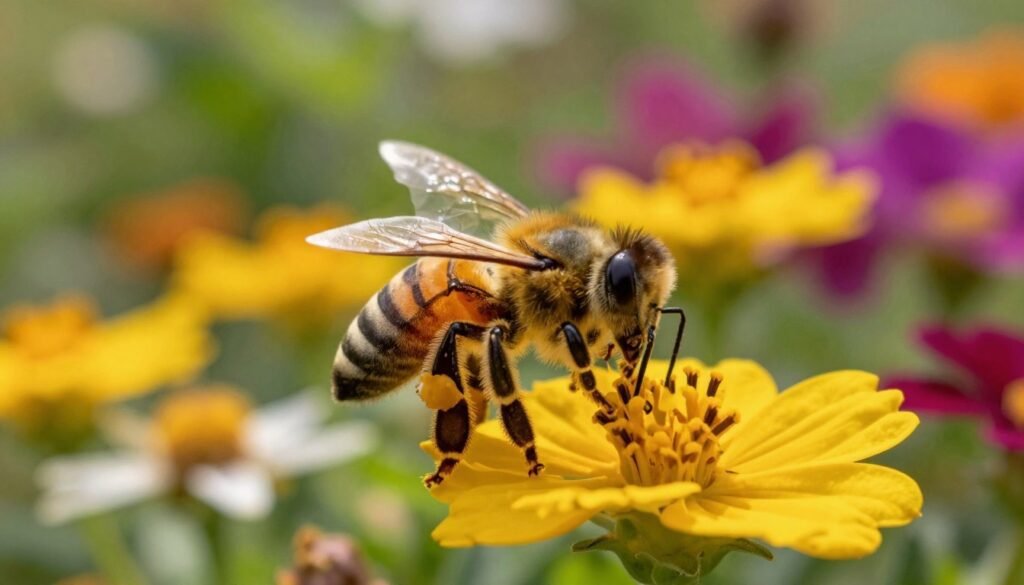
Watch how the colony adjusts over several days. If workers keep raising many young late in the season, they risk exhausting stores because the cluster will not leave the developing brood.
“Monitor frames weekly to see whether the hive is preparing for winter or still pushing growth.”
- Observe for changes in foraging and comb stores.
- Note shifts in egg laying and cell occupancy.
- Support colonies with feed when signals indicate dwindling resources.
| Environmental Cue | Colony Response | Keeper Action |
|---|---|---|
| Reduced forager returns | Lowered egg laying | Check stores; consider feeding |
| Drop in E-β-ocimene | Workers limit rearing | Monitor brood development |
| Warm days but low nectar | Continued brood risk | Consolidate frames; add fondant |
Rebalancing Frames for Optimal Development
A deliberate swap of frames can nudge the queen toward new cells and strengthen the colony’s core.
Move a frame with little comb into the center of the brood area to encourage the queen to lay in fresh foundation. Workers will tend the frame, draw wax, and fill cells when food and the queen are strong.
Keep movements quick and steady so you do not chill the cluster. If you disrupt temperature, developing larvae can be harmed and workers will spend time re-warming rather than foraging.
If the hive is crowded, add a new box and rebalance frames to give the colony room. This reduces the chance of swarming and helps the bees manage honey and stores efficiently into winter.
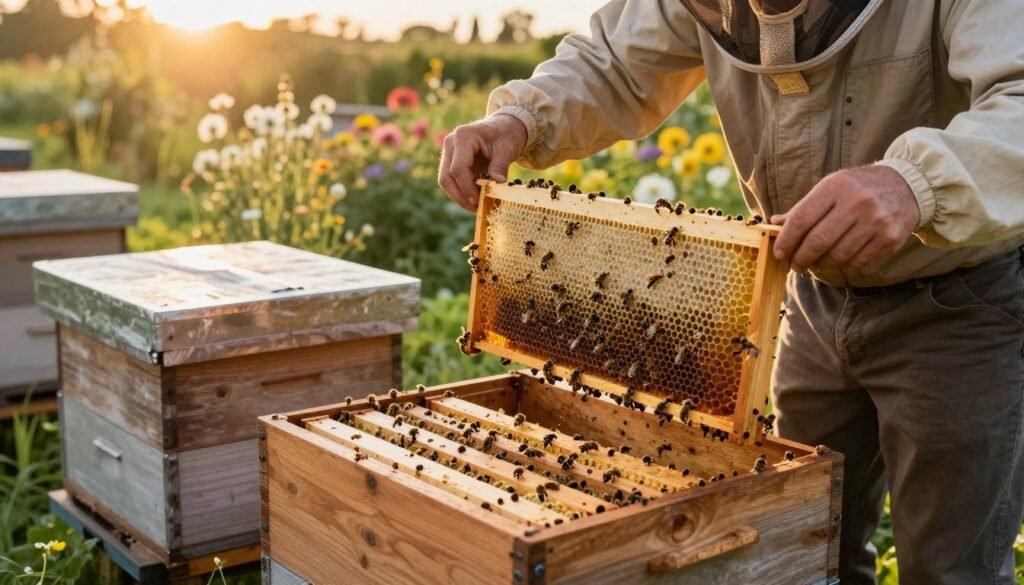
Monitor the new frames over several days. Look for drawn comb, eggs, and steady worker activity to confirm the queen accepted the changes.
- Place near-empty comb centrally to stimulate laying.
- Avoid exposing the cluster to cold during moves.
- Add a deep box if space is tight and rebalance again.
| Action | Goal | When to Use |
|---|---|---|
| Move empty frame to center | Encourage laying in new cells | When comb is underused and queen is active |
| Add new box and rebalance | Prevent crowding and swarming | When frames are full or bees are congested |
| Check frames in 3–7 days | Confirm comb drawn and eggs present | After rebalancing or feeding |
For step-by-step timing and tips on making these moves in fall, see this guide on approaching fall changes.
Preparing for Seasonal Transitions
As daylight shortens, colonies shift priorities and begin conserving resources for the cold months.
Check food and treat mites early. Inspect honey stores and assess weight by hefting the hive. Treat for Varroa if counts are high so the queen and workers start winter healthy.
Reduce rearing as temperatures fall. Queens naturally slow egg laying and the colony stops raising new young in cells to protect the cluster and existing honey stores.
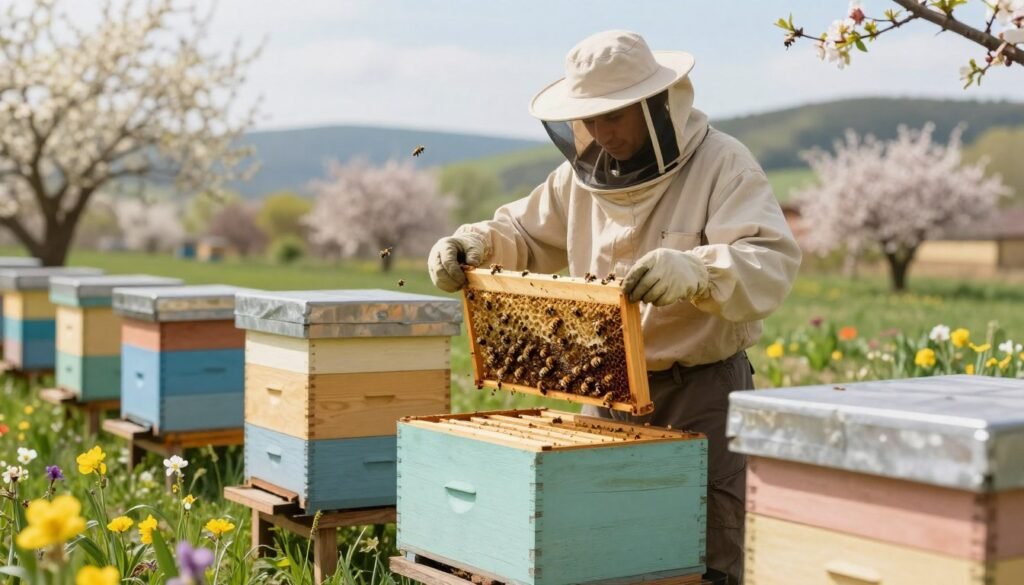
Clean and repair equipment, add insulation where needed, and seal gaps that let cold drafts through. A dry, well‑sealed hive increases the chance the colony survives until spring foraging.
Take time to review the season. Note what feeding, treatments, and management steps worked. Monitoring bee behavior in fall reveals issues you can fix before deep winter.
“A timely, thorough transition plan gives your bees the best shot at a strong return in spring.”
| Task | Goal | Timing |
|---|---|---|
| Inspect stores | Confirm honey sufficiency | Late summer to early fall |
| Varroa treatment | Protect queen and brood health | Before cluster tightens |
| Repair & insulate | Keep hive dry and warm | Pre‑winter |
For practical steps on managing summer-to-fall shifts and avoiding winter losses, consult this summer beekeeping guidance and review common risks at colony collapse prevention.
Professional Certification and Continued Learning
Joining a Master Beekeeper track gives clear steps to improve hive care. Programs such as the North Carolina State Beekeepers Association Master Beekeeper Program offer four certification levels from Certified Beekeeper to Master Craftsman.
Certification blends classroom study and hands-on tests. Candidates complete written and practical exams that confirm skills in managing queens, worker health, comb handling, and cell inspections.
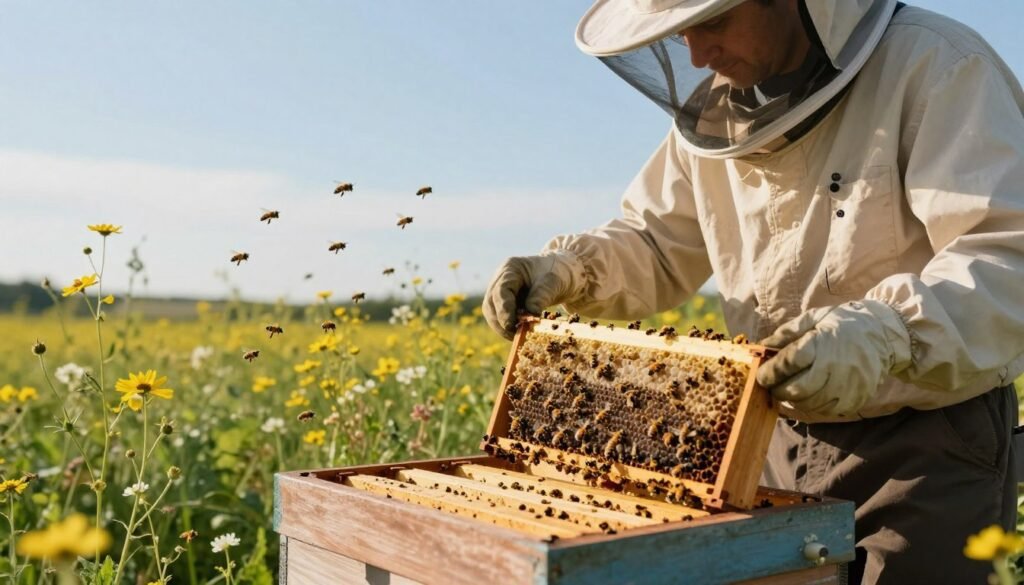
Local clubs and mentors speed practical learning. Working with experienced keepers helps you read colony signals, check honey stores, and make better decisions about feeding and foraging.
Keep learning year-round. Read widely, attend meetings, and study how honey stores develop, for example the guide on how honey matures inside the comb. Continuous education strengthens your ability to protect the queen, maintain healthy brood areas, and guide colonies into winter.
“Investing in your education is the best way to ensure long‑term hive success.”
- Certification enhances management and credibility.
- Mentoring accelerates practical skills.
- Ongoing study protects colony health and productivity.
Conclusion
Clear signals from the hive let a keeper know when to feed, treat, or rebalance to protect winter strength.
Watch regularly, act quickly, and keep records. Inspect frames and note the queen’s laying and worker activity. Early observation can prevent major losses and preserve stores.
Supplemental feeding and timely Varroa control are essential steps to prepare colonies for cold months. Learn how resource gaps affect colonies at dearth and colony impact and review signs of chilled brood at identifying chilled brood.
Stay curious and keep learning. Certification, mentors, and steady practice will help you read environmental cues, support the queen and workers, and guide hives to a strong spring.
FAQ
What drives colony decline when nectar sources dry up in late summer?
When local blooms finish, foragers bring in less food. Worker numbers fall, eggs receive less care, and the queen may slow laying. Reduced pollen and nectar intake forces the colony to shrink adult population and conserve stores, increasing vulnerability to pests and cold as the year progresses.
When does a typical nectar dearth occur and how long does it last?
Timing varies by region but often hits midsummer to early fall. A dearth can last days to several weeks, depending on weather and available floral resources. Beekeepers should monitor local bloom calendars and weekly hive weight to detect flow changes quickly.
How does a nectar shortage change foraging behavior?
Foragers make longer trips and visit fewer flowers. They concentrate on remaining sources, which raises competition and can increase robbing risk. Worker mortality from distance and stress rises, lowering the colony’s ability to replace aging bees.
What biological effects does resource scarcity have on developing young?
Larval growth slows when nurse bees have less pollen and nectar to process into jelly. Brood development can stall, capped cells may shrink, and the colony may reduce egg laying to match available food, risking lower spring population if recovery is delayed.
How can I tell if the queen has reduced egg laying during a dearth?
Look for fewer eggs and young larvae across frames and increased empty cells where eggs should appear. The pattern may show clustered areas of brood separated by empty comb. Always inspect at intervals of several days to distinguish a temporary lull from lasting decline.
What signs point to queen health problems impacting colony stability?
Spotty or absent egg laying, inconsistent brood age, and poor brood capping suggest queen issues. Reduced pheromone output can change worker behavior. Consider queen replacement if problems persist after short-term stress or if you observe drone-laying or few viable eggs.
How can I support worker longevity during prolonged stress?
Provide steady carbohydrate and protein sources to reduce forager strain. Keep hive entrances small, maintain good ventilation, and control pests like Varroa. Healthy nutrition reduces pre-foraging mortality and helps workers live long enough to care for brood.
What are winterized worker phenotypes and why do they matter?
Winterized workers have longer lifespans and more fat stores to survive cold months. If a dearth forces the colony to raise many short-lived summer phenotypes late in the season, the hive may lack winter-capable bees and face higher winter losses.
How do I assess hive food stores quickly and reliably?
Weighing hives on a scale gives real-time data. For a hands-on check, lift the back of the hive box to sense weight and inspect frames for honey and capped stores. Record findings weekly during dearths to guide feeding decisions.
When should I feed sugar syrup versus fondant or candy boards?
Use sugar syrup in spring and early fall when brood is present and liquid food is needed. Switch to fondant or hard candy heading into winter to avoid fermentation and moisture. During hot dearths, fondant reduces robbing risk and hive humidity problems.
How can I reduce the chance of honey robbing when resources are scarce?
Reduce hive entrances, use entrance reducers and bee guards, avoid spilling syrup, and move feeding sites away from hives. Consider daytime feeding and close supervision. Strong colonies are less likely to be victims, so bolster weak hives promptly.
What Varroa management steps are best when colonies are weakened by low forage?
Monitor mite levels with alcohol or sugar rolls and treat if thresholds are exceeded. Use low-stress options like formic acid or oxalic acid timed for broodless windows. Controlling mites helps maintain worker health and improves recovery after a dearth.
What environmental cues do honey bees use to regulate brood rearing?
Bees respond to nectar and pollen flow, temperature, and queen pheromones. Reduced foraging rewards and colder nights trigger nurses to cut brood production. Beekeepers can mimic positive cues by supplying feed and warmth to encourage steady rearing.
When should I rebalance frames between strong and weak colonies?
Move frames of pollen and honey to at-risk hives during a dearth, but avoid transferring excessive brood if the recipient lacks nurses. Rebalancing helps even food distribution and supports development without provoking robbing or queen stress.
How should I prepare hives for the transition from summer dearth to cooler weather?
Consolidate weak colonies, provide adequate winter stores, reduce entrance size, and ensure insulation and ventilation. Schedule Varroa treatments while brood levels allow. Preparing early reduces late-season losses and improves spring buildup.
What certifications or courses help beekeepers manage colonies during resource shortages?
Look for programs from the Entomological Society of America, state beekeeping associations, and university extension services. Workshops on integrated pest management, nutrition, and hive monitoring teach practical skills for handling dearths and seasonal stress.