Get the right varieties flowering together so your fruit trees reach peak production. In New York, the season begins in mid-late April with apricot flowers and runs to early June when final apple blooms fade. This guide helps you match trees by bloom period and weather needs.
Successful fruit set depends on overlap. A tree often needs pollen from a different variety of the same species. Choose compatible apple varieties and avoid relying on a single golden delicious if it blooms at the wrong time.
Account for local weather conditions and bees’ activity. Triploid varieties need special attention because they cannot supply viable pollen. Whether planting new apple trees or managing an existing plot, synchronized flowering boosts consistent fruit production.
Key Takeaways
- Match compatible varieties so flowers overlap and pollen transfers succeed.
- Plan for New York’s mid-April to early-June flowering window.
- Watch weather conditions—cold snaps can disrupt fruit set.
- Avoid relying on triploid varieties as sole pollinators.
- Keep bees active during the critical flowering period for best results.
The Importance of Orchard Pollination Bloom Timing Checklist
Successful fruit set begins when compatible trees flower at the same window, letting bees move pollen between varieties so flowers can be fertilized and form seeds.
Proper pollination is the basic requirement for fruit production. Without pollen transfer, an apple tree will fail to develop its crop.
Many fruit trees are not self-fruitful. They need a companion variety in bloom at the same time. If one apple tree flowers while its partner is closed, those flowers produce no fruit.
Keep compatible apple trees within 100 feet to boost bee visits and pollen movement. Monitor trees during the peak period to confirm overlap.
- Match compatible varieties and bloom groups for effective pollination.
- Plant apple trees close and monitor flowers daily during the critical weeks.
- Use reliable references like fruit tree bloom charts and select nectar-rich species to attract bees (best nectar-producing trees).
| Key Factor | Why It Matters | Practical Tip |
|---|---|---|
| Overlap of flowers | Allows pollen transfer between varieties | Choose compatible apple trees in similar bloom groups |
| Distance between trees | Shorter distance increases bee visits | Keep trees within 100 feet when possible |
| Bee activity | Bees carry pollen to receptive flowers | Plant nectar sources and avoid spraying during the period |
Understanding Bloom Groups and Compatibility
Grouping apple trees by their flowering window makes cross-pollination much more reliable. Defining these windows helps you match varieties that open their flowers at the same time so pollen can move between trees.
Defining Bloom Windows
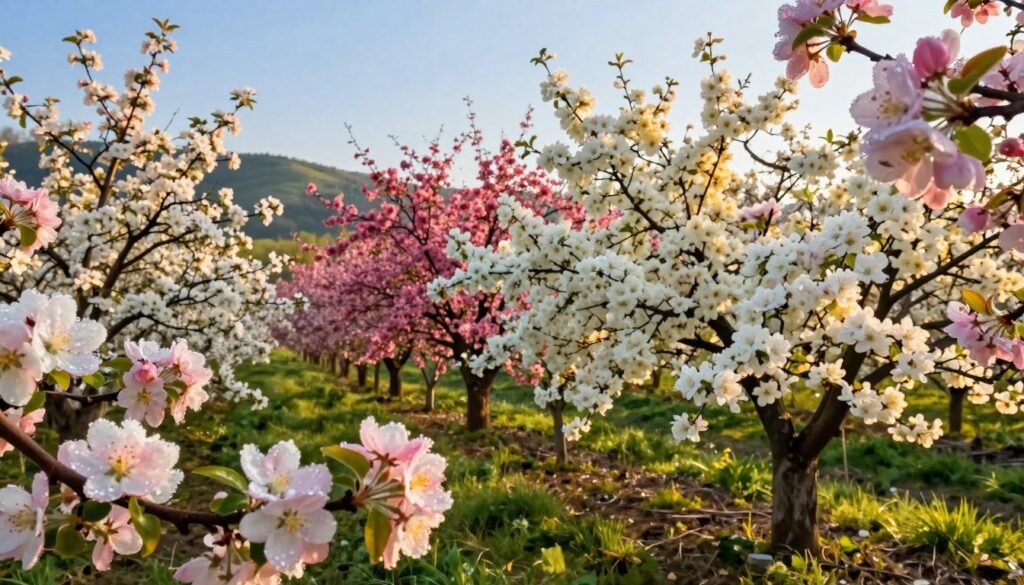
Apple bloom is commonly divided into five groups, from Group 1 (earliest) to Group 5 (latest). Each group represents a roughly three-week window.
Classifying your apple tree into one of these groups simplifies planning. Trees in adjacent groups often overlap, providing a buffer when weather shifts.
Identifying Compatible Varieties
Do not pair a Group 1 variety with a Group 5 variety; their bloom times rarely overlap and fruit set will fail.
Effective pollination depends on overlap. Choose at least one reliable pollen source that flowers when the primary apple tree is open.
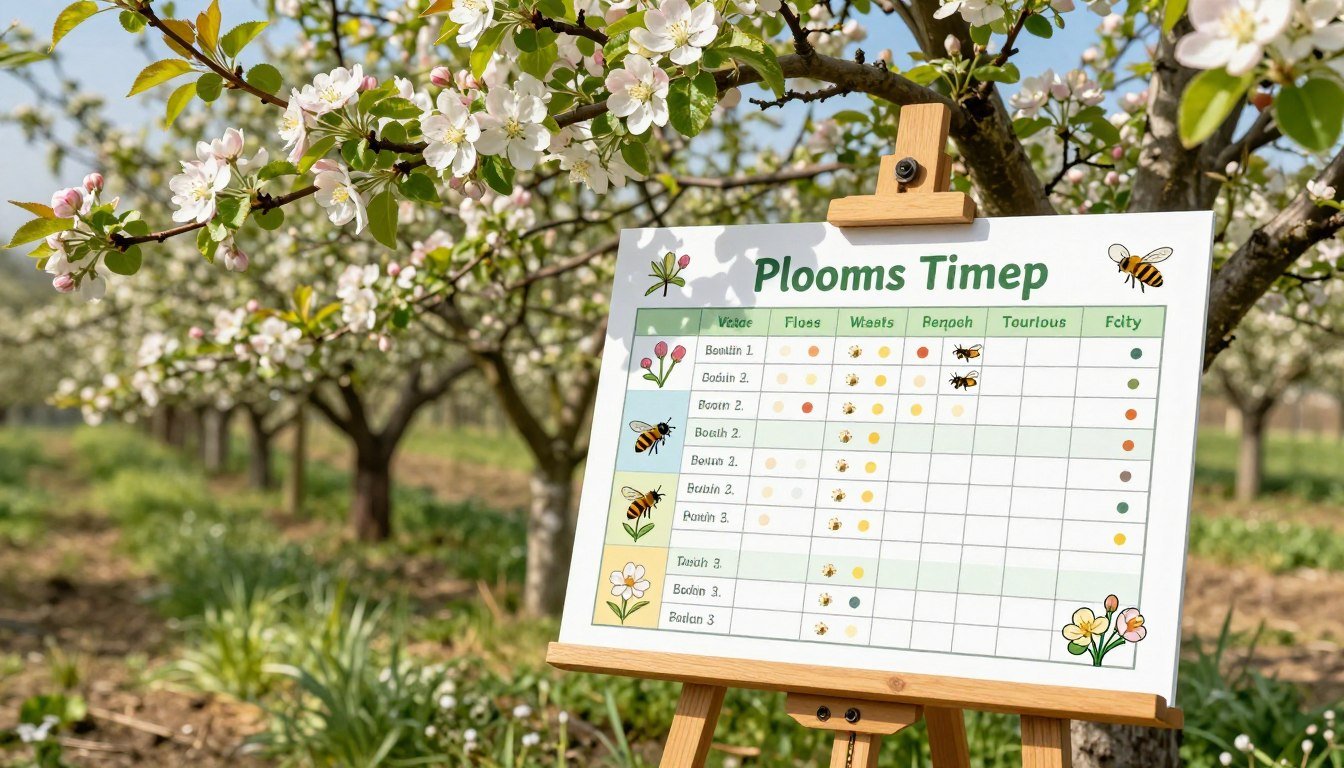
Use a variety bloom chart like fruit tree bloom charts to visualize sequence and ensure bees visit a concentrated period of flowers for stronger fruit production.
Managing Apple Tree Bloom Periods
Managing when apple trees open their flowers lets you plan reliable crosses and steady yields. This section shows how to sort varieties and fill gaps so bees transfer viable pollen during the main flowering window.
Categorizing Bloom Groups
Classify apples into five groups to simplify planning. Each group spans about three weeks, and most varieties only flower for roughly one week within that window.
Use a variety bloom chart to place each tree and predict overlap. That visual makes scheduling and plant selection easier.
Avoiding Incompatible Pairings
Never pair a Group 1 tree with a Group 4 or 5 if you expect good fruit set. Short overlaps mean flowers miss compatible pollen.
Watch temperatures; cold snaps can shift bloom time and break planned overlaps.
Utilizing Mid-Season Pollenizers
Introduce one or two mid-season varieties to bridge early and late types. A golden delicious often works, but always confirm overlap.
Remember triploid varieties need two different pollen sources. For layout tips and seasonal care, see an apple tree in spring guide and how to make your site pollinator-friendly.
Strategies for Pear and Plum Pollination
Effective fruit set in pears and plums starts with where and how you plant each variety. A clear planting plan reduces gaps in pollen transfer and helps bees move between compatible trees.
Optimizing Pear Orchard Layout
Group pear types close together so European and Asian pears share a concentrated patch of flowers. Asian pears such as 20th Century and Hosui commonly match European varieties and often open at the same time.
Because pear flowers attract fewer bees than apple flowers, place bee boxes in the area during the bloom period to boost activity. The pear flowering window is usually short, so close planting of several pear varieties raises the chance that pollen is available when flowers are receptive.
- Keep compatible varieties near each other to concentrate flowers and encourage bee movement.
- Separate European and Japanese/hybrid plum blocks—those groups do not cross-pollinate well.
- Use reliable pollenizers like Santa Rosa and Bubblegum/Toka for Japanese/hybrid plums and plant multiple varieties of the same type.
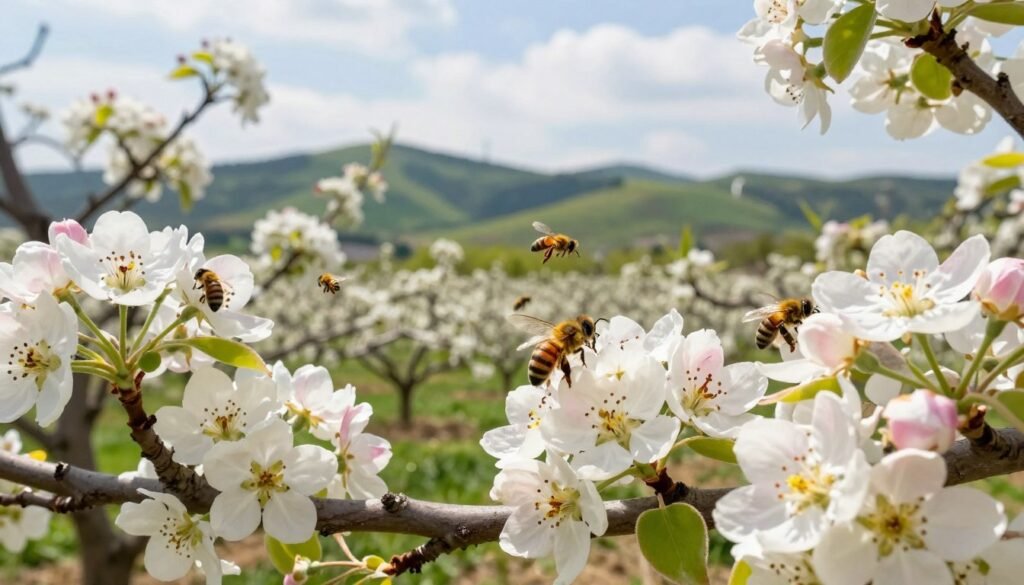
For a visual guide to variety overlap and to plan planting, consult a trusted fruit tree bloom chart and review resources on the best trees for bees to boost bee visits during the critical period.
Navigating Sweet Cherry Bloom Sequences
Managing sweet cherry bloom sequences starts with selecting self-fruitful varieties that cover gaps in flowering. Varieties like Lapins, Skeena, and BlackGold often act as reliable pollen sources for many sweet cherries.
Do not rely on tart cherries as pollenizers; their bloom period usually runs later than sweet cherry trees and can miss overlap. When adding a new sweet cherry tree, always confirm its bloom time against your current varieties to avoid mismatches.
Begin with at least one self-fertile tree to guarantee some fruit even if weather conditions shorten the flowering period. Track bloom periods with a simple sequence chart so you can see overlaps at a glance.
- Choose self-fruitful varieties to bridge gaps between other trees.
- Avoid pairings that sit at opposite ends of the bloom period.
- Design block placement so bees can move easily between different varieties during flowers’ receptive days.
For ground-level planting that supports bees and tree health, review tips on best ground cover plants for apiaries. Proper layout and the right varieties boost fruit set and deliver consistent yields.
Environmental Factors Influencing Bloom Success
Late spring frosts can wipe out open flowers in a single night, turning a promising season into a low-yield year.
A late frost is any freezing temperature during the bloom period that damages delicate flowers and halts fruit set. Understanding local weather and microclimates helps you reduce risk.
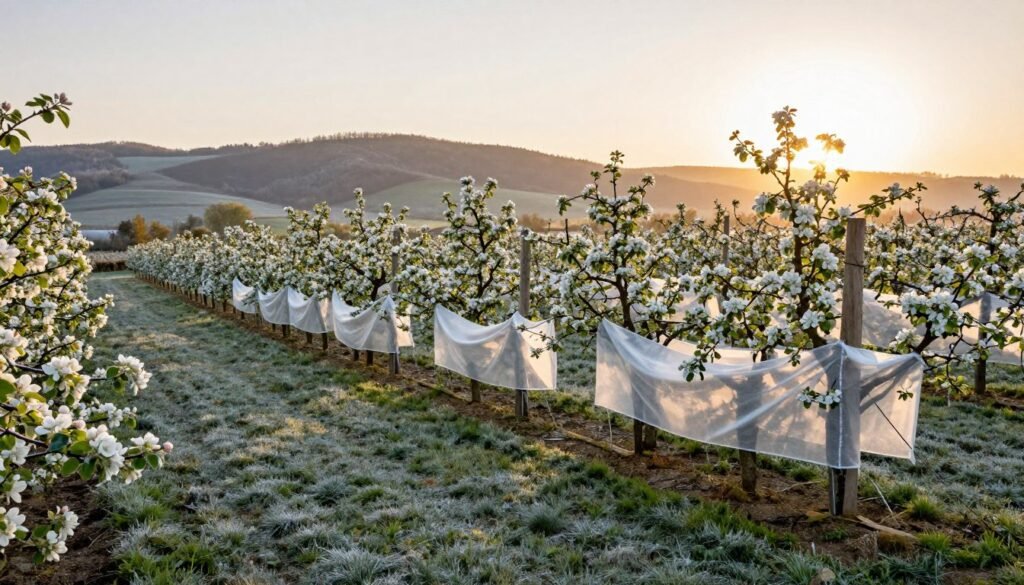
Mitigating Frost Damage During Bloom
Choose varieties with later bloom times when your region has unpredictable spring freezes. Planting later apple varieties or pears at slightly higher elevations can avoid the worst nights.
Site selection matters. Sunny slopes warm sooner, and wind exposure can reduce frost pockets. Group apple trees and other species to concentrate heat and improve bee activity when flowers open.
- Monitor forecasts: watch nightly lows during the critical bloom periods and act early.
- Use protective measures: row covers, orchard heaters, or wind machines for larger blocks.
- Plan plantings: match apple varieties and tree placement to local weather conditions to raise the odds of set fruit.
For practical steps during flowering, review best practices for active hives and bee care at best practices during bloom. For regional climate guidance when selecting sites or trees, see regional climate profiles.
Conclusion
Consistent fruit yields come from planning variety pairs that open at the same time. Choose compatible trees so flowers overlap and insects can transfer fertile pollen between them.
Use the checklist to select varieties that match your local climate and to place at least one reliable diploid partner near triploids. Remember that late frosts and cold snaps can undo careful planning, so favor varieties suited to your microclimate.
Monitor trees during the critical weeks and adjust care based on what you see. For deeper guidance on apple pairing and bloom groups, read understanding apple pollination.
Stay observant and keep learning—small, timely actions during spring make the difference between a sparse season and a full harvest.
FAQ
What is the best way to stagger flowering among apple varieties for reliable fruit set?
Plant a mix of early, mid-season, and late varieties so flowering overlaps. Choose compatible cultivars such as ‘Gala’ (early), ‘Honeycrisp’ (mid), and ‘Fuji’ (late). Place pollinizer rows within 50 feet of main blocks and maintain bee habitat to ensure active pollen transfer during the overlapping period.
How do I identify compatible varieties for effective cross-pollination?
Use bloom group charts from extension services to match varieties in the same or adjacent bloom windows. Also check for self-fertility: some cultivars like ‘Golden Delicious’ pollinate others well, while triploid varieties such as ‘Bramley’ need two compatible diploid partners.
What are bloom groups and why do they matter?
Bloom groups categorize trees by when their flowers open, typically early, mid, or late. Accurate grouping helps growers select trees that flower simultaneously so bees can transfer viable pollen, increasing fruit set and uniformity.
How can I protect flowers from late spring frost?
Use frost fans, wind machines, or orchard heaters where feasible. Another tactic is to encourage delayed bloom by holding back nitrogen or using irrigation to cool buds before a freeze. Plant frost-tolerant rootstocks and choose sites with good air drainage to reduce risk.
Do pear and plum trees need different pollination strategies than apples?
Yes. Many pear varieties require cross-pollination and bloom at different times than apples. Plums can be more varied—European plums often self-fertile, while Japanese plums usually need cross-pollinators. Match varieties by bloom overlap and consider separate bee placement for mixed blocks.
How should I place mid-season pollenizers in an orchard?
Interplant mid-season pollenizers throughout the block at a ratio of about one pollenizer row for every six to eight main variety rows, or every fourth or fifth tree within a row. This keeps pollen sources near all trees and boosts bee traffic across varieties.
What role do bees and other pollinators play in flowering success?
Honey bees and wild pollinators transfer pollen between flowers during the effective pollination window. Maintain hives at recommended stocking rates, provide floral diversity and nesting habitat, and avoid insecticides during bloom to protect pollinator activity.
How do weather conditions affect flowering and fruit set?
Warm, calm days speed flowering and promote bee activity; cold or wet weather delays opening and reduces pollinator flight. Extended cool spells can shorten overlap between varieties, lowering fruit set. Monitor forecasts and use protective measures when late freezes threaten open flowers.
What special considerations apply to sweet cherry bloom sequences?
Sweet cherry varieties often have tight, short bloom windows and many require specific compatible partners. Avoid planting only one cultivar; instead include at least one proven pollinizer like ‘Bing’ with ‘Stella’ or ‘Lapins’ based on compatibility charts to assure overlap.
Are triploid varieties problematic for pollination planning?
Triploids produce little or no viable pollen, so they cannot pollinate others. They still require two fertile diploid partners that bloom at the same time. Plan orchard layouts to ensure triploids are adjacent to compatible pollen-producing varieties.
How can I optimize layout for pears to improve pollination efficiency?
Alternate rows of compatible pear cultivars or interplant pollinizers every few trees. Ensure varieties have overlapping flowering periods and provide adequate hive placement. Some pears also benefit from crabapple nearby as a pollen source if timing matches.
What should I do if two varieties flower at different times each season?
Consider grafting compatible scions onto existing trees to create in-row pollenizers, introduce different cultivars with more reliable overlap, or adjust cultural practices like pruning and irrigation to slightly shift flowering time. Monitor yearly weather trends to refine choices.
Can pruning influence flowering period and overlap?
Yes. Pruning intensity and timing affect bud development and bloom timing. Heavier pruning can stimulate earlier flowering while delayed pruning may slow bloom. Use pruning to balance vigor and adjust bloom synchronization across varieties when needed.
How do I measure effective overlapping bloom period for fruit set?
Track bloom stages—green tip, tight cluster, full bloom—and record dates for each variety annually. Effective overlap means multiple varieties reach full bloom within several days of each other under typical conditions, allowing pollinators to transfer fresh pollen.
Are there management practices to increase fruit set after poor initial pollination?
If pollination was weak, consider managing crop load with thinning to improve fruit quality on set fruit. For future seasons, increase bee density, add supplemental pollenizers, improve habitat for wild pollinators, and adjust planting plans to enhance overlap and compatibility.