Pollinators in the United States face rising pressures from habitat loss, pesticides, and disease. Adding well-chosen trees to your garden multiplies floral resources by offering masses of blossoms from a single canopy during spring and summer.
Trees like basswood, magnolia, serviceberry, and black locust produce nectar and pollen at scale, serving as reliable food sources when insects need energy and protein. This long-form listicle curates species that work across U.S. climates to help homeowners, land managers, and community groups make high-impact planting choices.
Trees complement flowering plants and perennials to create layered habitat for honey bees and wild pollinators alike. The guide also aligns species to regions and site conditions, and points to practice-based tips so new specimens establish quickly and deliver floral resources year after year.
For regional planting and shrub-to-tree guidance, see this practical resource from Oregon State University: shrubs and trees that support pollinators.
Key Takeaways
- Trees provide concentrated bloom and large quantities of nectar and pollen.
- Choosing region-appropriate species reduces maintenance and boosts success.
- A mix of early, peak, and late bloomers ensures continuous forage through the year.
- Both honey bees and native pollinators benefit from tree-rich landscapes.
- Planting trees complements gardens and helps build resilient community canopies.
Why trees matter for bees and pollinators in the United States
A single mature canopy can supply weeks of forage, concentrating blooms that feed many pollinators at once. Nectar fuels flight and daily activity, while pollen provides the protein that brood need. Together, these floral resources make large flowering plants vital food engines for insects.
Many species — from honey bees to bumblebees and sweat bees — can gather huge rewards from one tree crown. The sheer volume of blossoms lets bees forage efficiently, reducing energy spent traveling between scattered flowers.
Timing matters. Early willow catkins and serviceberry blooms bridge gaps when colonies and queens are most vulnerable. Trees with extended bloom windows also help stabilize nutrition across variable weather and year-to-year swings.
Flowering canopies complement beds and meadows by adding vertical layers of bloom in urban spaces, parks, and schoolyards. Planting a mix of species and bloom periods spreads risk and supports a wider range of pollinators with different feeding habits.
For practical guidance on integrating tree-based forage and site management, see this management resource.
34. best trees for bees USA: nectar-rich, bee-loved flowering trees to plant now
Early-blooming canopy species give pollinators a vital food boost when few other flowers are open. Planting a mix of spring and summer bloomers fills seasonal gaps and supports both wild insects and managed colonies.
Early spring bloomers for vital pollen and nectar
Serviceberry (Amelanchier spp.) opens with delicate white flowers that many bees visit. Its fruits later feed birds and add seasonal interest.
Redbud, willow, and orchard allies
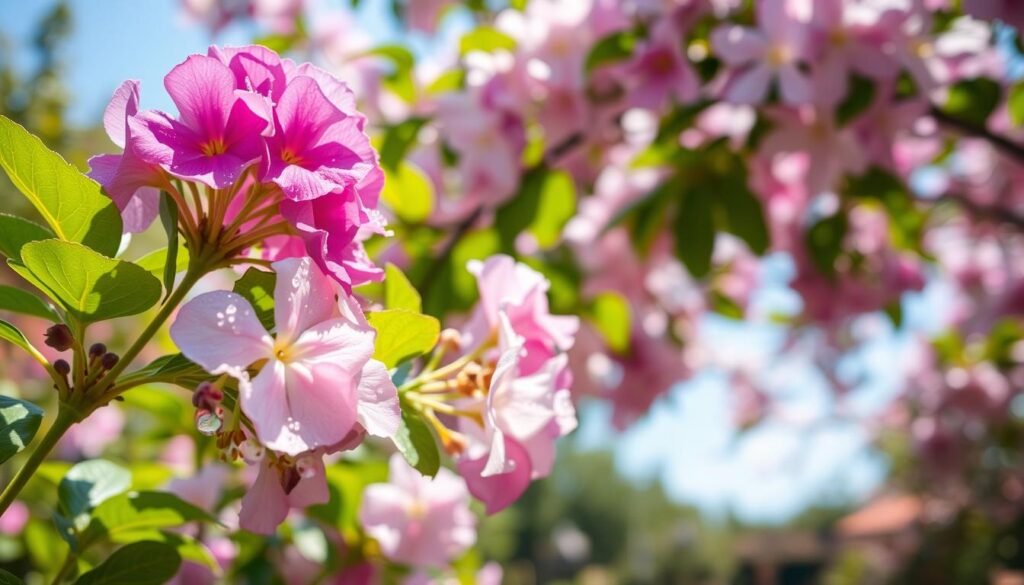
Eastern redbud offers magenta blossoms on twigs and trunk that supply early forage. Willows (Salix spp.) produce catkins rich in pollen and some nectar, ideal near wet ground. Fruit and crabapple (Malus, Prunus) give massed spring flowers attractive to honey bees and native pollinators.
Mid- to late-spring and summer standouts
American basswood and littleleaf linden bloom in clusters of fragrant yellow flowers that draw intense activity. Tulip tree and magnolia provide large, fragrant flowers, while black cherry supports moths and butterflies. Later, black locust and sourwood yield notable varietal honey; tupelo and catalpa extend nectar into summer.
| Species | Flower color | Peak season | Notes |
|---|---|---|---|
| Serviceberry | White flowers | Early spring | Bird fruits; widespread range |
| Willow | Yellow/green catkins | Very early spring | Great near streams; pollen-rich |
| Basswood / Linden | Yellow flowers | Mid spring | Fragrant clusters; bee magnet |
| Black locust & alternatives | Creamy white clusters | Late spring | High nectar; regional Robinia available |
For deeper plant choices and regional tips, see this bee-friendly plant guide and a practical tree-focused compilation.
Match trees to your region, space, and site conditions
Picking the right specimen for your yard makes each planting more effective and easier to manage. Consider soil, moisture, mature size, and bloom timing to support local bees and reduce maintenance.
Eastern and Mid-Atlantic choices
American basswood, tulip tree, black cherry, and serviceberry suit wide range sites and provide steady spring forage. These species adapt across much of the eastern range and perform well in mixed gardens.
Southeast picks
Southern and sweetbay magnolia bring large spring blooms; sourwood yields early-summer nectar; tupelos thrive in swampy soils. Match heat tolerance and moisture when siting specimens.
Southwest and West options
California redbud and Saskatoon serviceberry fit arid or cooler western slopes. New Mexico locust is a regional alternative with good nectar value.
Urban and tough sites
Black locust shows remarkable toughness on compacted lots, but consider non-invasive Robinia where spread is a concern. Plant willow along drainage swales to front-load early spring resources.
- Evaluate canopy spread and roots so a tree fits available space.
- Match pH and drainage—sourwood prefers acidic, tupelos handle occasional flooding.
- Mix variety in height and bloom to help more pollinators over time.
For localized plant lists and planting tips, see this native bee-friendly plants guide.
Bloom calendar planning: support bees from early spring through summer
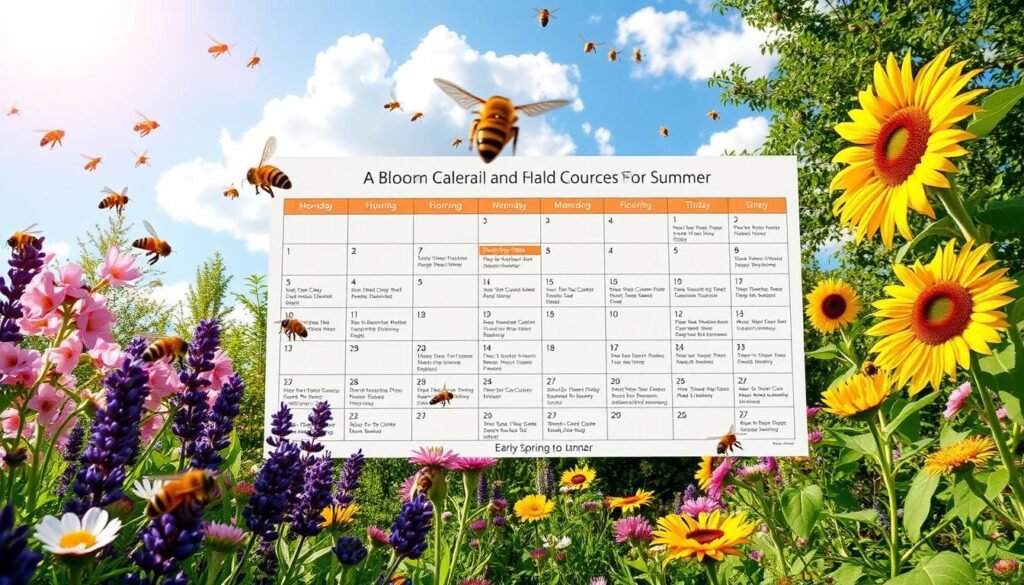
Plan blooms across the season so pollinators always find food when they need it most.
Nectar fuels flight and daily activity, while pollen supplies protein for brood. Aim to include both each season so honey colonies and solitary bees get energy and building blocks at the right time.
Nectar vs. pollen: why both matter for honey bees and native pollinators
Nectar gives quick calories; pollen gives lasting nutrition. Provide trees that offer each resource so workers can forage and feed larvae without long trips.
Include species with different flower shapes to help short- and long-tongued bees. This diversity improves resilience if weather shortens one period of bloom.
Suggested succession mix by time
Build an early spring foundation with willow catkins and serviceberry to feed emerging queens and expanding colonies.
Target a spring peak using lindens and crabapples for fragrant, nectar-dense bloom and massed flowers that attract many bee guilds.
Extend into summer with sourwood, tupelo, and catalpa to maintain foraging and produce specialty honey flows.
| Period | Key species | Primary reward | Planting note |
|---|---|---|---|
| Early spring | Willow, Serviceberry | Pollen, some nectar | Plant near water; protect early buds |
| Spring peak | Linden, Crabapple, Cherry | High nectar & pollen | Site for sun and pollinator access |
| Summer | Sourwood, Tupelo, Catalpa | Nectar-rich | Include swamp-edge or deep-soil species |
| Strategy | Mixed genera & sizes | Continuous nectar pollen | Neighborhood planning reduces gaps |
Track bloom and bee activity each year and adjust species mix. For seasonal planting tasks and timing guidance, consult this seasonal beekeeping guide and a regional conservation plan like this pollinator support resource.
Pollinator-safe planting and care tips for a thriving, bee-friendly garden
Protecting pollinators starts with simple planting and care choices that keep blooms safe and abundant.
Pesticide-free practices and timing
Set a firm pesticide policy: avoid insecticides and fungicides on flowering plants. Never spray trees when flowers are open or when bees are active.
Spot-treat pests by hand or use targeted, non-toxic options outside of bloom time to protect honey bees and native pollinators.
Right tree, right place
Match soil, moisture, and canopy size to your site so new plants establish quickly and bloom reliably.
Place willows in wet swales and pick drought-tolerant species for dry beds. Allow enough space from buildings and lines to avoid future conflicts.
Maintenance that maximizes bloom
Water young trees deeply during the first two growing seasons and mulch to conserve moisture without burying the trunk flare.
Prune spring-flowering species right after bloom to protect next year’s flower buds. Favor single flowers with accessible nectaries over doubled cultivars.
- Monitor leaves and overall foliage health; strong foliage supports regular flower production.
- Save seed or choose reliable cultivars that balance ornament with food value.
- Build diversity across genera and bloom times to lower risk from pests, disease, or weather in any single year.
- Coordinate plantings with neighbors to create connected foraging space and steady food across the season.
| Care action | When to do it | Benefit to pollinators |
|---|---|---|
| Pesticide avoidance | Year-round; never during bloom | Prevents acute and chronic harm to bees |
| Deep watering & mulching | First 2 seasons; during dry spells | Helps trees set blooms and provides steady nectar |
| Prune after bloom | Immediately post-flower | Preserves next year’s flower buds and structure |
| Plant siting | At planting time | Ensures long-term bloom and reduces maintenance |
Conclusion
Choosing trees that present massed flower clusters and fragrant flowers helps local pollinators find food quickly.
Tilia americana and T. cordata, Liriodendron tulipifera, Amelanchier spp., and Nyssa spp. offer yellow flowers, white flowers, and nectar-rich flowers that yield rich nectar and notable honey flows.
Bees love specimens with large clusters because a single crown feeds many individuals and supports both solitary bee and social colony success. Serviceberry fruits feed birds while black cherry and other Prunus act as host plants for butterflies and moths.
Pick a variety of species suited to your range and microclimate. Select two to three names to plant this spring, verify botanical name at local nurseries, and share observations so neighbors learn which flowers and clusters perform best.
FAQ
What trees bloom earliest to feed bees in spring?
Early bloomers include willows (Salix spp.), serviceberry (Amelanchier spp.), and eastern redbud (Cercis spp.). Willows produce catkins rich in pollen and some nectar, while serviceberry and redbud offer accessible flowers that support honey bees and native pollinators during lean early-spring weeks.
Which flowering trees produce abundant nectar for honey production?
Trees known for high nectar production include black locust (Robinia pseudoacacia), basswood or linden (Tilia spp.), tupelo/black gum (Nyssa spp.), and sourwood (Oxydendrum arboreum). These trees can support strong honey flows when they bloom regionally and under favorable weather.
Are there native tree options for hot, dry western sites?
Yes. Consider regional choices like New Mexico locust (Robinia neomexicana) and California redbud. These species tolerate heat and lower moisture and still provide flowers attractive to bees and other pollinators.
What fruit trees help pollinators and also provide food for people and birds?
Fruit and crabapple trees (Malus and Prunus species) offer abundant spring flowers that feed honey bees and native bees. Later they produce fruit and berries that support birds and other wildlife, adding ecological value to the landscape.
How do I plan a bloom calendar to support bees from spring through summer?
Use succession planting: early bloomers like willow and serviceberry, spring peak bloomers such as linden and crabapple, and summer nectar sources like sourwood, catalpa, and tupelo. Mix species with overlapping bloom times to keep nectar and pollen available continuously.
Can large trees such as tulip tree or southern magnolia be planted in urban yards?
Tulip tree (Liriodendron tulipifera) and southern magnolia (Magnolia grandiflora) can thrive in urban yards if you have space and suitable soil. Consider mature canopy size, root spread, and local site conditions before planting. Smaller cultivars or alternative species may suit tight spaces better.
What maintenance helps trees produce more flowers for pollinators?
Proper siting, regular watering for young trees, and pruning at the right time improve bloom. Avoid heavy pruning during heavy flowering years; remove dead wood and thin crowded branches in late winter to encourage spring blooms. Diversity of species reduces the risk of total crop failure.
Are there risks of planting non-native Robinia like black locust?
Black locust offers high nectar but can be invasive in some regions. Choose regional alternatives such as New Mexico locust or use non-invasive cultivars where available. Check local extension guidance before planting to balance pollinator benefits with ecological safety.
How should I protect bees when I need to manage pests on flowering trees?
Never spray systemic or contact insecticides while trees are in bloom. Use integrated pest management: monitor pests, apply targeted treatments in dormant seasons, choose bee-safe products, and favor cultural controls. Timing and product choice keep pollinators safe.
Which trees attract both bees and beneficial insects like butterflies and moths?
Many nectar-rich trees also support butterflies and moths. Examples include black cherry and other Prunus species, catalpa (which supports caterpillars), and Southern magnolia. Planting a mix enhances habitat for multiple pollinator and beneficial insect species.
How do soil and moisture influence tree selection for pollinators?
Match trees to site conditions. Willows and tupelo prefer moist soils and riparian areas. Sourwood and black cherry tolerate well-drained upland soils. Correct matching reduces stress, promotes better flowering, and increases nectar and pollen production for bees.
Can small yards still support pollinators with trees?
Yes. Choose smaller species or columnar cultivars like serviceberry, littleleaf linden (Tilia cordata), or compact crabapples. Even one well-placed flowering tree provides substantial forage for honey bees, bumble bees, and native pollinators in urban gardens.
What are good tree choices for the Southeast with heat and humidity?
In the Southeast, consider sweetbay magnolia (Magnolia virginiana), sourwood, and tupelo (Nyssa spp.). These species tolerate regional heat and moisture and deliver important nectar flows during late spring and summer.
How do I avoid repeating the same species too often in a landscape?
Aim for diversity: combine early, mid, and late bloomers from different genera to reduce pest and disease risk and ensure continuous forage. Planting multiple species also benefits a wider range of pollinators, butterflies, and birds.
Where can I find local recommendations for tree species and cultivars?
Consult your state university extension, local native plant societies, or USDA plant hardiness and range maps. These resources provide region-specific guidance on suitable nectar-rich trees and non-invasive alternatives.