Published March 31, 2026 · Last Updated August 26, 2026
Managing entrance flow is a low-cost, effective step beekeepers use to help a hive regain balance. Small adjustments to the hive entry can improve defense, cut heat loss, and steady airflow while bees work to rebuild population and health.
Foxhound Bee Company notes that entrance reducers are a common tool to control ventilation and internal temperature. A well-chosen reducer helps limit robbing and lowers stress on the queen and workers during winter or after population loss.
Practical tip: learn when to change an entrance by matching access to your colony’s activity. Read guidance on timing and adjustments at when to add or remove an entrance.
Key Takeaways
- Entrance control helps maintain hive heat and ventilation.
- Smaller entrances can reduce robbing and pest access.
- Adjust access as population and season change.
- A proper entrance frees more bees to forage and care for brood.
- Use reducers alongside other tools for better defense and health.
Understanding the Role of Entrance Reducers
A simple strip or disc at the hive entrance can greatly change how bees defend and ventilate their home. This small adjustment is a practical tool beekeepers use to shape traffic, reduce stress, and keep heat where it helps developing brood.
The Purpose of Entrance Control
Entrance control gives a steady hole for bees to come and go while the population shifts. Beginner kits often include a thin wooden bar with notches that lets beekeepers tune that access as activity changes.
Disc-style equipment offers multiple settings. A plastic disc can act as a quick queen excluder or close the hive for ventilation management.
“A right-sized entry helps guards work efficiently and keeps robbers at bay.”
Natural Entrance Preferences
Bees prefer a predictable, defensible entry. Narrower ports help guards spot intruders and make it easier to regulate airflow through frames and brood areas.
Practical note: match the tool to your hive’s traffic and the season. Good entrance choices support long-term honey production and colony recovery.
Why Weak Colonies Require Specific Entrance Management
A narrowly controlled entrance makes it easier for a depleted hive to hold ground against robbers. When bee numbers fall, guards thin out and the entrance becomes a weak point. Predators and stronger hives can exploit that gap during warm months.
Beekeepers must act to support these hives. Installing an entrance reducer gives a steady, defensible port that keeps heat and activity stable. This controlled access lowers stress on the queen and workers.
A smaller port also cuts the number of guards needed. That lets more bees leave to forage and tend brood. Over time, this focus can help a colony rebuild numbers and produce honey again.
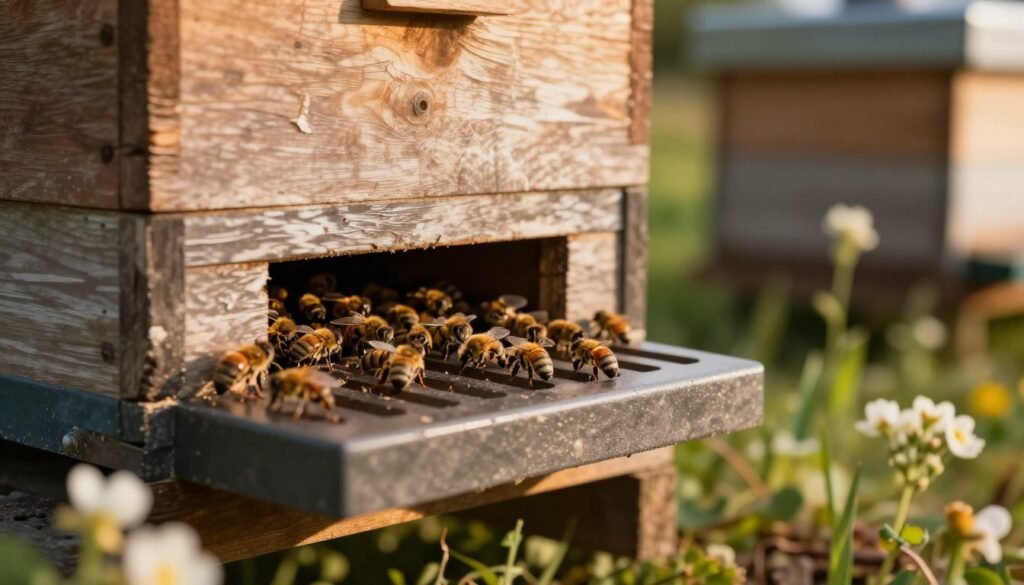
“A consistent, manageable entry gives a small hive the best chance to recover.”
Simple maintenance and timely adjustments are proactive steps any beekeeper can take. Learn more about modular approaches by reading using modular entrance reducers effectively.
| Challenge | Effect on Hive | How a Reducer Helps |
|---|---|---|
| Robbing by other hives | Loss of stores and brood | Creates a single defensible point |
| Low guard numbers | Poor defense and airflow imbalance | Reduces guards needed and stabilizes heat |
| High stress in summer | Reduced foraging and brood care | Frees bees to forage and maintain brood |
Determining the Ideal Reducer Opening Size for Weak Colonies
Small adjustments at the front of the hive can keep brood warm and reduce the workload on a shorthanded guard force.
Aim to limit heat loss while keeping enough ventilation so bees can move and exchange air. A properly set entrance reducer keeps internal temperature steady during brood rearing.
Monitor the entrance daily in spring and fall. Watch for congestion at peak flight times and adjust if traffic stalls. Let guards work without chasing intruders across a wide face.
Tip: a narrow port helps a small colony defend stores and frees more workers to care for brood and gather honey.
Beekeepers should check growth and widen the slot as numbers rise. Learn practical timing at when to add or remove an entrance.
| Metric | Recommended Setting | Why it helps |
|---|---|---|
| Early spring traffic | Very narrow | Reduces heat loss and limits robbing |
| Brood rearing phase | Moderate gap | Balances warmth and ventilation |
| Growing population | Wider port | Prevents congestion and stress |
| High forage season | Open | Allows free foraging and pollen return |
Benefits of Using a Physical Chokepoint
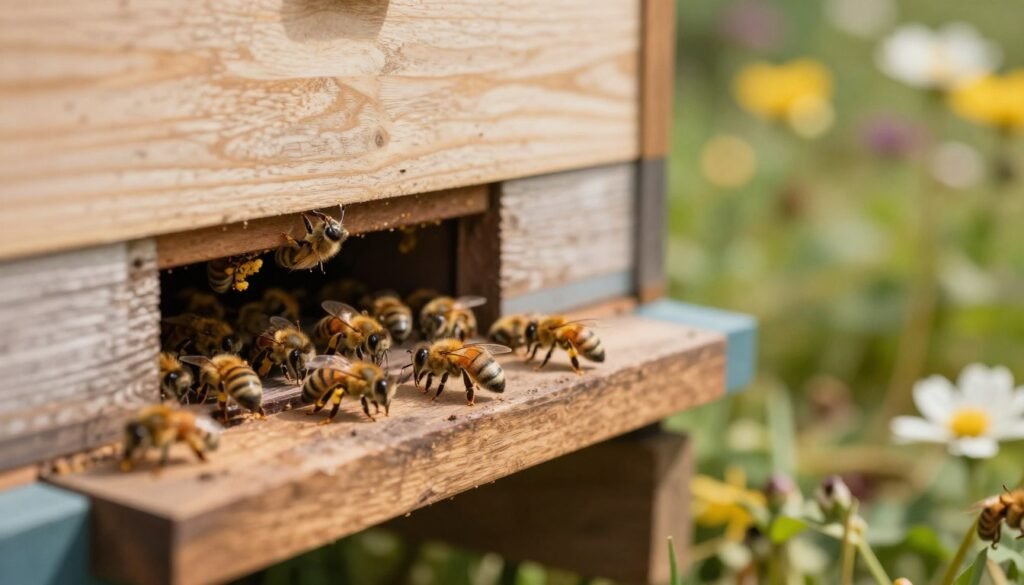
When all comings and goings pass a single hole, guard bees monitor entries with far greater success. A 1 to 1.5 cm aperture acts as a physical bottleneck that focuses traffic into one defensible point.
Maximizing Guard Efficiency
Focused control at the entrance lets guards check every visitor. That makes it easier to spot robber bees or predators before they reach frames and stores.
Mechanical help can offset low guard numbers. Wooden or plastic entrance reducers and simple tools create a consolidated defensive line at the hive front.
- Concentrates traffic so a few guards can manage threats.
- Neutralizes numerical advantage of invading swarms.
- Protects honey and brood while more workers remain on tasks.
“A narrow choke point gives a small colony the tactical edge it needs to hold stores.”
Beekeepers seeking alternatives can review entrance reducer alternatives to match material and control needs.
Managing Hive Temperature and Airflow
Too much draft can sap a hive’s energy, while too little airflow invites condensation and mold.
Proper ventilation keeps internal temperature steady through hot summer days and cold winter nights. Beekeepers must weigh airflow against the need to conserve warmth near brood.
Entrance reducers let you tune exchange without exposing stores to theft or excess heat loss. A fully open entrance gives maximum flow but can chill a small colony in cool weather.
- Watch traffic at the entrance during peak flight times to spot congestion or excessive draft.
- Use a modest reducer when humidity or cold threatens brood health.
- Open fully in high forage season to avoid bottlenecks and lost honey returns.
“Balanced airflow protects brood and reduces stress on guard bees.”
| Condition | Recommended Control | Effect on Hive |
|---|---|---|
| Cold or damp weather | Smaller entrance setting | Retains heat and limits moisture |
| Peak foraging season | Fully open or wider port | Improves traffic flow and pollen return |
| High humidity | Moderate ventilation | Prevents condensation and mold |
For step-by-step timing and adjustments, see mastering hive management.
Protecting Your Hive Against Robbing Behavior
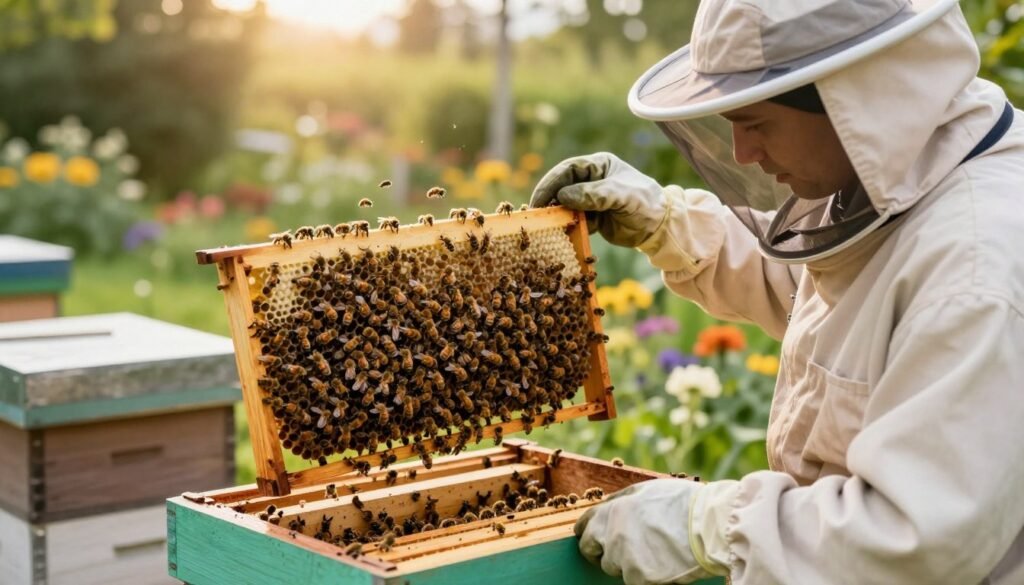
Robbing peaks when nectar is scarce and a poorly defended entrance invites rival bees to steal stores. Quick detection and a measured response can protect the hive’s honey and brood.
Identifying Robbing Signs
Look for sudden crowding at the landing board, aggressive chasing, and bees fighting near the threshold. Watch for unfamiliar workers lingering and carrying bright pollen from other sources.
Other cues include rapid loss of stored honey and noisy, frantic activity at dusk. Early action prevents escalation.
Defensive Strategies
Install an entrance reducer immediately during a nectar dearth to give guards a tactical advantage. A 1 to 1.5 cm aperture creates a strict physical bottleneck that lets a few guards control traffic.
- Consolidate the entrance so defenders can face intruders directly.
- Monitor and adjust the reducer if fighting continues.
- Keep hive inspections brief to avoid spreading alarm pheromones.
“A narrow aperture concentrates defense and preserves stores when the colony cannot spare many guards.”
For more on spotting and stopping robbing behavior, consult this guide on preventing robbing in the USA: preventing robbing behavior.
Keeping Pests and Predators Out
A focused barrier at the entry can stop unwanted visitors before they reach frames and food.
Entrance reducers act as a mechanical shield that blocks larger predators like mice, raccoons, and opossums from entering the hive. This simple control preserves honey and reduces stress on guard bees.
Specialized traps, such as Guardian Beetle Traps, can double as a reducer and help keep small hive beetles away. These dual-use devices limit the opening while catching or deterring beetles.
Regular inspection is essential. Check the entrance daily during peak activity and after storms to confirm no pests bypass the barrier. A secure entrance size helps the colony stay focused on brood care and forage.
- Mechanical barrier prevents mammals from entering the hive.
- Specialized designs deter small hive beetles and other common pests.
- Routine checks ensure no breach and keep bees safe.
- A clean, well-maintained reducer lets workers concentrate on honey and brood.
“A protected threshold keeps threats out and lets a colony rebuild its strength.”
For timing and placement guidance, consult guidance on when to add or remove an entrance.
Selecting the Right Material for Your Needs
Choose a material that withstands weather and handling to keep hive access reliable year after year.
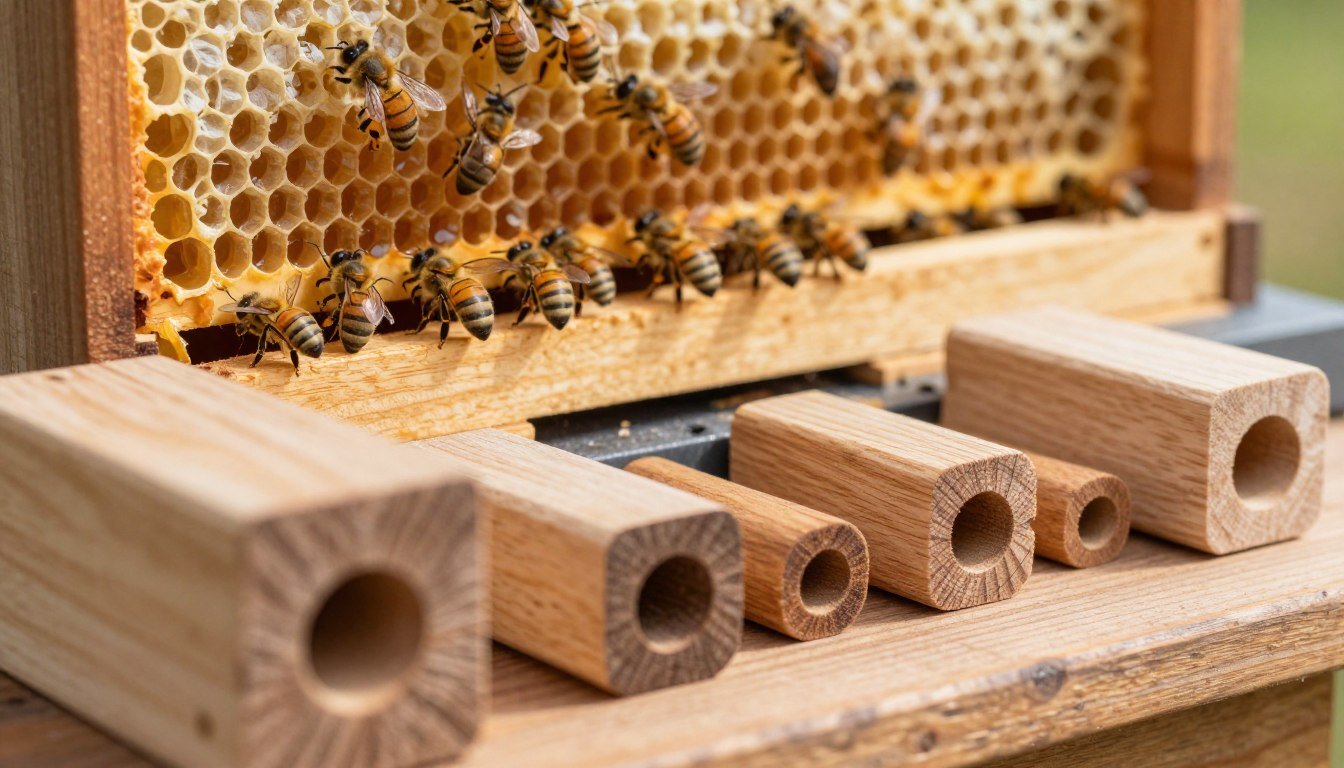
Cypress wood is a top choice. It resists rot and holds paint or oil finishes well. It fits both 8- and 10-frame hives and can be trimmed to match the bottom board snugly.
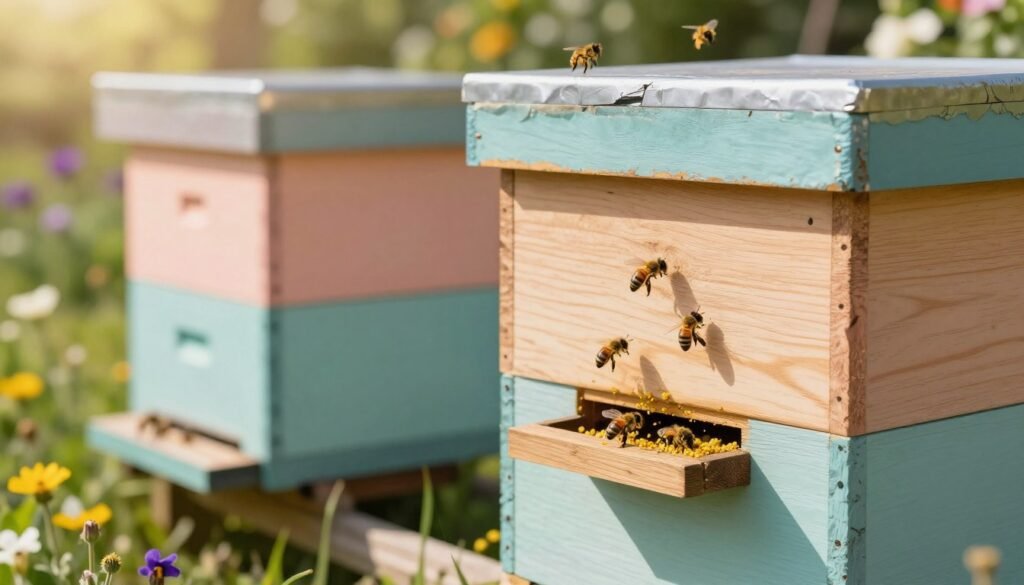
Wooden options let beekeepers make quick tweaks with common tools. A secure fit on the bottom board closes gaps that pests could use. That tight contact also helps limit heat loss during cool spells.
Investing in quality materials pays off. Durable components lower maintenance, protect stores, and last many seasons.
| Material | Key Advantage | Best Use |
|---|---|---|
| Cypress wood | Rot resistant, easy to modify | Standard 8- and 10-frame hives |
| Hardwood | High durability, solid fit | Long-term, heavy-use yards |
| Plastic | Lightweight, weatherproof | Quick installs and temporary control |
- Tip: match material to climate and handling needs.
- Tip: confirm a tight seal on the bottom board every inspection.
Proper Installation and Maintenance Techniques
Simple placement and regular checks at the entrance can stop small problems before they harm hive health.
Install on the bottom board so the port sits flush and offers steady control of traffic. A correct fit keeps heat in and lets bees move freely in and out.
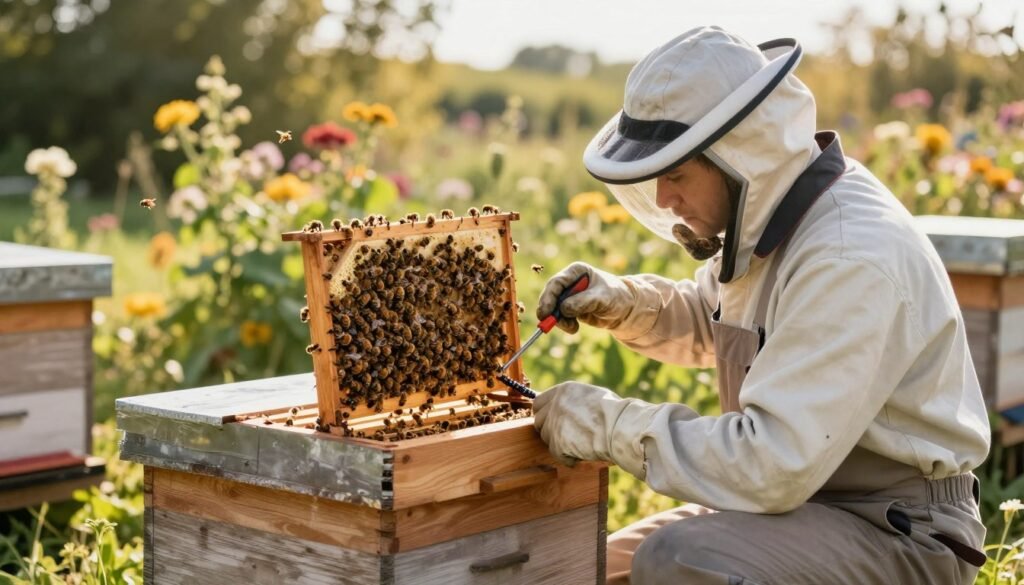
Routine cleaning removes dead bees and debris that can block access. Check daily during active months and after storms.
Routine Cleaning and Inspection
Rotate or lift a plastic disc tool to clear buildup. Large discs often give about a 1.75-inch entrance, while smaller settings are near 1 inch. Use the smaller option when guard numbers are low.
Inspect the part for cracks and warping. Replace damaged wood or plastic to keep the hive secure and ventilated.
- Keep the landing board clear so the queen and workers can pass unimpeded.
- Use simple tools to remove stuck debris during checks.
- Record adjustments so you track what controls flow and heat best.
“A clean, well-fitted entrance helps a small hive stay focused on brood and honey.”
| Task | Frequency | Benefit |
|---|---|---|
| Remove dead bees and debris | Daily in spring/fall | Maintains clear access and colony health |
| Inspect component for damage | Monthly or after storms | Prevents drafts and predator entry |
| Rotate or clean plastic disc | As needed | Quick maintenance with minimal disturbance |
For product choices and a practical review, see the best entrance reducer for nuc boxes guide.
Seasonal Adjustments for Changing Populations
Seasonal shifts demand regular tweaks at the hive entrance to match bee activity and weather.
Spring: keep the port tight to conserve heat while the colony rebuilds. A narrowed access helps guards defend and reduces energy loss during brood rearing.
Summer: open or remove entrance reducers when nectar flows peak. Wider access prevents congestion and lets foragers move heavy loads without delay.
Fall: return to a reduced opening to block robbing and to help the colony prepare for winter. A smaller threshold helps retain warmth and limits unwanted visitors.
Monitor growth weekly during transitions. Watch traffic, check brood activity, and adjust the entrance size to match population and weather trends.
Quick checklist:
- Spring — narrow and defend.
- Summer — widen or remove.
- Fall — narrow and protect.
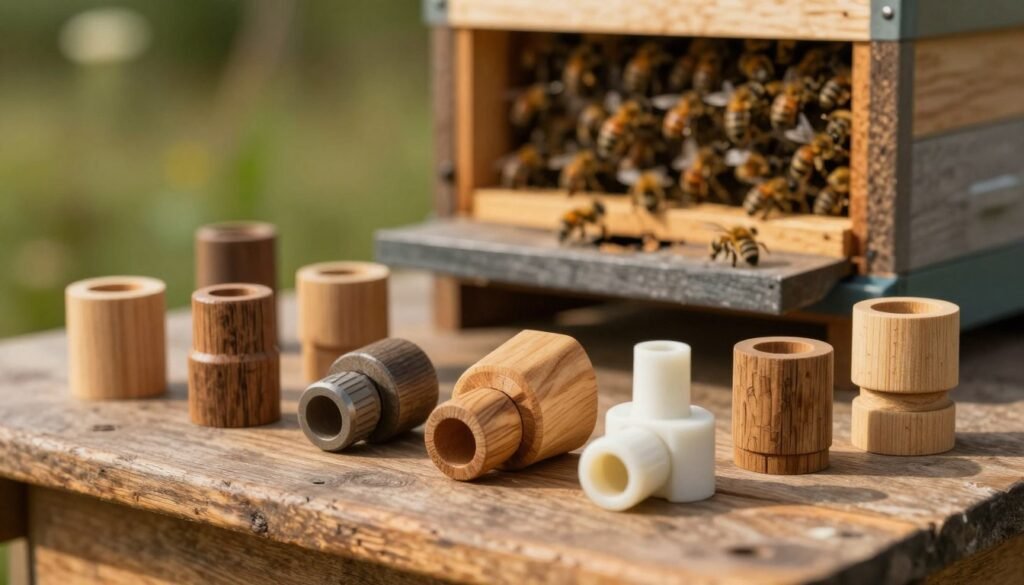
“Timely adjustments at the hive front keep bees focused on brood and stores.”
Use entrance reducers as a seasonal tool and review changes after major weather events to keep the colony stable year-round.
Monitoring Traffic Flow and Colony Health
Simple counts at the hive threshold often show whether a colony is rebuilding or losing ground.
Watch the entrance during midday flights. Smooth, steady traffic usually signals good health and efficient foraging. Sudden pauses, crowding, or bees that struggle to enter suggest the entrance reducer may be too small for the current population.
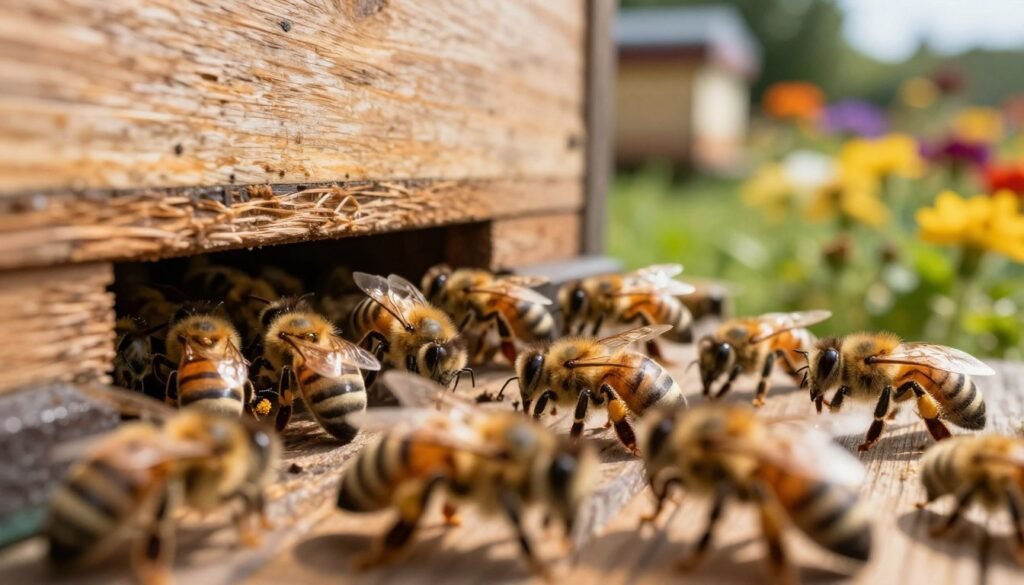
Tom Seeley reports wild honey bees favor an entrance of about 10–15 square centimeters. Use that guidance when you tune entrance reducers and when you track airflow and temperature near brood frames.
Daily checks give you quick cues: low numbers at peak nectar flow, heavy clustering, or signs of robbing mean adjust controls and observe queen activity. A healthy hive shows continuous comings and goings without long lines at the landing board.
- Note peak flight times and record traffic counts.
- Compare behavior across hives to spot outliers.
- Use a simple log and consult a monitoring devices guide: monitoring devices guide.
“Short, regular observations at the hive mouth let beekeepers detect problems early and protect honey stores.”
Troubleshooting Common Entrance Issues
When bees bunch at the threshold, a measured tweak usually fixes the issue without a full inspection.
If you see a traffic jam at the entrance, temporarily increase or remove the entrance reducer to restore smooth flow. Watch the landing board for a few minutes to confirm traffic resumes.
When signs of robbing or aggressive behavior appear—crowds, fighting, or rapid loss of stores—narrow the entrance. Adjusting entrance size and creating a single defensible point improves the hive’s defense and helps the population hold ground against a swarm or raiding workers.
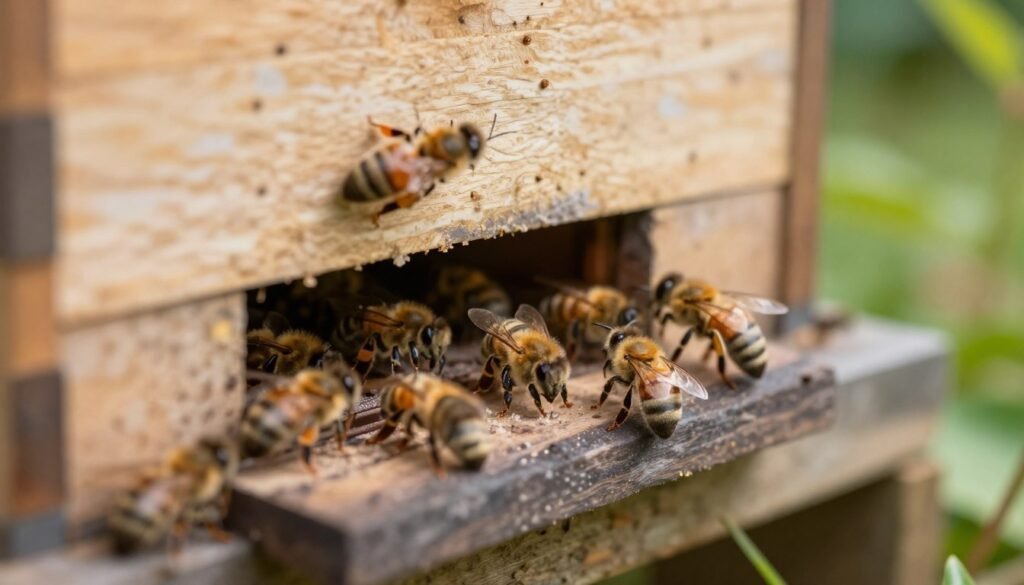
If the hive is fully open and stress continues, check for pests, poor ventilation, or disease. Sometimes the problem is not traffic but a lack of air movement or a pest inside the brood area.
Beekeepers should make gradual changes and use simple tools during checks. Keep notes of each tweak and the result. To learn how to spot early signs, see how to identify robbing behavior early.
“Small, timely adjustments at the entrance protect stores and let the hive focus on brood and recovery.”
Integrating Reducers with Thermal Efficiency
Balancing access and ventilation at the hive front is a simple way to boost winter resilience. Beekeepers who tune the entrance with care cut heat loss while keeping enough airflow for brood health.
Entrance reducers help limit drafts without shutting off vital ventilation. A modest adjustment to entrance size lets the colony trade a small reduction in airflow for far greater thermal efficiency.
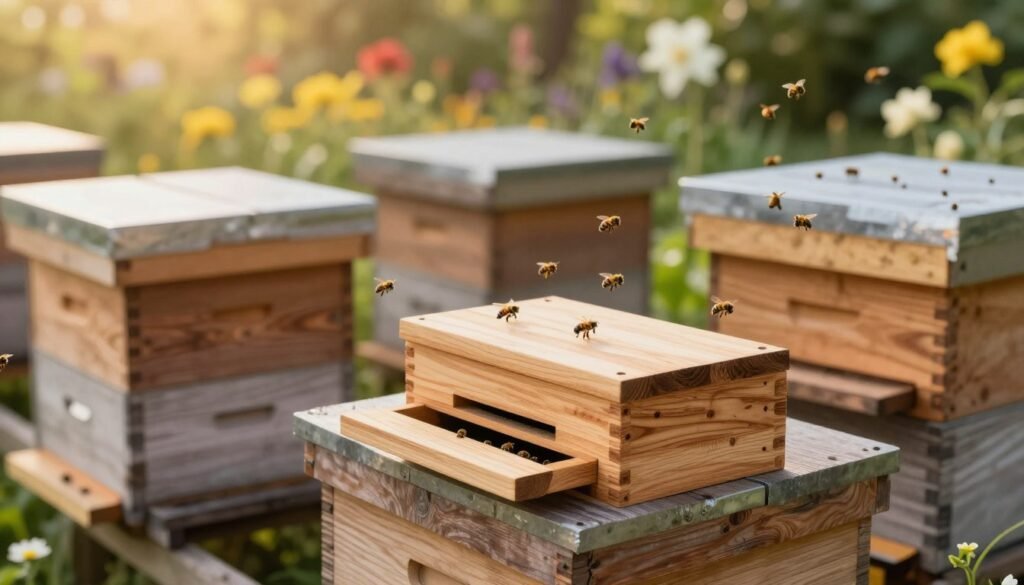
Tip: check the landing board on cold mornings. If bees cluster long at the threshold, ease the setting slightly to restore movement and fresh air.
| Setting | Winter Effect | Airflow |
|---|---|---|
| Very narrow | Minimizes heat loss | Low |
| Moderate | Balances warmth and exchange | Medium |
| Open | Higher loss, good ventilation | High |
Practical note: pair physical entrance controls with good insulation and routine checks. For related hardware like mouse guards, review the best mouse guard for Langstroth hives to keep pests out while you optimize thermal efficiency.
“A well-managed entrance supports the colony’s natural ability to regulate temperature and improves long-term survival.”
Conclusion
Small, deliberate tweaks at the hive threshold can prevent losses and boost long‑term productivity. A clear, adjustable entry helps balance defense and thermal needs while guards do their work.
Entrance reducers are essential tools that protect stores, limit pest access, and cut stress during cold spells or nectar shortages. Monitor daily traffic and behavior to confirm the setting supports recovery and steady brood care.
Adjust controls based on seasonal shifts and hive growth. With proper installation and simple maintenance, entrance reducers help bees thrive and remain productive. Learn about compatible gear like pollen traps in this short guide: pollen traps guide.
FAQ
What is the ideal entrance reducer opening for struggling bee colonies?
Aim for a narrow entry that lets two to four bees pass side-by-side. A small gap improves defense and reduces heat loss while still allowing adequate traffic. Adjust based on colony strength and season.
Why use entrance control on hives?
Controlling the entry concentrates guard bees and limits invaders. It cuts robber access, reduces drafts, and helps maintain internal temperature. That makes feeding, inspection, and recovery easier for weaker populations.
Do bees have a natural preference for entrance width?
Yes. Many colonies narrow their natural entrance at night or when threatened. They prefer a size that balances airflow, protection, and ease of movement. Mimicking this helps stressed groups.
Why do vulnerable colonies need specific entrance management?
Small or recovering populations struggle to defend wide openings. A controlled entry concentrates defenders, reduces pest inflow, and minimizes energy spent on thermoregulation, supporting growth and brood survival.
How do I determine the proper opening for a weak hive?
Observe traffic and defense. If bees cluster, sting guards increase, or robbing occurs, tighten the opening. If bees bottleneck and chilled brood appears, widen slightly. Combine visual checks with hive weight and temperature readings.
How does a physical chokepoint benefit colony defense?
A chokepoint funnels returning and incoming bees through a narrow area. Guards patrol more effectively, intruders become easier to repel, and resource loss from robber bees falls. It also simplifies inspections.
How does concentrated guarding maximize effectiveness?
When guards are confined to a small entrance, each bee covers more of the entry. That raises interception rates of intruders and reduces the colony’s need to allocate many workers to defense, freeing others for foraging and brood care.
Can a reduced entry harm hive ventilation or cause overheating?
Properly sized narrow entries normally maintain adequate airflow for small colonies. In hot weather, open the entry more or add screened ventilation above the brood to prevent heat stress while keeping the lower entrance defended.
What are common signs of robbing behavior?
Look for frantic bees fighting at the entrance, dead bees on the landing board, sudden decrease in forager returns, or a stream of unfamiliar bees entering. Robbing often follows nectar dearths or weak hive scent cues.
What defensive strategies reduce robbing risk?
Use a narrowed entry, reduce hive openings during feeding, relocate open feeders away from hives, and rearrange exposed honey frames. Quick interventions—smoking the frames and closing unused entrances—help stop robberies fast.
How do entrance adjustments keep pests and predators out?
Small entrances block larger pests like mice and minimize wasp access. Coupled with entrance screens or mouse guards, they limit predator entry while allowing bees to move freely during daylight.
Which materials work best for entrance control tools?
Durable hardwood, metal, and UV-stable plastic all perform well. Wood blends with traditional hives while plastic and metal resist weather and warping. Choose based on climate, budget, and ease of cleaning.
How should I install and maintain an entrance control device?
Fit the tool flush to the bottom board or inner cover to prevent gaps. Inspect monthly, clean propolis and debris, and replace warped or cracked pieces. Proper fit prevents sneaking pests and unwanted airflow.
What routine cleaning prevents entrance problems?
Remove debris and dead bees from the landing area, scrape propolis build-up, and check for gaps where pests can enter. Disinfect tools if disease is suspected, and ensure moving parts glide freely.
How should I change the entry through the seasons?
Narrow entries in early spring and late season to defend against robbers and conserve heat. Open the entry in peak summer or during heavy nectar flows to boost ventilation and traffic flow as populations grow.
How can I monitor traffic flow to assess colony health?
Track the number of foragers returning with pollen, note flight activity at peak warm hours, and watch for prolonged gaps in traffic. Combine visual counts with hive weight and brood inspections for a clear picture.
What common entrance issues should I troubleshoot first?
Check for blocked exits, excessive propolis build-up, worn or warped reducers, and signs of robbing. Also inspect for pests like small hive beetles or mice. Fix seals and replace damaged parts promptly.
Can entrance fittings improve thermal efficiency for wintering?
Yes. A snug lower entry reduces convective heat loss and helps the cluster maintain temperature. Pair entry control with insulated wraps or reduced internal volume to maximize winter survival.