
Protecting your property from subtle, underground methods used to bypass standard locks is a growing concern. Homeowners must learn how to spot weak spots near foundations and secure each access point with targeted measures.
This article lays out practical steps to identify vulnerabilities and reinforce structural openings. You will read about stabilizing soil, sealing gaps, and installing barriers that deter entry while minimizing structural damage.
Historical patterns show criminals often exploit the main access to a house to avoid alarms. A proactive strategy that includes physical reinforcement and routine inspections reduces the chance of costly harm.
We also link practical beekeeping-derived tactics—like narrowing an opening or using controlled screens—to home defense ideas. For more applied tips on narrowing and managing openings, see defensive measures and entrance control.
Key Takeaways
- Assess foundation edges for weak spots and signs of digging.
- Use targeted barriers and screens to limit access at vulnerable points.
- Seal gaps promptly to prevent progressive structural damage.
- Schedule regular checks and simple repairs to stay proactive.
- Combine physical reinforcements with monitoring for best results.
Understanding the Threat of Underground Intrusions
Hidden underground activity often begins long before visible damage appears. Recognizing early signs helps homeowners and security teams act quickly. The psychology behind these operations shows a steady, patient approach that prioritizes secrecy and slow progress.
The Psychology of Tunneling
Criminal groups often treat the project like an engineering task. A notable case involved a 600-meter tunnel plot uncovered by Brazilian police. Teams may spend months and substantial sums—one group invested $1.27 million—to reach a target.
“Many perpetrators work in shifts and monitor the site, trading speed for stealth.”
Common Entry Points
Hidden access points include storm drains, rental properties adjacent to a lot, and secluded yard areas. Tracking the mass of displaced soil, unusual surface curves, or fresh board removals can reveal where a breach begins.
- Multiple potential points increase detection difficulty.
- Robbers pick spots out of the public eye to avoid early detection.
- Monitoring the number of disturbed areas helps prioritize inspections.
| Indicator | What to Look For | Action |
|---|---|---|
| Soil mass displacement | Fresh piles, irregular curves | Inspect and document; notify authorities |
| Hidden access points | Unused drains, loose boards | Secure and monitor with cameras |
| Extended activity time | Shift patterns, noise at odd hours | Increase patrols and lighting |
Analyzing Historical Tunneling Methods
Decades of case studies show subterranean work often spans years before discovery. Records include a heist 12 years ago that caused a $70 million loss. That case shows how patient planning leads to major damage.
The São Paulo plot is another key case. Investigators found the gang spent $1.27 million on a reinforced tunnel with iron beams and wood. Ventilation and lighting let workers operate long hours and extend time on site.
What forensic teams look for:
- Concrete mixes and board supports that signal heavy reinforcement.
- Debris mass removal methods and odd surface curves near foundations.
- Lighting or duct runs that indicate prolonged work.
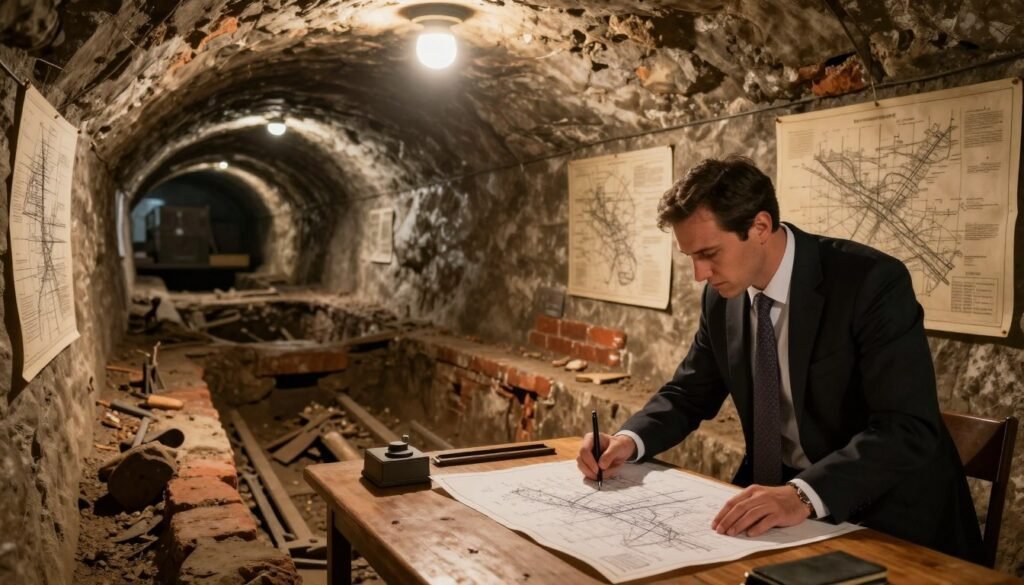
“Studying past results helps answer how to stop attackers before they reach the top of a target area.”
| Historic Case | Key Data | Preventive Action |
|---|---|---|
| $70M heist (12 years ago) | Years of secret work, large debris mass | Routine soil checks, rapid reporting |
| São Paulo plot | $1.27M spent; iron and wood reinforcement | Inspect concrete, secure boards, probe voids |
| Forensic field studies | Ventilation, lighting present | Monitor utilities, detect unusual runs |
Identifying Vulnerable Property Areas
A careful survey of buried services reveals predictable weak zones around a property.
Begin by mapping underground utilities and known service lines. These lines often mark the most practical way someone might work under a yard.
Mapping Underground Utilities
Use municipal utility maps, as-built drawings, and a visual field check to locate drains, sewers, and conduit runs. Pay special attention to storm drains; proximity can affect the size of an excavation. One high-profile case involved a 30-meter tunnel into a Berlin safe deposit room, where nearby drains shaped the path.
- Inspect visible points near utility access covers and loose board patches.
- Look for soil curves or fresh mass displacement that signal recent digging.
- Secure concrete edges and all secondary entrances close to utility runs.
- Log data and results from each check to answer where risk is highest.
| Indicator | What to look for | Action |
|---|---|---|
| Soil curves | Fresh low spots or piles | Document and inspect at top priority |
| Utility access | Open covers, loose boards | Secure and monitor daily |
| Foundation edge | Cracks in concrete | Repair and reinforce immediately |
Implementing an Entrance Tunnel for Robbing Reduction
Protecting vulnerable access points means layering physical barriers, sensing systems, and alarm links. This combination reduces the window of opportunity that attackers exploit and shortens the time between activity and response.
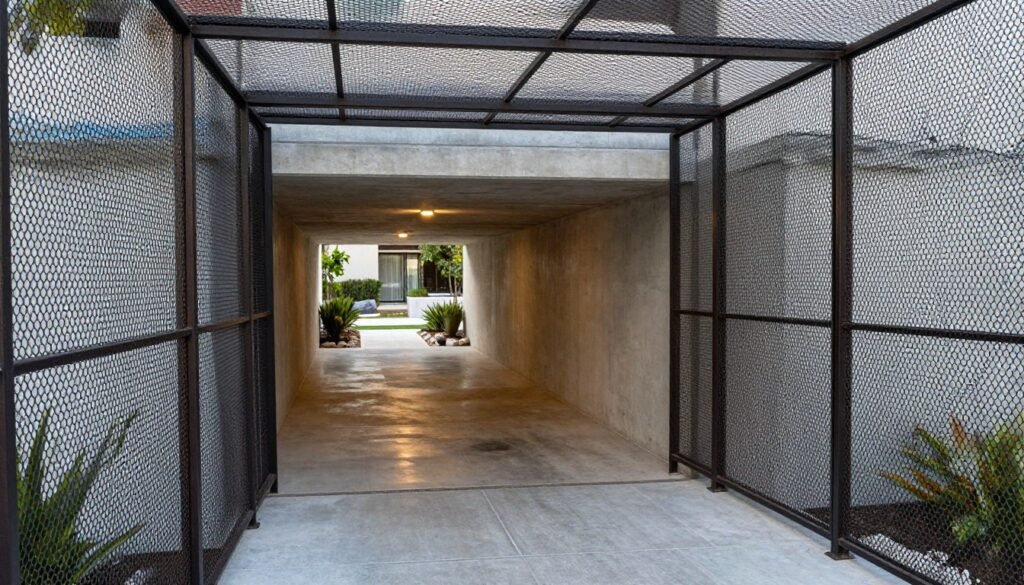
Reinforced Mesh Barriers
Heavy-gauge mesh at foundation openings blocks direct digging and stops most small-scale breaches. Install stainless steel or galvanized mesh anchored to concrete and steel frames.
Mesh resists cutting and preserves structural concrete while keeping soil mass contained. Regular checks of boards and anchors show signs of stress early.
Pressure Sensitive Flooring
Pressure mats and load sensors beneath approach areas deliver immediate data on unusual weight shifts. These systems act like a compact table of data, showing where and when movement occurred.
Place sensors at the top edge of foundations and near secondary entrances. That placement catches odd pressure patterns tied to tunneling attempts.
Alarm Integration
Link mesh tamper alerts and pressure triggers to a monitored alarm. Integration gives a fast answer to suspected damage and sends authorities or security staff without delay.
“Early detection and fast notification are the most reliable tools to stop attackers in their tracks.”
Quick checklist:
- Fit mesh at all ground-level openings.
- Install pressure sensors at foundation tops.
- Integrate sensors with a monitored alarm system.
- Schedule regular inspections and document results.
| Measure | Purpose | Action Interval |
|---|---|---|
| Reinforced mesh | Block access and prevent cutting | Inspect quarterly |
| Pressure sensors | Detect weight shifts and soil mass movement | Test monthly |
| Alarm integration | Immediate notification on damage | Verify weekly |
Assessing Ground Stability and Foundation Risks
A rapid soil survey can reveal hidden shifts that threaten a home’s base long before visible cracks appear.
Check the top of the foundation for hairline cracks, uneven edges, or fresh gaps in concrete. These signs often show ground movement that could lead to serious damage.
Monitor the mass of soil near foundation walls. Any sudden change in contours or new low spots may mean a nearby excavation or subsurface void forming.
Use simple field tests and geotechnical data to decide if reinforcement is needed. Foundation engineers use those results to design shoring or grouting that stabilizes soil and limits further harm.
Regular inspections document day-to-day changes and make it harder for attackers to work unnoticed. Timely records help give a clear answer when questions arise.
| Indicator | What it means | Recommended action |
|---|---|---|
| Soil mass displacement | Fresh low spots, irregular curves | Survey with probe; consult engineer |
| Cracks at foundation top | Stress on concrete; possible void below | Document, monitor weekly, repair as advised |
| Loose boards or covers | Potential access or hiding of activity | Secure, log, and increase patrols |
“Protecting the foundation is the best defense against subsurface damage.”
Utilizing Advanced Sensor Technology
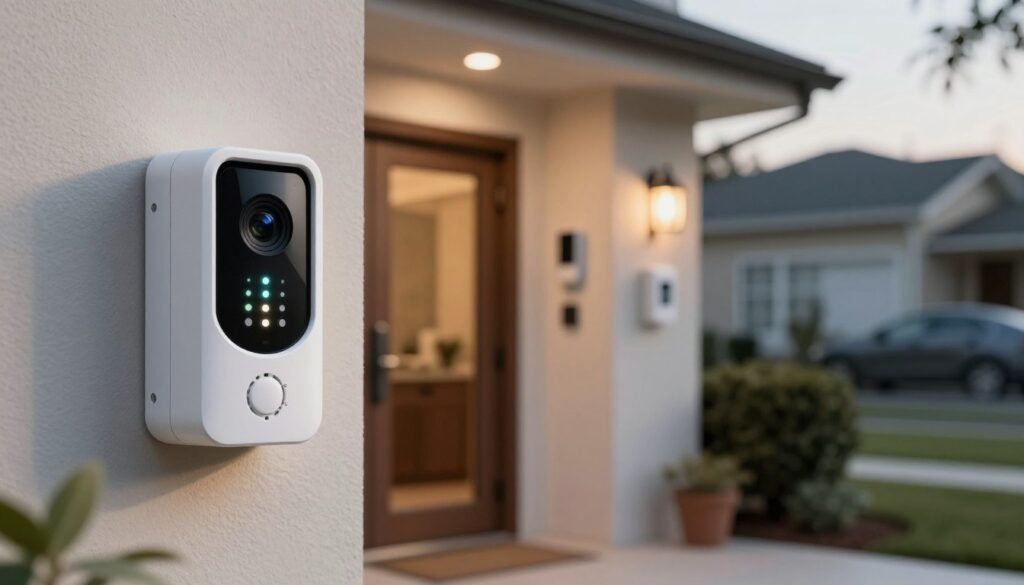
Advanced ground sensors now give homeowners an early warning when slow subsurface activity begins near a foundation.
Sensors detect subtle vibration patterns and convert them into real-time data. Placed at the top of the soil near vulnerable points, they monitor shifts in mass and report unusual curves in surface readings.
These devices stream results to a security board and to cloud dashboards. That constant flow of data shows day-by-day changes. Early alerts let you address potential damage before it reaches an entrance or causes major harm.
| Reading | Likely cause | Action |
|---|---|---|
| Low vibration, rising trend | Slow digging near foundation | Inspect sensor line, increase logging |
| Sharp spike | Heavy equipment or sudden collapse | Secure area, notify authorities |
| Mass displacement pattern | Subsurface void forming | Schedule geotechnical survey |
We answer the common question of how to protect a property by integrating sensors into your existing alarm and control board. Regular monitoring gives an early answer and reduces the chance of costly ground damage.
For guidance on detecting related behavioral signs, see how to identify robbing behavior early.
Monitoring Unusual Activity and Surface Changes
Early observation is the easiest way to spot a small problem before it becomes major damage.
Regular checks of the yard and the top of foundation lines help detect soil displacement and odd surface curves. Simple daily walks reveal fresh low spots, mounded earth, or new depressions.
Detecting Soil Displacement
Keep a running table of observations and sensor data. Note date, location, visible shifts, and any alarm board alerts. This record helps you answer the question of whether activity is natural or suspicious.
- Log changes in surface mass and shape each day.
- Compare sensor data with visual checks to confirm results.
- Mark and photograph any new curves or loose covers near an entrance or path.
| Indicator | What to look for | Action |
|---|---|---|
| Soil mass shift | New mounds or low spots | Inspect, document, notify security board |
| Surface curves | Unusual contours near foundation top | Probe, record data, schedule survey |
| Unexpected sensor spike | Unplanned weight or vibration | Secure area, review results |
Daily monitoring and clear logging give you the best chance to stop a small incision or a tunnel before it causes serious damage.
Reinforcing Concrete and Structural Integrity
Using reinforced concrete at critical foundation points gives the clearest path to long-term protection. A reinforced concrete slab tied into existing footings raises the barrier strength and slows deliberate excavation attempts.
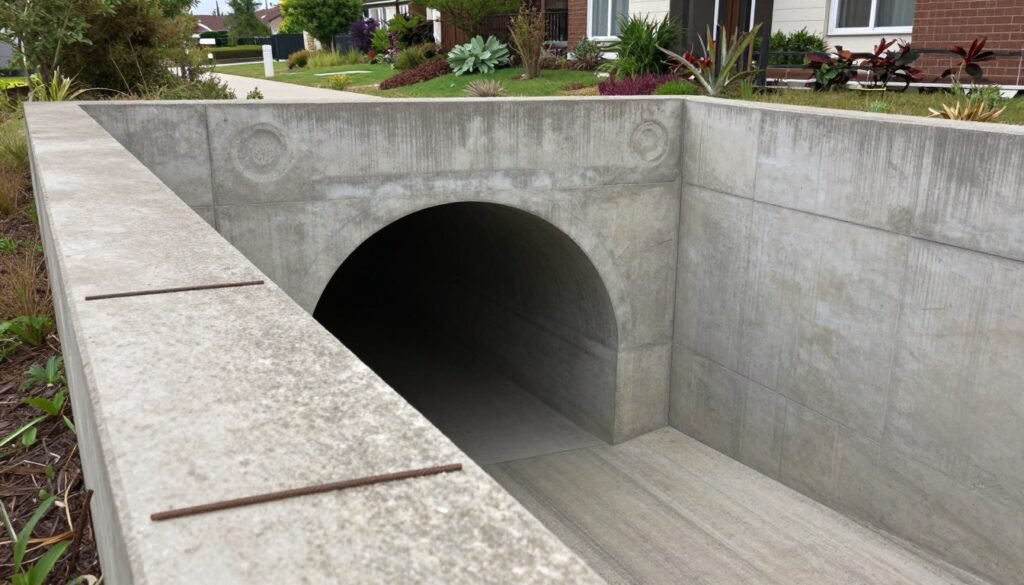
High-density concrete resists common mechanical tools and reduces the chance of a breach. Properly placed rebar and thicker pours keep loads distributed and preserve structural integrity under stress.
We recommend sealing gaps and converting weak patches into continuous, reinforced concrete zones. That approach creates a uniform, hard surface that is costly and slow to penetrate.
- Design tip: Tie new reinforced concrete to existing footings with dowels and shear keys.
- Material note: Use high-strength mixes and corrosion-resistant rebar.
- Maintenance: Inspect joints, repair hairline cracks, and keep records of repairs.
| Measure | Benefit | Action |
|---|---|---|
| Thick reinforced slab | Blocks manual and powered cutting | Pour to engineered specs; inspect annually |
| Rebar grid | Distributes loads and prevents collapse | Install per structural drawings; coat to resist corrosion |
| Sealed joints | Stops tool access and erosion | Apply structural sealant; monitor every 6 months |
Investing in reinforced concrete pays off. It preserves structural integrity and ensures your home withstands even the most determined operations without major damage.
Managing Access Points and Perimeter Security
Limit every route that leads to your property. Control paths, gates, and secondary approaches so an attacker has fewer options. A small, clearly defined perimeter makes monitoring easier.
Reduce the number and spread of entrances to your yard and home. Each additional opening raises the risk that someone will find a way to start a tunnel nearby. Keep gates locked and remove unnecessary walkways.
Carry out regular checks of all access points. Walk the perimeter weekly and log any fresh soil, loose covers, or new holes. Quick action reduces the time an intruder can work unnoticed.
“Controlling who can reach foundation edges is the first line of defense.”
| Measure | Purpose | Check Interval |
|---|---|---|
| Limit entrances | Reduce possible approaches | Review annually |
| High-quality locks & alarms | Prevent unauthorized access | Test monthly |
| Perimeter patrols | Detect unusual activity or soil shifts | Inspect weekly |
Evaluating Material Durability for Long Term Protection
Durable construction choices protect homes against slow soil shifts that appear across years.
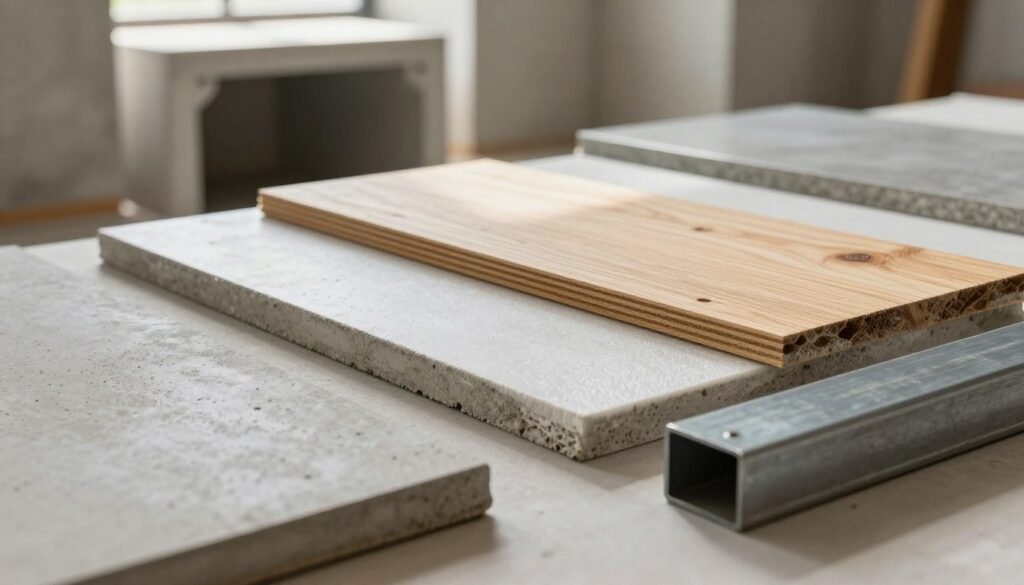
Assessing material durability begins with testing the components that touch soil and concrete. Choose mixes rated for high compressive strength and low permeability.
High-quality material resists corrosion, freeze-thaw cycles, and mechanical wear. That strength helps prevent voids and keeps the foundation stable over many years.
- Select a high-strength concrete mix and corrosion-resistant rebar.
- Use protective coatings and structural sealants at joints.
- Prefer products with documented lifespan testing and warranties.
| Component | Durability Trait | Recommended Action |
|---|---|---|
| Concrete mix | High compressive strength, low permeability | Use engineered mix; test slump and strength |
| Rebar | Corrosion resistance | Choose coated or stainless steel and inspect annually |
| Sealants/coatings | Joint protection and water barrier | Apply per manufacturer; replace as recommended |
Choosing the right material is a critical defense. With proper selection and maintenance, your property stays protected for years.
Addressing Ventilation and Lighting Requirements
Without steady air and light, sustained subsurface work becomes nearly impossible. Many people do not realize that a covert workspace needs both ventilation and illumination to operate safely over time.
Restricting air flow to any hidden void is an effective deterrent. Seal crawl spaces, cover vents, and block loose access points so confined spaces cannot be refreshed with fresh air.
Many people are surprised to learn that intruders often install lighting and run power to see while they dig. Check your property for hidden panels, unused conduits, or unattended electrical runs that could support temporary lighting.
Controlling the air supply is a clever way to discourage people from attempting long-term work near your home. Combine physical seals with regular inspections and locked utility covers.
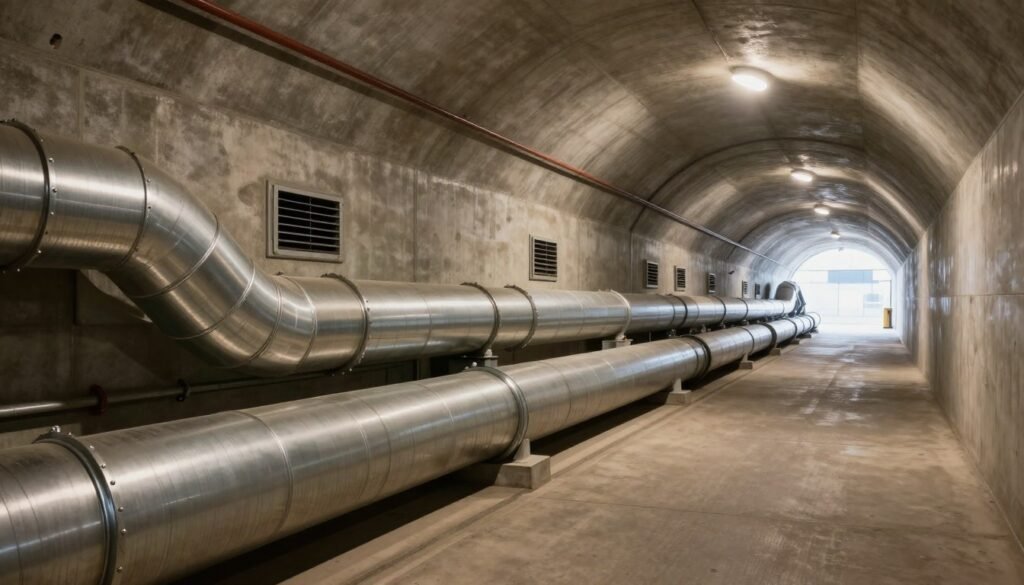
“Cutting off essentials like air and power raises the risk and cost for anyone attempting concealed activity.”
For a technical perspective on ventilation impacts, review this ventilation study and coordinate measures with local utility providers.
Coordinating with Local Law Enforcement
Contact local police immediately when you suspect covert subsurface activity near your property. Quick notification starts official steps that protect evidence and safety.
Share all observations and sensor data with officers. Photos, logs, and timestamps help investigators treat your concerns as a formal case and prioritize response.
Law enforcement can deploy investigative measures not available to residents. They can inspect, document, and secure an area while coordinating forensic or engineering support.
Working directly with the police is the most effective route when you believe someone is attempting unauthorized work near your home. Their involvement reduces risk and improves the chance of a timely resolution.

“Early involvement by authorities preserves evidence and speeds protective action.”
| Action | Why it helps | Who does it |
|---|---|---|
| Notify police | Starts an official case file | Local law enforcement |
| Share data | Guides investigation steps | Homeowner & officers |
| Implement measures | Secures site and deters activity | Police & security teams |
Conducting Regular Site Inspections
Spending a short amount of time each day on a quick perimeter walk is one of the simplest and most effective safeguards a homeowner can use.
Inspect key spots such as foundation tops, utility covers, and loose boards. Note any fresh soil, mounds, or new depressions. Keep each check brief but consistent so patterns are easier to spot.

Maintain a clear table of findings after every inspection. A compact log helps you compare dates and locations and highlights gradual change over weeks and months.
“A daily log transforms scattered observations into a clear record you can act on.”
- Post visible signs that the property is monitored; this alone can deter unwanted activity.
- Spend a little time every day checking vulnerable points and recording results.
- Use the table to flag repeated anomalies and guide follow-up actions.
| Check Item | What to record | Action |
|---|---|---|
| Foundation edge | Cracks, low spots, soil piles | Document in table; inspect next shift; notify authorities if worsening |
| Utility covers | Loose lids, new conduits | Secure cover; log post; increase monitoring |
| Perimeter signs | Presence and condition of deterrent posts | Replace damaged signs; update post locations in the table |
Responding to Suspicious Construction Noise
Unexpected heavy construction noise can hide deliberate activity beneath nearby ground.

Do not ignore unusual work sounds at odd times. If loud equipment or continuous digging is active nearby, it may mask people trying get access under a property. In one well-known case, noise across the street hid work beneath a Bank of America branch.
Report strange noise immediately. Tell police the exact time and describe the sound. Give records or timestamps when you can.
- Listen for repeating, steady rhythms that seem out of place with normal construction.
- Note any activity at unusual time periods and record it with video or audio when safe.
- Keep neighbors informed and share observations with local police.
“Construction noise can be used to conceal persistent, targeted activity; vigilance helps stop it early.”
| Action | Why it helps | When |
|---|---|---|
| Call local police | Starts an official report and response | Any unusual time |
| Document sound | Provides evidence to investigators | As it happens |
| Alert neighbors | Increases watchfulness and deterrence | Immediately |
Protecting High Value Assets from Subterranean Threats
High-value vaults attract patient, precise methods that often target the slab beneath valuables.
Concrete floors are a primary target. In one well-known case, burglars dug 60 feet to reach a Bank of America vault. Investigators later found an 18-inch hole in the vault floor that revealed how small an opening can be.
Another historic case from 1986 shows what hardened robbers can do. Thieves broke through three feet of solid concrete to access a bank vault. That example proves reinforcing the slab matters.
Practical steps:
- Increase slab depth and add high-strength rebar to resist cutting and bore attempts.
- Install embedded sensors beneath the floor to detect drilling or sudden voids.
- Document the size and location of any breach immediately and notify authorities.
“A small hole can make a secure vault vulnerable; the floor is as important as the door.”
Conclusion
A steady habit of day-to-day checks is the single most effective way to stop covert activity early. Small, regular inspections turn scattered signs into usable data and give you a fast answer when something looks wrong.
This article has provided the key steps, the case facts, and clear guidance to keep your property at the top of its security game. Use logs, sensors, and quick reporting to get reliable results.
If you’d like more historical context on underground cases, see this joy of tunnels case. Collecting good data is the best answer to any security question and will bring the end of a potential threat.
FAQ
What indicators suggest someone is digging beneath or near my property?
Unusual soil displacement, new depressions in the yard, cracked concrete, fresh spoil heaps, and sudden changes in surface drainage are common signs. Listen for steady low-frequency noise at night and monitor for serial activity on access points like utility covers and perimeters.
How can I map underground utilities before installing protective measures?
Hire a certified utility locator who uses ground-penetrating radar and electromagnetic detection. Obtain municipal utility records and mark gas, water, electrical, and telecom lines to avoid damage and to identify vulnerable zones that require reinforced concrete or mesh barriers.
What materials work best to reinforce foundations against covert digging?
Heavy-gauge steel mesh, poured reinforced concrete slabs, and fiber-reinforced polymer overlays resist cutting and collapse. Combine materials with a proper footing depth, and ensure the design accounts for soil type, load-bearing curves, and expected mass pressure.
Are pressure-sensitive flooring systems effective at detecting subterranean intrusion attempts?
Yes. Pressure-sensitive mats and distributed sensor grids detect micro-movements and weight changes. When integrated with alarm systems, they provide rapid alerts. Ensure sensors are calibrated for false-positive sources like heavy storms or construction equipment.
What sensor technologies should I use to monitor underground activity?
Use a layered approach: seismic sensors for vibration patterns, fiber-optic cables for strain and acoustic monitoring, and ground-motion accelerometers for localized disturbances. Combine these with CCTV and surface motion detectors for redundancy and improved data curves.
How do I assess ground stability and foundation risk for my property?
Commission a geotechnical engineer to evaluate soil composition, bearing capacity, and water table depth. They will provide recommendations on excavation depth limits, recommended reinforcement, and long-term measures to prevent collapse or settlement in high-risk areas.
What perimeter measures deter and detect subterranean access attempts?
Install reinforced fencing with buried skirts, sensor-equipped boundary lines, and alarmed manhole covers. Use pressure and motion sensors around probable entry points and maintain clear sightlines and lighting to reduce concealment opportunities for people working daily on an illicit dig.
How should I coordinate with law enforcement if I suspect tunneling activity?
Report suspicious findings immediately, share sensor data and observation logs, and request a property check. Work with local police or sheriff’s departments and, if needed, specialized units to safely inspect or intervene without disturbing potential evidence.
What inspection schedule is recommended to catch early signs of digging attempts?
Conduct visual inspections weekly in high-risk areas and monthly elsewhere. After storms or nearby construction, increase frequency. Include checks of concrete slabs, utility covers, ground mesh integrity, and recorded sensor activity for anomalies.
How do ventilation and lighting factors influence the risk of underground intrusions?
Poorly lit or ventilated areas on the surface can conceal access points and make detection harder. Improve perimeter lighting and ensure vents and air grates are secured and monitored to prevent use for air flow during long-duration digs.
What steps limit damage if a breach is discovered beneath a structure?
Evacuate occupants if structural integrity is threatened, cordon off the area, and avoid walking over suspected voids. Engage structural engineers to assess foundation risks and use remote shoring or grout injection to stabilize the ground before repair with reinforced concrete.
How long do reinforced protective measures typically last?
With quality materials like reinforced concrete and corrosion-resistant mesh, protections can last decades—often 20–50 years—depending on soil chemistry, moisture, load cycles, and maintenance. Periodic inspections extend service life and effectiveness.
Can routine construction or landscaping trigger false alarms in sensor systems?
Yes. Heavy machinery, irrigation, and routine digging can mimic tunneling signatures. To reduce false positives, program sensor thresholds, maintain a construction activity log, and integrate multi-sensor verification before dispatching responders.
What are cost-effective measures for homeowners with moderate risk?
Start with targeted solutions: reinforce vulnerable slabs, install perimeter motion detectors, secure utility covers, and add sensor-enabled soil probes at key points. These measures balance budget and protection without full-scale ground reinforcement.
How many people does it generally take to excavate a clandestine access under a property?
It varies. Small-scale digs may involve one or two individuals over weeks, while larger efforts to move significant mass require teams and equipment. Monitoring activity patterns and spoil disposal can help estimate manpower and potential intent.
What legal steps can property owners take to protect their land against underground intrusion?
Review local statutes on trespass and damage, install clear signage, document any disturbances, and file complaints with authorities. Consider easements, bonded security services, and liaising with utility companies to enforce penalties against offenders.