Last Updated August 26, 2026
Quick checks can help beekeepers spot risky batches before fermentation starts. This short guide sets clear, at-home steps that assess honey and its moisture content. Aim for under about 18% for stable storage and marketable quality.
Simple observations — like stream and viscosity checks, shake-and-bubble tests, and a ribbon on a dry plate — let you screen jars in minutes. Keep frames capped before harvest, keep the extractor dry, and avoid pulling supers in wet weather. These habits cut the chance that water raises levels during honey production.
Key Takeaways
- Use quick, at-home methods as first-line checks for moisture and content.
- Aim for roughly 17–18% or lower for long-term stability and best honey quality.
- Good handling: capped frames, dry extractor, and dry storage reduce risk.
- Runny or foamy batches likely signal higher moisture; flag them for care.
- When decisions affect sales or bottling, validate results with a refractometer.
- Record observations (date, weather, frame status) to improve hive management.
Why Honey Moisture Matters Right Now
Current weather and extraction choices can flip a year’s harvest from prized jars into fermenting risk.
Moisture content directly affects shelf life. Honey under about 18% water content resists fermentation and stores well. Above roughly 19% it becomes unstable and natural yeasts can activate, spoiling flavor and aroma.
Risk factors are easy to spot: wet springs, high ambient humidity, early removal of frames, or water introduced during extraction. Damp rooms and wet extractor parts add risk during processing.
Economic stakes matter. Commercial buyers often expect 17–18% for consistent quality. Excess moisture lowers market value, impacts customer trust, and can harm a brand’s reputation.
Even without tools, simple signs let beekeepers triage suspect frames. Delay extraction, segregate risky jars, and log weather, frame status, and extraction timing. When in doubt, confirm with a refractometer and consult grading guidance like this honey grading analysis.
- Store in airtight containers and keep extraction rooms dry.
- Plan extraction windows around low-humidity days.
- Track patterns across seasons to protect shelf life and product quality.
Safe Moisture Ranges and Fermentation Risks
A few percentage points of added water decide shelf stability for a whole harvest.
Target range: Aim for under about 18% water. This level keeps jars stable and extends shelf life for retail or home use.
Ideal range and the gray zone
Below ~18% is the safe zone for storage. Between roughly 18.1% and 20% is a gray area. Batches in that band may be stored short term, cooled, or consumed faster.

When fermentation accelerates
Above about 19% the risk of fermentation rises quickly. Native yeasts can convert sugars into alcohol, acids, and foam. Warm storage or added air exposure speeds this process.
| Range (%) | Risk | Signs | Recommended action |
|---|---|---|---|
| <18 | Low | Thick flow, stable jars | Store cool, label for sale |
| 18.1–20 | Moderate | Runny flow, occasional bubbles | Segregate, cool room, consider dehumidifying |
| >19 | High | Foam, sour aroma, fizz | Hold from sale, confirm with a refractometer, treat or consume fast |
Practical notes: Wax on a frame can absorb ambient water in humid rooms. Extraction in damp conditions often worsens problems. When in doubt, confirm borderline lots with a refractometer before long-term storage or bottling.
How to Test Honey Moisture Without an Instrument
Quick sensory checks give a practical read on jar stability before bottling. Run simple, repeatable moves at room temperature and under steady light for the best comparisons.
The spoon and stream check
Scoop a spoonful and watch how the liquid falls. Thick, continuous ribbons usually signal lower moisture and higher quality.
A thin, fast stream that splatters suggests a wetter jar and possible fermentation risk.
Shake-and-bubble jar method
Place a small amount in a clean jar, cap it, and shake briskly. Observe foam and bubble persistence.
Fine, long-lasting bubbles hint at added water and higher moisture levels; short-lived foam is less worrying.
Stringing, ribboning, and surface checks
Drop a little on a dry plate. Low-moisture samples form strings and layered ribbons that sit briefly on the surface.
Runny, splattery drops that spread quickly likely indicate elevated content honey and should be flagged.
Bread or cracker absorption proxy
Put a dot on plain bread or a cracker. If it sits on top for a few seconds, that’s a good sign. Rapid soaking and spread point toward wetter jars.
- Compare jars from the same batch — floral source and temperature affect viscosity.
- Segregate runny or foamy lots and move them to a drier room or plan dehumidifying or freezing steps.
- For borderline results, confirm with a moisture in honey reading from a refractometer before long-term storage.
Deeper At-Home Checks That Signal Moisture Issues
Small visual cues often give the earliest warning that batches need closer attention.
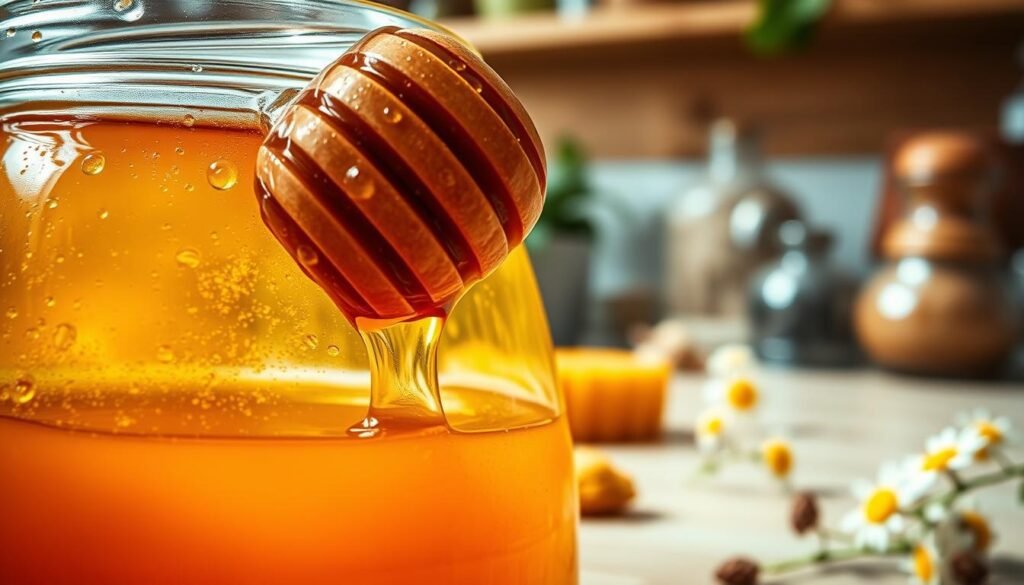
Visual signs: Scan jars for persistent micro-bubbles, a stable foam layer, or a faint hiss when opening. These often indicate early fermentation and higher water content. Smell any suspect jar for sour or yeasty notes and isolate it at once.
Comb and frame clues
A high percentage of capped frames shows bees finished dehydrating nectar and suggests better quality. Count capped cells quickly: many uncapped cells usually mean higher water content and unfinished processing.
Weight and pour checks
Compare similar jars by weight and flow. Heavier jars that pour slowly usually hold denser, lower-content product. Lighter, fast-flowing jars often correlate with higher water levels.
- Store frames in a dry room; wax absorbs humidity and can raise levels after capping.
- Prioritize extraction of drier frames first to avoid cross-mixing in the extractor.
- Track which hive or yard yields wetter lots to refine management and harvest timing.
| Sign | Likely meaning | Action |
|---|---|---|
| Micro-bubbles / foam | Early fermentation | Isolate & cool |
| Low cap percentage | Immature frame | Delay harvest |
| Light, thin pour | Higher water content | Segregate & monitor |
Preventing Excess Moisture During Harvest and Extraction
Timing and dry handling make the biggest difference between stable jars and fermenting batches. Plan harvests around clear weather and wait until a high percentage of capped frames shows the bees finished nectar processing.
Avoid pulling honey supers within a few days of rain. Nectar diluted by showers often raises water and risks batch stability. When in doubt, delay the pull.
Keep the extractor, uncapping knives, tanks, and other equipment completely dry. Even small amounts of water introduced during extraction can raise content and cause problems later.
Room and staging best practices
Use a low-humidity room with good air turnover. Active dehumidification and steady light help keep frames dry while you work.
Stage frames in a dry, temperature-stable space until extraction. Wax is hygroscopic; the longer frames sit in damp air, the more water they can absorb.
- Extract promptly and run smaller, controlled batches in humid regions.
- Separate obviously wetter frames and process them last or blend carefully after confirming levels with a refractometer.
- Train beekeepers and helpers on cleanup and handling so no water enters production steps.
“Dry gear and smart timing protect quality and cut the chance of fermentation.”
Reducing Moisture at Home Without Specialized Tools
A controlled, dry enclosure can pull excess water from jars while you monitor progress daily. Small setups let you lower headspace humidity and reduce the risk of fermentation for wet lots.
Use a dehumidifier in an enclosed area with gentle stirring
Set a dehumidifier inside a closet or plastic tote tent and place sealed buckets or jars on racks. Run the unit on low and stir or rotate containers a few times per day.
Gentle agitation exposes fresh surface area so water escapes the headspace more quickly. Keep power cords dry and use food-safe equipment.
DIY air circulation: warm, dry enclosure with a small fan and light
Repurpose an old refrigerator or ice chest as a warm, dry box. Add a low-watt light and a small fan for steady airflow.
Aim for modest warmth rather than heat. Cover vessels loosely with breathable cloth. Good ventilation speeds evaporation while protecting quality.
Short-term freezing to halt fermentation in high-moisture batches
If a batch shows active bubbling or sour notes, freeze it immediately to stop fermentation. Thaw later and dry in the enclosure or confirm levels with a refractometer before bottling.
- Stage suspect jars separately and skim any foam that forms.
- Monitor progress with daily sensory checks and record changes in flow and bubble persistence.
- For treatment options and next steps, see guidance on high-moisture content honey.
Practical note: Favor food-safe materials and modest power settings; careful management protects flavor and long-term quality.
When to Validate Readings and Manage Honey Quality
Field estimates are helpful, but a precise reading closes the gap between guesswork and quality control. Use simple checks for early screening, but treat them as approximations. Confirm any borderline or commercial batch with a refractometer before bottling or selling.
Limits of sensory checks and refractometer use
No-instrument checks give quick clues, not exact numbers. Optical devices read roughly 12–27% water content and show higher refraction as water rises.
Calibrate regularly, clean the prism between samples, and avoid temperature shock that skews results. Adequate light helps optical readings.
Storage, temperature, and QA routine
Target around 17–18% for long-term storage. Roughly 18.1–20% needs mild dehydration; above 20% requires urgent action or blending with drier lots.
- Log refractometer measure results and compare with your at-home checks to refine field estimates.
- Keep jars cool, dark, and airtight to preserve enzymes, aroma, and shelf life.
- For extractor-heavy production, build a QA loop: quick sensory screen, drying when needed, then refractometer confirmation before bottling.
Good validation protects production economics and brand trust for both hobby and commercial beekeepers.
| Step | Action | Why it matters |
|---|---|---|
| Screen | Use simple sensory checks | Fast triage |
| Confirm | Read with a refractometer | Accurate measure moisture |
| Store | Separate by reading | Preserve quality |
Conclusion
A short routine at harvest and extraction makes big gains in product reliability.
Quick checks — stream and ribbon tests, shake-and-bubble observations, dry-surface stringing, and bread absorption — give early signals of higher moisture. Use these as a fast screen and separate any suspect jars or frames for treatment.
Target under about 18% moisture content for good shelf life. Treat lots trending above ~19% urgently: dehumidifier enclosures with gentle stirring, a warm dry box with fan and light, or short-term freezing can halt fermentation.
Keep frames capped before pulling, avoid post-rain extraction, and keep extractor and equipment dry. Document observations, adjust timing for local humidity, and confirm production lots with a refractometer before bottling.
Store finished jars airtight in a cool, dry place. Consistent extractor routines and simple, repeatable habits help beekeepers secure reliable results season after season.
FAQ
What are simple ways to check moisture in harvested honey without a refractometer?
Use quick sensory checks: watch flow and viscosity with the spoon-and-stream method, observe if honey forms a continuous ribbon or runs thin and splatters. Try the shake-and-bubble jar test: vigorous shaking that leaves persistent small bubbles suggests higher water content. A slice of bread or a cracker placed on honey will soften quickly when water content is elevated. These methods give a fast practical indication before lab or refractometer confirmation.
Why does moisture content matter right now for beekeepers and honey producers?
Water content drives shelf life, taste, and safety. High moisture promotes fermentation and gas formation that spoil jars, damage reputation, and waste product. With humid seasons and busy extraction windows, monitoring levels protects supers, extracted honey, and consumer quality. Managing moisture also reduces waste in frames and keeps hives healthier.
What is the safe moisture range for stable honey and when does fermentation become likely?
Aim for moisture under about 18 percent for long-term stability and minimal fermentation risk. Once honey approaches or exceeds roughly 19 percent, natural yeasts can activate and cause fermentation quickly, especially if stored warm or in poorly sealed containers. Keep an eye on batches near this threshold.
How reliable are the spoon-and-stream and ribbon tests for viscosity and flow?
They are practical field checks. Thick honey that forms a smooth ribbon and piles on a spoon usually has lower water content. Thin, fast-flowing, or splattering honey points to higher water. These tests won’t give a percent reading but are useful for rapid decisions during extraction and bottling.
What does the shake-and-bubble jar test reveal about excess water content?
Shake a sealed jar vigorously. If many small bubbles remain suspended for a long time, honey likely holds excess water. Low-moisture honey clears quickly as trapped air rises and dissipates. This method flags batches that may need drying or refrigeration to prevent fermentation.
Can stringing or ribboning honey on a dry surface distinguish good from runny product?
Yes. Spread a small amount on glass or a tile. Low-water honey strings and holds shape; runny honey spreads and wets the surface. This visual check helps sort jars and frames before packaging, especially when refractometers aren’t available.
How does bread or cracker absorption act as a moisture proxy?
Place a dry cracker or small bread piece on a spoonful of honey for a minute. If it becomes noticeably soggy, the honey contains more free water. This quick kitchen test works as a rough indicator for home bakers and small-scale producers.
What deeper at-home checks signal early fermentation or moisture problems?
Look for fine bubbles, a foamy surface, or a faint hiss when opening jars—early fermentation signs. Comb clues include a low percentage of capped frames or wax that feels tacky and deforms in humid air. Also compare weight-by-feel across identical jars; lighter, more liquid jars often contain more water.
How can comb appearance and capping percentage inform moisture decisions during harvest?
Capped cells indicate bees deemed the nectar ready. Harvest when most frames in a super are well capped; uncapped or partially capped frames signal higher moisture and immature honey. Timing harvests after dry weather and avoiding supers near rain reduces the chance of watery nectar entering the store.
What harvest and extraction practices prevent excess moisture uptake?
Work in a dry, low-humidity room and ensure equipment is dry. Move supers and frames to a protected, warm area ahead of extraction. Extract promptly rather than leaving supers exposed. Fast extraction limits wax and honey contact with humid air and cutting down on hygroscopic uptake.
What are safe home methods to reduce moisture without specialized tools?
Use a dehumidifier in an enclosed space and gently stir honey in shallow containers to expose moisture for removal. Build a warm, dry enclosure with controlled airflow—small fan and light—to speed drying. Short-term freezing of suspect batches halts fermentation until you can properly dry or test them further.
When should I stop relying on no-instrument checks and validate with a refractometer?
Validate when you plan commercial sales, need an exact moisture percent, or detect signs of fermentation. No-instrument checks are useful for triage but can’t replace a refractometer reading for compliance, labeling, or precise quality control. Invest in a refractometer for reliable measurement of moisture content in honey.
How do temperature and storage affect moisture readings and shelf life?
Temperature alters viscosity and apparent moisture behavior; warm honey flows faster and may mask small moisture differences. Store jars sealed in cool, dry conditions to protect quality and extend shelf life. Avoid fluctuating temperatures that can condense moisture and raise water content inside containers.