Published December 3, 2025 · Last Updated August 26, 2026
Practical, data-driven steps prepare beekeepers for better honey returns without relying on chemicals. This guide frames key actions that match colony strength with incoming nectar and space needs.
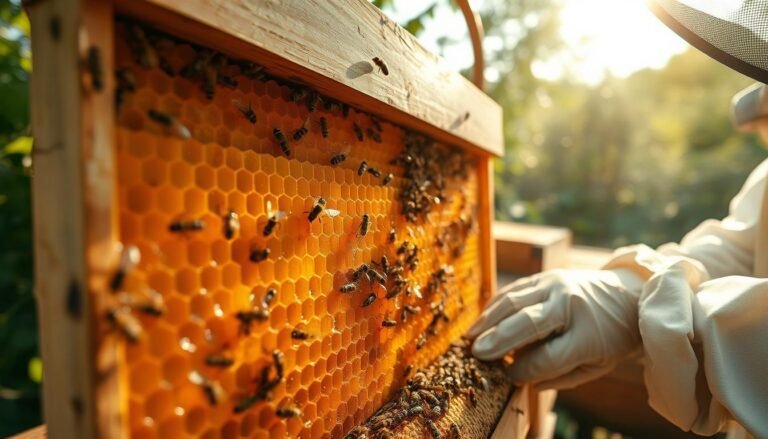
Timing matters: add supers when frames are about two-thirds full (roughly six of ten frames filling or capping). This keeps foragers working on honey, not wax.
Preventing swarms protects the workforce. When a swarm departs, a colony can lose about sixty percent of foragers and suffer a three-week brood break that cuts yields.
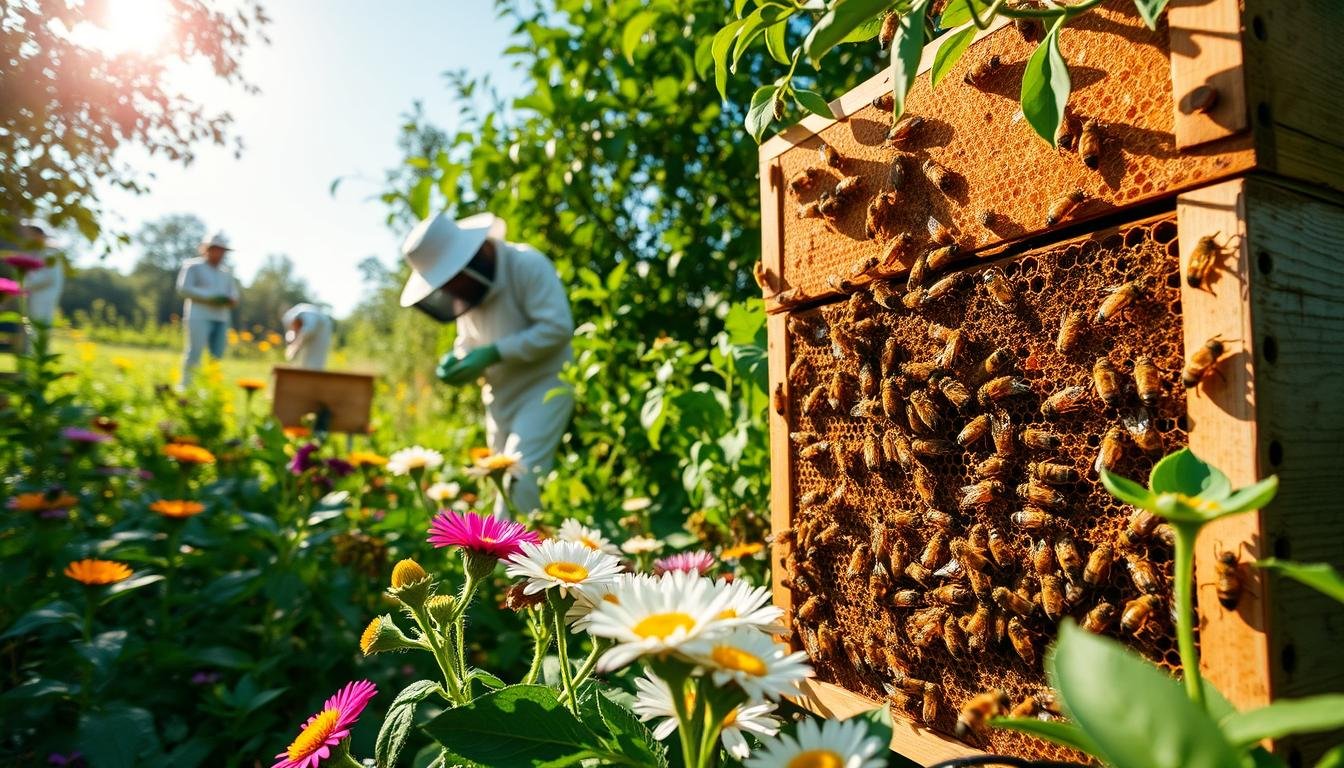
Site apiaries inside a two-mile forage radius with diverse blossoms and limit colony density to local resources. Note that conifer-heavy areas often underperform.
Later sections offer step-by-step comb management, pest prevention, storage tips, and microclimate fixes—morning sun, afternoon shade, and better ventilation—that speed foraging and ease honey curing.
For practical expansion advice, see this expansion tips guide.
Key Takeaways
- Match space to nectar and add supers at the two-thirds frame rule.
- Strong colonies and rich forage within two miles drive higher honey yields.
- Stopping swarms preserves up to 60% of foragers and avoids brood gaps.
- Drawing extra comb diverts about 25 lb of honey into wax; plan for it.
- Microclimate, water, and proper storage cut stress and pest loss.
User Intent and What “Productivity” Means for Your Bee Colony Today
Productivity starts with clear, measurable outcomes: more nectar in, a steady brood pattern, and fewer losses from pests or swarming. Track capped honey, comb drawn, and visible forager activity as primary signals.
Early-season inputs (Jan–mid‑Mar) fuel spring build-up from ~20,000–25,000 winter bees to 35,000–60,000 before the main flows. Those weeks mainly grow populations and rarely produce surplus honey.
Expectations differ by age. A small hive or first‑year colony uses energy for comb and brood, so harvests may be limited. Established colonies with drawn comb and a proven queen convert more incoming nectar into surplus honey.
- Define success: nectar intake, conversion to capped honey, solid brood, and low losses.
- Monitor: capped stores, brood pattern, and incoming pollen and nectar.
- Prioritize resilience: disease resistance, ventilation, and reliable water help bees perform at peak times.
Map Your Forage: Location, Bloom Windows, and Hive Density
A clear map of nearby blooms reveals whether your location will sustain hives through the season. Start by drawing a two-mile forage radius (~9,000 acres) around each yard and mark where nectar- and pollen-rich plants grow in spring and fall.
Productive locations are the single largest driver of honey results. If roughly one-third of the mapped area supports major nectar sources, a modest number of colonies (25–40) can produce harvestable honey. Doubling that count in the same yard often cuts per-hive yields markedly; examples show drops from near 90–100 lbs to ~30 lbs when forage becomes limiting.
Avoid large conifer tracts that act as food deserts. Target prairies, wetlands, fencerows, urban corridors, and roadside medians for season-long blooms. Note regional differences: northern springs start later, southern flows run longer, and species like Chinese tallow can extend spring flows into July.
Ground-truth your map by walking key spots, noting dominant flowering plants and expected bloom windows. Keep records by location so future seasons refine yard density and supering plans. For broader planning and site selection, consult an expansion strategy and a list of beekeeping resources.
Site Selection and Microclimate: Sun, Shade, Wind, and Ventilation
Choose apiary spots that give morning warmth and afternoon relief for steadier bee activity. Morning sun wakes foragers early and gets flights started. Afternoon shade lowers heat stress and keeps internal temperatures manageable during hot weather.
Morning sun, afternoon shade
Orient entrances toward the east or southeast so bees get early warmth. Provide shade on the top or western side by late afternoon to prevent overheating and conserve energy for foraging.
Windbreaks and airflow
Avoid low, humid depressions. Damp air slows nectar dehydration and delays honey ripening.
- Use trees, shrubs, or fencing as windbreaks to steady flight paths and cut wind chill.
- Add an upper entrance during heavy flows to speed access to top supers and improve ventilation.
- Good airflow helps bees finish curing honey faster by expelling moist air.
| Site Factor | Recommended Action | Expected Result |
|---|---|---|
| Morning sun | Orient entrance east/southeast | Earlier foraging, more nectar intake |
| Afternoon shade | Plant shade west side or use movable shades | Reduced heat stress, stable hive temps |
| Wind exposure | Install windbreaks within 30–60 ft | Smoother flight, higher consistent traffic |
| Ventilation | Add upper entrance during flows | Faster honey curing and lower moisture |
Reassess sites as surrounding land use and weather patterns change. Small shifts in location and access can save bees energy and increase capped honey yields.
Water Access for Honey Bees: Simple, Safe, and Reliable Sources
Reliable water points keep colonies cool, fed, and focused during heat and dearth. Provide shallow basins with stable landing floats so foragers collect safely without drowning. Use stones, cork, or small wood pieces as platforms.

Place stations near the yard but not at entrances. This lowers traffic jams and reduces defensive behavior around the entrance. For a yard with more than one small hive, install multiple stations to cut competition and crowding.
- No‑drown design: shallow basins with visible landing points support steady collection all day.
- Positioning: near colonies but offset from entrances keeps flights smooth.
- Functional benefits: steady water enables evaporative cooling, brood feeding, and faster nectar drying that helps honey finish sooner.
- Maintenance: check and refill during heat waves, scrub algae, rotate locations slightly, and add a pinch of sea salt on stones if uptake is low.
For a step‑by‑step build and placement guide, see crafting a honey bee waterer.
Plant for Continuous Nectar and Pollen Flow Around Your Apiary
A deliberate mix of trees, shrubs, and groundcover prevents forage gaps for nearby bees.
Layered plantings — tall trees, flowering shrubs, perennials, annuals, and cover crops — create overlapping bloom across the season.
Early bloomers provide pollen that fuels larval growth. That brood becomes the foragers that gather nectar during main flows. April–June often produces most harvestable honey, while late-summer flowers can refill winter stores.
Practical choices for yards and corridors
- Include Dutch white clover and creeping thyme in lawns for steady nectar and pollen between big blooms.
- Combine regionally suited natives with proven non‑natives to extend flowering windows and resilience.
- Work with neighbors or municipalities to expand pollinator corridors along roads and rights‑of‑way.
Track bloom calendars near your yard and plant to fill predictable gaps. Choose pesticide‑safe flowers close to colonies to cut flight distance and improve net energy gains for bees and honey stores.
How to Boost Hive Productivity Naturally: Population, Queen, and Timing
A strong spring build begins with a young, well‑mated queen and careful brood staging. Requeening in fall often produces a queen with robust pheromone output and high egg numbers that set up large foraging populations come spring.
Young queens and brood timing
Select a young, well‑mated queen whose steady laying suppresses swarm impulses and grows workers before the main flow. Evaluate eggs, larvae, and brood pattern in early spring to confirm performance.
Scheduling splits and interventions
Planned splits relieve crowding and can prevent swarms, but they lower the parent colony’s immediate worker pool. Time splits so at least one colony retains enough bees to exploit the primary nectar window.
- Stage brood cycles: aim for peak‑age foragers to emerge as the flow peaks for maximum nectar collection and capping rates.
- Watch crowding signs: backfilling, queen cells, and congestion indicate it’s time to act.
- Track spring benchmarks: population growth, incoming nectar, and weather windows guide timing of requeening or splits.
Assess queen quality before major manipulations and choose interventions that preserve honey potential in at least one colony. Early, targeted action keeps bees focused on storage rather than swarming, raising overall honey returns.
Supering Strategy: Space Management Without Chemicals
Timing super additions around local bloom curves prevents congestion and keeps foragers collecting.
When to add supers: follow the two‑thirds rule—add space when about six of ten frames are filling and capping. This stops backfilling and lowers swarm pressure. Before the main bloom, add one or more supers if local nectar forecasts show a rising curve.
Top vs. bottom placement and peak timing
Evidence shows little yield difference between top and bottom placement. Many beekeepers choose top supers for easier lifting and faster inspections.
Conservative additions near flow end
At or after peak, add fewer supers. Empty comb draws pest attention—small hive beetles and wax moths exploit unpatrolled space as the colony contracts.
- Drawn comb fills faster: foundation takes longer because bees must build wax first.
- Log records: note supering dates, bloom notes, and daily weight changes.
For planning and calendar cues, consult a supering calendar that matches local bloom windows and weights.
Swarm Prevention That Preserves Foragers and Honey Yield
Swarm pressure can erase weeks of work and sharply cut near-term honey returns. A lost swarm often takes about sixty percent of foragers and creates a three-week brood gap that slows collection and capping.
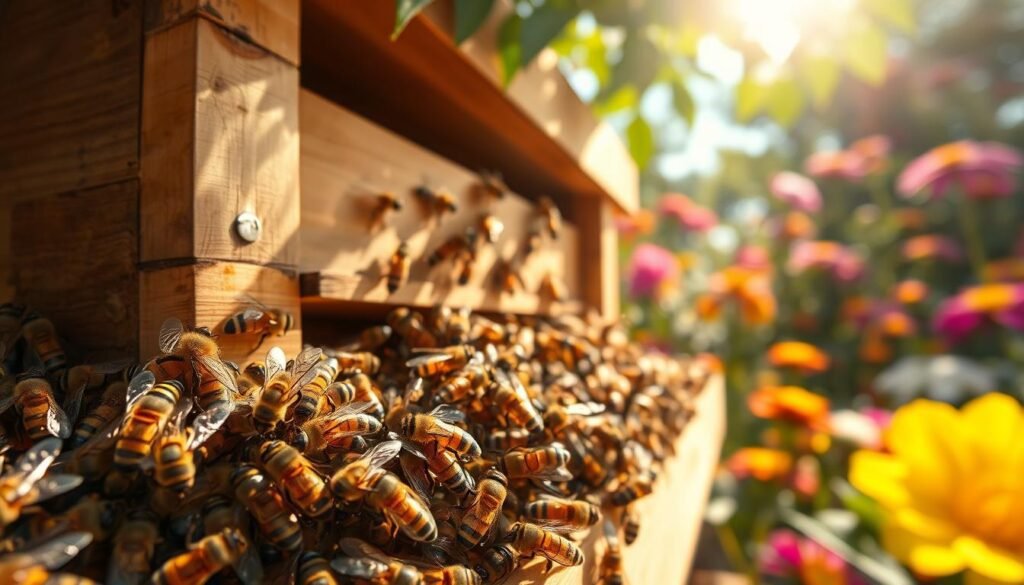
Relieving congestion prevents the trigger. Pull full honey frames out of the brood chamber and replace them with empty drawn comb or foundation. This gives the queen room to lay and reduces backfilling that sparks queen-cell production.
Relieving congestion: rotate full frames from the brood area
- Check for queen cells, backfilling, and heavy bearding as early warning signs.
- Move one or two full frames upward and insert drawn empties to expand brood space.
- Record frame positions and dates so patterns emerge across seasons.
Balanced splits that keep the parent strong
Use measured splits that remove enough bees to lower swarming impulse but leave a robust foraging force in the parent colony. Time splits before the main bloom so the aged worker cohort remaining can harvest at scale.
| Action | Why it matters | Expected result |
|---|---|---|
| Rotate full frames | Creates laying space | Fewer queen cells, sustained honey flow |
| Balanced split | Relieves pressure without gutting workforce | Parent colony retains collectors during peak |
| Recordkeeping | Tracks queen cell counts and interventions | Improved seasonal timing and outcomes |
Healthy Comb, Frames, and Natural Resource Economics
Careful comb management converts a hidden expense into a seasonal advantage.
Wax production has a measurable cost. Drawing ten medium combs can consume roughly 25 pounds of honey and uses sterols and fatty acids from pollen. That nutrition is then unavailable for brood growth.
Quantify the tradeoff: building fresh comb diverts stores and slows colony expansion during peak windows. Plan frame cycles so bees spend flow days storing honey instead of making infrastructure.
Build an inventory of clean, drawn comb and spare frames so colonies accept nectar faster. This speeds storage and reduces the resource drain that comes with foundation building.
After extraction, return wet supers for a day or two so bees can dry comb thoroughly. Then freeze comb to kill eggs of small hive beetles and wax moths.
For off‑season storage: stack dry comb with para‑dichlorobenzene as directed, air out before reuse, and retire damaged comb promptly. Routine inspection keeps comb hygienic and helps bees focus on honey, not rebuilding.
| Action | Benefit | Note |
|---|---|---|
| Maintain drawn comb stock | Faster nectar intake | Less honey spent on wax |
| Return wet supers briefly | Cleaner comb for storage | One–two days is sufficient |
| Freeze and store | Kills pests | Air out before reuse |
Protecting Productivity: Pests, Pathogens, Robbing, and Predators
Small invaders and opportunists pose outsized risks to honey stores late in the flow. Monitor pests and disease frequently and act quickly when thresholds are met.
Varroa, beetles, moths, and bacterial threats
Regular checks for varroa, small hive beetle (SHB), wax moths, American and European foulbrood protect bees and honey yields.
Adjust chemical and mechanical management based on results and local conditions. Treat varroa when counts exceed your chosen threshold and isolate or destroy foulbrood as required by regulation.
Robbing prevention and yard hygiene
Use robbing screens, tidy yard work, and careful transport of frames to cut theft. Minimize exposed comb smells during harvest and move supers quickly to reduce robbing spirals.
Post-extraction handling and storage
Remove bees from supers with blowers, repellents, or brushing and extract immediately. Returned wet supers can be given a short clean-up window, then frozen before stacking with para-dichlorobenzene per label.
| Action | Why it matters | Timing |
|---|---|---|
| Monitor varroa and disease | Protect populations and brood | Monthly and pre-flow |
| Rapid extraction | Prevents SHB and moth damage | Within 24 hours of removal |
| Robbing screens & spacing | Reduces theft and stress | During harvest and dearth |
Weather, Climate, and Troubleshooting Small Honey Harvests
Bad weather during a main flow often explains small harvests more than queen problems or disease. Rain, strong wind, and heat keep bees inside and cut foraging days. That reduces nectar secretion and narrows the window for surplus storage.
Rain, heat, and dearths: adapting management you can’t control
Diagnose small yields by matching low-weight weeks to stormy or hot periods during bloom. Extended summer dearths force colonies to eat spring stores; reliable water helps colonies cool and preserves reserves.
Hive style, ventilation, and access paths that speed curing and reduce stress
Improve ventilation and add an upper entrance when humidity stalls nectar dehydration. Hive design matters: Langstroth boxes often support larger brood nests and bigger crops when managed well.
- Review recent weather and flow timing before changing queens or treatments.
- Reassess location annually; shifting land use can cut local blooms and justify relocation.
- Track colony weight, nectar flow timing, and anomalies so beekeepers adjust supering and interventions in real time.
| Issue | Action | Expected Result |
|---|---|---|
| Rainy bloom | Delay extraction; monitor weight | Prevent wet honey and pest risk |
| Hot dearth | Provide water; consider relocation | Protect stores and brood |
| High humidity | Add upper ventilation | Faster curing and less fermentation |
Conclusion
Align location, bloom timing, and colony numbers so each beekeeper places colonies where flowers and forage match seasonal availability. This simple fit is the most reliable path to a consistent spring and summer harvest.
Discipline in space management—add supers at the two‑thirds mark, prevent swarms, and keep young queens—keeps workers focused on nectar and honey rather than rebuilding or emigrating.
After harvest, extract promptly, return wet supers briefly, freeze comb, and store per label instructions. Keep notes on weather, bloom windows, and interventions. Clear records and thoughtful management choices support better decisions and steady honey yields for beekeepers.
FAQ
What does "productivity" mean for a bee colony?
Productivity means consistent nectar and pollen intake, healthy brood rearing, low winter losses, and a reliable honey harvest. It reflects colony strength, forager numbers, and the ability of the queen and workers to convert forage into stored honey and brood.
How important is hive placement within the forage radius?
Location matters. Place hives within a 2‑mile forage radius of diverse bloom to maximize foraging options. Shorter flight distances save energy, increase trips per forager, and improve nectar inflow during peak flows.
How many colonies should I keep for local nectar availability?
Match colony count to nectar and pollen resources. In areas with limited bloom, fewer hives preserve yield per colony. In strong nectar zones you can support more colonies; monitor stores and adjust density to avoid competition and robbing.
What microclimate factors help colonies forage earlier and avoid heat stress?
Morning sun warms entrances and wakes foragers earlier; afternoon shade reduces heat stress. Aim for a site with good ventilation and windbreaks. Upper entrances or screened bottoms can improve air movement and aid nectar curing.
How should I provide water so bees can access it safely?
Offer shallow water stations with landing pads (stones, corks, floaters) to prevent drowning. Place them near but not directly at hive entrances so bees don’t attract robbers or predators to the boxes.
Which plants give the longest continuous nectar and pollen flow?
Use a mix of native shrubs, trees, and long‑blooming perennials plus season‑bridging plants like clover, thyme, and herbs. Stagger bloom times—early spring trees, midseason wildflowers, and late summer asters—to reduce dearth periods.
How do queen quality and colony timing affect yields?
Young, well‑mated queens produce steady brood that builds worker numbers ahead of major flows. Time splits and queen introductions so peak forager populations coincide with regional nectar flows for maximum collection.
When should I add supers without stressing the colony?
Add a super when existing frames are roughly two‑thirds filled with nectar or capped honey. Watch flow signals more than calendar dates. Top supering often works during strong blooms; bottom supering can be useful where continuous brood expansion is needed.
How do I prevent swarms while keeping foragers productive?
Reduce congestion by rotating full honey frames out of the brood chamber and by creating balanced splits that relieve pressure without removing too many foragers. Regular inspections for queen cells and space management help deter swarming.
Is drawn comb worth the honey cost for new colonies?
Yes. Drawing foundation consumes stored honey—roughly the equivalent of several pounds per frame—but drawn comb speeds storage and brood expansion. Use a mix of drawn comb and foundation to balance immediate yield with long‑term growth.
What are the best practices against Varroa, small hive beetles, and wax moths?
Monitor regularly, use integrated pest management: screen bottoms, regular mite counts, timely treatments when thresholds are met, good sanitation, and minimizing wet comb exposure. Proper ventilation and spacing reduce pest pressure and robbing risk.
How should I time harvests and store wet comb safely?
Harvest during dry, warm weather when nectar is capped. Freeze wet combs or handle promptly to prevent fermentation and wax moth damage. Clean, ventilated storage and food‑grade containers preserve quality off‑season.
How do weather and seasonal dearths affect small honey yields?
Rain, heat, and drought reduce foraging windows and nectar secretion. During dearths, provide supplemental feeding and conserve stores by reducing space and limiting inspections. Adapt management to local climate trends rather than fixed schedules.
What hive styles and ventilation strategies speed nectar curing?
Well‑ventilated tops, screened lids, and adequate entrance area speed moisture removal from nectar. Choose hive styles that allow airflow without chilling brood—insulation and ventilation must be balanced for your climate.
Can planting a lawn understory help between major flows?
Yes. Clover, lawn thyme, and other groundcover bloomers provide accessible nectar and pollen during gaps. These plants are low‑maintenance and help sustain forager activity through short dearths.
How do I reduce robbing and theft when colonies are crowded?
Maintain good yard hygiene, space colonies to reduce scent trails, use robbing screens when necessary, and avoid leaving exposed honey or open feeders. Quick interventions during any robbing event limit colony stress and losses.
What signs show a colony is undermanned for an upcoming flow?
Few returning foragers, small pollen loads, limited brood, and patchy comb stores indicate low workforce. Consider delaying harvests, reducing splits, or introducing nucs/frames of brood to boost forager numbers before the flow.