Last Updated September 17, 2026
You can test honey purity at home only in a limited sense: the popular kitchen tests — a spoonful in a glass of water, a drop on your thumb, a match dipped in honey — detect added water and almost nothing else, while the adulteration that actually happens in the honey trade (cheap rice, beet, wheat and corn syrups blended into real honey) passes every one of them. The one home instrument that gives a real number is a honey refractometer, which measures moisture; everything beyond that needs a laboratory. This guide explains what each home test can and cannot show, how to run the ones worth running, how to use a refractometer, and how to buy honey you never need to test.
Key Takeaways
- The water, thumb, paper, flame and heat tests all measure the same thing — moisture and viscosity — so they flag watered-down honey and nothing more. Syrup-adulterated honey is just as thick as the real thing.
- Europe’s Joint Research Centre found 46% of 320 imported honey consignments suspicious of syrup adulteration in 2023, and concluded that “a simple test is not sufficient to detect adulteration”; the FDA detects it with stable carbon isotope ratio analysis, not kitchen chemistry.
- A $20–40 handheld honey refractometer is the only home test with a defined pass mark: USDA Grade A extracted honey must be at or below 18.6% moisture, and honey above roughly 19–20% can ferment.
- Crystallization, a layered floral aroma and a slightly acidic, complex taste are honest signs of real honey, but their absence proves nothing — heated and filtered real honey stays liquid and tastes flat too.
- The most reliable “test” is the purchase: honey from a local beekeeper, a True Source Certified brand, or a jar whose label meets FDA’s honey labeling guidance carries far less risk than any jar you screen in the kitchen.
Table of Contents
- What “Pure Honey” Actually Means
- What Home Tests Can and Cannot Detect
- The Kitchen Tests, With Honest Verdicts
- The One Home Test That Works: A Honey Refractometer
- Reading Results Without Fooling Yourself
- When a Lab Test Is Worth It
- Buying Honey You Don’t Need to Test
- Safety and Storage Notes
What “Pure Honey” Actually Means
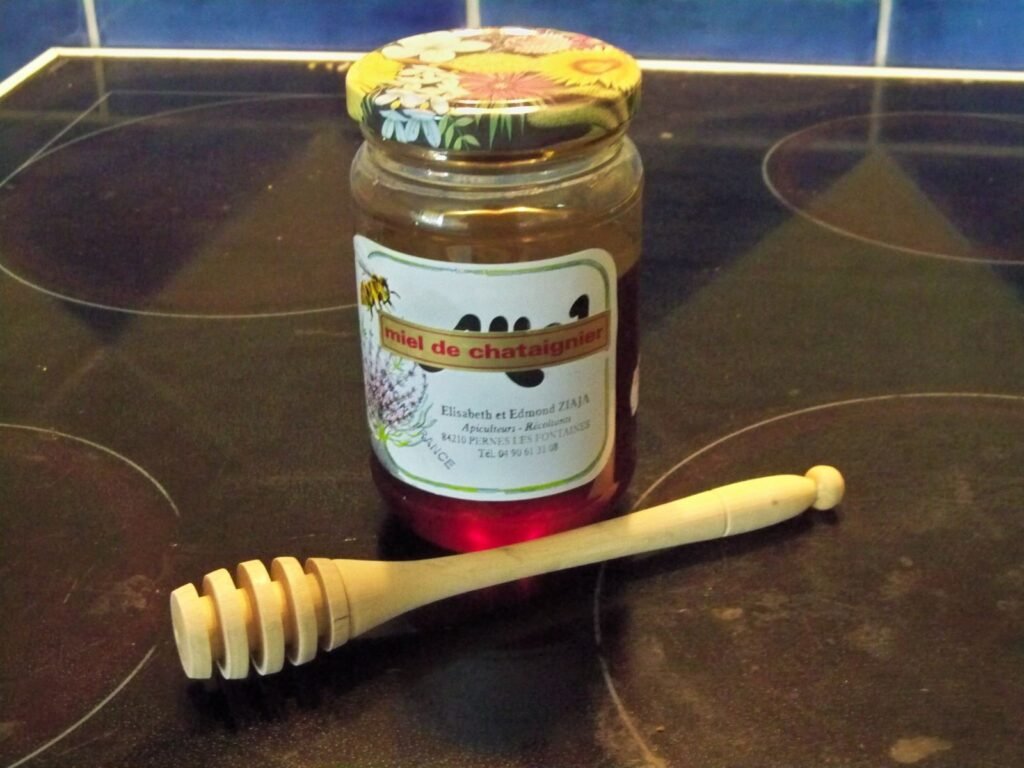
Honey is roughly 80% sugars (mostly fructose and glucose), 17–20% water, and a small fraction of acids, enzymes, pollen, minerals and aromatic compounds that give each floral source its character. In the United States the FDA’s Guidance for Industry: Proper Labeling of Honey and Honey Products says a product labeled simply “honey” must be honey and nothing else; a blend with added sugar or syrup has to declare it. Selling syrup-extended honey as “honey” is what the agency calls economically motivated adulteration:
“Economically motivated adulteration, the regulatory term that the FDA uses for food fraud, is the substitution, addition, or omission of a substance in a product or concealment of a product’s inferiority or damage to increase its apparent value or reduce the cost of its production (i.e., for economic gain).”
Two numeric standards matter for a home tester. The USDA’s United States Standards for Grades of Extracted Honey cap moisture at 18.6% for Grade A and Grade B honey; the international Codex Alimentarius honey standard (CXS 12-1981) allows up to 20% moisture and up to 40 mg/kg of HMF, a compound that rises when honey is overheated or stored too long. Moisture is the one you can measure at home. HMF is not.
What Home Tests Can and Cannot Detect
Every viral kitchen test — water glass, thumb, paper towel, matchstick, spoon over a flame — is a viscosity or moisture test in disguise. They will catch honey that has been thinned with water, which is rare in commercial fraud because watery honey ferments on the shelf. They will not catch honey extended with refined syrup, because rice, beet, wheat or corn syrup blended at 20–50% produces a jar that is as thick, as sweet and as slow to dissolve as the genuine article. That is precisely why fraud has moved to syrups. When the European Commission’s Joint Research Centre tested 320 imported consignments in 2021–22, “147 samples (46%) were suspicious to be adulterated,” mostly with syrups “made mostly from rice, wheat or sugar beet,” and its conclusion about detection was blunt:
“However, the current analytical methods are not yet developed enough at international level and a simple test is not sufficient to detect adulteration.”
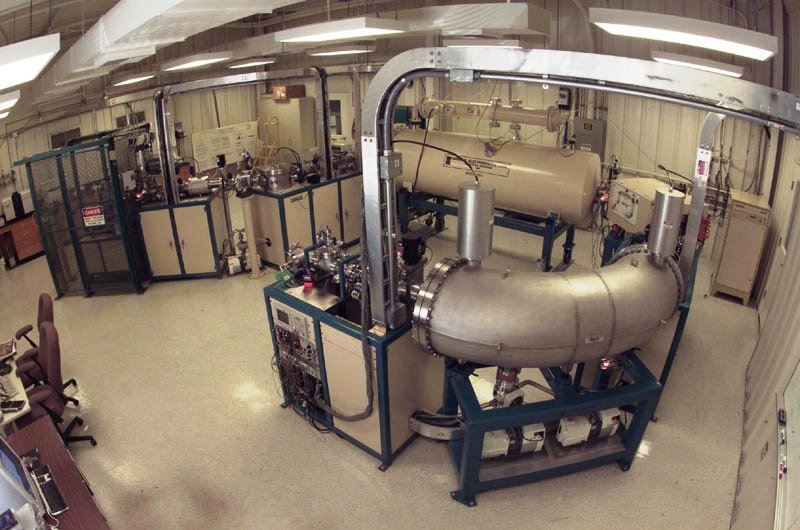
The FDA reaches its own verdicts with Stable Carbon Isotope Ratio Analysis, which compares the carbon signature of the honey with that of its own protein — a test no kitchen can run. Its most recent published sampling found 4 violative samples out of 102 (4%) in FY25, 3 of 107 imported samples (3%) in 2022–23, and 10% of 144 imported samples in the round before that. The honest summary: home tests are a screen for water and gross fillers, a lab is the only way to catch syrup, and the best defense is buying well in the first place.
| Home test | What it actually measures | Detects added water? | Detects syrup adulteration? | Verdict |
|---|---|---|---|---|
| Spoonful in a glass of water | Viscosity / density | Yes, if heavily diluted | No | Weak screen |
| Drop on thumb or paper towel | Viscosity, surface moisture | Yes, if heavily diluted | No | Weak screen |
| Matchstick or cotton-bud flame | Moisture at the surface | Roughly | No | Unsafe and uninformative |
| Spoon over heat (caramelization) | Sugar content and water | Roughly | No — syrup caramelizes too | Not useful |
| Vinegar fizz | Alkaline fillers such as chalk | No | No | Irrelevant to U.S. retail honey |
| Iodine drop | Starch | No | Only crude starch fillers, not refined syrups | Rarely informative |
| Crystallization, aroma, taste | Composition and processing, indirectly | Somewhat | Sometimes — a trained palate can notice flat, one-note sweetness | Useful soft signals |
| Honey refractometer | Moisture content (a real number) | Yes, precisely | No | The one home test worth owning |
| Laboratory isotope or NMR analysis | Sugar origin and molecular fingerprint | Yes | Yes | The only definitive test |
The Kitchen Tests, With Honest Verdicts

The water test
Drop a teaspoon of room-temperature honey into a clear glass of room-temperature water without stirring. Real honey — and syrup-blended honey — sinks in a cohesive blob and dissolves slowly; honey that has been thinned with water or is unripe (harvested above about 20% moisture) breaks up and clouds the water quickly. That is the whole result. A jar that “passes” has told you it is not watered down; it has told you nothing about syrup.
The thumb and paper-towel tests
A drop that holds a dome on your thumb or sits on a paper towel without a spreading wet ring is a drop with low moisture. Cold honey holds a dome better than warm honey, thick floral sources (buckwheat, heather) hold better than thin ones (acacia, tupelo), and a syrup blend holds as well as anything. Treat these as a rough moisture check, not a purity check.
The flame test
Dipping a matchstick in honey and striking it, or holding a honey-coated cotton bud to a flame, tests whether the surface is dry enough to burn. Low-moisture honey lights; so does low-moisture syrup blend. It adds nothing a refractometer doesn’t do better, and it puts an open flame next to a sticky, sugary fuel in your kitchen. Skip it.
The heat or caramelization test
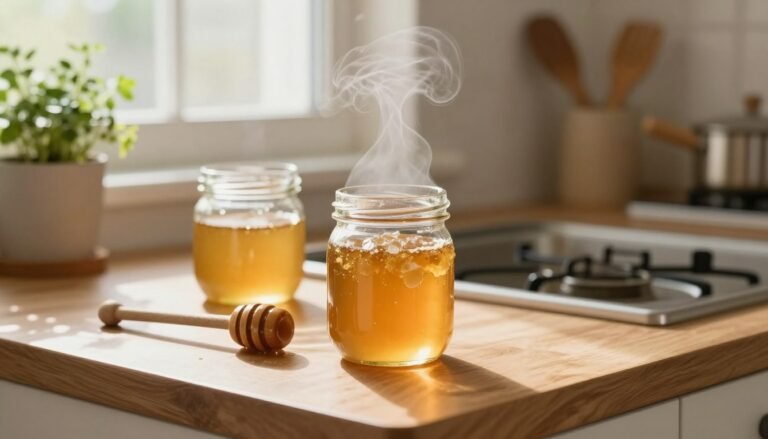
Warming a spoonful over a flame until it darkens is sometimes claimed to separate honey (which “caramelizes”) from adulterated honey (which “foams”). Both are sugar solutions; both caramelize, and foaming depends mainly on water content and how fast you heat. This test is not informative and it destroys the sample.
The vinegar and iodine tests
A fizz when honey is stirred into dilute vinegar means an alkaline filler such as chalk — a historical adulterant that does not turn up in modern U.S. retail honey. A blue-black color with a drop of iodine means starch, which can catch crude flour or starch fillers but not the refined rice or wheat syrups that fraud actually uses, because those are already broken down into sugars. Neither test is dangerous; neither is worth much.
Crystallization, aroma and taste
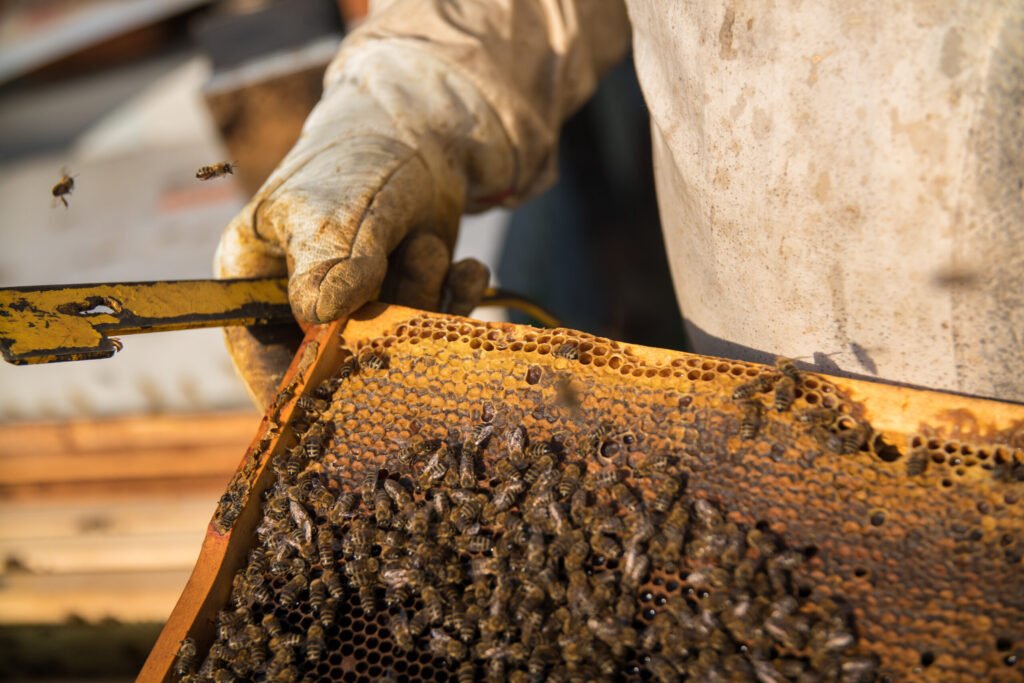
These are the kitchen signals with some real information in them. Most raw honey crystallizes within weeks to months, faster for glucose-rich sources like clover and canola, slower for fructose-rich ones like acacia and tupelo; a jar that stays perfectly liquid for a year has either been heated and fine-filtered or is not all honey. Real honey smells of something — flowers, hay, resin, fruit — and tastes layered and slightly acidic, with a finish that changes; syrup blends taste flat and uniformly sweet. Taste a suspect jar next to honey from a local beekeeper and the difference is often obvious. Our guides to why honey crystallizes and raw honey filtration levels explain the processing side.
The One Home Test That Works: A Honey Refractometer
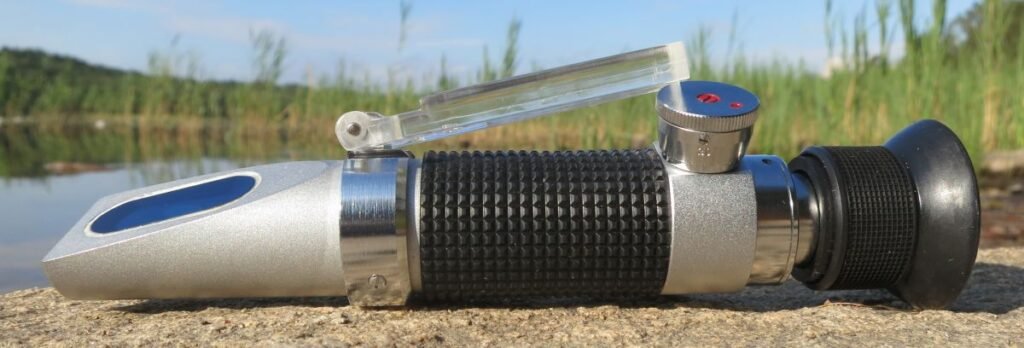
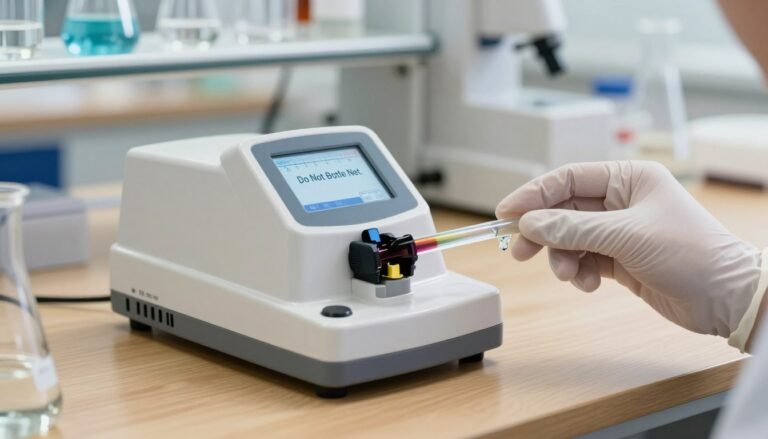
A handheld honey refractometer is a small optical instrument, sold for beekeepers for roughly $20–40, that reads the moisture content of a smear of honey to a fraction of a percent. Put two drops on the prism, close the cover, hold it to the light and read the line on the scale. The number means something: USDA Grade A and B extracted honey must be at or below 18.6% moisture, Codex allows 20%, and honey much above 19–20% is at risk of fermenting — the sour, fizzy, yeasty jar that some kitchen tests are really detecting. A refractometer will tell you in ten seconds whether a jar has been watered, whether a beekeeper harvested unripe honey, and whether your own harvest is safe to bottle. It will not detect syrup, which has the same moisture as honey. For technique and calibration see how to test honey moisture with a refractometer and our review of the best honey refractometers.
This short demonstration from the supplier Mann Lake shows the whole procedure — calibrating the instrument, loading a drop of honey, and reading the moisture line — in under two minutes.
| Refractometer reading | What it means | Action |
|---|---|---|
| Below 17% | Very dry honey; some sources (e.g., desert or heavily dehydrated) run this low | Fine; will be very thick |
| 17–18.6% | Meets USDA Grade A/B moisture limit | Normal, stable honey |
| 18.6–20% | Within Codex limit; below USDA Grade A | Use promptly; keep sealed and cool |
| Above 20% | Unripe or watered; fermentation risk | Don’t buy again; for your own harvest, don’t bottle yet |
Reading Results Without Fooling Yourself

Home tests fail in both directions. A perfectly genuine but unripe honey from a hobbyist, or a thin varietal like tupelo, will “fail” the water and thumb tests; a syrup blend from a large packer will “pass” every one of them. Temperature changes everything — chilled honey holds a dome and warm honey spreads — so test at room temperature, and test a known-good jar (from a beekeeper you trust) alongside the suspect one so you are comparing, not guessing. Run more than one test, write down what you saw, and treat the sum as a clue rather than a verdict. If a jar is thin, tastes flat, never crystallizes and sells for well below the price of local honey, you have a pattern worth acting on: stop buying it, or send it to a lab.
When a Lab Test Is Worth It
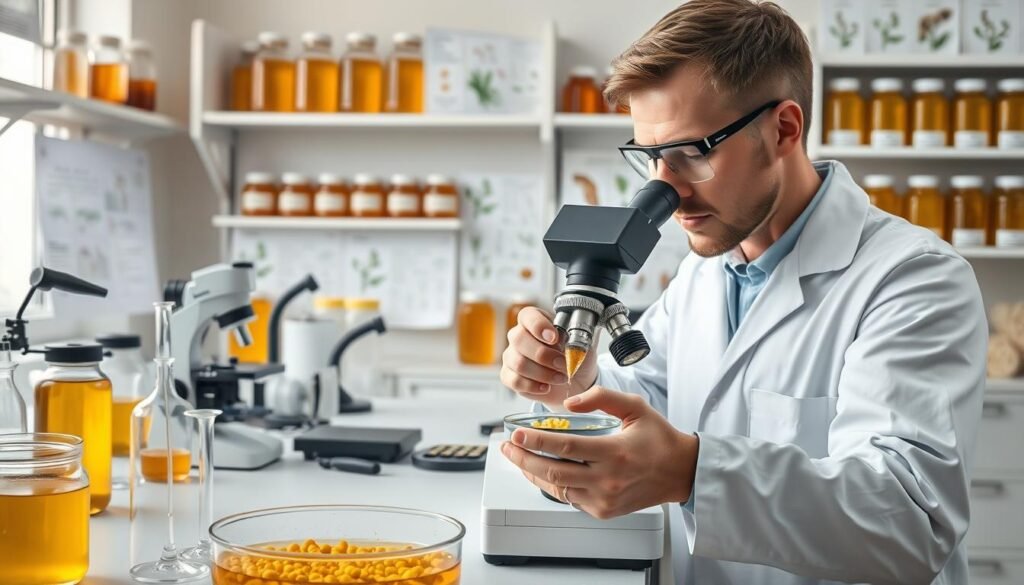
Laboratories detect syrup by asking where the sugar’s carbon came from. Stable carbon isotope ratio analysis — the FDA’s method, also written as SCIRA or EA-IRMS — separates honey (made by bees from C3 plants) from corn and cane syrup (C4 plants); liquid-chromatography isotope analysis (LC-IRMS) extends that to individual sugars and catches some C3 syrups; nuclear magnetic resonance (NMR) profiling compares the whole molecular fingerprint of a sample against a database of authentic honeys and flags rice, beet and wheat syrups that isotope tests miss; and pollen analysis (melissopalynology) checks the floral and geographic origin on the label. Commercial labs such as Eurofins run these for the trade, typically at a few hundred dollars per sample, which makes sense for a beekeeper selling under a varietal claim, a buyer sourcing drums of honey, or a consumer who wants a definitive answer about a brand. For a single supermarket jar it is cheaper to switch brands. Our companion guide, how to tell if honey is fake — beyond the kitchen tests, goes deeper into honey laundering and what FDA’s own testing has found, and how to spot fake honey covers the lab methods one by one.
Buying Honey You Don’t Need to Test
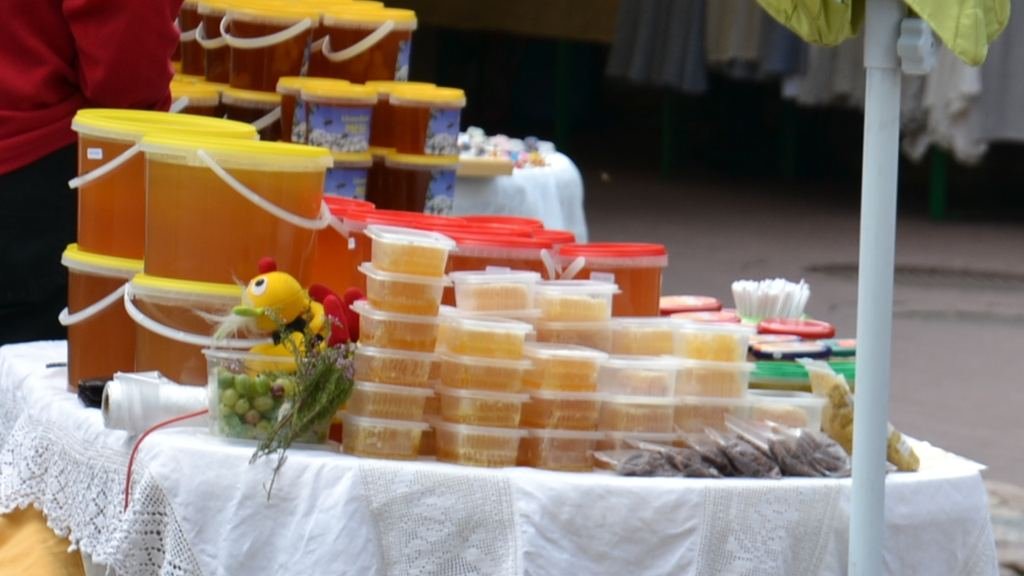
The cheapest, most reliable purity test is choosing where the honey comes from. Honey bought directly from a beekeeper — at a farmers market, a farm stand or a local club sale — has a short, visible supply chain and a person you can ask about floral source, harvest date and moisture; it is also the honey the FDA’s sampling finds violative least often. In a store, look for a label that names a specific origin and floral source, meets the U.S. honey labeling requirements, and carries a True Source Certified mark, a voluntary traceability audit built specifically against import fraud. Be skeptical of “pure,” “natural” and “raw” without a producer’s name behind them, and of any price far below what local honey costs — real honey cannot be produced for the price of syrup. Raw vs. manuka vs. local honey sorts out which labels matter for which purpose, and how the U.S. honey industry works explains why so much supermarket honey is imported and blended in the first place.
Safety and Storage Notes
If you insist on a flame test, use a single match over a sink, keep the honey jar and anything flammable well away, and never heat a sealed container or microwave honey to “test” it. Store honey sealed at room temperature out of sunlight; refrigeration only speeds crystallization. Crystallized honey is not spoiled — stand the jar in warm (not boiling) water to reliquefy it without pushing up HMF. Honey that smells sour or alcoholic, fizzes, or has a foamy cap has fermented because its moisture was too high; that is the one “purity” failure a kitchen can reliably diagnose, and a refractometer would have predicted it. Full storage detail is in our honey storage guide.
Sources
Adulteration definitions, methods and sampling results are from the FDA’s FY25 honey sampling report (April 2026) and its 2022–23 imported honey report; labeling rules from the FDA’s Guidance for Industry: Proper Labeling of Honey and Honey Products. The European figures and quotation are from the Joint Research Centre’s “Food fraud: How genuine is your honey?” (March 2023). Moisture limits are from the USDA’s United States Standards for Grades of Extracted Honey and the Codex Alimentarius honey standard CXS 12-1981. Laboratory method descriptions follow Eurofins’ honey authenticity testing overview; the traceability program referenced is True Source Honey.
FAQ
Does the water test really show whether honey is pure?
No. It shows whether honey has been thinned with water. Honey blended with rice, beet or corn syrup — the adulteration that actually occurs — sinks and dissolves slowly exactly like pure honey, so a jar that passes the water test has not been shown to be pure.
Is the flame or matchstick test safe and accurate?
It is neither. It only indicates low surface moisture, which syrup blends share, and it puts an open flame next to a sugary fuel. A refractometer gives the same information as a number, safely.
What is the most reliable way to test honey at home?
A handheld honey refractometer, which reads moisture content. USDA Grade A extracted honey is at or below 18.6% moisture; readings above 20% mean unripe or watered honey that may ferment. It cannot detect syrup, but it is the only home test with a defined pass mark.
Does real honey always crystallize?
Most raw honey crystallizes within weeks to months, quickly for clover and canola and slowly for acacia and tupelo. Heated and fine-filtered honey can stay liquid for a year or more, so a liquid jar is not proof of adulteration — but a jar that never crystallizes deserves a closer look.
How do labs detect adulterated honey?
Mainly by stable carbon isotope ratio analysis (the FDA’s method), which separates bee-made sugars from corn and cane syrup; LC-IRMS for individual sugars; NMR profiling, which fingerprints the whole sample against authentic honeys and catches rice and beet syrups; and pollen analysis for origin. Commercial testing costs a few hundred dollars per sample.
How common is fake honey in the United States?
The FDA’s published sampling found 4% of 102 samples violative in FY25 and 3% of 107 imported samples in 2022–23, after 10% in the round before. Europe’s 2023 coordinated action found 46% of 320 imported consignments suspicious, so the risk depends heavily on where a jar’s honey came from.
What’s the safest way to buy honey?
Buy from a local beekeeper you can talk to, or choose a brand that names its origin, follows FDA honey labeling guidance and carries the True Source Certified traceability mark. Very low prices and vague “pure” or “natural” claims with no producer named are the warning signs.