Published November 27, 2025 · Last Updated August 26, 2026
This practical guide shows how to align harvest decisions with bee biology and seasonal patterns. You will learn when to take surplus and how to protect stores so the hive stays strong through winter.
Ethical harvests match nectar flows and leave reserves: about 40–60 pounds in cold zones and 20–30 pounds in warm areas. Take frames only when they are 80–90% capped and moisture reads below ~18.5% to avoid fermentation.
Use gentle methods—minimal smoke, escape boards, soft brushing or gentle blowing—to protect brood and queen. Preserve drawn comb to speed refilling and boost next-season production.
After removal, monitor stores, brood, and queen health. Feed a 2:1 syrup in fall only if stores are low. Proper supering during bloom reduces congestion and lowers swarm risk.
Key Takeaways
- Harvest only surplus when frames are mostly capped and moisture is low.
- Leave regional reserves: 40–60 lb cold, 20–30 lb warm.
- Use gentle removal to protect brood, queen, and comb.
- Monitor the hive after extraction and feed syrup only as a last resort.
- Super during bloom to support production and reduce swarming.
Why balance matters: honey production without compromising colony health
Good harvest practice protects the hive’s long-term strength while allowing beekeepers to take true surplus. This approach prioritizes the hive’s food and workforce before any extraction. Leave regional reserves—about 40–60 pounds in northern climates and 20–30 pounds in warmer areas—so the population can ride out cold snaps and brood slowdowns.
Understanding surplus vs. survival stores
Surplus is what can be removed safely; survival stores are the winter lifeline and must remain. Assess frames for capped cells and low moisture before any harvest. A quick check of stores, brood pattern, and queen performance helps decide if supers hold true surplus.
How stress, swarming, and pests reduce yield
Swarming can cut yields sharply: roughly 60% of workers leave, and brood production pauses for about three weeks while a new queen establishes. That drop in foragers reduces nectar collection and overall honey production.
Other stressors include late-season extractions, dearth, or adding empty comb when population declines. These actions lower patrol coverage and invite pests like small hive beetles and wax moths. Ethical timing—harvesting during a strong nectar flow when most cells are capped—reduces robbing, fermentation, and colony disruption.
- Decision flow: check stores, brood, queen, and frame cappings before you take supers.
- Stewardship: protect brood and a vigorous queen to secure future honey production and reduce emergency feeding.
- Reference: regional survival benchmarks and management tactics can be found in this study on winter survival winter reserve guidelines.
Know your flow: mapping nectar, pollen, and weather in your area
Mapping local bloom patterns helps beekeepers match actions to real conditions. Study what flowers open month by month and note peak months for nectar and pollen.
Honey flow timing by region and why location matters
Bees forage roughly a two-mile radius—about 9,000 acres—so landscape choice is critical. Wetlands, prairies, urban plantings and rights-of-way often supply diverse forage. Avoid large pine or conifer expanses that act as food deserts.
Reading local bloom cycles, dearths, and microclimates
Regional flows vary: many U.S. areas peak April–June, while some southern zones extend into July. Early blooms from January to mid‑March usually aid spring build-up rather than producing large surplus.
Right-sizing the number of colonies per yard
Stocking density matters: if 30–40% of acres bloom in spring, 25–40 colonies can yield harvestable honey. Doubling that number often cuts per-hive returns dramatically.
- Plan by radius: map blooms inside the 2-mile forage circle.
- Match number to forage: avoid overstocking to protect brood, stores, and long-term yields.
- Track weather: warm, stable periods boost nectar secretion and good curing conditions.
Colony readiness checklist before any harvest
Before putting on the extractor, verify the hive shows clear signs of strength and forward momentum.
Confirm population: a dense adult population and steady foraging signal readiness. Check that nurse bees support open brood and that the population is growing.
Population, brood pattern, and queen performance signals
Read the brood pattern for compact, even cells. Eggs and young larvae across frames show a productive queen. Replace a failing queen outside peak flows.
Super and frame status: avoiding congestion and swarm triggers
Inspect frames in supers: when about six of ten combs are filling and capping, add space to prevent crowding. Rotate full combs out of the brood nest and add empties to keep the queen laying.
“Act early on queen cells, backfilling, or frequent bearding to reduce swarm risk.”
- Check resources: steady nectar and pollen coming in.
- Watch swarm cues: queen cells and backfilled brood nests.
- Document findings to refine ongoing management.
| Check | Good sign | Action |
|---|---|---|
| Population | 10–12 deep frames covered | Keep or split if overly strong |
| Brood | Compact pattern, even capping | Monitor nutrition |
| Supers | 6 of 10 combs filling | Add another super |
Strong spring care amplifies results. Use this checklist and note trends so beekeepers can act with confidence.
Balancing honey harvesting with colony needs
Plan your removals so hives keep enough stores to survive the slow months. Set clear reserve targets by climate and check stores before you take frames.
How much to leave: winter stores by climate (pounds)
Cold regions: aim for 40–60 pounds per hive. Warm regions: plan on 20–30 pounds. Use hefting or a hive scale to confirm actual pounds remain.
Ethical timing: harvest during strong nectar flows
Take supers only when most cells are capped and moisture is low. That time preserves quality and reduces robbing. Move extra frames during active flows to keep guards focused.
Avoid overharvest late in season and during dearth
Do not pull stores as populations decline. Smaller colonies cannot defend added space and pests find weak combs. If autumn yields are abundant, consider keeping much of that crop for survival.
“Surplus for you, survival for them — this ledger keeps apiaries productive year after year.”
- Set reserves by region.
- Verify pounds before extraction.
- Respect dearths and late-season risk.
Supering strategy: adding space at the right time and in the right amount
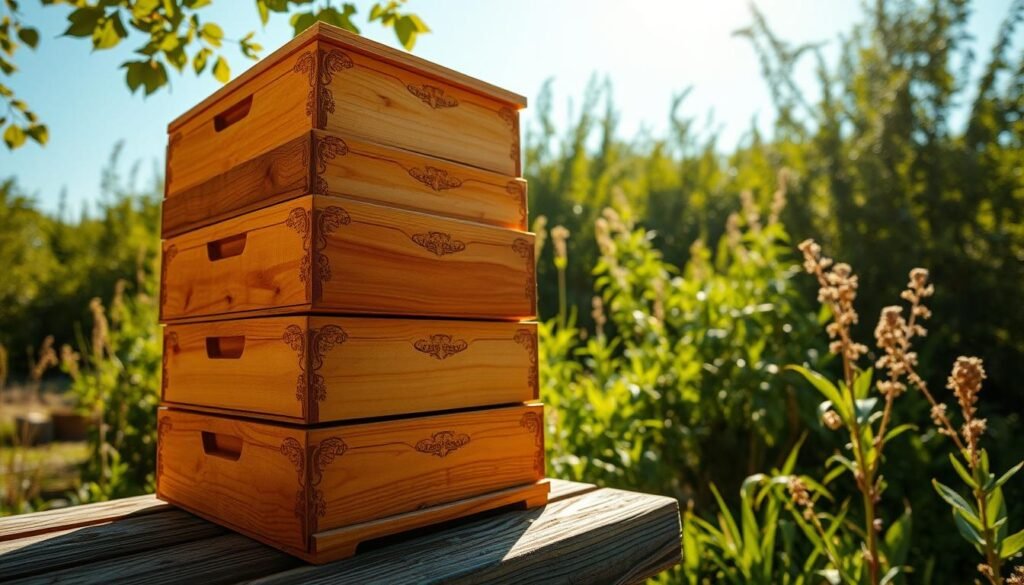
The right timing for extra boxes depends on how many combs are already filling and capping. Use a clear rule so your decisions stay consistent during fast flows.
When to add more boxes
Rule of thumb: add a super when about six of ten combs are nearly full and cappings appear. This 2/3 rule keeps stores moving and prevents last‑minute crowding.
Before, during, and after peak
Before peak, add multiple supers if forecasts and incoming nectar are strong. At peak, add one super and monitor fill rate hourly or daily.
After peak, stop adding boxes in most cases. Bees often backfill the brood area and fewer boxes reduce pest risk.
Top vs. bottom placement
Top supering reduces heavy lifting and speeds access during extraction. Bottom supering works too; there is no proven yield advantage either way. Choose based on your workflow and safety.
Risks and energy costs
“Too many boxes during a dearth invite small hive beetles and wax moths; too few raise swarm risk.”
Drawing new comb costs roughly 25 pounds of honey to produce ten medium frames. Use drawn comb to speed intake and lower energetic strain on the population.
| Situation | Action | Reason |
|---|---|---|
| 6 of 10 combs filling | Add a super | Prevents congestion and swelling |
| Strong pre-peak flow | Add multiple supers | Anticipate high intake rates |
| Late-season decline | Hold off | Reduce pest exposure and excess boxes |
- Plan: keep spare supers ready during fast flows.
- Monitor: record the number added and fill dates for better future management.
Readiness to harvest: moisture content, cappings, and field tests
Use simple field tests to confirm that frames are ripe for removal. Proper checks protect flavor and prevent fermentation.
Visual and numeric targets
Set the target: aim for moisture content under roughly 18.5% to avoid fermentation and preserve flavor.
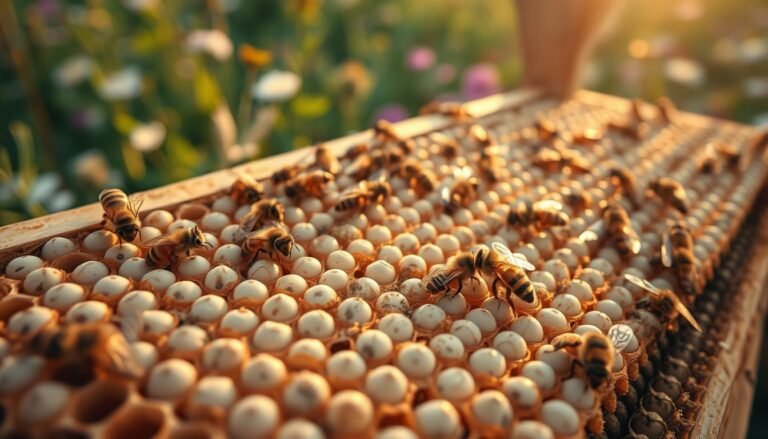
Read the comb: look for at least 80–90% capped cells on each frame as the primary visual cue of ripeness.
Quick field checks
The gentle shake test is simple: snap a frame down—no drips means good cure. Smell the comb; a clean, sweet aroma without sour notes signals stability.
Sample multiple frames per super. Not all frames ripen evenly; leave unripe edges for a later pull to protect batch content.
Timing and tools
Work on warm, dry days during an active flow. Lower ambient humidity helps bees finish curing and reduces absorbed moisture in extracted product.
- Avoid mixing unripe frames with ripe ones.
- Record readings and use a refractometer when precision is needed.
- Build a protocol so checks stay consistent across hives and seasons.
| Check | Good sign | Action |
|---|---|---|
| Moisture content | <~18.5% | Proceed to extract or test with refractometer |
| Capping rate | 80–90% capped cells | Mark frame ready; sample adjacent frames |
| Field test | No dripping, fresh aroma | Move to extractor on dry day |
“A few quick checks on the hive save time and protect quality.”
Gentle removal and extraction methods that protect bees and comb
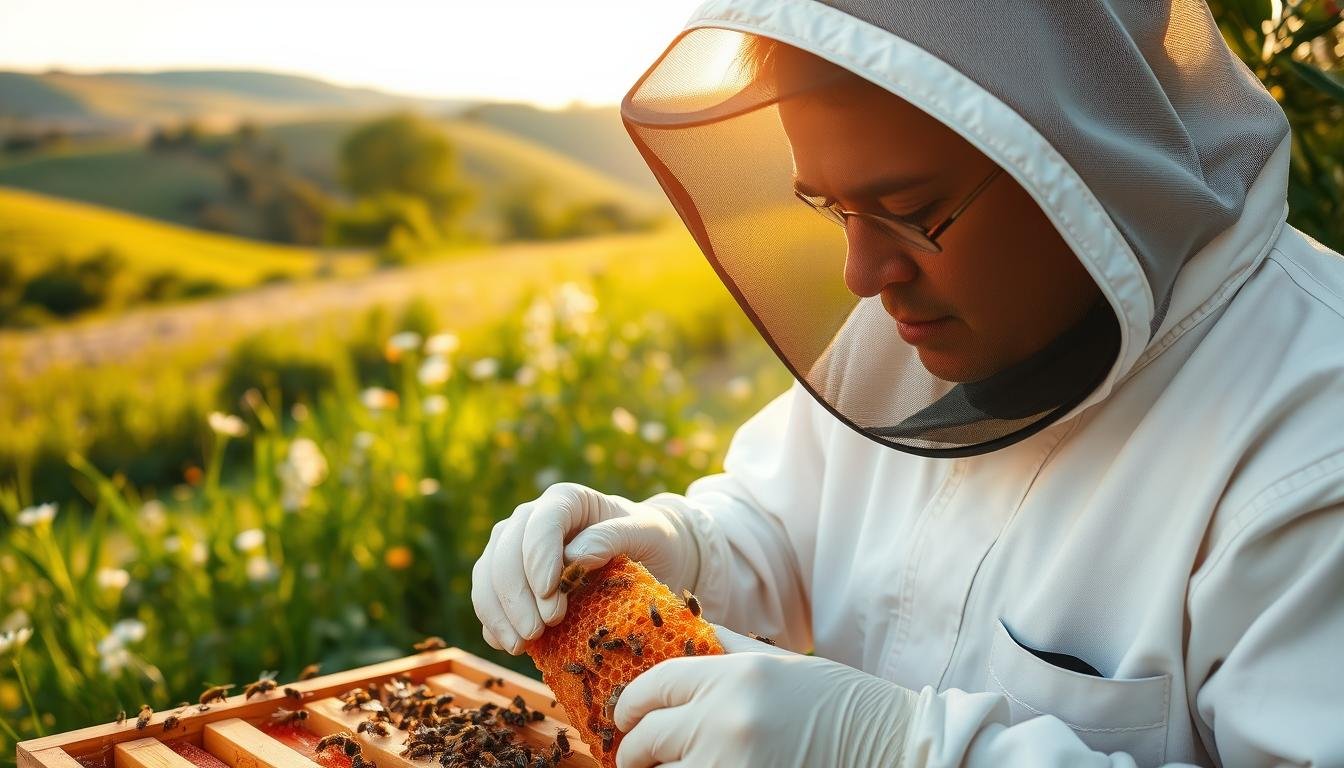
A quiet, methodical removal reduces bee stress and preserves valuable frames. Work on warm afternoons when most foragers are out. Install an escape board 24–48 hours before removal so supers are light of bees.
Tools and calming techniques
Use minimal smoke; a few soft puffs calm rather than scatter. Plan tools: bee escape, soft brush, and a low-setting blower to clear lingering bees. Lift supers straight up to avoid smooshing comb.
Clearing frames and uncapping
Clear remaining bees with gentle brushing or low airflow blowing to avoid tearing comb. Uncap with a warmed knife or fork (~100°F) to preserve wax and comb structure.
Extraction, filtering, and temperature control
Use a centrifugal extractor to spin honey free and keep comb intact. Filter coarsely to remove bits of wax and cappings, but avoid overheating. Keep honey under ~110°F to protect enzymes and aroma.
“Spin, don’t crush—preserve drawn comb to save the hive energy.”
Keep pace: extract soon after removal and return wet supers for bees to clean for 1–2 days. Do not leave unprotected boxes more than 24 hours to limit pest risk.
Post-harvest hive management: keeping colonies strong
After extraction, regular checks keep hives on track for the months ahead. Inspect weekly for active brood patterns, steady foraging, and adequate reserves.
Monitoring food stores, brood, and foraging after harvest
Check the basics: confirm the queen is present, brood looks healthy, and workers bring in nectar or pollen. Note any drop in foraging or sudden changes in temperament.
Supplementing only as a last resort
Feed only when natural forage fails. Emergency fall feeding uses a 2:1 sugar syrup (two parts sugar to one part water). Use pollen patties to support brood when pollen is scarce.
Protecting the queen and brood chambers during all handling
Never remove frames from the brood area for extraction. Keep the brood nest warm and avoid long, open inspections that chill young bees or stress the queen.
“Keep interventions minimal and targeted; gentle handling speeds recovery and sustains long-term yield.”
- Verify reserves and correct shortfalls before weather tightens.
- Reserve much of the autumn crop as winter stores when survival is at risk.
- Monitor pests closely after removal—beetles and moths exploit weak frames.
- Record post-harvest metrics to refine management next year.
| Check | Good sign | Action |
|---|---|---|
| Foraging | Regular incoming nectar/pollen | Continue weekly inspections |
| Stores | Adequate honey stores and capped frames | No feeding; monitor weight |
| Brood and queen | Even brood pattern; egg laying | Avoid disturbance; protect thermals |
| Emergency feed | Low stores or shrinking population | Offer 2:1 syrup and pollen patties sparingly |
Handling wet combs, storage, and pest prevention between flows
After extraction, manage wet gear fast to protect comb and preserve value. Quick action limits pest eggs and reduces sticky mess during transport.
Let bees finish and sanitize frames
Return wet supers to the hive for 24–48 hours so bees clean the remaining honey. This leaves frames drier and easier to freeze or store.
Freezing and stacking for pest control
Freeze single frames or full supers for several days to kill small hive beetle and wax moth eggs. After drying, stack boxes sealed and treat per label.
- Seal and label: store dried comb in sealed stacks with para-dichlorobenzene crystals as directed.
- Air out: ventilate boxes a day or two before reuse so repellent odors dissipate.
- Move sticky gear carefully: stage wet items in closed containers to prevent robbing at nearby hives.
- Timing: avoid adding empty comb space late in the season when worker coverage drops.
“A short, repeatable process after extraction saves time and protects wax assets.”
Conclusion
A clear plan that ties forage maps to hive checks makes harvests repeatable year after year.
Keep decisions tied to biology and data. Watch nectar flow, check that most frames show 80–90% capped cells, and confirm low moisture before you pull frames. Use the two‑thirds rule for adding supers to avoid crowding and swarm triggers.
Work gently: minimal smoke, escape boards, careful handling, and clean equipment protect bees, brood, and the queen. Extract on dry days, uncap cleanly, spin in a proper extractor, and avoid overheating to keep flavor and quality.
Return wet supers briefly, store comb safely to control pests, and monitor post‑harvest recovery. Track results year to year so beekeepers refine timing, gear, and volumes for steady production and strong colonies.
FAQ
How do I know when my hive has surplus stores ready for removal?
Check frames for capped cells—aim for about 80–90% capped in the supers you plan to take. Look for healthy brood below, a laying queen, and strong foraging activity. Use the gentle shake test to see if frames drip; low moisture and firm cappings indicate true surplus.
How many pounds should I leave for winter stores by climate?
Requirements vary by region. In temperate northern zones, leave roughly 60–90 pounds of stores per colony. In milder southern climates, 30–50 pounds may suffice. Adjust up for small colonies, older queens, or lengthy dearths. When in doubt, err on leaving more.
When is the ethical time to harvest without harming colony health?
Harvest during strong nectar flows when brood rearing remains robust and frames are well capped. Avoid taking large amounts during dearths, late season, or when large numbers of brood need feeding. Time extraction after peak flow and monitor weather forecasts.
How do I size the number of colonies for a given bee yard?
Match colony count to available forage and bloom duration. Start with fewer hives in limited forage areas and scale up across seasons. Observe nectar sources, pollen diversity, and peak flow strength; adjust numbers to prevent overcompetition and low production.
What signals in brood pattern and queen performance matter before harvesting?
Look for a solid, compact brood pattern, consistent egg laying, and a queen that’s not failing or superseded. Spotty brood, excessive drone brood, or a weak queen indicate you should postpone major harvests until the colony stabilizes or you requeen.
How many supers should I add before, during, and after peak flow?
Add a super when about two-thirds of frames in the current brood box or super are filled. Before peak, add one to two supers; at peak, add more quickly as needed; after peak, remove empty supers promptly. Monitor comb fill rate and adjust rather than follow a fixed number.
What are the pros and cons of top supering versus bottom supering?
Top supering follows natural bee movement upward and reduces congestion in brood boxes. Bottom supering can ease inspection and honey removal but risks chilling brood when disturbed. Choose a method that suits your workflow, lifting ability, and local weather.
How do I avoid triggering swarms when managing space?
Prevent congestion by adding supers early, ensuring good ventilation, and maintaining a strong queen. Regular inspections to spot swarm cells, splitting strong colonies, or providing a queen-right management plan reduce swarm risk. Too few boxes and rapid crowding increase swarming.
How can I test honey moisture quickly in the field?
Use the gentle shake test—tilt a frame; if honey doesn’t drip and cappings are firm, moisture is likely low. For accuracy, use a digital refractometer to read moisture percent; target under 18% for safe storage and minimal fermentation.
What calming methods protect bees during super removal?
Use minimal smoke to calm surface bees, work during warm, sunny periods when foragers are out, and employ a bee escape board or a one-way entrance to clear supers overnight. Gentle movements and avoiding rapid frame jostling reduce defensiveness and brood disturbance.
Should I brush bees off frames or use a blower when clearing supers?
Use soft-bristled brushes or leaf blowers on low setting depending on colony temperament. Brushes work well for small operations; blowers speed work for larger yards but can injure bees if used too forcefully. Choose the method that balances speed and colony protection.
How do I preserve drawn comb and wax during extraction?
Use tangential or radial extractors that match frame size and operate at moderate RPMs to avoid frame damage. Keep frames cool, avoid overheating honey, and return undamaged frames to the hive promptly so bees reuse comb and conserve wax production energy.
What is the best way to filter raw honey without degrading quality?
Use coarse to fine filtration in stages and avoid heating honey above 95°F to preserve enzymes, aroma, and pollen. Stainless steel strainers and gravity filtration work well. Rapid, high heat or ultra-fine filtering that removes pollen lowers raw honey value.
When should I supplement after harvest and what feeds are appropriate?
Monitor brood pattern and remaining stores after extraction. Supplement only when needed—use 1:1 sugar syrup spring feeding or 2:1 for fall build-up depending on goals. Offer pollen patties only if natural pollen is scarce. Treat supplementation as a temporary measure.
How do I handle wet combs and prevent pest infestation between flows?
Let bees clean some wet supers by returning them briefly, then freeze combs to kill wax moth eggs. Store combs in airtight containers or cool, dry sites. Use screening and clean equipment; avoid routine chemical repellents unless necessary and follow label directions for para-dichlorobenzene use.
What storage practices protect extracted honey and spare combs from pests?
Store jars in a cool, dry place with tight lids. Keep spare drawn combs frozen or sealed with breathable cloth in a dry, ventilated room. Regularly inspect stored equipment for wax moths and small hive beetles and rotate older stock first to reduce infestation risk.
How does local bloom timing affect harvest planning?
Map local nectar flows, peak bloom dates, and dearth periods for your region. Align supering, extraction, and splits to these cycles. Knowing microclimates and nearby forage sources helps maximize production and reduces the chance of premature harvesting during lean periods.
Can I extract during rainy or cool weather?
Avoid extraction during cool, wet spells because reduced foraging stresses colonies and increases robbing risk. Aim for warm, dry days so bees are active and supers can be removed with minimal disruption. If weather forces extraction, work quickly and return supers promptly.
What equipment helps minimize bee losses during harvest?
Key items include a good extractor, bee escape boards, smoker, soft brush, insulated storage, and a refractometer for moisture checks. Proper protective clothing and jar sanitizing gear also speed the process and lower stress on both bees and beekeeper.