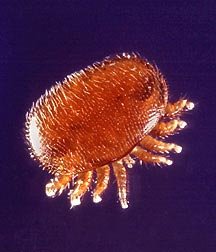
Southern California has a honeybee problem that looks, on paper, like exactly the kind of thing that should be spreading disaster: a genetic mash-up of Western European, Eastern European, Middle Eastern, and African bee lineages, feral and semi-feral, living outside any formal breeding program. Instead, a 2026 study from the University of California, Riverside found the opposite — colonies headed by these local hybrid queens carried 68% fewer Varroa mites than colonies headed by commercial queens, and the resistance appears to start before a mite even finishes its life cycle.
Key Takeaways
- UC Riverside researchers monitored 236 honeybee colonies across Southern California from 2019 to 2022.
- Colonies with locally raised Californian hybrid queens averaged 1.26 mites per 100 bees, versus 4.83 for commercial queens — a 68% reduction.
- Hybrid-queen colonies were more than 5 times less likely to cross the threshold requiring chemical mite treatment.
- Mites were measurably less attracted to hybrid larvae at 7 days old, the stage they normally target most — suggesting the resistance is genetic, not just behavioral.
- Published in Scientific Reports in April 2026 by Genesis Chong-Echavez and Boris Baer, UCR’s Center for Integrative Bee Research (CIBER).
What UC Riverside Actually Found
The study, published in Scientific Reports, grew out of something UCR entomologist Boris Baer and graduate student Genesis Chong-Echavez kept hearing directly from local beekeepers rather than out of a lab hypothesis. Over four seasons, the team tracked 236 colonies across Southern California, comparing ones headed by locally raised Californian hybrid queens against colonies headed by commercially bred queens shipped in from elsewhere. The gap was large and consistent: hybrid-queen colonies averaged 1.26 Varroa mites per 100 bees, compared with 4.83 per 100 bees in commercial-queen colonies, and were over five times less likely to cross the mite-count threshold that normally triggers a chemical treatment.
“We kept hearing anecdotally that these Californian honeybees were surviving with way fewer treatments.” — Genesis Chong-Echavez, UC Riverside
That’s not a small effect in an industry where the most recent national loss survey (covered in this site’s breakdown of the 2025–2026 US colony loss survey) put annual managed-colony losses at roughly 62% for the year. A locally adapted population quietly outperforming commercial stock by this margin, without any formal breeding program behind it, is the kind of finding that reframes where mite-resistance research should be looking next. UC Riverside’s own news release on the study and independent science coverage from phys.org both confirm the same figures reported here.
| Queen source | Average Varroa mites per 100 bees | Likelihood of needing chemical treatment |
|---|---|---|
| Californian hybrid queens (local, unmanaged lineage) | 1.26 | Baseline (lowest) |
| Commercial queens | 4.83 | 5x+ more likely |
The Resistance Starts Before the Mite Even Bites
The more surprising part of the study isn’t just that hybrid colonies had fewer mites — it’s when the difference first shows up. Chong-Echavez found that Varroa mites were measurably less attracted to Californian hybrid larvae at seven days old, precisely the developmental stage when a mite is normally most likely to invade a brood cell and reproduce. That timing matters: it points to something built into the larvae themselves, not just a learned or environmental behavior adult bees perform later, like grooming or hygienic uncapping.
“What surprised me most was the differences showed up even at the larval stage.” — Genesis Chong-Echavez, UC Riverside
Baer, who co-authored the paper, has said the entire research question started outside the lab rather than inside it: “This question did not start in the lab. It started in conversations with beekeepers.” That origin story is also why this finding is distinct from this site’s coverage of Baer’s other 2026 paper on queen cell architecture — same CIBER lab, same UC Riverside team, but a completely different mechanism and a different published study.
What This Means If You Don’t Keep Bees in Southern California
The honest caveat is that you can’t order “Californian hybrid” queens from a breeder catalog — this is a semi-feral, regionally adapted population that developed its resistance without deliberate selection, which is exactly what makes it scientifically interesting but also hard to replicate on demand elsewhere. Beekeepers outside Southern California looking for mite-resistant genetics today still have real, purchasable options with a longer track record, including Saskatraz hybrid stock and Minnesota Hygienic lines, both bred specifically for mite resistance rather than discovered after the fact. What the UC Riverside study adds to that picture is a reminder that natural, regionally adapted resistance can independently outperform formal breeding programs — and that researchers are now paying closer attention to feral and landrace bee populations as an overlooked source of resistance genetics.
Frequently Asked Questions
Can I buy Californian hybrid queens for my own hives?
Not as a named commercial product — this is a semi-feral, regionally adapted population in Southern California rather than a breeder-selected line, though researchers may study it further to isolate the specific resistance trait for future breeding programs.
How much better were the hybrid colonies at resisting Varroa?
They averaged 1.26 mites per 100 bees versus 4.83 for commercial queens — a 68% reduction — and were more than five times less likely to need chemical mite treatment.
Is this the same UC Riverside study as the queen cell architecture research?
No. Both come out of UC Riverside’s Center for Integrative Bee Research and involve Boris Baer, but they’re separate 2026 papers studying different mechanisms — this one covers Varroa resistance in hybrid bees, the other covers how queen cell construction shapes queen development.
Is the resistance behavioral or genetic?
The evidence points toward genetic: mites were less attracted to hybrid larvae as early as 7 days old, before any adult worker behavior like grooming or hygienic removal could explain the difference.
Related Reading
- Exploring the Future of Varroa-Resistant Bee Genetics
- Saskatraz Bees: The Complete Guide to This Varroa-Resistant Hybrid Stock
- Arnot Forest Survivor Bees: The Wild Colonies That Never Got Varroa Treatment
- The 2025-2026 US Colony Loss Survey: What Beekeepers Actually Reported
- Queen Cell Architecture Shapes Queen Bees, New Research Shows