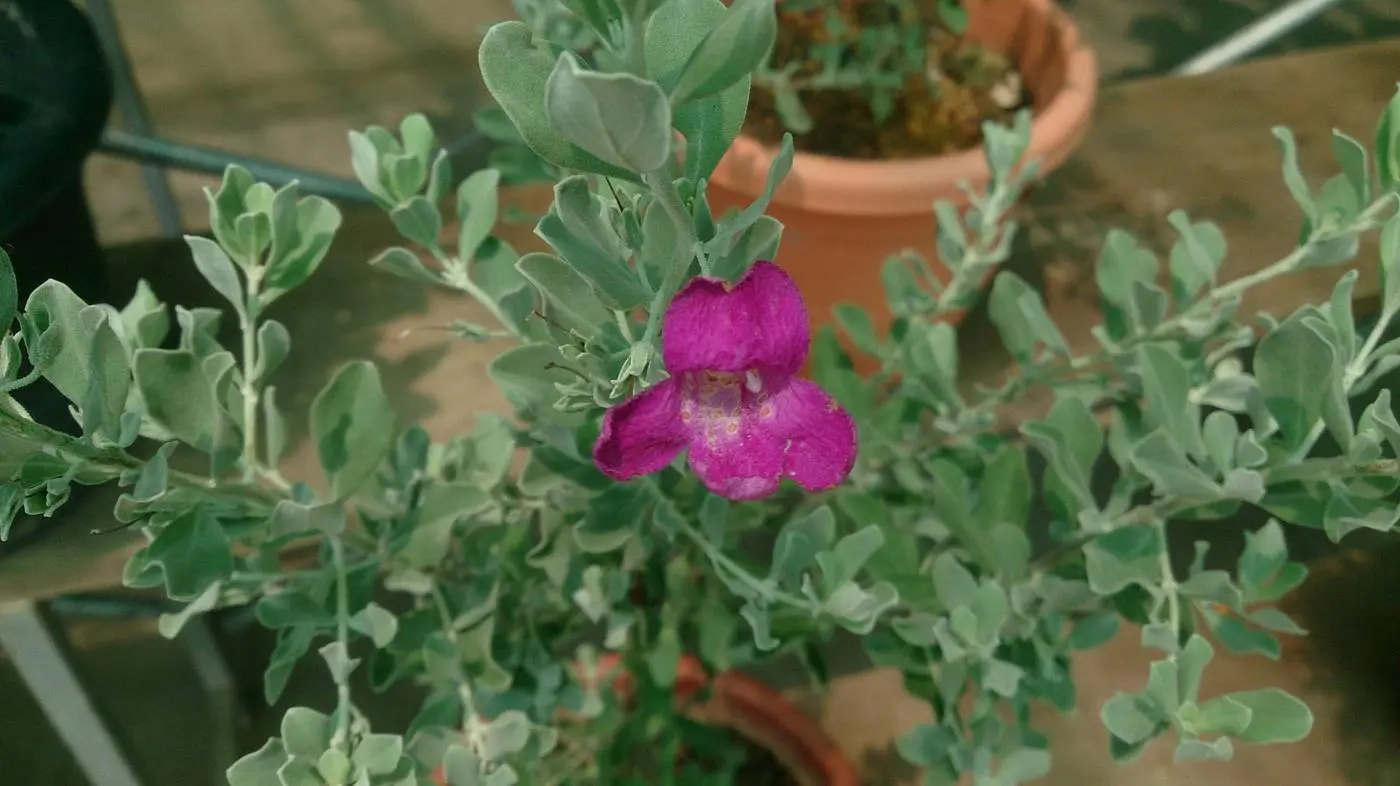
Texas ranger is not a glamorous plant. It’s a tough, silver-leaved shrub sold by the thousands at nurseries across the Southwest, planted along highway medians and in xeriscaped yards mostly because it survives on almost no water and bursts into purple flower right after a rare summer rain. Nobody was hunting for a new bee species on it. But a small ground-nesting bee that turned up in pollen samples from the plant didn’t match anything in the scientific literature — and in 2026, it became Andrena cenizophila, the only mining bee on record that depends on a single shrub species for every bit of its pollen.
The species was formally described in the Journal of Melittology by Silas Bossert, an assistant professor of entomology at Washington State University, working with the Central Texas Melittological Institute and the University of Kansas. Some of the specimens behind the description weren’t freshly collected for the study at all — they’d been gathered years earlier by longtime Texas bee researcher Jack Neff and sat unidentified until DNA sequencing and a close look at antennae, body shape, and reproductive anatomy confirmed they belonged to something new.
A Bee That Only Wants One Shrub
Andrena cenizophila is a solitary bee — each female digs and provisions her own nest burrow rather than living in a colony, which is how the large majority of the world’s bee species actually live, honeybees being the exception rather than the rule. It’s found across southwestern Texas and into central Coahuila, Mexico, tracking the native range of its one and only food source: Leucophyllum frutescens, known variously as Texas ranger, cenizo, or purple sage.
Plenty of solitary bees are picky about pollen — entomologists call this oligolecty, a preference for one plant family or genus rather than foraging broadly. What sets this species apart is how absolute the preference is. Every pollen sample examined so far comes from cenizo and nothing else. “This bee is the only mining bee in the world that is specifically focused on this one particular kind of shrub,” Bossert said.
A Named Species With an Unwritten Life Story
What’s a little strange about Andrena cenizophila is how much remains unknown about it despite now having a formal name, a type specimen, and a peer-reviewed paper behind it. Researchers haven’t yet located an active nest. That means nobody can currently say how deep the burrows run, how many brood cells a female provisions in a season, or how the larval stage lines up with cenizo’s unpredictable, rain-triggered bloom cycle. A species description is the start of a research program, not the end of one — reference specimens are now held at WSU’s M.T. James Entomological Collection and the Smithsonian for other researchers to examine and build on.
It’s also a useful data point in a much bigger picture: an estimated 117 new bee species are described worldwide every year, a pace covered in detail in this site’s look at how many bee species actually exist. Most of those new species aren’t found in some remote, unexplored jungle — they’re sitting in specimen drawers, or on ordinary landscaping plants, waiting for someone with the right comparative material to take a second look.
If You Grow Cenizo, You Might Already Be Hosting It
Anyone gardening with Texas ranger from San Antonio down to the Rio Grande Valley is a plausible, unwitting host to this bee. There’s no special action required — mainly the opposite. Skip insecticide on cenizo while it’s flowering, and don’t feel obligated to prune away every spent flush right after it fades, since ground-nesting bees like this one typically dig their burrows in undisturbed bare soil near a host plant’s base rather than in the shrub itself. For a species this narrowly dependent on one plant, simply not interfering with that one relationship is the most useful thing a home gardener can do.
Frequently Asked Questions
Is Andrena cenizophila dangerous to be around?
No. Like nearly all solitary mining bees, it rarely stings and isn’t aggressive; females sting defensively only if physically handled, and males of the genus have no stinger at all.
What does Andrena cenizophila eat, and where is it found?
It relies exclusively on pollen from Texas ranger (Leucophyllum frutescens), and it’s known from southwestern Texas and central Coahuila, Mexico — matching the shrub’s native range.
Who discovered and named this bee?
Silas Bossert of Washington State University described it in 2026 in the Journal of Melittology, working with the Central Texas Melittological Institute and the University of Kansas, using specimens including some originally collected by Texas researcher Jack Neff.