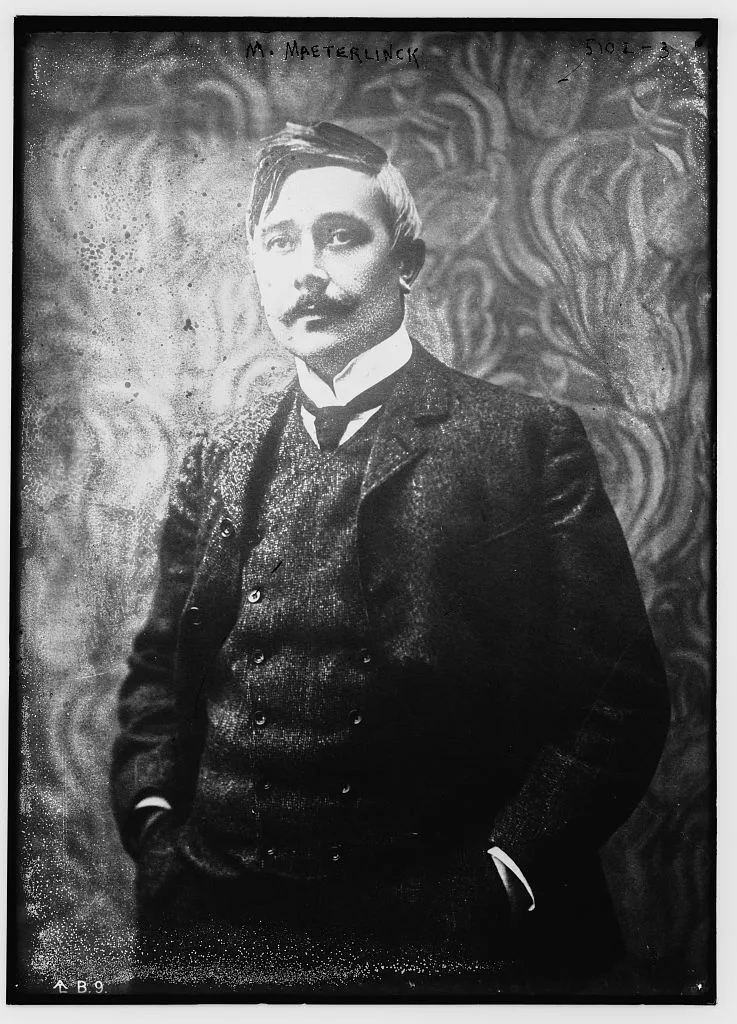
Maurice Maeterlinck’s The Life of the Bee, published in 1901, is not a beekeeping manual or a scientific study — it’s a philosophical meditation on the hive by a Belgian playwright who would win the Nobel Prize in Literature a decade later, treating the colony’s organization as a lens for questions about individuality, collective purpose, and mortality that had nothing to do with honey yield. It became an international bestseller at a time when most bee literature was either dry technical manuals or the classical inheritance of Aristotle and Virgil, and it remains one of the most widely read books ever written about bees specifically because it wasn’t trying to teach anyone to keep them.
This is a different kind of entry in this site’s history coverage: not a scientist whose discovery changed practical beekeeping, but a literary figure whose bestselling book shaped how millions of non-beekeepers thought about bees, at a moment when the book’s poetic license and its actual, if secondhand, natural history were both doing real cultural work.
Key Takeaways
- Maurice Maeterlinck (1862–1949) was a Belgian playwright and poet, awarded the 1911 Nobel Prize in Literature for his body of work — The Life of the Bee was one of several works cited in that recognition, not a scientific text in its own right.
- First published in French in 1901 (La Vie des Abeilles) and quickly translated into English by Alfred Sutro, it became a genuine international bestseller, unusual for a book about insects at the time.
- The book is explicitly philosophical rather than technical — using the colony’s social structure to explore ideas about the individual versus the collective, purpose, and death, more in the tradition of an essay than a field guide.
- Maeterlinck was not himself a career beekeeper or entomologist; his natural history drew on existing beekeeping and scientific literature of his era, filtered through his own literary sensibility.
- The book helped popularize serious public interest in bee behavior at a moment when it might otherwise have remained confined to specialist agricultural literature.
Who Maeterlinck Was, and Why a Playwright Wrote About Bees
Maeterlinck was already an established, celebrated figure in French-language literature by 1901 — a Belgian poet and playwright associated with the Symbolist movement, known for atmospheric, often dreamlike dramatic works. The Life of the Bee sits alongside a small cluster of his prose works turning that same searching, philosophical sensibility toward the natural world rather than the stage. It was not an isolated curiosity in his career; Maeterlinck returned to nature-essay writing more than once, but the bee book became by far his most widely read work in this vein.
A decade after the book’s publication, in 1911, Maeterlinck received the Nobel Prize in Literature — awarded, per the Nobel committee’s own framing, for his broader body of dramatic and literary work rather than for the bee book specifically, though its popularity had by then made his name recognizable well beyond literary circles.
What Kind of Book It Actually Is
Readers picking up The Life of the Bee expecting a field guide or a beekeeping manual are working against the book’s actual intent. It is, in its own era’s description, “a real philosophical voyage of discovery” that uses the bee colony — its rigid caste structure, its collective labor, the queen’s central but strangely passive role, the eventual and inevitable death of the drones — as material for musing on questions with nothing to do with apiculture: what does individual purpose mean inside an organism as tightly collective as a hive, and what does the colony’s apparent indifference to any single bee’s death say about mortality and meaning more broadly. This puts the book in a very different lineage from the practical, observation-driven tradition running from Charles Butler’s Feminine Monarchie through modern beekeeping manuals — Maeterlinck was working in essay and philosophy, not agriculture.
That said, the book isn’t pure invention — Maeterlinck drew on the real scientific and beekeeping knowledge available to an educated, curious writer at the turn of the 20th century, decades after Jan Swammerdam’s dissections had settled the queen’s anatomical sex and well within the era of established movable-frame beekeeping. The natural history in the book reflects genuine, if secondhand and selectively chosen, science of its time, dressed in prose built for a very different purpose than a textbook.
Why It Became a Bestseller
Part of the book’s commercial success is simply timing: it arrived at a moment of significant public appetite for accessible nature writing, in the same broad cultural current that produced popular natural-history essayists on both sides of the Atlantic. But its lasting popularity also reflects something more specific — Maeterlinck made the hive’s genuinely strange biology (a female-ruled society, workers that are functionally sterile, a caste system fixed from birth) accessible and emotionally resonant to readers who would never have picked up a technical apiculture text, in a way that closer scientific antecedents like Karl von Frisch’s later work on the discovery of the waggle dance or François Huber’s earlier hive-science observations never attempted to do, since both were writing for a scientific rather than general audience.
How to Read It Today
Approached as a period piece of philosophical nature writing rather than a science book, The Life of the Bee holds up as a genuinely interesting artifact — both for what it says about how an educated non-specialist understood bee biology in 1901, and for what its enormous popularity says about the public’s appetite for the hive as a metaphor for human society, a theme this site’s broader bee symbolism across cultures piece traces across a much longer historical arc than Maeterlinck’s single book. Modern readers with a background in current bee biology will spot places where Maeterlinck’s philosophical framing outran the actual science of his day — but that gap is itself part of what makes the book a useful historical document rather than a reason to dismiss it.
Frequently Asked Questions
Did Maeterlinck actually keep bees himself?
Historical accounts describe him as having direct, sustained interest in bees and apiculture rather than writing purely from library research, though he was not a professional or lifelong career beekeeper in the way Charles Butler or later dedicated apiarists were.
Is The Life of the Bee scientifically accurate?
Partially, and unevenly by design — it reflects genuine science known at the time, filtered through a philosophical and literary purpose rather than a strictly technical one. Readers looking for a rigorous modern account of bee biology should treat it as a historical and literary document, not a current reference.
Did Maeterlinck win the Nobel Prize specifically for this book?
No — his 1911 Nobel Prize in Literature recognized his broader body of literary work, particularly his dramatic writing, rather than being awarded specifically for The Life of the Bee, even though the book’s popularity had significantly raised his public profile by that point.
Is the book still in print?
Yes — being well over a century old, it is in the public domain, and both the original French text and Alfred Sutro’s English translation are widely available in reprint editions and free digital formats.
Maeterlinck’s book is a reminder that a hive’s cultural influence has never been limited to beekeepers — sometimes the most widely read book about bees in a given era comes from someone who approached the hive as a philosopher first and a naturalist second.