Published September 3, 2026
After chestnut honey’s bold, tannic bitterness, Acacia honey sits at the exact opposite end of the flavor spectrum: nearly water-clear, delicately mild, and so subtly sweet that some first-time tasters wonder if they’ve been given diluted honey rather than the real thing. But there’s a genuine, well-documented naming quirk hiding in plain sight here – most European “acacia honey” doesn’t actually come from a true Acacia tree at all. This article covers the real story: the tree it actually comes from, why the name stuck anyway, its remarkably slow crystallization, and where it’s genuinely produced today.
Table of Contents
- The Real Tree Behind “Acacia” Honey
- One of the Palest Honeys Available
- Exceptionally Slow Crystallization
- A Genuinely Delicate Flavor Profile
- Where Acacia Honey Is Produced Today
- A Real Tension: Prized Honey Tree, Introduced Species
- Culinary Uses
- Authenticity and Fraud Risk
- Acacia Honey in the Wider World of Naming Quirks
- Acacia Honey vs. Chestnut Honey
- Common Misconceptions
- FAQ
The Real Tree Behind “Acacia” Honey
What is sold across Europe as “acacia honey” almost always comes from Robinia pseudoacacia, commonly known as black locust – not from a true Acacia species at all. This is a genuine, well-documented historical naming quirk rather than a modern marketing error: black locust was historically sometimes referred to as “false acacia” due to superficial resemblance, and the shorter “acacia” name simply stuck in common European usage and honey labeling over time, even though botanically the two are unrelated genera. It’s worth being direct about this rather than repeating the popular name uncritically, since understanding the real source tree matters for anyone trying to accurately research or source the honey.
One of the Palest Honeys Available
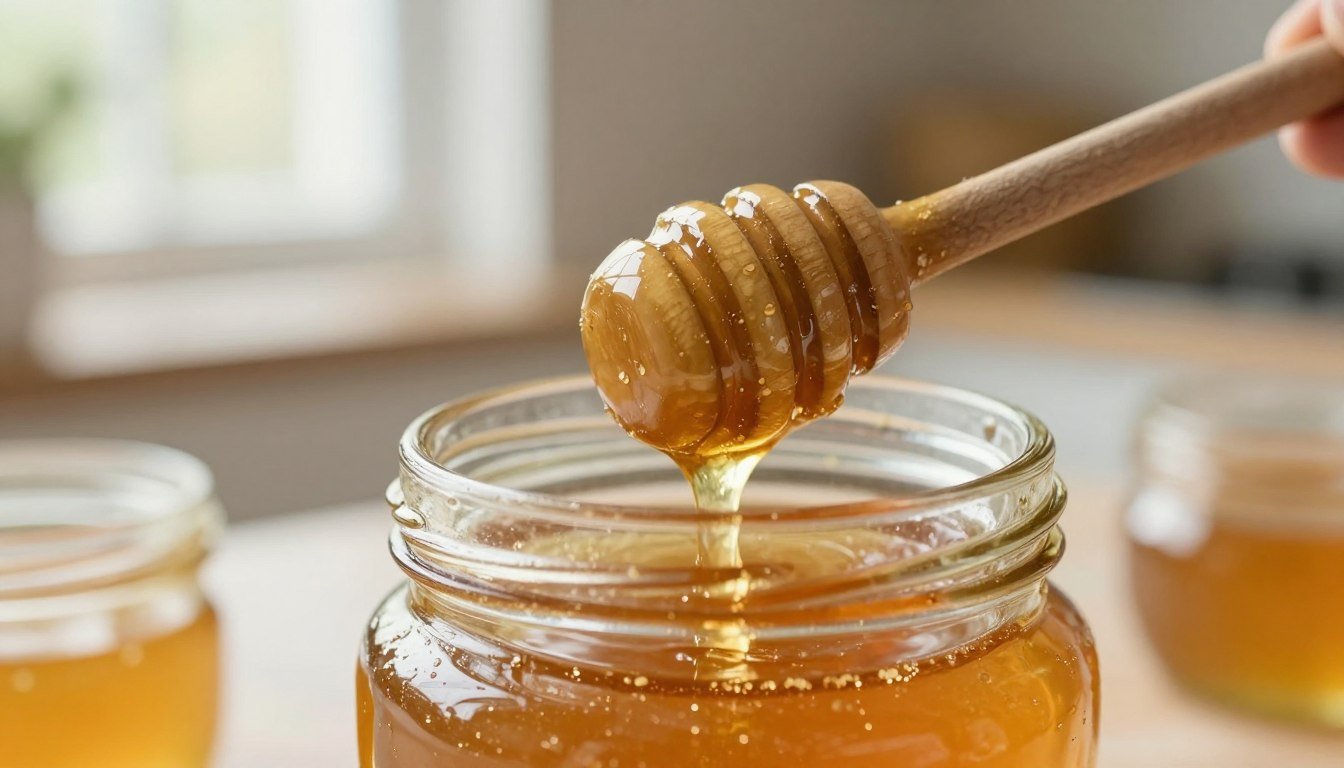
Acacia honey is genuinely notable for being one of the palest, most water-clear honey varieties commercially available, a visually striking contrast to darker specialty honeys like the chestnut honey covered elsewhere on this site. This near-colorless appearance is a real, consistent characteristic of genuine black locust honey rather than a sign of over-processing or adulteration – buyers unfamiliar with the variety sometimes mistakenly assume very pale honey must be less “real” or less nutritionally complete than darker honey, an assumption this article does not support, since color reflects floral source, not honey quality or authenticity on its own.
Exceptionally Slow Crystallization
Acacia honey has a genuinely high fructose-to-glucose ratio compared to most other honey varieties, giving it one of the slowest crystallization rates of any commercially available honey – genuine, well-documented samples have been reported staying liquid for a very long time, often years, under normal storage conditions. This is a real, practically significant characteristic for buyers who specifically want honey that stays smooth and pourable without needing to be reliquefied, a genuinely different practical profile than many other honey varieties that crystallize within months.
A Genuinely Delicate Flavor Profile
Acacia honey’s flavor is widely described as mild, delicately sweet, and notably clean, without the strong lingering aftertaste found in many other honey varieties – a genuinely different sensory approach than the intensity-first appeal of bold varieties like chestnut or Leatherwood honey. This mildness is precisely why acacia honey has real, sustained popularity among consumers who want a honey that adds gentle sweetness without competing with other flavors in a dish or beverage, a genuinely different market position than premium honeys marketed specifically for boldness and distinctiveness.
Where Acacia Honey Is Produced Today
Genuine acacia (black locust) honey production is concentrated in parts of Central and Eastern Europe, with Hungary in particular holding real, well-documented recognition as a major producer, alongside production in Romania, Italy, and other European countries with established black locust tree populations. This regional concentration reflects where black locust trees grow in sufficient density and bloom reliably enough to support genuine monofloral honey production, similar to the same basic floral-source-availability logic behind other regionally concentrated specialty honeys already covered in this series.
A Real Tension: Prized Honey Tree, Introduced Species
Black locust is actually native to North America, not Europe, and its widespread presence across European countries today reflects historical introduction and naturalization rather than native origin – and in various parts of Europe, black locust is genuinely considered by some ecological authorities to be an invasive or ecologically concerning species affecting native plant communities. This creates a real, honest tension worth acknowledging directly: the same tree valued highly for its honey production is, in some contexts, also a subject of genuine ecological management concern, a meaningfully different situation than honey trees with uncomplicated native-species conservation status.
Culinary Uses
Acacia honey’s mild sweetness and slow crystallization make it genuinely popular as an everyday table honey and sweetener across the regions where it is produced, valued specifically for how easily it blends into tea, yogurt, and various dishes without imposing a strong distinct flavor of its own – a real, practical everyday utility that stands in useful contrast to the deliberately intense, ingredient-forward culinary role bold honey varieties like chestnut honey typically play.
Authenticity and Fraud Risk
Acacia honey’s popularity and specific, recognizable pale appearance make it a real target for adulteration and mislabeling, the same basic economic dynamic already documented in our guide to detecting adulterated honey – whenever a specific honey variety commands genuine consumer recognition and demand, the incentive to mislabel a cheaper substitute as that variety rises accordingly. Buyers seeking authentic acacia honey should look for clear regional provenance from established black locust-growing areas rather than assuming any very pale honey is automatically genuine acacia honey.
Acacia Honey in the Wider World of Naming Quirks
Acacia honey’s tree-name mismatch is a genuinely interesting example of how common names in agriculture and food labeling can drift from botanical accuracy over long periods of popular usage without anyone deliberately setting out to mislead consumers – similar in spirit, though different in specifics, to naming confusion this site has addressed elsewhere, including the sweet chestnut versus horse chestnut distinction covered in our chestnut honey article. These naming quirks are worth taking seriously specifically because they can create genuine confusion for buyers or researchers trying to accurately source or study a particular honey variety, not merely as trivia.
Acacia Honey vs. Chestnut Honey
| Aspect | Acacia (Black Locust) Honey | Chestnut Honey |
|---|---|---|
| Source tree | Robinia pseudoacacia | Castanea sativa |
| Color | Nearly water-clear, very pale | Dark amber to brown |
| Flavor | Mild, delicate, subtly sweet | Bold, bitter, tannic |
| Crystallization | Extremely slow, often stays liquid for years | Notably slow, though less extreme than acacia |
Common Misconceptions
- “Acacia honey comes from a true Acacia tree.” It almost always comes from Robinia pseudoacacia, black locust, historically called “false acacia” – the popular name is a longstanding misnomer, not botanical fact.
- “Very pale honey is less authentic or lower quality.” Acacia honey’s near-colorless appearance is a genuine, consistent characteristic of its floral source, not a sign of processing or dilution.
- “Black locust is a native European tree.” It is native to North America and was historically introduced and naturalized in Europe, where it is considered invasive or ecologically concerning in some contexts.
Frequently Asked Questions
Is acacia honey a good introduction to specialty honey for someone who dislikes strong flavors?
Yes, precisely because of its mild, delicate character and clean finish, acacia honey is a genuinely accessible entry point for buyers hesitant about bolder specialty honeys like chestnut honey – it offers real specialty-honey provenance and character without the flavor intensity that makes some other premium varieties genuinely divisive.
Are there true Acacia species that also produce honey?
True Acacia species exist and can produce honey in regions where they grow, but this is genuinely distinct from the “acacia honey” most commonly sold and recognized in European markets, which – as this article explains – overwhelmingly comes from black locust rather than true Acacia trees, making it important not to conflate the two when discussing honey specifically labeled and marketed as “acacia honey” in a European context.
Does acacia honey actually come from an Acacia tree?
No, almost all European “acacia honey” actually comes from Robinia pseudoacacia, black locust, a genuinely different tree historically called “false acacia” – the popular name is a longstanding misnomer rather than accurate botanical labeling.
Is acacia honey the palest honey variety in the world, or are there paler ones?
It is consistently cited as among the palest commercially available honey varieties, though this article does not claim it is the single absolute palest honey possible under every circumstance – honey color depends on floral source generally, and acacia honey’s genuine, well-documented near-colorless character puts it firmly at the pale end of that spectrum regardless of exact ranking claims.
Why is acacia honey so pale in color?
Its near-colorless, water-clear appearance is a genuine, consistent characteristic tied to its specific floral source, making it one of the palest honey varieties commercially available.
Can acacia honey eventually crystallize at all?
Given enough time and specific storage conditions, most honey can eventually crystallize, including acacia honey, though its genuinely high fructose content means this process takes considerably longer than for most other honey varieties, which is precisely the practical characteristic that gives it real appeal for buyers wanting long-lasting liquid honey.
Why does acacia honey stay liquid for so long?
It has a genuinely high fructose-to-glucose ratio compared to most honey, giving it one of the slowest crystallization rates of any commercially available honey – genuine samples have been documented staying liquid for years under normal storage.
Is acacia honey typically more affordable than bolder specialty honeys?
Pricing varies by market and region, and this article does not claim a fixed universal price relationship between acacia honey and other specialty varieties – both genuine acacia and genuine chestnut honey command real premium specialty pricing relative to generic commodity honey, reflecting their distinct, verifiable production and floral-source characteristics rather than one being inherently cheaper than the other by default.
Does acacia honey production timing depend on black locust bloom season?
Yes, genuine acacia honey production depends on beekeepers timing colonies to the black locust bloom period, which like other monofloral honey varieties covered on this site is a genuinely narrow seasonal window that beekeepers must plan around carefully to capture a batch dominated by black locust nectar rather than mixed competing floral sources.
Where is acacia honey mainly produced?
Parts of Central and Eastern Europe, with Hungary holding particular recognition as a major producer, alongside Romania, Italy, and other countries with established black locust tree populations.
Do beekeepers in Europe actively plant black locust trees for honey production?
In regions with established acacia honey production, black locust groves are genuinely maintained and valued specifically as a honey resource, creating a real, practical economic incentive to preserve existing tree stands even in areas where the same species faces ecological management concern elsewhere – a genuinely complicated situation where the same tree is simultaneously an economic asset in one context and a management concern in another.
Is black locust considered an invasive species?
In various parts of Europe, yes – it is native to North America and is considered by some ecological authorities to be invasive or ecologically concerning in its introduced European range, creating a genuine tension with its value as a honey-producing tree.
Does black locust bloom at the same time as other major nectar sources in Europe?
Bloom timing varies by region and local climate, and beekeepers producing genuine monofloral acacia honey generally need to manage colony placement carefully relative to competing bloom from other trees and plants in the area – a real, practical beekeeping management consideration rather than something that happens automatically regardless of surrounding forage conditions.
Does acacia honey have any documented health-related research interest?
As with many honey varieties, acacia honey has drawn some general research interest, though this article does not make specific medical claims about it beyond noting that, as with dark-honey polyphenol research discussed in our chestnut honey coverage, general research interest in a honey variety’s composition is a different and more limited claim than proven clinical health benefit.
How does acacia honey’s flavor compare to bolder honey varieties?
It is mild, delicately sweet, and notably clean without a strong lingering aftertaste, a genuinely different sensory approach than intensity-first varieties like chestnut honey, which is prized specifically for its bold, tannic character.