Published September 3, 2026
Not every premium honey is prized for being sweet and delicate. Chestnut honey, produced across parts of Italy, France, and other Mediterranean and southern European regions with sweet chestnut forests, has built a genuine specialty reputation on the exact opposite quality: a bold, notably bitter, tannic character that divides opinion sharply – connoisseurs seek it out specifically for that intensity, in a similar spirit to the distinctive flavor-first appeal already documented in this site’s coverage of Tasmania’s Leatherwood honey, even though the two honeys, trees, and continents involved are entirely unrelated.
Table of Contents
- The Sweet Chestnut Tree
- A Genuinely Polarizing Flavor Profile
- Where Chestnut Honey Is Produced
- Why It Stays Liquid Longer Than Most Honey
- Traditional Culinary Pairing
- A Real Connection to Chestnut Forest Health
- What to Look For When Buying
- Antioxidant and Polyphenol Research Interest
- Chestnut Honey in the Wider World of Bold Honey Varieties
- Chestnut Honey vs. Leatherwood Honey
- Common Misconceptions
- FAQ
The Sweet Chestnut Tree
Castanea sativa, the sweet chestnut, is native to and widely cultivated across parts of southern Europe, with genuine, long-established chestnut forest and orchard traditions in regions of Italy, France, and neighboring countries. Unlike honey sourced from a single narrowly restricted wild region, chestnut honey production spans multiple countries and regions wherever mature sweet chestnut trees flower in sufficient concentration – a genuinely different geographic pattern than the tightly localized single-region honeys already covered elsewhere in this series.
A Genuinely Polarizing Flavor Profile
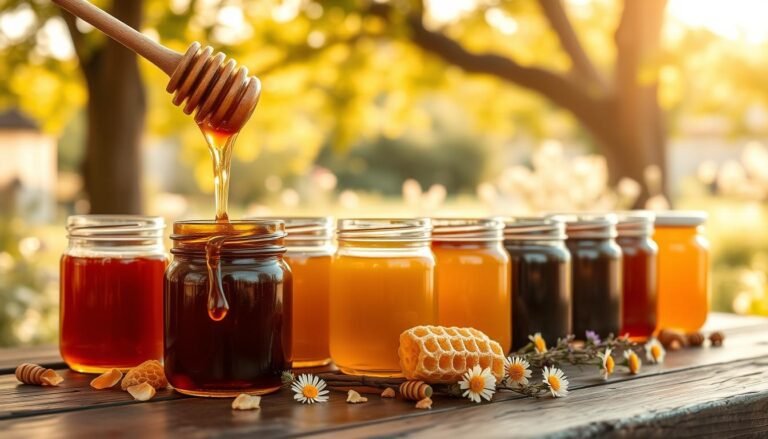
Chestnut honey is widely described as dark amber to brown in color, with a strong, notably bitter and tannic flavor profile often characterized as woody or astringent – a genuinely bold character that stands in real contrast to the mild, floral sweetness most people associate with honey generally. This is honestly a polarizing honey: some consumers actively seek out its intensity as a distinctive gourmet experience, while others find its bitterness genuinely off-putting compared to milder varieties, a real, well-documented split in consumer reaction rather than a universally beloved flavor the way some other specialty honeys are marketed.
Where Chestnut Honey Is Produced
Chestnut honey production is genuinely concentrated in regions with established sweet chestnut forest or orchard cover, including parts of Italy – where it holds real recognition as a traditional regional specialty – and parts of France, including areas like Corsica and the Cévennes region, alongside production in other southern European countries with suitable chestnut tree cover. This multi-country production pattern gives chestnut honey a genuinely different market structure than single-country specialty honeys like Jarrah honey – it is a recognized category spanning several traditional European chestnut-growing regions rather than a single nation’s exclusive specialty.
Why It Stays Liquid Longer Than Most Honey
Chestnut honey is generally noted for staying liquid and resisting crystallization longer than many other honey varieties, a real, practically useful characteristic tied to its specific sugar composition. This slow-crystallization property is a genuine, documented compositional characteristic rather than a marketing claim, and it gives chestnut honey real practical appeal for buyers who prefer honey that pours easily and stays smooth over an extended shelf life, distinct from its flavor reputation alone.
Traditional Culinary Pairing
Chestnut honey has a genuine, longstanding culinary tradition in the regions where it is produced, particularly paired with strong, sharp cheeses where its bold bitterness provides real flavor contrast rather than simply adding sweetness – a pairing philosophy considerably different from how milder honey varieties are typically used in cooking and food pairing. This specific savory-pairing tradition is part of what has sustained chestnut honey’s genuine culinary reputation independent of any claimed health properties, positioning it as a real ingredient-level specialty product rather than purely a table sweetener.
A Real Connection to Chestnut Forest Health
European sweet chestnut forests have faced genuine historical disease pressure, including documented chestnut blight and ink disease outbreaks affecting chestnut tree populations in various regions over time, connecting chestnut honey production to the same broader pattern already documented elsewhere in this series: premium regional honey varieties whose long-term viability is directly tied to the health of a specific tree population, not an abstract or interchangeable agricultural input. This article does not claim to detail the precise current disease-management status across every chestnut-growing region, but the underlying connection between chestnut tree health and chestnut honey’s continued production is a genuine, real one worth understanding.
What to Look For When Buying
Genuine chestnut honey should carry clear regional provenance from an established chestnut-growing area, and buyers new to its distinctive bitter character may want to start with a smaller quantity given how genuinely divisive the flavor can be compared to milder honey varieties – the same basic authenticity and informed-purchase principles covered in our guide to detecting adulterated honey apply here as with any specialty honey carrying real regional identity.
Antioxidant and Polyphenol Research Interest
Dark honey varieties generally, including chestnut honey, have drawn genuine scientific research interest for antioxidant and polyphenol content, reflecting a broader pattern in honey research where darker, more robustly flavored varieties often show higher measured antioxidant activity than lighter, milder honeys. It is honest to be precise about what this article claims: this reflects real, documented research interest in the general category of dark honey compounds, not a specific medical claim about chestnut honey’s health effects, consistent with the same careful distinction this site draws between documented traditional use or research interest and proven clinical efficacy elsewhere in its honey coverage.
Chestnut Honey in the Wider World of Bold Honey Varieties
Chestnut honey belongs to a genuine, recognizable category of honey varieties valued specifically for bold, non-sweet flavor character rather than mild floral appeal – a category that also includes Tasmania’s Leatherwood honey, even though the two honeys come from entirely unrelated trees on different continents with different specific flavor profiles. This pattern is worth noting as a genuine counterpoint to the assumption that “premium honey” always means delicate and sweet – a real, sustained market and culinary tradition exists specifically around honey varieties that lean into intensity and distinctiveness rather than mildness, and chestnut honey is one of the most established and longest-documented examples of that pattern in European culinary tradition specifically.
Chestnut Honey vs. Leatherwood Honey
| Aspect | Chestnut Honey | Leatherwood Honey |
|---|---|---|
| Source tree | Castanea sativa | Eucryphia lucida |
| Origin | Italy, France, southern Europe | Tasmania |
| Flavor character | Bitter, tannic, woody | Spicy, aromatic, perfumed |
| Crystallization | Notably slow, stays liquid longer | Standard crystallization pattern |
Chestnut honey is ultimately a genuine example of how a honey variety’s value can rest entirely on distinctiveness rather than universal appeal – it is not trying to be the smoothest or sweetest honey available, and that deliberate, embraced intensity is precisely what has sustained its centuries-long culinary reputation across multiple European chestnut-growing regions.
Common Misconceptions
- “Chestnut honey tastes sweet like most honey.” Its defining characteristic is a bold, bitter, tannic flavor genuinely different from the mild sweetness most people expect from honey.
- “Chestnut honey comes from only one specific country or region.” It is produced across multiple southern European countries and regions with established sweet chestnut forest cover, not a single exclusive geographic source.
- “All dark, bold honey varieties taste similar.” Chestnut honey’s specific woody, tannic bitterness is genuinely distinct from other dark honey varieties like Leatherwood’s spicy aromatic profile or Jarrah’s malty character.
Frequently Asked Questions
Is chestnut honey typically sold raw?
Yes, given its market positioning around authentic, distinctive regional character, chestnut honey is generally sold minimally processed, consistent with how most genuinely flavor-driven specialty honeys covered on this site are typically presented to preserve the specific qualities buyers are seeking.
Is the sweet chestnut the same tree as the horse chestnut?
No, and this is a genuinely common point of confusion worth clarifying directly: the sweet chestnut, Castanea sativa, is a member of the beech family and produces the edible chestnuts used in cooking, while the horse chestnut, Aesculus hippocastanum, is an entirely unrelated tree species whose seeds (conkers) are not edible in the same way – only the sweet chestnut is the source of both edible chestnuts and chestnut honey.
What tree does chestnut honey come from?
Castanea sativa, the sweet chestnut, native to and cultivated across parts of southern Europe with established chestnut forest and orchard traditions.
Does chestnut honey pair well with breakfast foods too, not just cheese and savory dishes?
Some people do enjoy chestnut honey with breakfast items like toast or yogurt, where its bold character contrasts distinctly with mild, creamy bases, though this is a more individual taste preference than its well-established, longstanding savory cheese-pairing tradition, which remains its most consistently documented culinary use.
Does chestnut honey have official regional certification, similar to other European specialty foods?
Some chestnut honey from specific regions may carry formal regional quality designations, consistent with the broader European tradition of protected geographic indication for specialty regional foods, though this article does not claim uniform certification exists across every chestnut-honey-producing region and country – certification status genuinely varies by specific origin.
What does chestnut honey taste like?
A genuinely bold, bitter, tannic, sometimes woody flavor profile, distinctly different from the mild sweetness of most common honey varieties – a real, documented flavor that divides opinion between people who seek it out and those who find it too intense.
Does chestnut honey work well in savory cooking beyond cheese pairing?
Yes, its bold, non-sweet character makes it genuinely versatile in savory applications beyond cheese specifically, including glazes, marinades, and dressings where a typical mild honey would simply add sweetness without the distinctive depth chestnut honey provides – a real culinary utility that extends its traditional cheese-pairing reputation into a broader range of savory cooking uses.
Why does chestnut honey stay liquid longer than other honey?
It has a specific sugar composition that genuinely slows crystallization compared to many other honey varieties, giving it real practical appeal for buyers who prefer honey that pours easily over an extended shelf life.
Is Italian chestnut honey different from French chestnut honey?
Genuine regional variation exists within the broader chestnut honey category, since local growing conditions, chestnut tree subspecies or varieties, and regional beekeeping practice can all influence a batch’s specific character – this article treats chestnut honey as a recognizable general category defined by the source tree and characteristic bitter flavor, while acknowledging real, expected regional variation within that broader category rather than claiming perfect uniformity across every country and region of production.
Where is chestnut honey produced?
Primarily in parts of Italy, France, and other southern European countries with established sweet chestnut forest or orchard cover, rather than a single exclusive country of origin.
Does chestnut honey have a distinctive aroma as well as flavor?
Yes, chestnut honey is generally noted for a distinctive, sometimes described as pungent or musky aroma alongside its bold flavor, part of the same overall sensory intensity that distinguishes it from milder honey varieties – the aroma and flavor together are what give it such a genuinely recognizable, hard-to-mistake character among honey connoisseurs familiar with the variety.
Do bees prefer chestnut nectar over other floral sources when both are available?
Bee foraging preferences generally depend on relative nectar availability, sugar concentration, and timing across multiple competing floral sources in a given area, and this article does not claim bees have an inherent preference for chestnut nectar specifically over other options – true chestnut honey typically results from beekeepers timing colonies to a chestnut bloom period with genuinely limited competing forage, similar to how other monofloral honey varieties covered on this site are produced.
What is chestnut honey traditionally paired with?
Strong, sharp cheeses, where its bold bitterness provides genuine flavor contrast, reflecting a longstanding regional culinary tradition distinct from how milder honey varieties are typically used.
Is chestnut honey used in traditional desserts as well as savory pairings?
Yes, alongside its well-known savory cheese pairing, chestnut honey also appears in traditional regional dessert and baking applications in some chestnut-growing areas, where its bold character adds real depth to sweet preparations rather than simply providing sweetness alone – a genuinely versatile ingredient role beyond the single savory-pairing reputation it is most commonly known for internationally.
Is chestnut honey a good choice for someone new to specialty honey?
It’s worth trying a smaller quantity first given how genuinely divisive its bitter character can be compared to milder, more familiar honey varieties – not everyone enjoys its intensity on first taste.