Published September 2, 2026
Basswood honey comes from one of the most productive nectar trees in North America, and yet it remains genuinely under-discussed compared to more famous single-source honeys, despite a distinctive minty, almost “fresh-cut-lumber” flavor that makes it instantly recognizable to anyone who’s tried it. The tree itself, American basswood, is also the same species already covered on this site as an excellent bee forage plant, and this guide connects that broader forage discussion to the specific honey it produces. This guide covers what basswood (linden) honey actually is, its unusually short but intense bloom window, its distinctive minty flavor, and an honest look at the debated “bees dying under linden trees” phenomenon.
Table of Contents
- What Basswood (Linden) Honey Actually Is
- The Flavor: Minty, Medicinal, and Distinctly “Fresh-Cut-Wood”
- Where Basswood Honey Is Produced
- A Short, Intense Bloom Window
- The Debated “Bees Dying Under Linden Trees” Phenomenon
- A Genuinely Urban Honey Source
- Price and Value
- Culinary Uses and Linden Flower Tea
- How It Compares to Other Honeys on This Site
- Common Mistakes
- Verifying Authenticity
- Frequently Asked Questions
What Basswood (Linden) Honey Actually Is
Basswood honey is a monofloral honey produced when honeybees forage predominantly on the blossoms of basswood trees (Tilia americana), also widely known as linden or lime trees depending on the region and closely related European species like Tilia cordata and Tilia platyphyllos. Basswood is a tall, fast-growing native North American hardwood commonly found in eastern and central forests, and it’s also planted extensively as an urban street and shade tree throughout the US and Canada, meaning meaningful basswood honey production can happen surprisingly close to cities and towns, not just deep forest. This same tree is already covered on this site as one of the genuinely excellent bee forage species in the guide to plants toxic to bees, which notes basswood is a normally outstanding nectar source with only a narrow, drought-conditional risk, not a constant concern.
The Flavor: Minty, Medicinal, and Distinctly “Fresh-Cut-Wood”
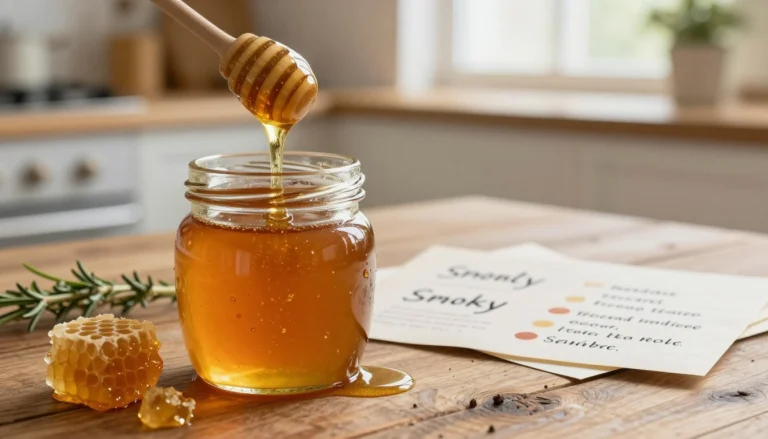
Basswood honey has one of the most distinctive, polarizing flavor profiles among the single-source honeys covered on this site: a pale, almost water-white to light greenish-yellow color paired with a sharp, minty, faintly camphor-like taste that many describe as tasting genuinely like fresh-cut lumber or green wood, alongside a slightly bitter, medicinal edge that lingers after the initial sweetness. This isn’t a subtle or mild honey the way clover or fireweed honey tends to be; it’s an assertive, immediately recognizable flavor that honey enthusiasts either love specifically for its uniqueness or find too sharp for everyday use. That intensity puts it in a genuinely different flavor category from the mild, tea-like fireweed honey covered elsewhere on this site, despite both sharing a similarly pale color.
Where Basswood Honey Is Produced
The Upper Midwest, particularly Wisconsin, Michigan, and Minnesota, along with southern Ontario and Quebec in Canada, are the primary basswood honey producing regions in North America, corresponding to the tree’s natural range and the density of mature basswood stands in those areas. Beekeepers in these regions often supplement a broader mixed-forage season with a dedicated basswood push during the tree’s bloom window, since a strong basswood year can produce a genuinely significant honey crop relative to the short time investment required. Basswood, or linden, honey also has a long, well-established history in parts of Europe, particularly Poland and Ukraine, where linden honey (sometimes labeled “lime honey” using the British name for the tree) has a strong traditional following independent of its American counterpart.
A Short, Intense Bloom Window
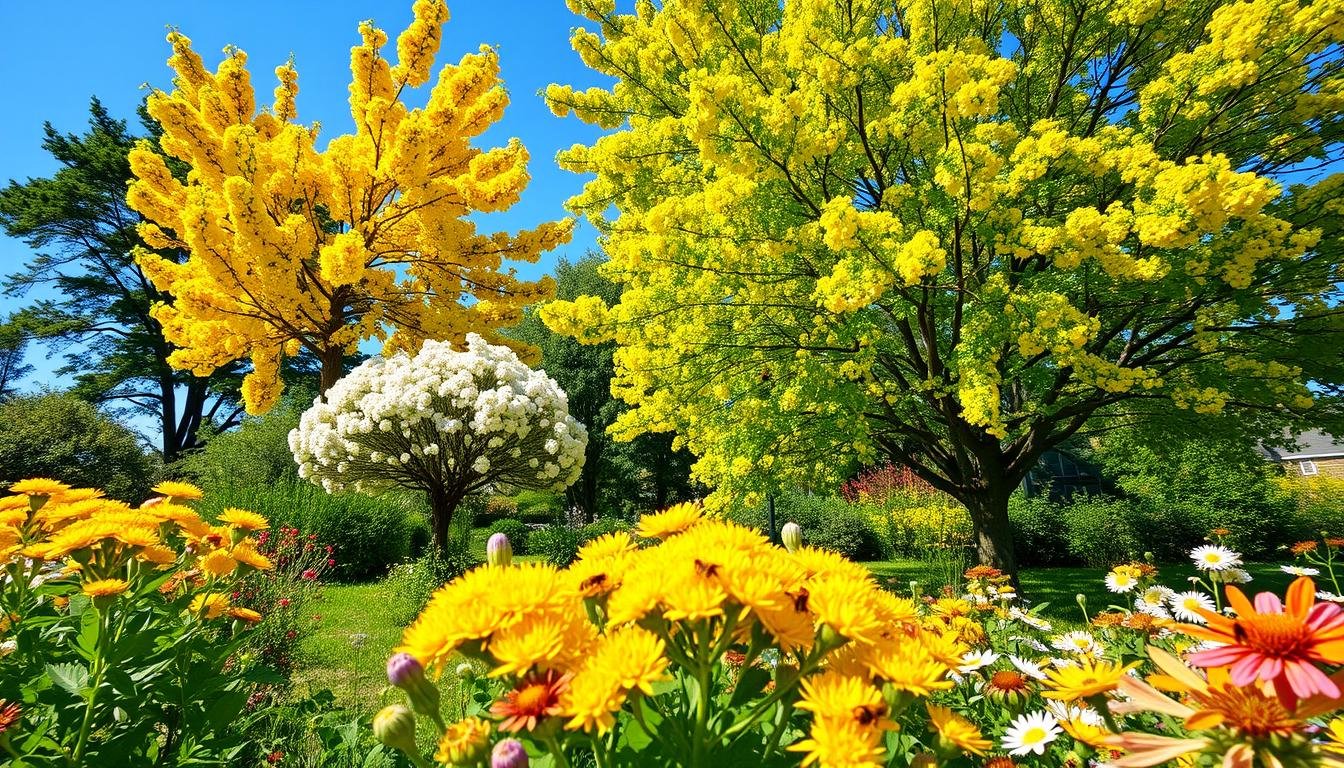
Basswood trees bloom for a notably short period, typically only around two to three weeks in early-to-mid summer depending on latitude and that year’s weather, but the bloom itself is remarkably intense: mature basswood trees produce an enormous volume of small, fragrant, pale yellow-white flowers that can fill the air with a distinctive sweet scent detectable from a considerable distance, and a strong basswood flow is well known among beekeepers in producing regions for its sheer volume relative to the brief window it’s available. This combination, short duration but high intensity, means beekeepers working basswood country need to time hive positioning and honey super management carefully to capture the flow, since a colony that isn’t already well-positioned when the bloom begins can miss a meaningful portion of a genuinely valuable, time-limited nectar source.
How does basswood’s bloom timing compare to other short-window honeys covered on this site?
Basswood’s roughly two-to-three-week window is broadly similar in length to fireweed honey’s four-to-six-week bloom, though basswood’s is somewhat more compressed and tends to occur earlier in the summer season across most of its shared Midwest and Canadian range.
The Debated “Bees Dying Under Linden Trees” Phenomenon
A genuinely real, frequently observed phenomenon deserves an honest, careful explanation here: dead or dying bumblebees are sometimes found in noticeable numbers on the ground beneath blooming linden and basswood trees, an observation that’s led to a long-standing popular theory that linden nectar is somehow toxic to bees. Current entomological research generally does not support the toxicity explanation as the primary cause; the more widely accepted current explanation points to old, naturally near-end-of-life bumblebees exhausting themselves foraging on an unusually abundant, energy-demanding nectar source late in their individual lifespans, rather than any inherent poison in the nectar itself, though the exact mechanism remains a genuinely debated topic in pollinator research rather than fully settled science. Importantly, this phenomenon is overwhelmingly reported in bumblebees and other wild pollinators specifically, not managed honeybee colonies, and it lines up with, rather than contradicts, the more measured assessment in this site’s plants toxic to bees guide, which treats basswood as an excellent, normally safe honeybee forage source with only a narrow, drought-specific risk profile.
Should beekeepers be concerned about this phenomenon affecting their honeybee colonies near basswood trees?
No significant evidence points to basswood nectar posing a comparable risk to managed honeybee colonies the way it’s anecdotally associated with wild bumblebee die-offs, and basswood remains a widely recommended, genuinely valuable forage tree for commercial and hobbyist beekeepers alike across its range.
A Genuinely Urban Honey Source
Unlike most of the rare single-source honeys covered on this site, which depend on remote swamps, mountain forests, or agricultural land far from population centers, basswood honey has a genuinely unusual urban dimension: because linden and basswood trees are widely planted as street and park shade trees throughout many North American and European cities specifically for their fast growth, dense canopy, and tolerance of urban conditions, a meaningful basswood nectar flow can sometimes be found within city limits themselves. Some urban beekeepers in cities with substantial linden street-tree plantings have reported genuinely strong basswood honey harvests from hives kept on rooftops or in small urban apiaries, a distinctive contrast to the largely rural or wilderness-dependent production stories behind most other specialty honeys discussed on this site.
Does urban basswood honey taste any different from rural forest-sourced basswood honey?
Not in any well-documented, consistent way tied specifically to the urban setting itself; flavor variation in basswood honey, like most single-source honeys, tends to come more from regional climate, soil, and the specific mix of surrounding forage than from a simple urban-versus-rural distinction.
Price and Value
Basswood honey typically sells in the $10 to $18 per pound range from regional producers in the Upper Midwest and Canadian prairie provinces, a moderate premium reflecting its short, weather-dependent bloom window and smaller overall production volume compared to a baseline honey like clover honey, while still remaining more accessible and typically less expensive than the rarest regional specialties like tupelo or sourwood covered elsewhere on this site.
Culinary Uses and Linden Flower Tea
Basswood honey’s sharp, minty intensity makes it a genuinely interesting choice for cooking applications where a subtler honey would simply disappear: stirred into strong black tea, drizzled over sharp cheese, or used in glazes and marinades where its assertive flavor can stand up to bold savory ingredients. It’s worth noting explicitly that linden flower tea, a well-known calming herbal tea popular across much of Europe (sometimes called “tilleul”), is made from the same tree’s dried flowers rather than from the honey itself, an important distinction similar to the fireweed tea versus fireweed honey relationship covered elsewhere on this site; the tea and the honey are separate products sharing a common source tree rather than the same item under two names.
How It Compares to Other Honeys on This Site
Basswood honey’s sharp, minty flavor profile sets it apart clearly from every other single-source honey covered on this site; where buckwheat honey is bold and dark and fireweed honey is pale and delicate, basswood occupies a genuinely unique niche: pale in color but sharp and assertive in flavor, a combination not shared by any other variety discussed here. Its production geography also overlaps meaningfully with clover honey’s Upper Midwest heartland, and beekeepers in that region often produce both varieties from the same general operation depending on which bloom is active at a given point in the season.
Common Mistakes
The most common mistake is assuming basswood honey’s minty, medicinal flavor note indicates spoilage or an off batch, when that sharp character is simply the variety’s normal, expected taste profile rather than any defect. Another mistake, given the “bees dying under linden trees” folklore, is assuming basswood or linden trees pose a real toxicity threat to honeybee colonies specifically, when the documented phenomenon involves wild bumblebees and remains a debated, not conclusively proven, causation story even for that species. People also sometimes confuse basswood honey with linden flower tea, assuming they’re the same product simply marketed under different regional names, when they’re genuinely separate items made from different parts of the same tree.
Verifying Authenticity
Because basswood honey’s short bloom window and moderate regional production make it less commonly available than mass-market honey, buying from a known Upper Midwest, Ontario, or Quebec producer transparent about harvest timing remains the most reliable way to get a genuine single-source product rather than a blend that only partially reflects basswood nectar. Readers wanting a general framework for spotting adulterated or mislabeled honey can consult this site’s complete guide to detecting fake honey.
Why does basswood honey sometimes get labeled “linden honey” in one region and “basswood honey” in another within the same country?
The naming split largely follows regional and historical convention rather than any real botanical or flavor difference; “basswood” tends to be the more common term in the Upper Midwest and much of the US, while “linden” appears more frequently in Canadian, European-influenced, and some Northeastern markets, so a buyer encountering either name locally should generally expect the same underlying single-source honey.
Does basswood honey have any notable antioxidant or nutritional distinction compared to other light-colored honeys?
No well-established research singles out basswood honey as meaningfully higher or lower in antioxidants than other pale, light-colored honey varieties; its appeal rests almost entirely on its distinctive sharp, minty flavor rather than any documented unique nutritional profile.
Frequently Asked Questions
Does basswood honey crystallize quickly like clover honey?
Yes, basswood honey tends to crystallize into a fine, relatively fast-setting white or pale crystal structure, a pattern covered in more general depth in this site’s guide to why some honeys crystallize faster than others.
Is basswood the same tree as the “linden” or “lime” trees mentioned in European gardening and herbal contexts?
Yes, essentially; American basswood (Tilia americana) and the European linden species (Tilia cordata, Tilia platyphyllos) are closely related members of the same genus, and “linden,” “lime tree” (a British term unrelated to the citrus fruit), and “basswood” are all names applied to different species and regional naming conventions within that same broader tree group.
Can basswood honey trigger allergic reactions more than other honey types?
No established evidence suggests basswood honey carries any elevated allergy risk compared to honey generally; genuine honey allergies remain rare overall and are typically tied to specific pollen or bee-product sensitivities rather than any particular floral source.
Is basswood honey good for people managing diabetes?
It carries the same general glycemic considerations as honey overall; readers managing diabetes and weighing how honey fits into their diet can find detailed context in this site’s guide to honey and diabetes.