Published August 27, 2026
Table of Contents
- What “Africanized Bees” Actually Means
- Why You Can’t Tell Them Apart by Looking
- The Real Difference: Behavior, Not Venom
- Where Africanized Bees Are Found
- Safety: What to Do If You Encounter a Defensive Colony
- What This Means for Beekeepers
- Beekeeping Practices in Affected Regions
- How Africanized Genetics Spread and Are Monitored
- Requeening Away From Aggressive Genetics
- Common Myths
- FAQ

“Africanized honey bee” (sometimes called “killer bee” in media coverage) refers to a hybrid of European honey bee subspecies and the African honey bee subspecies (Apis mellifera scutellata), first introduced to Brazil in the 1950s and now established throughout much of South America, Central America, Mexico, and the southern United States. The name causes more alarm than the actual biology usually warrants — but the real differences are worth understanding, especially if you keep bees somewhere within their established range.
What “Africanized Bees” Actually Means
Africanized honey bees are not a separate species from the European honey bees most backyard beekeepers manage — both are Apis mellifera, just different subspecies and their hybrids. The African subspecies was originally imported to Brazil specifically to breed with European stock for better honey production in tropical climates; some queens and swarms escaped quarantine in 1957, and their descendants spread north over the following decades, hybridizing with existing European colonies along the way. The result is a spectrum of hybrid genetics rather than a single uniform “Africanized” type — some colonies show strong African-derived behavioral traits, others are more diluted, and it varies by region and by colony. This is also part of why choosing bee species and stock carefully matters more in affected regions than elsewhere.
Why You Can’t Tell Them Apart by Looking
Africanized bees are, on average, very slightly smaller than European bees, but the difference is small enough that it takes laboratory measurement (specifically, wing morphometry or DNA testing) to distinguish them reliably — you cannot identify a colony as Africanized just by looking at it in the field. Both are golden-brown with dark banding and look essentially the same to the naked eye. This matters practically: don’t assume a calm-looking colony is “definitely European,” and don’t assume every defensive colony is “definitely Africanized” either. Behavior is the real signal, covered next, though even that isn’t a perfect field test on its own.
The Real Difference: Behavior, Not Venom
The individual venom of an Africanized bee is not more potent than a European honey bee’s — sting for sting, the toxicity is comparable. The danger comes from colony-level defensive behavior, which tends to differ in several consistent ways in populations with strong African-derived genetics:
- Faster response to disturbance. Defensive behavior can trigger with less provocation and less warning time than a typical European colony.
- Larger numbers responding. A much higher percentage of the colony’s guard and forager bees join a defensive response at once.
- Longer pursuit distance. Defensive bees may follow a perceived threat considerably farther from the hive than European bees typically would.
- More easily re-triggered. Colonies can stay agitated longer after an initial disturbance. This is a difference in degree of the same coordinated response every honey bee colony uses — see how a hive coordinates its defense for how that system works generally.
Because more bees respond and pursue farther, a person or animal can end up receiving a much higher total number of stings in an encounter with a highly defensive Africanized-influenced colony than in a comparable encounter with a typical European colony — and it’s the cumulative venom load from many stings, not any single sting’s potency, that creates real medical danger, including for people without a known bee sting allergy.
Where Africanized Bees Are Found

In the United States, established Africanized honey bee populations are generally found across the southern tier of states, including Texas, Arizona, New Mexico, southern California, and parts of Florida and the Gulf Coast, with the range shaped largely by winter cold tolerance — Africanized genetics don’t overwinter as well in colder climates, which has limited their northward spread. If you’re unsure whether your specific region has established populations, your state or county agricultural extension office is the most reliable source, since ranges shift gradually and get monitored locally.
Safety: What to Do If You Encounter a Defensive Colony
If a colony (wild or managed) becomes defensive and bees are pursuing:
- Run in a straight line away, don’t swat. Swatting and erratic movement tends to escalate defensive response; a steady retreat is more effective than fighting.
- Get indoors or into a vehicle if possible. Enclosed spaces stop pursuit quickly; bees generally don’t follow into a car or building.
- Protect your face and airway if you can’t immediately reach shelter. Facial and neck stings carry more risk.
- Don’t jump into water. A common but bad idea — defensive bees can wait at the surface, and you can’t stay submerged long enough for them to disperse.
- Seek medical attention if stung more than roughly a dozen times, or for any known allergy, regardless of sting count. Large sting counts warrant medical evaluation even without a diagnosed allergy, given the cumulative venom load involved.
What This Means for Beekeepers
If you keep bees within an established Africanized range, feral swarms you might capture, and even your own managed colonies over time (through open mating with feral drones), can pick up more defensive genetics generation over generation if left unmanaged. This is one of the practical reasons experienced beekeepers in affected regions requeen more proactively than beekeepers in areas without established Africanized populations — a docile, well-behaved colony today doesn’t guarantee the same temperament after a swarm requeens itself with open-mated local drones down the line.
Beekeeping Practices in Affected Regions

Beyond requeening, beekeepers working within established Africanized ranges commonly adopt a few practical habits that reduce risk without requiring any special equipment beyond what most beekeepers already own:
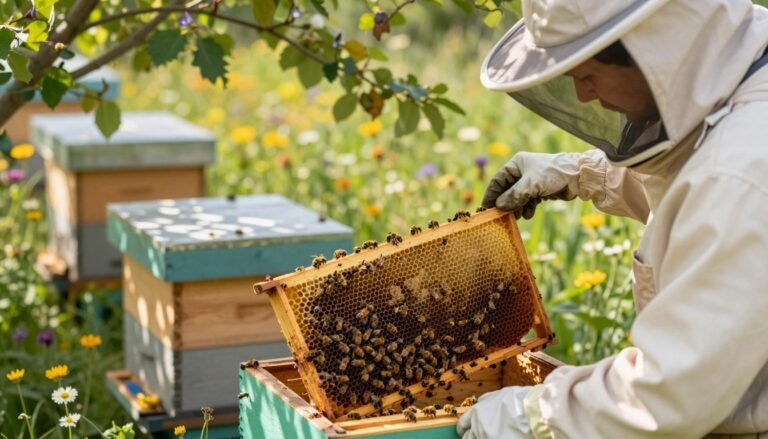
- Full protective gear, every time. Partial gear (no veil, bare hands) is a much bigger risk in areas with established Africanized populations than in regions without them, since even a moderately defensive colony can deliver far more stings before a beekeeper can retreat.
- Hive placement away from foot traffic. Locating hives away from paths, property lines, and areas where people or pets regularly pass reduces the odds of an incidental disturbance triggering a defensive response.
- Caution with unknown feral swarms. A swarm of unknown origin found in the wild should be treated with more caution in affected regions — some state extension programs and local beekeeping associations offer swarm-removal guidance or will test/assess a colony’s temperament before it’s brought into a managed apiary.
- Working hives during cooler, calmer parts of the day. Defensive responses tend to be more pronounced during hot afternoons; many beekeepers in affected regions shift inspections to cooler morning hours.
- Keeping neighbors and nearby structures in mind. Some counties and municipalities in affected regions have specific local ordinances around hive placement setback distances — worth checking with local authorities before siting a new apiary.
None of this requires specialized training beyond what a responsible beekeeper should already practice — it’s a matter of treating these precautions as standard procedure rather than optional, specifically because the downside of a bad encounter is more severe in areas with established Africanized populations.
How Africanized Genetics Spread and Are Monitored

Africanized genetics spread mainly through two mechanisms: swarming (an established Africanized-influenced colony reproduces and the swarm establishes a new feral colony nearby) and open mating (virgin queens, including those in managed European colonies, can mate with feral Africanized-influenced drones in the area since queens mate in flight with whatever drones are present). This second mechanism is precisely why managed apiaries in affected regions aren’t automatically immune just because they started with gentle, purchased European stock — without active requeening, colony temperament can drift over successive generations as local drone genetics mix in.
Many affected states run some form of monitoring or extension outreach program tracking the spread and density of Africanized genetics, often in partnership with university entomology departments. Some regions have also established voluntary or mandatory registration for managed hives partly for this reason — checking with your state department of agriculture or apiary inspection program is worthwhile both for compliance and for current, localized guidance specific to your area.
Requeening Away From Aggressive Genetics
Replacing a colony’s queen with one from a known, gentle-tempered breeding line is the standard, effective response to a colony that’s become noticeably more defensive over time — since a colony’s temperament follows its queen’s genetics (and to a lesser extent, the drones she mated with), a fresh queen from calm stock generally brings the colony’s behavior back in line within a brood cycle or two as her offspring replace the existing workforce. For the mechanics of doing this safely, see how to requeen a hive without finding the old queen and how to calm aggressive bees for handling a defensive colony safely in the meantime.
Common Myths
| Myth | Reality |
|---|---|
| Africanized bee stings are more venomous | No — individual sting potency is comparable to European bees; the danger is from higher sting counts, not stronger venom |
| You can identify them by sight in the field | No — reliable identification requires lab measurement or DNA testing, not visual inspection |
| All feral swarms in affected regions are dangerously aggressive | No — genetics exist on a spectrum, and many feral colonies in Africanized-range areas are manageable, though caution is still warranted with unknown swarms |
| Africanized bees are a separate species | No — both are Apis mellifera; it’s a subspecies hybridization, not a distinct species |
Sources
Behavioral and range information reflects published entomology and state agricultural extension guidance on Africanized honey bees, including material from university extension services and state departments of agriculture in affected regions. For current, region-specific guidance, your local agricultural extension office is the most reliable and up-to-date source.
FAQ
Are Africanized bee stings more dangerous than regular honey bee stings?
Not per sting — the venom itself is comparable in potency. The added danger comes from colonies responding with far more bees and pursuing farther, which can lead to a much higher total sting count in an encounter.
Can I tell if a colony is Africanized just by looking at it?
No. Africanized and European honey bees look nearly identical; reliable identification requires laboratory wing measurement or DNA testing.
What should I do if I’m being chased by defensive bees?
Run in a straight line to shelter (indoors or a vehicle) without swatting, protect your face if you can’t reach shelter immediately, and never jump into water to escape.
How do beekeepers manage colonies that become too defensive?
Requeening with a queen from known, gentle-tempered stock is the standard fix — colony temperament follows the queen’s genetics, and behavior typically improves within a brood cycle or two after requeening.