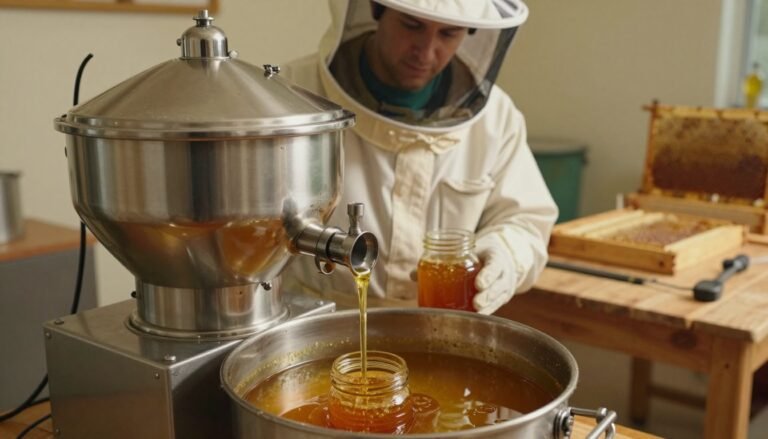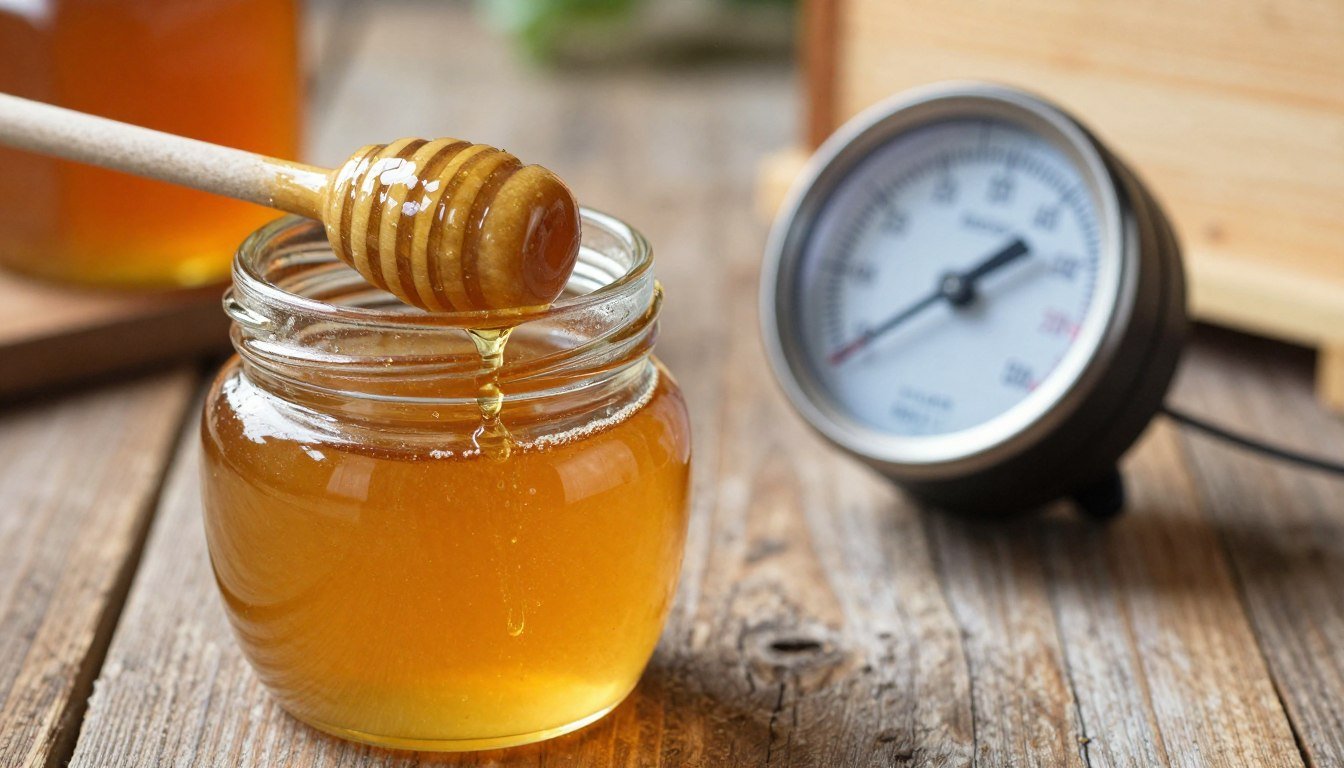
Understanding water levels in harvested honey is a core task for beekeepers who want consistent quality and shelf life. Nettie’s Bees measures the moisture content of every batch to keep jars stable and flavorful.
Water content affects texture, crystallization, and the risk of fermentation. Keeping this level within the safe band preserves the golden color and smooth mouthfeel buyers expect.
Practical control combines careful curing, precise refractometer checks, and climate-managed drying. Learn why this metric matters and how it shapes marketability by consulting a detailed guide on moisture content honey and best practices on humidity effects on curing.
Key Takeaways
- Water content drives stability, texture, and shelf life.
- Professional monitoring keeps product meeting quality standards.
- Refractometers and drying rooms help reach safe levels.
- Below ~20% is ideal to reduce fermentation risk.
- Proper control improves marketability and consumer trust.
The Science of Honey Composition and Water
The chemistry inside a hive turns thin nectar into a shelf-stable, sweet substance through enzymatic action and evaporation. Raw honey is mostly sugars, with water content typically between 14% and 20%. This balance gives product its texture and long life.
Bees reduce water in nectar by passing it mouth-to-mouth and by fanning to increase air flow. That steady circulation of air inside the hive speeds evaporation and helps set the final level.
Archaeologists have even found edible jars in Egyptian tombs that remained good after thousands of years. That longevity highlights how effective the natural process is at creating a stable food.
- Composition: Mostly fructose and glucose with small amounts of enzymes and acids.
- Bee action: Trophallaxis and wing fanning lower water and raise shelf life.
- Variation: Floral source and season affect final levels and overall quality.
Beekeepers monitor these factors to maintain product quality and avoid fermentation. For detailed laboratory guidance, see this scientific chapter on honey.
Defining the Target Moisture Content for Ripe Honey
Beekeepers rely on a narrow band of water levels to decide if frames should be extracted. The practical range accepted by many professionals sits between 14% and 18%.
The USDA sets Grade A at 18.6% or less, which guides commercial grading and labeling. Staying under that threshold reduces the risk of fermentation and preserves shelf life.
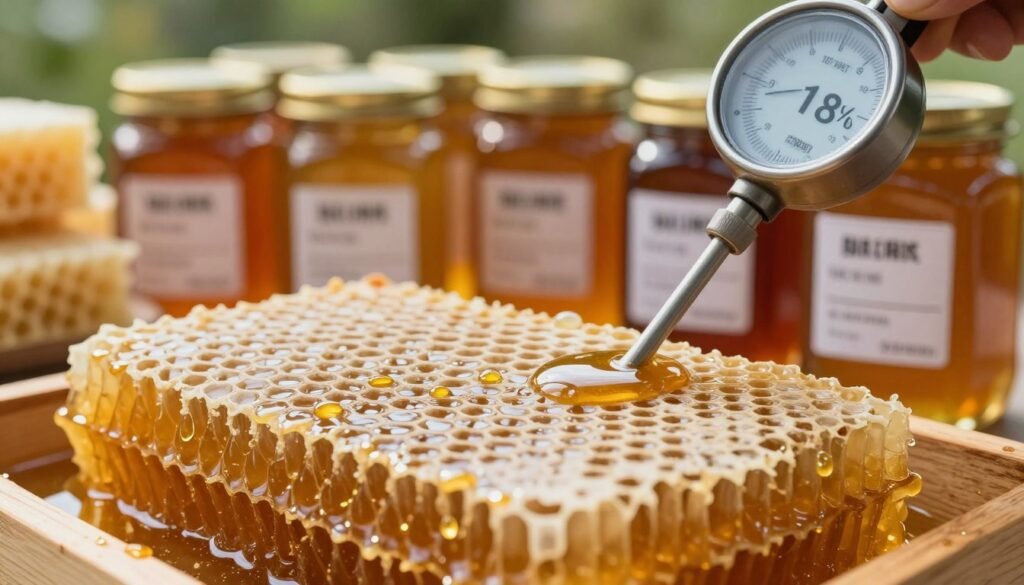
Several factors shape the final water content: floral source, regional climate, and hive ventilation. These affect whether the product needs extra curing time before removal.
| Range | Classification | Practical implication |
|---|---|---|
| 14%–16% | Optimal | Stable, long shelf life; minimal risk of fermentation |
| 16%–18% | Commercially acceptable | Good quality; monitor storage conditions |
| 18%–18.6% | USDA Grade A limit | Still gradeable; caution advised |
Achieving an ideal moisture content is a primary goal for professional beekeepers who want consistent batches. When uncertain, follow simple field methods such as those explained in how to test honey moisture without an.
Why Moisture Levels Impact Honey Quality
A few percentage points of extra water can turn a fine product into one that spoils quickly. This simple change affects aroma, texture, and saleability. Small differences in water amount alter the chemical balance and activate dormant yeasts.
Risks of Fermentation
Research in the Journal of Food Science shows product with a water content above 19% is far more vulnerable to fermentation.
When levels rise past that mark, yeasts wake and produce gas and acids. You may notice bubbles, a sour smell, and thinning in jars. These signs mean spoilage and lost value.
Flavor and Texture Profiles
Lower water preserves floral aromas and creates a thick, luxurious mouthfeel. Producers who keep water low maintain better shelf life and consumer trust.
Good practice: monitor levels during curing and storage to protect natural aromatic compounds and avoid degradation.
| Condition | Typical Effect | Visible Sign | Recommended Action |
|---|---|---|---|
| ≤ 18% | Stable aroma and viscosity | Clear, thick jars | Standard storage at room temp |
| 18%–19% | Acceptable but needs care | Occasional fine bubbles | Check humidity; delay extraction |
| > 19% | High risk of fermentation | Sour smell, foaming | Drying or dehumidify immediately |
Learn practical lab and field checks with this guide on moisture content control and review grading standards at honey grading standards.
Essential Tools for Measuring Honey Moisture
Reliable instruments give clear readings that protect product quality before harvesting.
Using a Refractometer
A refractometer measures the refractive index of a sample. Light bends differently when dissolved solids and water change. That bend creates a precise reading of the water level.
Professional beekeepers test multiple frames with a refractometer before extraction. This practice confirms the batch has reached the ideal moisture content and reduces risk during storage.
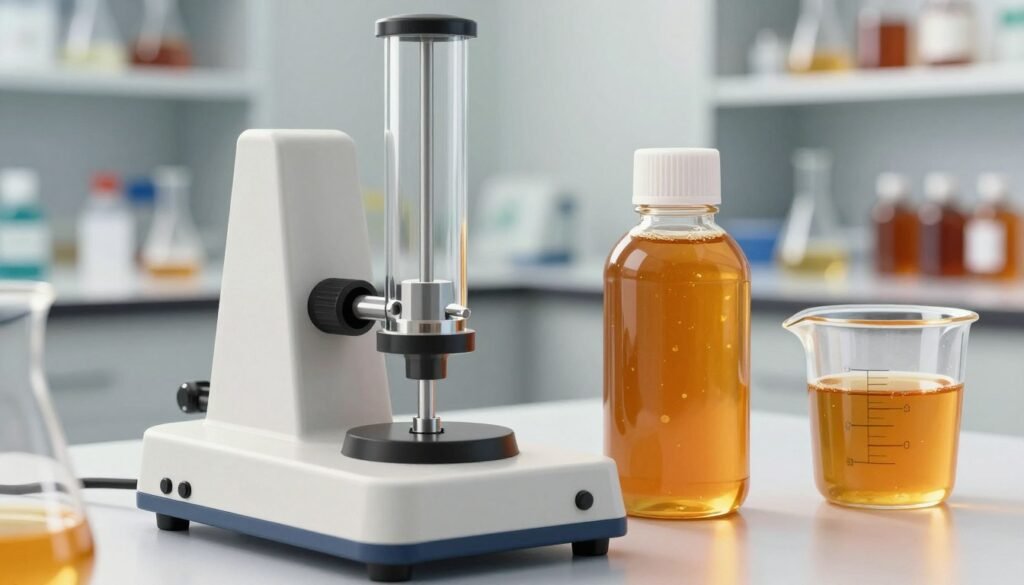
“Accurate readings let a beekeeper decide the right moment to harvest and protect jar stability.”
- Digital refractometers give electronic readings accurate to ±0.1%.
- Test several frames to check range and avoid sampling error.
- Good readings prevent harvesting product that still needs drying or more air exposure.
| Tool | Use | Typical Accuracy |
|---|---|---|
| Hand refractometer | Quick field checks | ±0.2% |
| Digital refractometer | Lab-grade readings before extraction | ±0.1% |
| Hydrometer (supplement) | Cross-check bulk samples | ±0.3% |
Learn why many producers prefer digital refractometers for routine checks.
Factors Influencing Natural Moisture Levels
A hive’s microclimate and the blossoms nearby determine the natural balance of sugars and water. Weather and humidity play a major role; rainy spells and high air humidity slow evaporation and raise water levels inside comb.
The nectar source also matters. Some floral types produce thinner nectar that keeps greater water, while others yield thicker syrups that dry down faster.
Timing matters too. Beekeepers who delay harvest during damp periods risk frames absorbing extra water from the surrounding environment. That can reduce overall quality and increase fermentation risk.
Use a refractometer as a check during extraction. This tool gives quick readings so experienced producers can decide the right time to harvest and protect product safety.
Good management blends patience and monitoring. Watch weather, sample multiple frames, and follow lab-based guidelines such as the recommended water content range of 14–17% to keep jars stable and maintain honey quality.
Techniques for Managing High Moisture in Honey
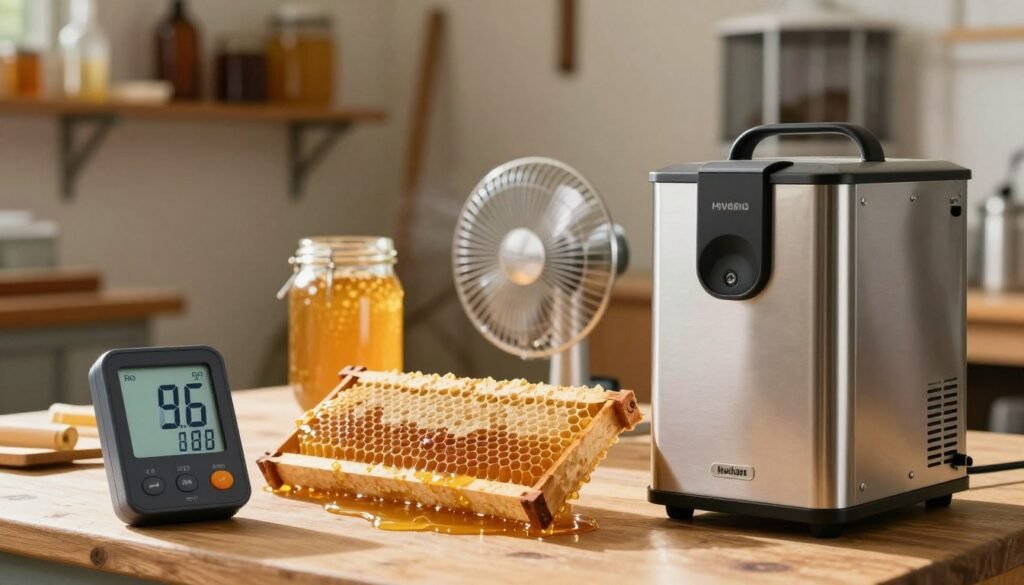
Airflow and controlled drying are the fastest ways to rescue an over-wet batch before extraction. Use a small curing room to lower humidity and protect jars from fermentation.
Dehumidification Methods
Many beekeepers place supers in a room set to 35–40% relative humidity. A dehumidifier plus circulating fans speeds evaporation safely.
If a refractometer reading shows high moisture content, move frames to that room and check readings daily. The process may take a couple of days but often salvages borderline batches.
“A steady drying environment and repeated refractometer checks prevent fermentation and preserve floral aroma.”
- Use fans to blow air across open buckets to lower readings.
- Refractometers are indispensable tools for tracking progress.
- Keep samples representative by testing multiple frames before extraction.
Timing the Harvest
Waiting until bees cap frames is the simplest management step. That extra time in the hive usually brings water content into the ideal range.
| Method | When to use | Effect |
|---|---|---|
| Dehumidifier + fans | High refractometer reading | Reduces levels in 1–3 days |
| Delay harvest | Uncapped frames | Bees finish curing; safe extraction |
| Bucket aeration | Post-extraction high reading | Quick additional drying |
Tools and timing work together. Use a quality refractometer for beekeepers and consult guides on preventing spoilage at understanding honey fermentation.
Best Practices for Proper Honey Storage
Proper storage habits are as important as harvest timing when preserving a batch’s aroma and stability. Store jars in airtight containers at room temperature to limit air exchange and preserve shelf life.
Keep jars in a dry place. A dry cupboard or pantry away from heat sources helps prevent the product from absorbing excess water and risking spoilage.
- Use clean, dry utensils when serving to avoid introducing water that raises moisture levels.
- Seal jars tightly after each use and avoid storing near stoves or windows.
- If crystallization occurs, warm the jar gently in warm water to restore texture without damaging quality.
“Airtight jars and steady, room‑temperature storage are the easiest tools to protect quality between harvest and the last spoonful.”
Beekeepers and consumers share management duties. Regular checks with a refractometer during processing help, but good storage keeps jars stable long term.
Conclusion
Active monitoring and proper handling protect each harvest from fermentation and quality loss.
Maintaining correct water levels is the single most important step to secure long shelf life and avoid spoilage. Use a reliable refractometer to check batches before extraction and record readings to spot trends.
Careful harvest timing, clean storage, and simple drying techniques preserve aroma and texture. The bees’ natural work is remarkable, yet human management keeps jars safe and saleable.
Learn advanced measurement methods like fiber‑optic and lab techniques via a concise study on fiber‑optic technique, and see practical field checks at how to test hive moisture.