Deciding the right bottling temperature is a vital step for any beekeeper who wants a top-tier product. The key limit to note is that the bottling temperature must not exceed 50°C (122°F). Temperatures above that mark cause delicate enzymes such as diastase, invertase, and glucose oxidase to break down quickly.
Good packaging and careful handling keep the natural nutritional value and flavor intact. Managing the bottling process in a thoughtful way saves time and preserves value for the consumer.
This guide walks through practical steps to protect those enzymes and keep quality high during the final stages of preparation. The aim is clear: deliver a product that reflects your standards and builds trust in the market.
Key Takeaways
- Keep bottling temperature at or below 50°C (122°F) to protect enzymes.
- Proper packaging preserves nutritional value and flavor.
- Small process changes during bottling save time and improve quality.
- Understanding enzyme sensitivity helps maintain product value.
- Careful handling in the packaging phase builds a strong reputation.
Understanding Why Temperature Matters
Even small rises in temperature can change the chemistry of honey and reduce its value. The product from each hive reacts to heat in unique ways, so careful monitoring is essential.
Temperatures above 50°C trigger the formation of 5-hydroxymethylfurfural (HMF). Health regulators such as FSSAI and Codex Alimentarius cap HMF at 40 mg/kg to protect consumers and preserve commercial standards.
Research on ScienceDirect shows that heating beyond 49°C significantly alters enzyme activity and increases HMF content. This change harms flavor, nutritional profile, and overall quality.
Several practical factors matter. The number of variables in hive management, extraction, and filling raises the risk of accidental heating. Simple steps like calibrated thermometers and gentle warming prevent rapid breakdown of beneficial compounds.
- Every hive produces heat-sensitive product that needs strict control.
- Monitor temperature closely to avoid HMF formation above safe limits.
- Understanding how brief exposure affects chemistry preserves final quality.
Should Honey Be Bottled Warm or Cool
A controlled filling temperature keeps flow steady while protecting delicate enzymes. Aim for a balance: enough heat to reduce viscosity, but not so much that enzymes degrade or HMF rises.
The Ideal Temperature Range
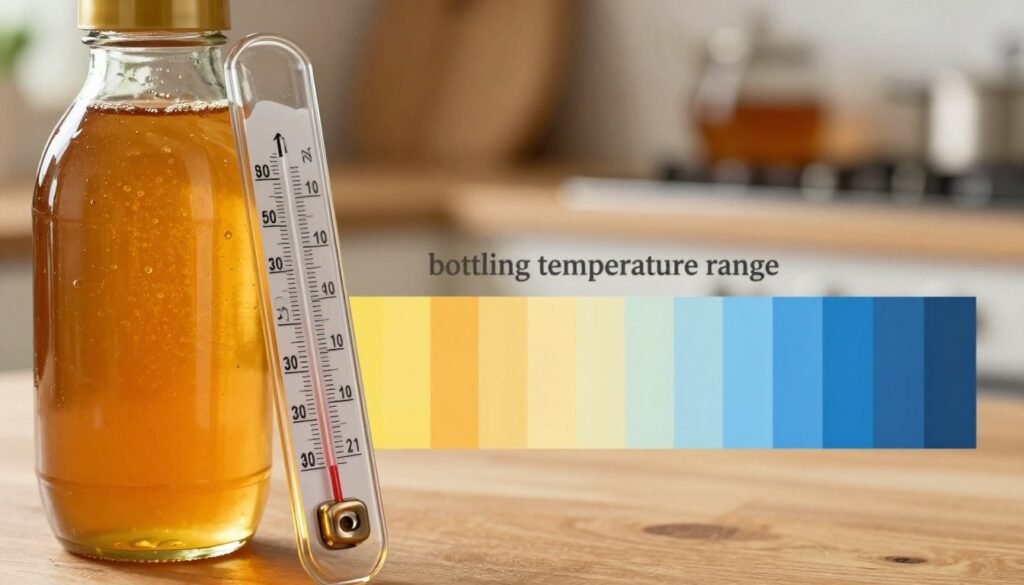
The optimal temperature range for bottling is 35°C to 45°C. A water bath or a warming cabinet set near 40–45°C offers gentle, even heat that helps jars fill cleanly.
This range improves flow and reduces trapped air without compromising enzyme activity. Prepare glass containers and feed lines so they handle the warm product safely.
Avoiding Overheating
Never use direct flame or microwave ovens. Those methods create hot spots that push local temperatures above safe limits and risk overheating honey.
- Use a calibrated thermometer and monitor each batch.
- Consistent temperatures minimize bubbles and give a professional clear fill.
- For creamed honey, precise heating steps protect crystal structure and texture.
For practical setup tips and extraction context, see this guide on how to extract and store.
The Science of Enzyme Preservation
Protecting enzymes requires attention to both the peak temperature and the total heating hours.
Pasteurization at 72°C or higher destroys nearly all enzymatic activity, which is why keeping product temperatures below 50°C matters. Enzymes like glucose oxidase provide antimicrobial action that boosts the nutritional value and functional status of the final product.
Prolonged exposure to heat raises 5-hydroxymethylfurfural (HMF) levels and lowers overall quality. Even moderate heating over several hours can reduce enzyme content and shorten shelf life.
- Keep the temperature range under 50°C to protect enzymes and nutritional value.
- Limit total heating time; extended hours at moderate heat accelerate enzyme loss.
- Prevent overheating to retain antimicrobial enzymes like invertase and glucose oxidase.
- Good temperature control preserves shelf life and product quality.
Preparing Your Bottling Environment
Start with dry, cleaned surfaces to prevent any rise in water content that invites fermentation.
Hygiene Essentials
A clean, dust-free room reduces risk when filling jars and buckets. Residual water in a container can raise moisture levels above 18.6% and trigger fermentation.
All equipment, utensils, and surfaces must be washed, rinsed, and fully dried before contact with honey. Inspect each container for defects and leave no visible residue.
Personnel handling each batch wear gloves, hair nets, and masks to keep physical contaminants out of the product. Small lapses in clothing or technique can harm quality.
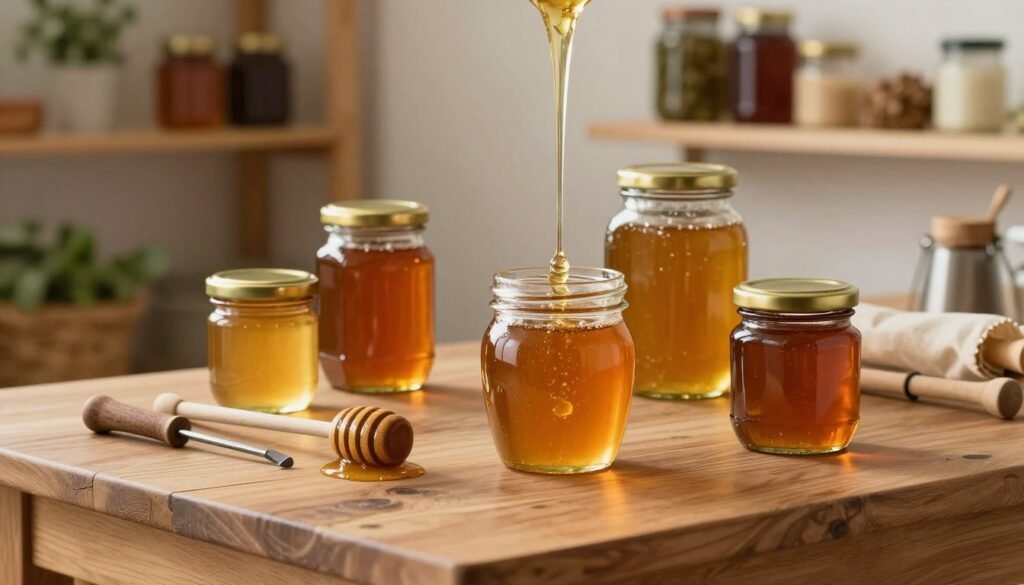
“Keep every surface dry and every step simple; that habit protects your product.”
- Prepare the exact number of containers needed and inspect them.
- Limit access to the filling zone to trained staff only.
- Monitor ambient humidity and remove standing water to protect water content.
For detailed packaging steps and labeling tips, review this practical guide on effective bottling and packaging and a seller-focused resource on how to package and label.
Settling Honey for Clarity
A quiet holding period of 24–48 hours allows suspended bubbles to rise naturally.
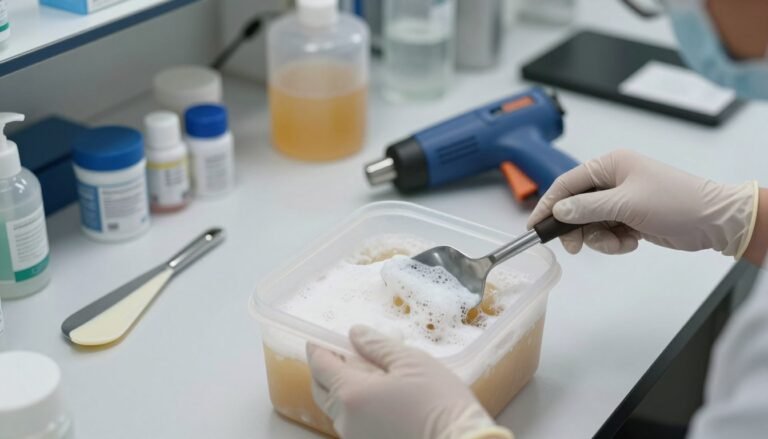
Pour the contents into a clean bottling tank or a food-grade bucket and leave undisturbed. This short time lets tiny air bubbles and foam collect at the surface.
After the period, skim the top with a sanitized spoon or ladle to remove foam and any debris. The result is a clearer jar fill and a more attractive glass presentation for customers.
If small air bubbles remain after pouring into jars, place filled containers in a warming cabinet set to 35°C for a few hours. Gentle heating helps trapped air escape without aggressive heating that harms enzymes.
Tip: Keep product stored in a cool, dry area before settling to protect water content and keep glass clean. Processing a modest number of jars per batch improves consistency and saves rework time.
“Allowing a brief rest and a careful skim delivers a professional, clear product every time.”
Selecting the Right Containers
Packaging choice directly affects how your product looks on the retail shelf and how long it stays fresh.
Choose materials and sizes that match your market, transport needs, and presentation goals.
Glass Versus Plastic
Glass is the gold standard for preserving flavor and acidity because it is inert and nonreactive.
Glass showcases clarity and color, making jars attract shoppers and signal premium quality.
Food-grade plastics like PET and HDPE offer a lighter, shatter-resistant alternative. They are BPA-free and safe for storing honey in larger runs or for shipping.
Choosing the Correct Size
Containers range from 50 g gift jars up to 5 kg bulk pails. Pick sizes that match buyer needs: retail, gift, or wholesale.
Every vessel must be food-grade and airtight to keep product fresh and free from external contaminants.
- Glass container choice highlights clarity and boosts shelf appeal.
- Plastic containers reduce weight and breakage risk during transit.
- Select sizes that match your target audience—small jars for gifting, larger pails for commercial buyers.
- Always use airtight seals and certified food-grade materials.
| Feature | Glass | Food-grade Plastic (PET/HDPE) |
|---|---|---|
| Inertness | Nonreactive, preserves flavor | Engineered to resist acids; safe when certified |
| Weight & Breakage | Heavier, fragile | Lightweight, shatter-resistant |
| Presentation | High visual appeal on shelf | Functional; labels do most of the branding |
| Typical Uses | Retail jars, gift packs | Bulk pails, squeezable bottles for shipping |
For a detailed comparison of glass and plastic options, review the guide on glass or plastic containers.
“Choosing the right packaging converts careful production into a trusted retail product.”
The Filling and Sealing Process
Precision at the fill line prevents costly underweights and keeps customer trust intact. Verify net weight with a calibrated scale for every jar since product is sold by weight, not volume.
Controlled flow reduces trapped air. Fit a honey gate to your bucket for steady dispensing into jars and containers. A steady hand and measured pours cut waste and speed packing.
If visible bubbles form during filling, let each jar sit for a few minutes before sealing so air bubbles have time to rise and escape. Use a warming cabinet to keep temperature steady and ensure smooth flow without long heating hours; refer to the recommended filling temperature guide when adjusting your set points.
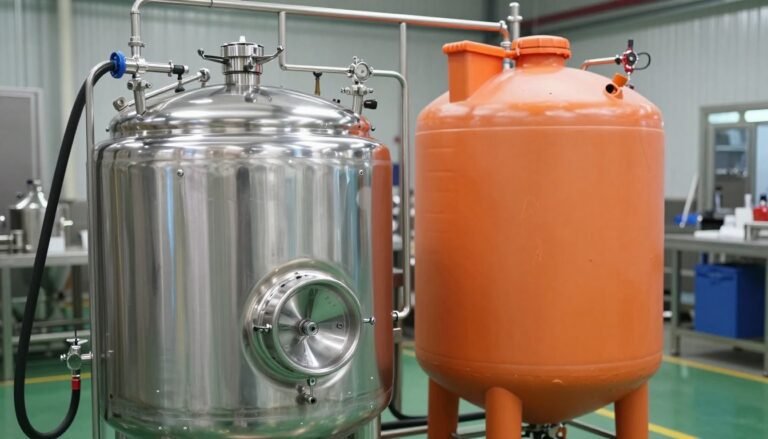
Lids must create an airtight, tamper-evident seal to stop moisture from entering and raising water content that can cause fermentation. Seal each number of jars in a single batch promptly. Proper methods protect natural enzymes and limit overheating risk; for tank options that suit small producers, see this bottling tank guide.
- Use a scale to confirm declared net weight on every jar.
- Install a honey gate on the bucket for controlled flow and fewer air bubbles.
- Keep fills short in time and seal batches quickly to protect content.
- Use airtight lids that are tamper-evident to avoid water uptake.
“Fast, precise filling and immediate sealing preserve quality and shelf life.”
Managing Glass Breakage Risks
A single shattered jar can contaminate an entire production run, so vigilance matters at every step.
Glass fragments are a significant physical hazard under HACCP food safety plans. If a glass container breaks during the bottling process, discard the entire affected batch to avoid contamination.
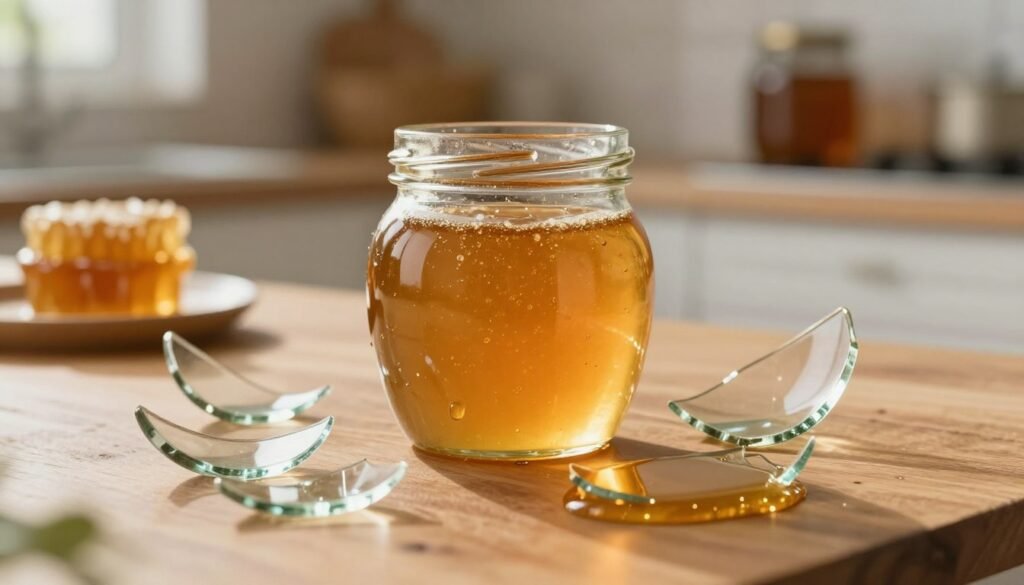
Safety Protocols
Inspect every container before filling. Check for hairline fractures, chips, or stress marks on each jar and bucket. The number of checks you perform signals your commitment to product quality.
- Treat broken glass as a critical incident and remove all product tied to the batch.
- Keep the bottling area clean and organized to reduce collisions that lead to breakage.
- Train staff to handle glass carefully and to report any damage immediately.
Never get casual about inspection steps. Even small cracks can cause dangerous shattering during transport or heating. Document every incident and review your process to prevent repeats.
“Discard the whole batch if glass breaks; it protects customers and preserves trust.”
Essential Labelling Requirements
Regulatory-compliant labeling links product traceability with buyer confidence.
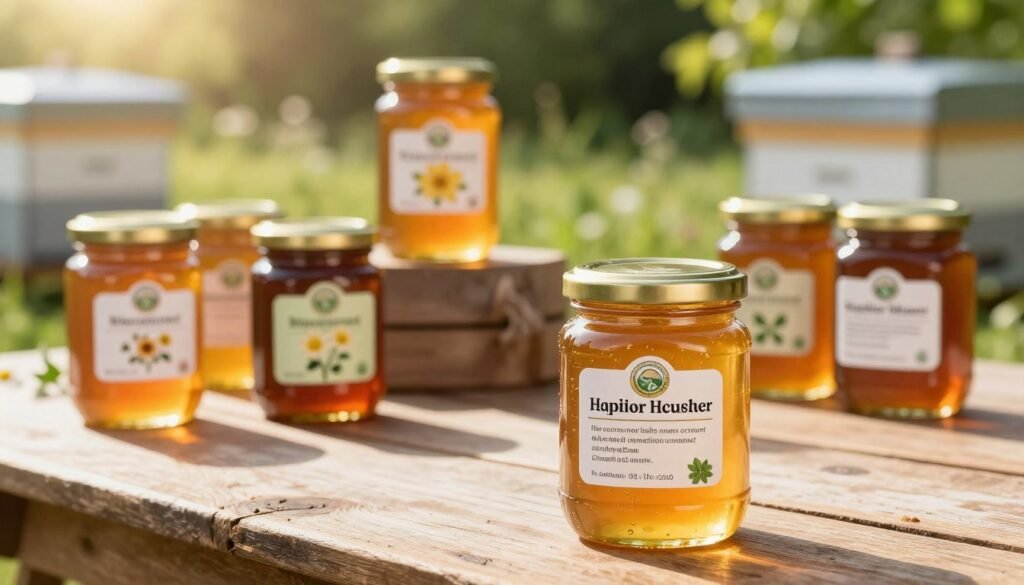
FSSAI rules require labels to list the product name, net weight, manufacturer details, a batch number, and a best-before date. Labels must clearly state “honey” and name the floral or botanical source when marketed as a specific variety.
Clear labels protect consumers and make regulatory checks straightforward. Each container must show the declared weight and the batch number so you can track inventory and handle recalls fast.
- Legal info: product name, net weight, maker address, and best-before date.
- Traceability: batch number and production number on every jar or bulk container.
- Marketing value: botanical origin and content details build trust and justify price.
Keep labels legible, durable, and consistent across all jars. For a compact, practical guide to label creation and compliance see label basics.
“Accurate labels reduce returns, speed inspections, and improve customer trust.”
Best Practices for Storage
A stable storage space under 25°C extends shelf life and prevents rapid quality loss.
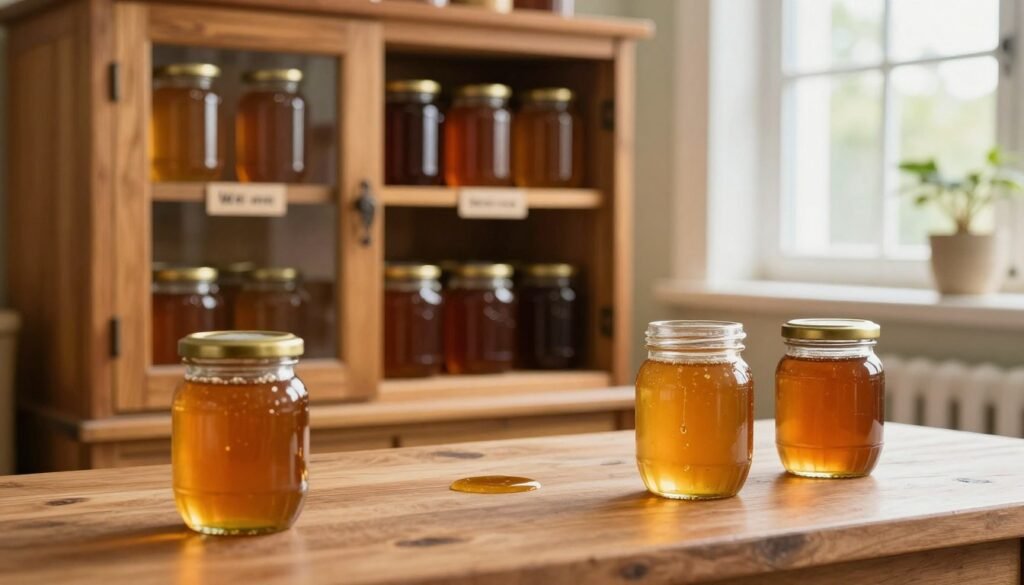
Keep jars and buckets in a cool, dark area away from direct sunlight. This protects color and nutritional value and limits heat exposure that raises HMF levels.
Use a clear batch number system and FIFO rotation. That practice moves the oldest product first and reduces the chance of selling aged stock.
Avoid wide temperature swings. Repeated expansion and contraction can weaken seals on glass containers and allow water content to climb. Weak seals also invite leakage and contamination.
- Storage tip: Keep product below 25°C and away from windows.
- Inventory tip: Track batch numbers and inspect seals regularly.
- Quality tip: Monitor crystallization and trapped bubbles during the rest period.
| Risk | Preventive Action | Outcome |
|---|---|---|
| Sunlight / heat | Store in dark room; avoid direct rays | Preserves color and enzymes |
| Temperature swings | Maintain stable climate under 25°C | Protects seals and shelf life |
| Old stock | Use FIFO and batch number tracking | Fresh product to customers |
“Regular checks and simple rotation keep quality high and reduce waste.”
For more detailed storage methods, review best practices for storing honey and a long-term guide on how to store honey long-term.
Conclusion
Every step from bucket to shelf affects the final quality customers notice.
Consistent temperature control, clear batch number records, and careful filling make the process repeatable. Take time to settle product, inspect jars, and confirm net weight before sealing.
Avoid overheating and monitor enzymes to protect quality. Keep water content low and follow glass breakage protocols to safeguard each batch.
For practical steps on processing, review this detailed processing honey guide to refine your routine and preserve product value.
FAQ
Is it better to heat jars before filling?
Pre-warming glass containers to near filling temperature reduces thermal shock and helps the product flow into jars without trapping air. Use a warming cabinet or warm water bath; avoid high temperatures that could degrade enzymes and flavor.
What temperature range preserves natural enzymes and clarity?
Maintain a gentle range around 95–120°F (35–50°C) for handling and slight warming. This keeps viscosity low enough to pour while protecting enzymes and aroma. Higher temperatures risk nutrient loss and color changes.
Can brief heating damage nutritional value?
Extended exposure to high heat reduces compounds like diastase and certain antioxidants. Short, controlled warming in the recommended range minimizes losses. Never exceed 140°F (60°C) during processing.
How do I remove bubbles during filling?
Let the product rest in a bucket or tank for a few hours to allow bubbles to surface. Fill slowly, use proper spouts, and tap jars gently after filling to release trapped air. A small headspace helps with expansion and reduces bubbling.
Is creamed product handled differently?
Yes. Creamed batches require cooler, controlled temperatures to maintain texture. Work at lower warmth, stir gently, and fill immediately to preserve the finely crystallized structure and avoid melting or separation.
Which containers are best: glass or plastic?
Glass is preferred for long-term storage and premium presentation; it’s inert and preserves flavor. Food-grade plastic can work for short-term retail but may allow slight moisture exchange and is less premium.
How do I choose jar sizes for retail and storage?
Match sizes to customer use and shelf life. Smaller jars sell well for sampling and gift packs. Larger jars suit families or foodservice. Consider fill efficiency, labeling, and stacking when selecting sizes.
How long should product rest before bottling for clarity?
Allow settled batches 12–48 hours in a clean tank to let air and fine particles rise. Cooler, still conditions speed clarification. Avoid disturbing the tank during the settling period.
What are the key hygiene steps during bottling?
Sanitize all equipment, jars, lids, and utensils. Use clean gloves, hair restraints, and a dedicated bottling area. Keep surfaces dry and free of contaminants to protect product quality and shelf life.
How can I seal jars to prevent spoilage?
Use properly sized lids and torque consistently. Ensure rims are clean before sealing. For commercial packs, consider induction seals for tamper evidence and added barrier protection.
What safety protocols reduce glass breakage risk?
Inspect jars for chips, pre-warm glass gradually, and avoid over-tightening lids. Use padded racks and train staff on careful handling. Keep a containment area and first-aid kit accessible in case of breakage.
How does water content affect bottling and storage?
Maintain moisture below levels that encourage fermentation; typically under 18%. Use refractometer checks per batch. Higher water content increases risk of spoilage and shortens shelf life.
Are batch numbers and traceability important?
Yes. Record batch numbers, processing temperature, and bottling date for traceability and quality control. This aids recalls, verifies shelf life, and supports marketing claims about freshness.
What labeling information is legally required?
Include net weight, ingredient list if applicable, origin or source, allergen statements, producer contact, and production or best-by dates. Check USDA, FDA, and local regulations for specific requirements.
How should finished jars be stored for best shelf life?
Store in a cool, dry, dark place away from direct sunlight and heat sources. Stable room temperatures and proper stacking protect flavor and prevent texture changes over months or years.
Can repeated warming and cooling affect product quality?
Yes. Repeated temperature swings promote crystallization, color shifts, and flavor loss. Minimize cycles by processing in controlled batches and avoiding unnecessary reheating.
When is reheating acceptable and how should it be done?
Reheat only to the lowest effective temperature to restore pourability, using a water bath or warming cabinet set within the safe range. Stir gently and monitor temperature with a thermometer to avoid hotspots.
Do air bubbles indicate spoilage?
Air bubbles alone usually signal agitation or recent heating. Persistent foaming, off-odors, or fermentation signs indicate a problem. Monitor aroma and test a small sample if you suspect spoilage.
What practices maximize product value and presentation?
Use clear glass, consistent fill levels, clean labels, and professional batch coding. Maintain gentle processing temperatures and strong hygiene to preserve flavor, texture, and consumer confidence.