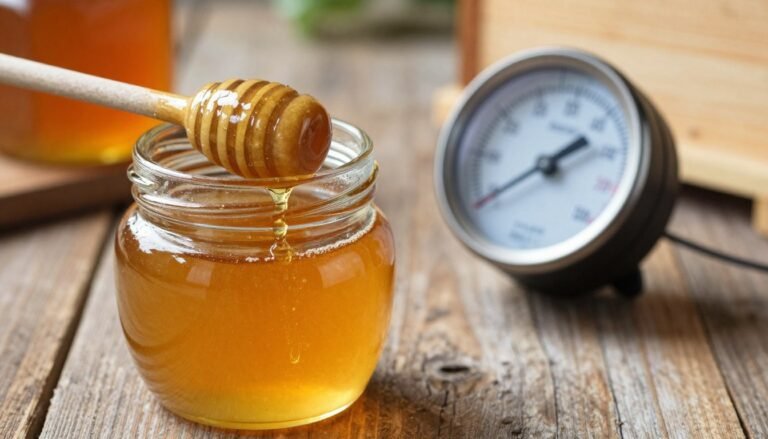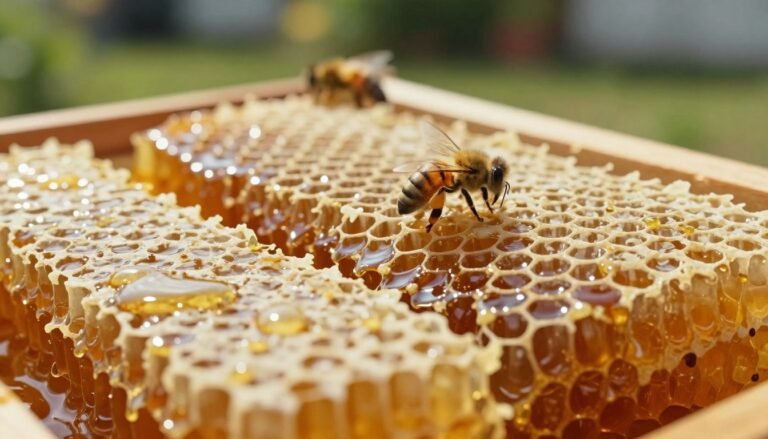
Knowing when jarred honey loses its best traits matters to beekeepers and shoppers across the United States. Heat above 104°F breaks down natural enzymes and cuts nutritional value, while the hive usually sits near 90–95°F during production.
When processing and temperature control slip, flavor and texture shift. You may notice altered taste, changed crystallization, and a thinner mouthfeel that signal a loss in quality.
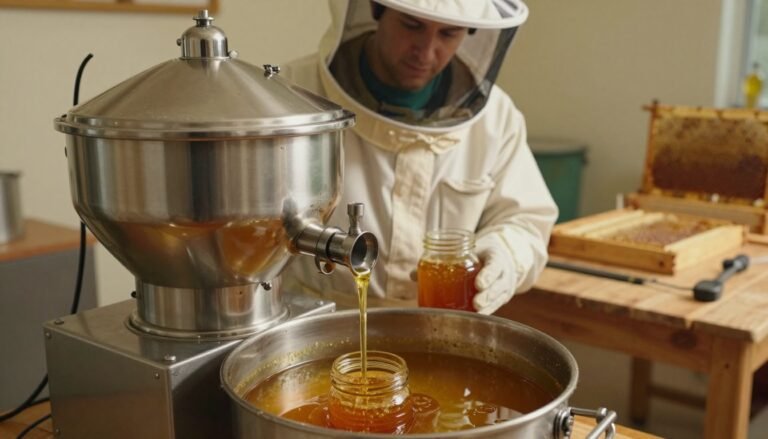
Careful handling and gentle heating preserve the compounds and health benefits buyers expect. Proper steps during extraction and bottling keep the product close to its natural state and protect the delicate volatile compounds that give each jar a unique view of its origin.
Key Takeaways
- Keep heating under 104°F to protect enzymes and benefits.
- Hive temps (90–95°F) set a natural benchmark for safe processing.
- Overheating changes flavor, texture, and crystallization patterns.
- Beekeepers and consumers should prioritize gentle processing and control.
- Watch for altered taste and mouthfeel as early warnings in a jar.
The Importance of Preserving Raw Honey Quality
Protecting raw honey starts with careful handling from the hive to the jar. The product is rich in antioxidants, minerals, and antibacterial elements that buyers prize. These components deliver many of the health benefits that make real honey valuable in kitchens and medicine cabinets alike.
Maintaining honey quality means gentle extraction, slow bottling, and avoiding excess heat during processing. Good beekeeping practices mirror the hive environment and set the benchmark for freshness.
Professional beekeepers prioritize care over speed. That attention preserves the complex flavor profile created by the bee and the plant sources it visits.
- Preserve raw honey quality: keep extraction gentle to protect nutrients.
- Protect health benefits: limit heat exposure during processing.
- Respect the hive: follow best practices so flavor and benefits remain intact.
Understanding the Sensory Signs of Overheated Honey
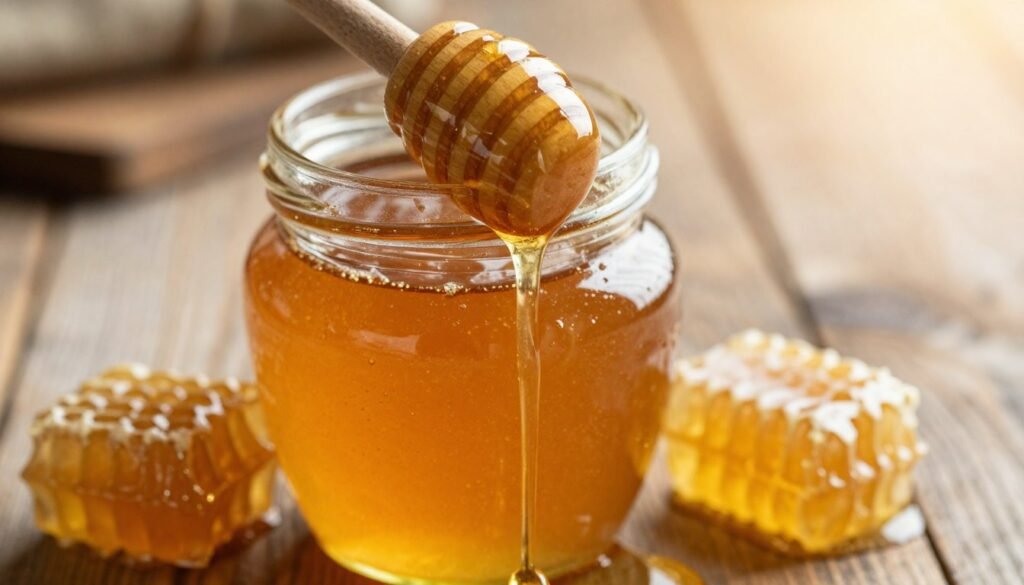
High temperatures can quickly strip a jar of its natural flavor and active compounds. Heat above 104°F (40°C) speeds the breakdown of enzymes and antioxidants that give raw honey its health benefits. Monitoring temperature during processing and storage protects the product’s quality and value.
Identifying Heat Damage
Look for muted aroma and a flatter taste profile; these often mean volatile compounds were lost to excessive heat. Regulatory checks often rely on HMF levels to flag heated or poorly stored jars.
The Role of Temperature
Temperature control matters at every step—from hive to jar. Beekeepers and buyers today should follow careful honey storage and gentle heating practices to preserve enzymes and protective properties.
- Keep heating low: avoid temperatures above 104°F to retain benefits.
- Test for HMF: elevated HMF can indicate past processing problems.
- Store wisely: stable, cool storage maintains flavor and quality.
Visual Indicators of Heat Damage
A jar’s color and clarity offer the fastest clues that high temperatures affected its quality.
When exposed to high temperatures, a jar will often darken and lose its clear, golden hue. This shift is easy to spot and can flag altered flavor and lower overall quality.
Professional beekeepers watch color closely. Any deeper tone or suspended particles may mean the bee harvest faced excessive temperature during processing. Careful temperature control keeps the sample true to the hive.
Inspect jars for cloudiness, dark streaks, or foreign bits before purchase. These visual cues help buyers and producers spot problems early.
| Condition | Normal Appearance | Heat-Damaged Appearance | Recommended Action |
|---|---|---|---|
| Color | Light golden | Dark brown or amber | Check source and storage; avoid if flavor altered |
| Clarity | Clear or uniform crystal | Cloudy with particles | Request testing or choose another jar |
| Processing note | Gentle, low temperature | Excessive heating during bottling | Review best practices and guides |
For more on what gentle warming does and grading standards, see what heating does and grading standards.
Changes in Texture and Consistency
Heat can warp a jar’s texture, turning a smooth pour into a stubborn, tacky mass.
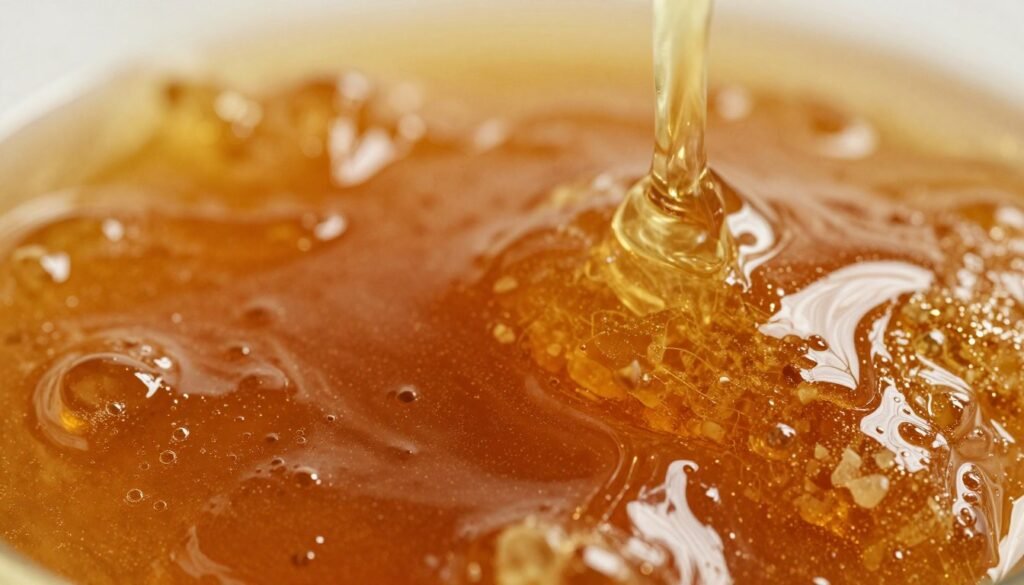
This glue-like transformation signals damage to the product and a drop in overall quality. Viscosity shifts when prolonged heat breaks down natural structure. The result is a thick, clinging paste that is hard to spread and hard to digest.
The Glue-Like Transformation
Beekeepers warn that improper heating disrupts natural crystallization and ruins the velvety mouthfeel each hive creates. When key enzymes are destroyed, consistency turns sticky and unpalatable for most recipes.
- Glue-like texture indicates heat damage and lower culinary value.
- Improper heating interrupts crystallization, producing coarse or gummy grains.
- Protect enzyme activity to keep the original smooth viscosity from the hive.
| Attribute | Normal | After Excess Heat |
|---|---|---|
| Viscosity | Smooth, free-flowing | Thick, tacky |
| Crystallization | Fine, even crystals | Gritty or gummy |
| Enzyme presence | Active, intact | Degraded or gone |
For more on protecting texture and proper warming methods, see this short guide on crystallization: why honey crystallizes.
Impact on Flavor and Aroma Profiles
Floral notes in a jar come from fragile volatile compounds that vanish when exposed to excess warmth. These molecules give each harvest its distinct bouquet and layered flavor.
When jars face too much heat, those aromatic compounds evaporate or break down. The result is a flat, generic sweetness and a notable loss of character.
Beekeepers work to preserve these traits during extraction and bottling. Gentle handling protects the enzymes and the delicate profile that links the product back to the hive and floral source.
- The most serious consequence of high temperatures is the disappearance of complex flavor and aroma.
- Deactivated enzymes mean fewer floral notes and reduced culinary value.
- Minor heating can still change texture and other key properties.
For practical guidance on maintaining quality during processing, see this guide on careful extraction and how to avoid overheating during bottling: gentle extraction practices and tips to avoid overheating.
The Science Behind Enzyme Degradation
Heat triggers chemical shifts that break down the biological helpers in a jar and reduce its nutritional profile.
Destruction of Vital Enzymes
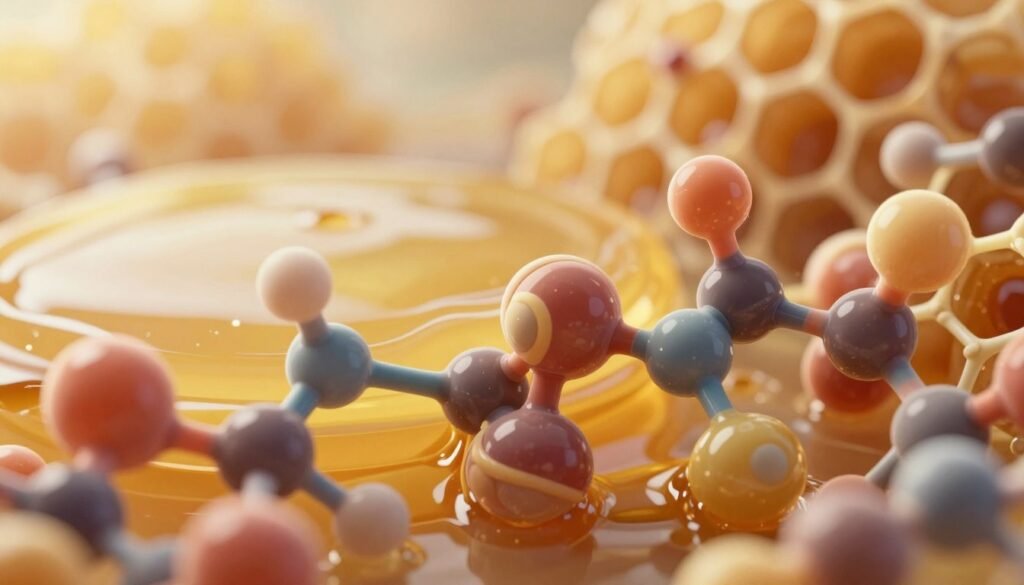
Diastase and glucose oxidase are fragile. Heating above 104°F (40°C) inactivates these enzymes. The result is less flavor and fewer health benefits in raw honey.
HMF Formation
When sugar molecules react under high temperature, hydroxymethylfurfural (HMF) forms. Elevated HMF is a clear marker of reduced honey quality and lower nutritional value.
Loss of Antibacterial Properties
Antibacterial effects rely on active enzymes and low water content. Excessive heat and added water during heating mixing reduce enzyme activity and weaken these protective properties.
- Primary concern: enzyme loss cuts the health benefits.
- When mixing: keep water and temperature low to protect natural enzymes.
- Warning: excessive heat increases HMF and signals loss in value.
- Beekeepers note: maintaining gentle temperature preserves the properties bees intend.
| Factor | Mechanism | Effect |
|---|---|---|
| Enzymes (diastase) | Denaturation at >104°F | Reduced digestive aid and altered flavor |
| HMF | Sugar breakdown under heat | Indicator of degraded nutritional value |
| Antibacterial action | Depends on active enzymes, low water | Weakened protection after heating |
Preserving enzymes keeps the benefits people expect from the hive and supports overall health and quality.
Why Overheating Accelerates Crystallization
Rapid, high temperatures upset the delicate sugar balance in a jar and make crystallization occur sooner than expected.
Gentle warming can temporarily liquefy thick jars. But sustained or intense heat destabilizes the sugar solution. When the jar cools, crystals form quickly and the texture turns grainy.
This is a natural process, and every bee and hive will produce product that eventually solidifies. The difference lies in how the process is managed.
- Overheating disrupts sugar ratios and speeds the crystallization cycle.
- Professional beekeepers use gentle warming to manage texture without damaging quality.
- Avoid rapid heating to preserve taste and the original mouthfeel.
- Respecting the natural process keeps jars closer to the hive’s intended profile.
“Improper heating makes a temporary fix that creates a long-term problem: faster, coarser crystals.”
For more on risks and treatment, see negative consequences of overheating and the raw vs processed comparison to learn safe handling tips.
Nutritional Value and Digestive Consequences
Exposure to high temperatures reduces important flavonoids and alters how the product aids digestion. Antioxidants such as flavonoids are heat-sensitive and decline when processing gets too warm. That loss lowers the overall nutritional value and the jar’s health profile.
Impact on Antioxidant Levels
Antioxidants degrade quickly under excessive heating. The result is less protection from free radicals and fewer documented health benefits in the finished jar.
Natural enzymes that support digestion break down at higher temperatures. Overheated product can become harder to digest and lose its gentle, soothing effects for the gut.
- Reduced nutritional value: key antioxidants fall with heat exposure.
- Digestive loss: enzyme activity that aids digestion weakens.
- Quality matters: keeping the product unheated preserves full benefits.
For simple at-home checks on purity and basic quality, see this short guide to test honey purity.
Safe Methods for Warming Crystallized Honey
A warm, controlled soak is the safest way to restore a jar that has solidified.
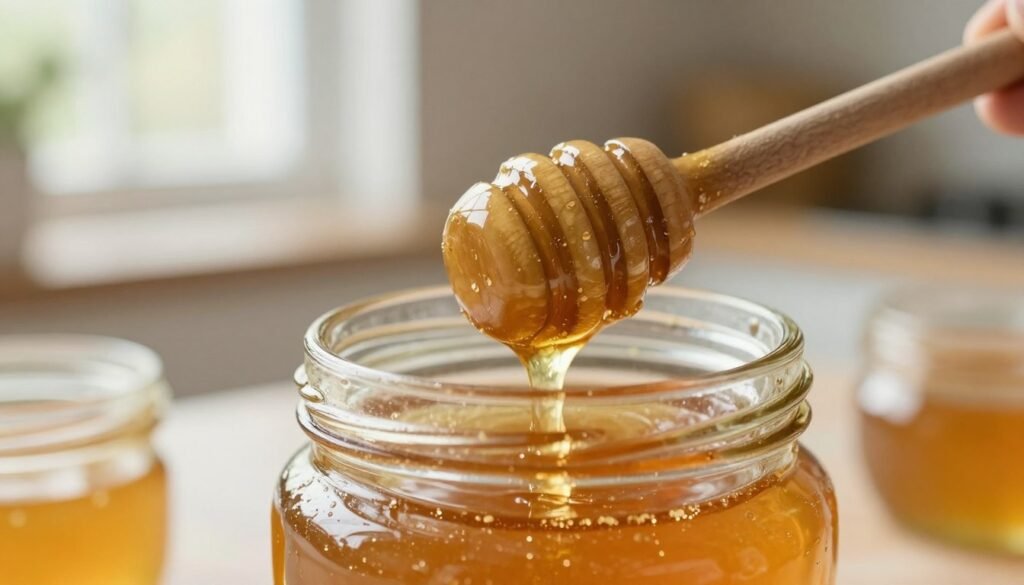
Use a warm water bath to gently return a jar to pourable form. Keep the water below 104°F to protect enzymes and the health benefits in raw honey.
Check the water with a thermometer and stir the jar gently. Replace the bath if it cools too much or drifts toward higher temperatures. This level of control preserves taste and texture without risking long-term damage.
Avoid microwaves. They heat unevenly and can create hot spots that destroy antioxidants and degrade quality. For most home cooks and beekeepers, the warm water option is one of the best options available.
- Benefit: gentle warming keeps natural properties intact.
- Control: monitor temperature and limit exposure to heat.
- Option to avoid: do not use quick, high-power heating methods.
“Gentle warming is a natural process that lets you enjoy the jar at its best while preserving the benefits of the hive.”
Best Practices for Long Term Storage
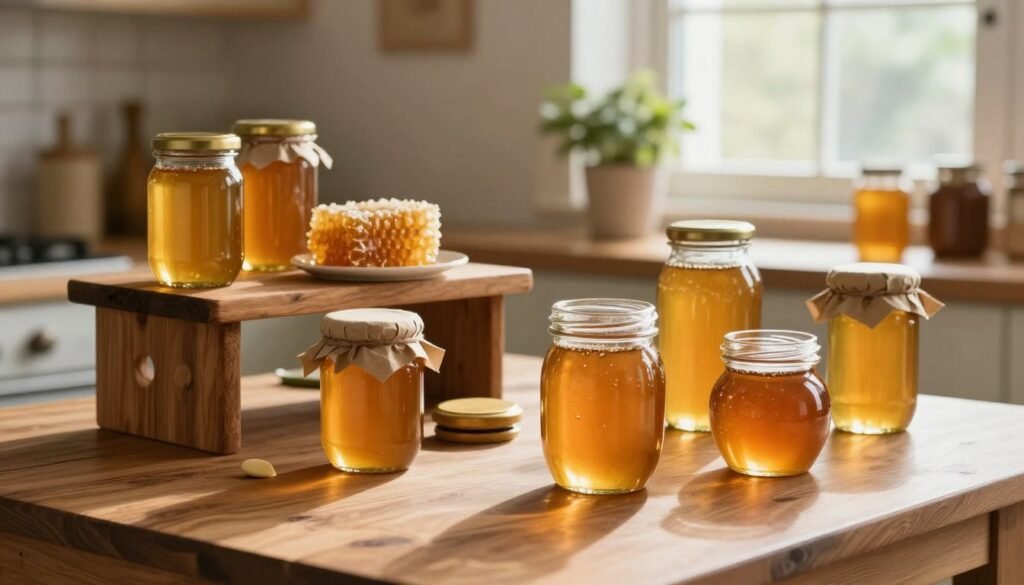
How you store a jar after bottling determines its future taste and nutritional profile. Good storage keeps raw honey true to its origins and protects honey quality over months or years.
Ideal Temperature Ranges
Keep temperatures steady between 50°F and 70°F. This range slows unwanted chemical change and preserves the nutritional value buyers expect.
Avoid frequent swings in room climate. Fluctuations speed crystallization and can reduce enzyme activity. Use a cool, dark pantry or cellar when possible.
Avoiding Direct Sunlight
Direct light warms jars unevenly and causes gradual degradation. Store sealed jars out of windows and away from hot appliances.
Use airtight glass jars to limit moisture and air exposure. These simple choices protect health properties and extend shelf life.
| Storage Factor | Recommended | Why it matters |
|---|---|---|
| Temperature | 50–70°F | Preserves enzymes and flavor |
| Light | Dark location | Prevents uneven heating and loss of aroma |
| Container | Airtight glass jar | Blocks moisture and air that harm quality |
Proper honey storage is part of good processing and care. Beekeepers and bee enthusiasts who control storage conditions keep the jar tasting like the hive. For practical packaging tips and labeling guidance, see how to package and label honey for. With the right options available, you can avoid unnecessary heating and keep quality high.
Conclusion
Knowing how heat changes a jar helps you keep its full value from field to table. Recognizing changes in color, texture, and aroma protects the jar’s health benefits and culinary benefits. View each container as a living ingredient that needs care.
Keep temperature and storage steady, and use gentle warming when needed. Beekeepers and home stewards who follow these steps preserve the product’s flavor and core health value.
Thank you for reading our blog today. We hope these tips help you protect the natural goodness in your jars. Stay connected for more expert advice on maintaining quality across seasons.